
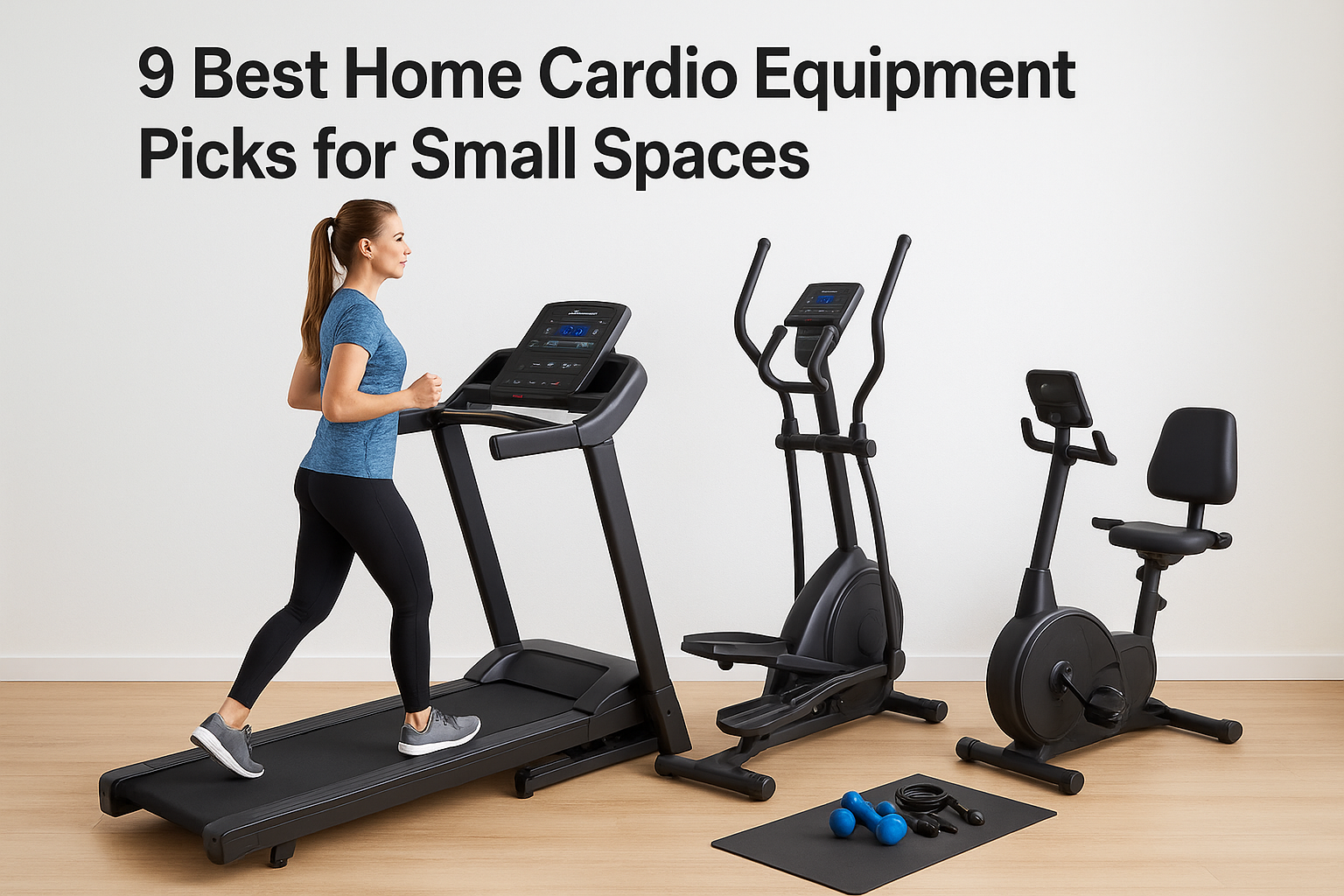
27 Jul 9 Best Home Cardio Equipment Picks for Small Spaces
A spare bedroom, a corner of the garage, a slice of the living room. That’s the reality for most people shopping for home cardio equipment for small spaces, and it changes what actually makes a machine
1. 3G Cardio Elite Runner X folding treadmill
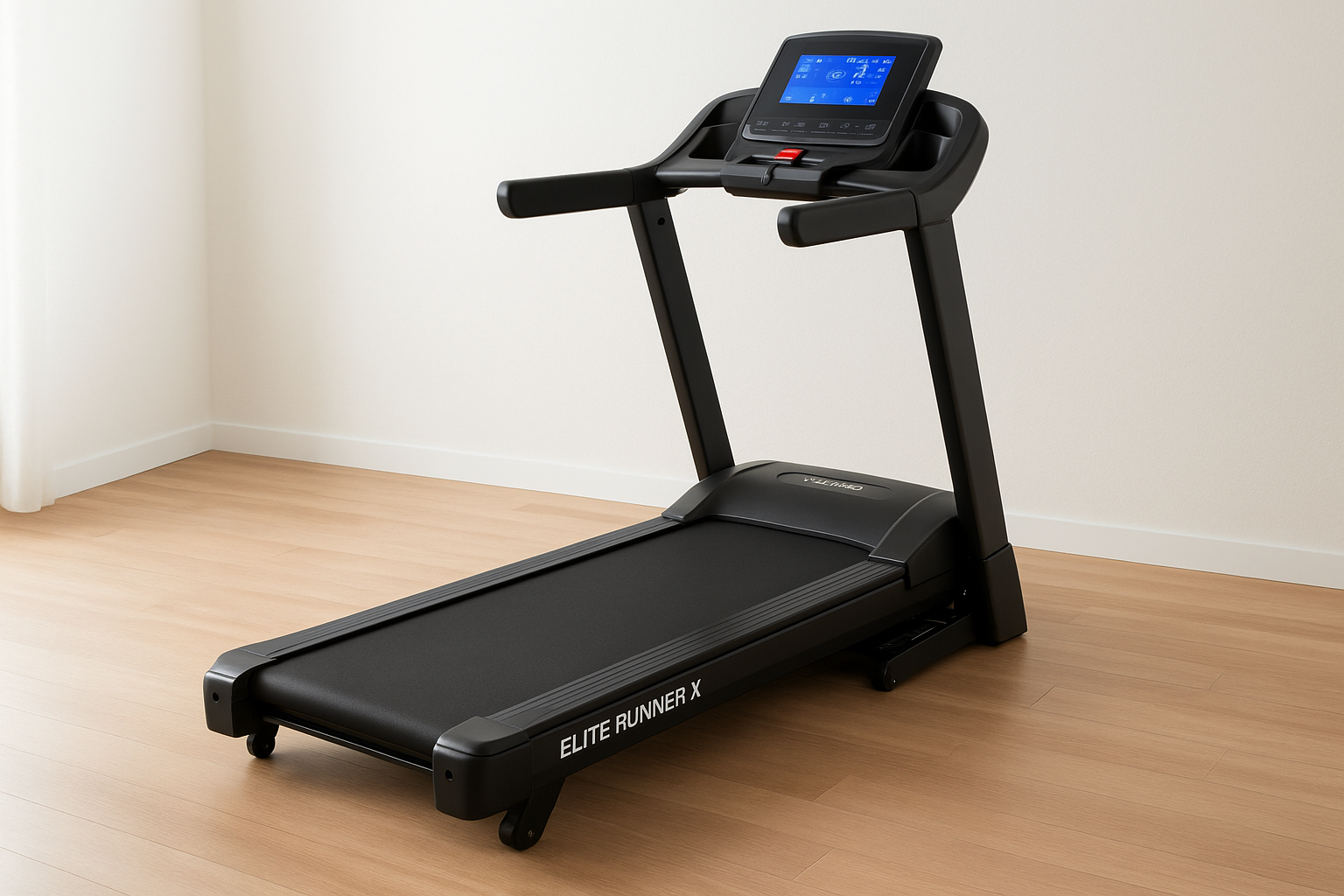
The Elite Runner X is 3G Cardio’s flagship folding treadmill, built for people who want a commercial-grade running surface without dedicating a whole room to it. It’s the machine we recommend most often when someone asks about home cardio equipment for small spaces and still wants a real running deck, not a shrunken-down walking pad that can’t handle a jog.
Key features
This treadmill runs on a 3.5 continuous-duty HP motor with a 22" x 60" deck, large enough for taller runners but still built to fold flat when you’re done. It comes with a FreeSync FTMS Bluetooth console that pairs with apps like Zwift, Kinomap, and Peloton’s digital app through 3G Cardio’s Bring Your Own Screen approach, so you skip the forced subscription and use whatever screen or tablet you already own.
- Speed range up to 12 mph with incline up to 15%
- Shock-absorbing deck cushioning to protect knees and joints
- Bluetooth heart rate strap included for accurate tracking
- USB charging port and tablet shelf built into the console
- Hydraulic folding mechanism for one-person operation
A folding treadmill only earns its keep if the fold actually happens every day, and the Elite Runner X’s hydraulic assist makes that realistic instead of a chore.
Footprint and storage
Unfolded, the Elite Runner X measures roughly 79" x 35", which is standard for a full-size running treadmill. Folded upright, though, the footprint drops to about 35" x 40", small enough to tuck against a wall, behind a door, or into a closet corner between workouts. The hydraulic lift means you’re not wrestling a 250-pound deck into place, which matters if you’re the one moving it in a studio apartment or a shared home gym space. Wheels on the base let you roll it aside without straining your back.
Who it’s best for
Runners and serious walkers who don’t want to compromise on deck size or motor power, but still need the machine to disappear when guests come over, will get the most out of this treadmill. It also suits households where multiple people share the equipment, since the console adjusts easily between a light walk and a hard interval session. If you live in a condo or apartment with tight square footage but still train for races or long runs, this is the machine built for that exact tension.
Price and warranty
The Elite Runner X sits in the $3,000 to $4,000 range depending on current promotions, positioning it as a mid-to-premium home treadmill rather than a budget folding model. That price reflects the commercial-grade motor and deck, not app subscriptions or gimmick features. 3G Cardio backs it with a lifetime frame warranty, 7 years on parts, and 1 year of labor for residential use, plus financing options like 6 months 0% through PayPal Credit and a price match guarantee within 6 months of purchase.
2. 3G Cardio Elite RB X recumbent bike
Recumbent bikes solve a specific problem: they give you a real cardio workout without asking your knees, lower back, or balance to cooperate the way a treadmill does. The Elite RB X is 3G Cardio’s answer for anyone hunting for home cardio equipment for small spaces who also wants a seated, low-impact machine that Consumer Reports named its best recumbent exercise bike of 2025.
Key features
Drive on the RB X comes from a magnetic resistance system with 20 levels, controlled through the same FreeSync FTMS Bluetooth console found across the Elite line, so it pairs with Kinomap, Zwift, and other BYOS-compatible apps. The oversized, cushioned seat adjusts along a rail system to fit riders from 5 feet to 6 feet 5 inches without tools.
- 20 magnetic resistance levels for gradual progression
- Bluetooth heart rate strap included, plus contact grips on the handlebars
- Adjustable seat rail for quick multi-user fit changes
- USB charging port and tablet shelf on the console
- Whisper-quiet belt drive instead of a chain
A recumbent bike that stays quiet enough for early mornings and late nights is the one that actually gets used.
Footprint and storage
Footprint runs about 58" x 26", noticeably smaller than a treadmill’s fully extended length, and the seat height stays low enough to slide under a desk or shelf when it’s not in use. Unlike folding treadmills, the RB X doesn’t collapse, so plan for a permanent spot rather than daily setup and teardown. That fixed footprint is still compact enough for a bedroom corner, home office, or basement nook without eating up walking space around it.
Who it’s best for
Anyone managing joint pain, recovering from injury, or simply preferring a seated workout over pounding a deck will find the RB X a better long-term fit than a treadmill. It also suits older adults and people newer to structured cardio who want a stable, low-entry machine.
Price and warranty
Expect a price point between $1,999 and $2,499, making it one of the more accessible entries in the Elite lineup. It carries the same residential warranty structure: lifetime frame, 7-year parts, 1-year labor, plus 0% financing options.
3. 3G Cardio Elite EM X elliptical trainer
Ellipticals promise a full-body, joint-friendly workout, but most compact models compromise on stride length and end up feeling cramped for anyone over 5’8". The Elite EM X is built to close that gap, giving you a machine sized for home cardio equipment for small spaces without shrinking the stride down to something that feels choppy.
Key features
A 20-inch adjustable stride sits at the core of this elliptical, letting you shorten it for a quicker cadence or lengthen it for a natural running-style motion. The same FreeSync FTMS Bluetooth console from the Elite line connects to Kinomap and other BYOS apps, so you’re not locked into a proprietary screen or a subscription to unlock resistance levels.
- 20-inch stride adjustment for different heights and training styles
- 20 levels of electronic resistance controlled from the console
- Bluetooth heart rate strap included with contact grips as backup
- Oversized, cushioned pedals to reduce foot fatigue on longer sessions
- USB charging port and tablet shelf built in
A stride you can actually adjust matters more than a longer spec sheet, since a fixed stride that doesn’t fit your body turns every workout into a compromise.
Footprint and storage
The Elite EM X measures roughly 73" x 27", which is compact for a full-stride elliptical but still a fixed-footprint machine, not a folder. Plan for a permanent spot along a wall or in a corner rather than daily setup, since the flywheel and rail system aren’t designed to collapse. Transport wheels on the front base make repositioning manageable if you need to shift it for cleaning or rearrange a shared space.
Who it’s best for
Runners nursing knee or hip issues, and anyone wanting a low-impact cardio option that still torches calories, will get the most from this machine. It also fits households where different-height users need one machine that adjusts rather than feels built for a single body type.
Price and warranty
The Elite EM X typically runs between $2,499 and $2,999. It carries the standard residential warranty: lifetime frame, 7 years on parts, 1 year of labor, along with the same 0% financing and price match options offered across the Elite lineup.
4. 3G Cardio Elite VS X vertical stair stepper
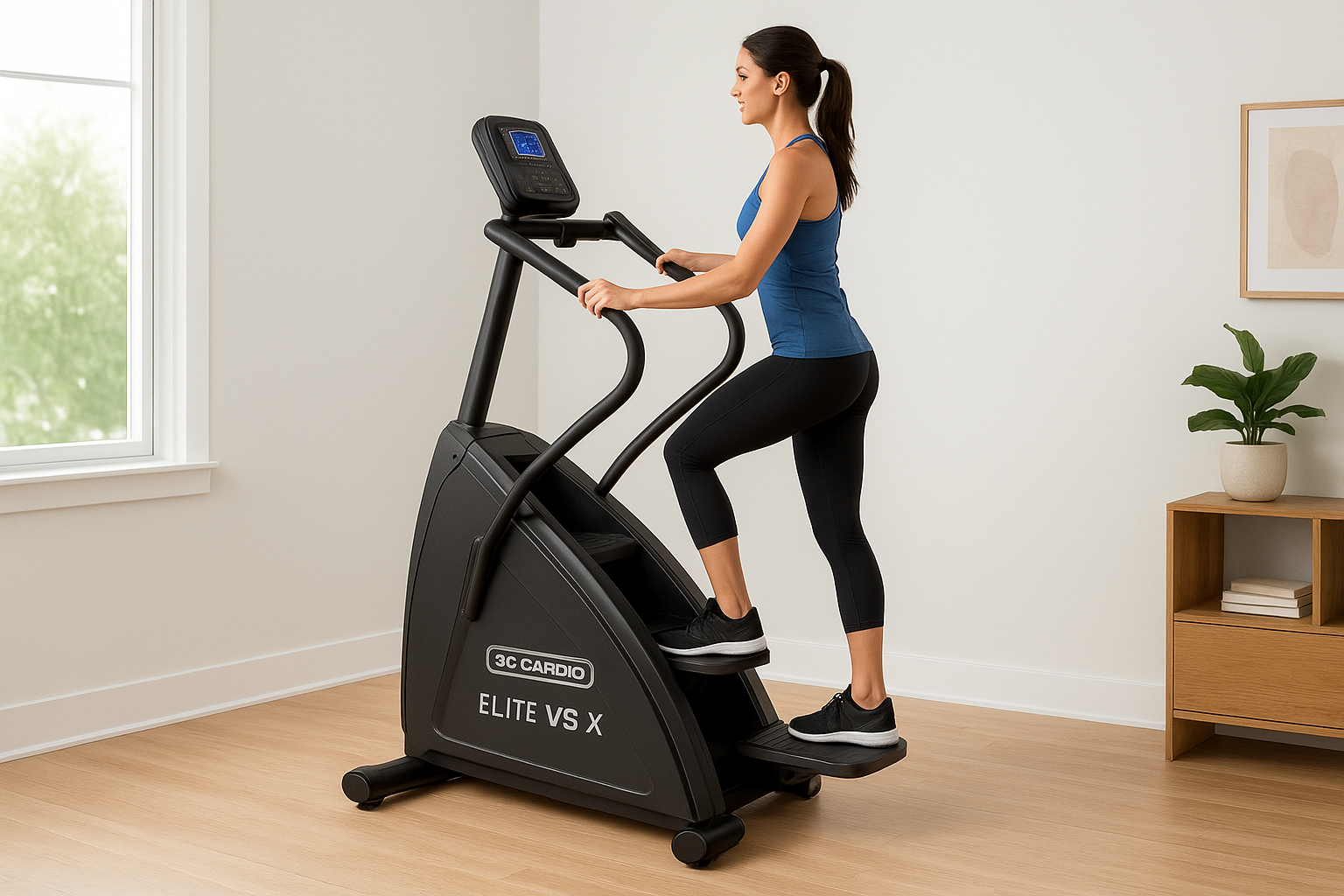
Stair climbing burns serious calories in a small window of time, but most home stair steppers feel flimsy or top out too fast for anyone in decent shape. The Elite VS X brings a commercial-grade climbing motion into a footprint that actually works as home cardio equipment for small spaces, without the wobble you get from cheaper mini steppers.
Key features
Independent pedals move on a hydraulic resistance system with adjustable intensity, so the stepping motion feels closer to a real staircase than the bouncy, disconnected feel of budget steppers. The FreeSync FTMS Bluetooth console pairs with Kinomap and other BYOS apps, giving you programmed climbs and heart rate tracking without a subscription.
- Independent pedal action for a natural climbing stride
- Adjustable hydraulic resistance for beginners through advanced climbers
- Bluetooth heart rate strap included
- Side handrails for balance and stability during intervals
- Compact vertical frame that stands upright when not folded
A stepper that mimics real stairs instead of just bouncing your feet up and down is the one that keeps your heart rate honest.
Footprint and storage
The Elite VS X stands roughly 45" x 27", one of the smallest footprints in the Elite line, and its vertical design means it takes up wall space rather than floor space. It doesn’t fold, but the upright profile lets it slide into a closet, corner, or narrow gap between furniture that a treadmill or elliptical simply can’t fit into. Transport wheels on the base make repositioning easy for cleaning or sharing a multi-use room.
Who it’s best for
Anyone short on square footage but chasing a hard cardio workout in 20 minutes or less will appreciate this machine. It suits apartment dwellers, busy parents, and anyone who wants a HIIT-style stair session without driving to a gym stairmaster.
Price and warranty
The Elite VS X typically prices between $1,999 and $2,499, making it one of the most budget-friendly Elite models. It carries the same residential coverage as the rest of the line: lifetime frame, 7-year parts, 1-year labor, with 0% financing and price match protection included.
5. Compact rowing machines
Rowing machines get overlooked by small-space shoppers because the full-size models look enormous in a showroom. But the compact category has grown fast, and a folding rower is one of the few machines that trains your legs, back, and arms in one motion without needing treadmill-length floor space. If you’re building out home cardio equipment for small spaces and want something that hits more muscle groups per session than a bike or stepper, this is the category to shortlist.
Key features
Most compact rowers use magnetic or air resistance instead of the water tanks found on premium models, which keeps the frame lighter and easier to fold. Look for a monitor that tracks stroke rate, distance, and calories at minimum, and check whether it offers Bluetooth so you can log workouts on a phone or tablet instead of relying on a tiny built-in screen.
- Magnetic resistance with 8 to 16 adjustable levels
- Folding frame with a hinge lock for safe storage
- Adjustable foot straps to fit different shoe sizes
- Monitor tracking stroke rate, distance, and calories
- Non-slip rail for the sliding seat
A rower earns its floor space by working your whole body in one stroke, not just your legs like most compact cardio machines.
Footprint and storage
Unfolded, expect a footprint around 80" x 20", long but narrow, since the rail needs to accommodate full leg extension. Folded, most compact models drop to roughly 25" x 30" and stand upright, so they slide into a closet or lean against a wall between a dresser and a doorframe. That narrow folded shape makes rowers one of the easiest machines to store in a studio apartment compared to a folded treadmill.
Who it’s best for
Anyone wanting a low-impact, full-body workout in a tight footprint will get more out of a rower than a single-focus machine like a bike or stepper. It also suits people cross-training for running or cycling, since rowing builds pulling strength that those sports rarely train.
Price and warranty
Compact rowers typically run from $300 for entry-level models to $1,200 for sturdier magnetic units with better monitors. Warranty coverage varies widely by manufacturer, so check frame warranty length and whether labor is included before buying, since cheaper rowers often skimp on both.
6. Foldable upright exercise bikes
Upright bikes trade the recumbent’s reclined seat for a more traditional cycling posture, and the folding versions are some of the smallest cardio machines you can buy that still deliver a real workout. If square footage is your main constraint in choosing home cardio equipment for small spaces, an upright bike beats a treadmill or rower on pure floor-space efficiency almost every time.
Key features
Most folding upright bikes rely on magnetic resistance with 8 to 16 levels, adjusted through a dial or button console rather than a full touchscreen. A basic display tracks time, speed, distance, and calories, and better models add a phone or tablet holder so you can stream a workout instead of staring at a wall.
- Magnetic resistance with 8 to 16 levels
- Folding hinge with a locking pin for stability
- Adjustable seat height and, on some models, handlebar height
- Transport wheels for rolling between rooms
- Basic LCD console tracking time, speed, and calories
An upright bike that folds flat against a wall gives you real cycling resistance without asking for a dedicated corner of your home.
Footprint and storage
Unfolded, most models measure around 40" x 20", already smaller than a recumbent bike or treadmill. Folded, that shrinks to roughly 20" x 20", small enough to stand in a closet, behind a couch, or in the gap next to a dresser. The upright seating position also means the bike doesn’t need the extended leg clearance a recumbent bike requires, which helps in rooms with limited length.
Who it’s best for
Cyclists, apartment dwellers, and anyone who wants the smallest possible footprint without giving up adjustable resistance will do well with a folding upright bike. It suits people who prioritize storage over stride length or seat comfort, since the upright position asks more of your core and wrists than a recumbent seat does.
Price and warranty
Folding upright bikes typically range from $150 for basic models to $600 for sturdier units with better resistance range and console features. Warranty terms vary widely, so confirm frame coverage length and whether the resistance magnet carries its own separate warranty before buying, since that part fails first on cheaper units.
7. Mini steppers and cardio climbers
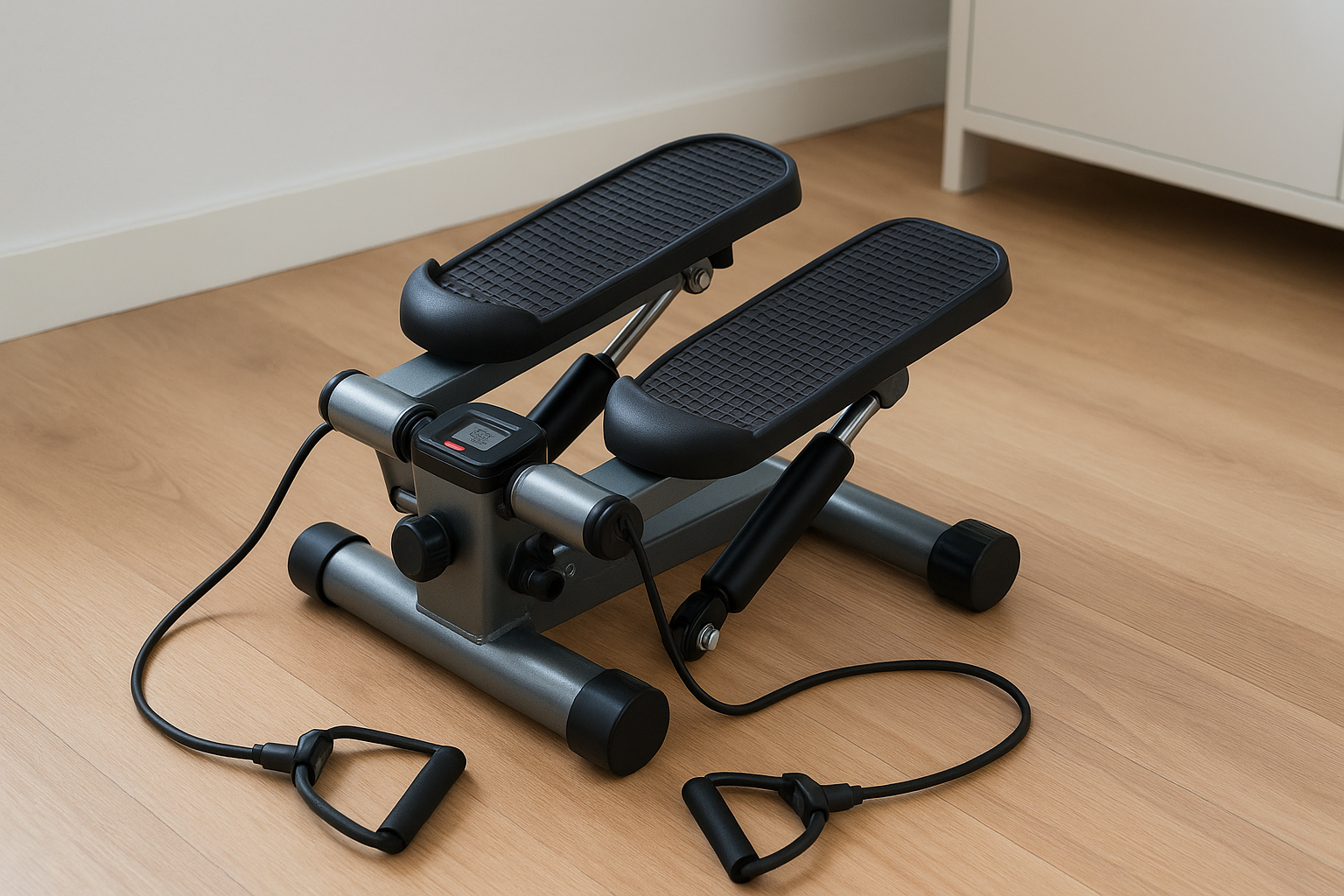
Mini steppers are the smallest true cardio machines you can buy, and they solve a problem the other entries on this list can’t: zero footprint when you’re not using it. If you’ve got literally no room for a bike or rower, a mini stepper still counts as legitimate home cardio equipment for small spaces, even if it trades range of motion for pure compactness.
Key features
Most mini steppers use hydraulic cylinders instead of a full drive system, giving you resistance you adjust with a dial or twist knob rather than electronic levels. Some models add resistance bands at the base so your arms get worked along with your legs, which turns a basic stepping motion into more of a full-body circuit.
- Hydraulic cylinder resistance, adjustable via twist knob
- Optional resistance bands for upper-body engagement
- Non-slip pedals with textured grip
- Basic LCD counter for steps, time, and calories
- No electrical components, so no cords or charging
A mini stepper trades a full range of motion for a footprint you can slide under a bed, and for some apartments that trade is worth making.
Footprint and storage
Most mini steppers measure roughly 17" x 20" and stand about 14" tall, small enough to store in a closet, under a bed, or in a cabinet without any dedicated space at all. Nothing folds because nothing needs to, since the whole unit is already smaller than most gym bags. That size makes it the easiest machine on this list to carry between rooms or pack for a trip.
Who it’s best for
Renters, dorm residents, and anyone working from a small apartment with genuinely no floor space will get real use out of a mini stepper, especially for short bursts between meetings. It also works as a low-cost warm-up tool for people who own a larger machine but want something quick before a strength session.
Price and warranty
Mini steppers typically cost between $40 and $150, making them the cheapest entry point on this entire list. Warranty coverage is usually thin, often 90 days to a year on parts, so check the seller’s return policy closely before buying, since hydraulic cylinders on budget units tend to wear out within a year of regular use.
8. Jump ropes for cardio in tight spaces
Jump ropes cost less than a gym membership co-pay and deliver a harder cardiovascular workout than most machines twice their price. For anyone hunting home cardio equipment for small spaces with zero storage to spare, a rope is about as close to a free lunch as fitness gear gets, since it rolls up small enough to fit in a coat pocket.
Key features
Quality depends on the bearing system in the handles, since cheap ropes bind and twist mid-swing while ball-bearing handles spin freely for consistent rotation. Cable material matters too: PVC-coated steel cables hold speed better than beaded or cotton ropes, especially once you’re stringing together double-unders or longer intervals.
- Adjustable-length steel cable with PVC coating
- Ball-bearing handles for smooth, snag-free rotation
- Weighted handle options for added arm and shoulder work
- Quick-adjust screw or clip for sizing to your height
- Foam or rubber grip for sweaty hands
A jump rope is the one piece of home cardio equipment that costs less than a takeout order and still spikes your heart rate faster than a treadmill warm-up.
Footprint and storage
Storage is essentially zero. Coiled up, a rope fits in a drawer, a gym bag, or hung on a single hook by the door, and that’s the entire footprint story. Where it does need room is overhead clearance and floor space to swing, so plan on roughly 7 feet of ceiling height and a 6-foot circle around you when you’re actually working out.
Who it’s best for
Budget-conscious buyers, frequent travelers, and anyone layering short cardio bursts between strength sets will get the most mileage from a rope. It also suits renters who can’t justify a machine but still want a genuine sweat.
Price and warranty
Most quality ropes run $15 to $40, with weighted or speed-specific models topping out near $60. Warranties are rare at this price point, so buyer protection usually comes down to the retailer’s return window rather than a manufacturer guarantee.
9. Resistance bands for cardio circuits
Resistance bands don’t look like cardio equipment, but strung together into a circuit of squats, rows, and high-knee pulls, they push your heart rate up just as fast as a stepper or bike. If you’re rounding out home cardio equipment for small spaces with something that trains strength and cardio at once, bands close that gap without adding a single machine to your floor.
Key features
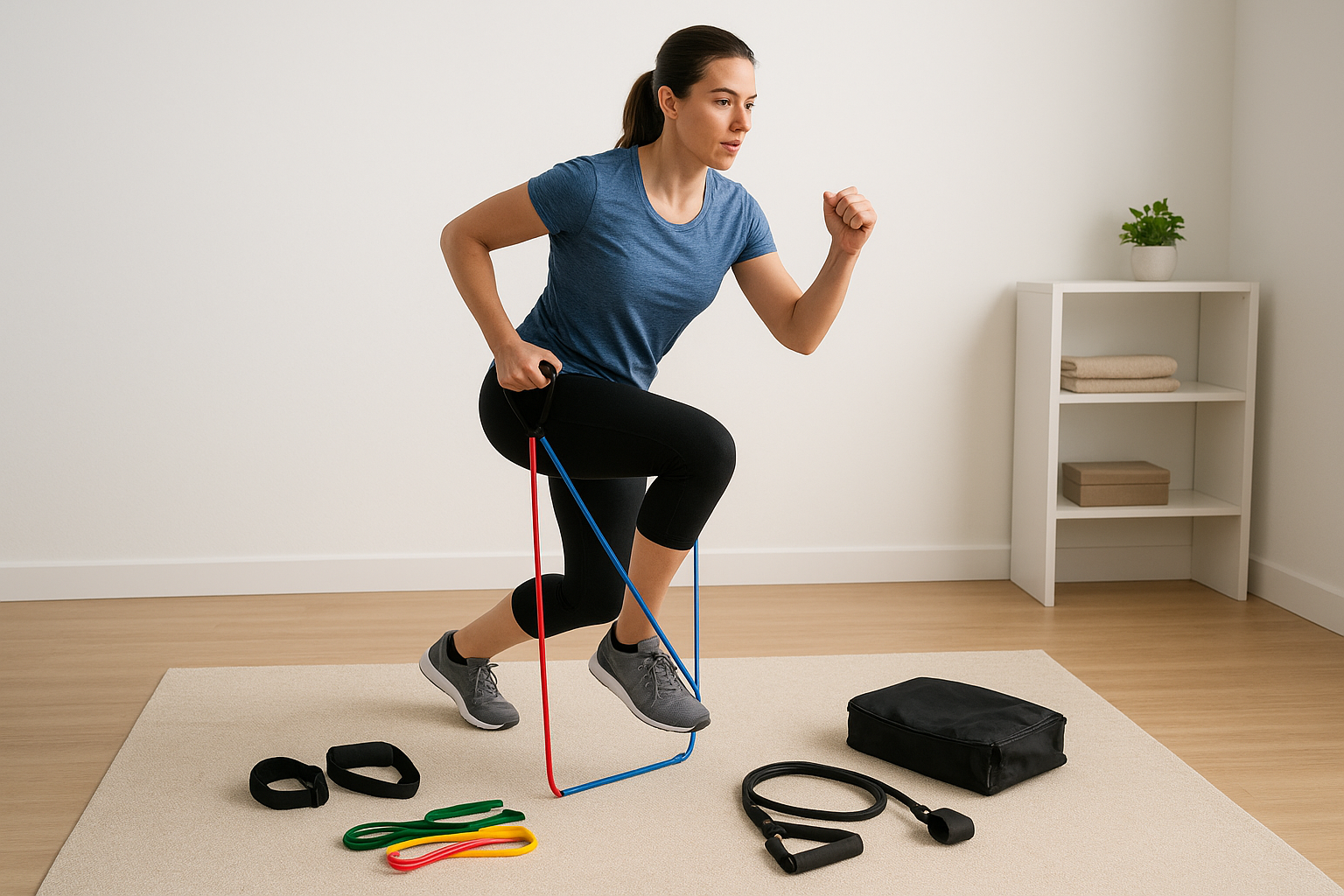
Bands come in loop and tube styles, and the two work differently: loops wrap around legs or ankles for lateral and glute work, while tubes with handles mimic cable machine movements like rows and presses. Resistance is measured in pounds of tension, and most sets bundle several levels so you can stack bands for heavier movements or use one alone for faster, cardio-paced reps.
- Multiple resistance levels, usually 10 to 50 pounds per band
- Door anchor for chest presses, rows, and woodchoppers
- Padded ankle straps for lateral and glute-focused circuits
- Carrying bag that doubles as storage
- Interchangeable handles for tube-style sets
Bands turn a bedroom floor into a full circuit station, since the resistance stacks and packs away in the same drawer as your socks.
Footprint and storage
A full band set, including handles, straps, and a door anchor, fits inside a bag roughly the size of a shoebox. There’s no assembly and nothing to fold, so storage is just tucking that bag into a closet shelf or gym bag. Workout space scales with the exercise: a standing row needs maybe 4 feet of clearance, while lateral band walks need a bit more width.
Who it’s best for
Travelers, renters, and anyone stacking strength work into a cardio circuit will get the most from bands, especially paired with bodyweight moves like burpees or jumping jacks. They also suit people rehabbing an injury who need controlled, adjustable resistance instead of a fixed-weight machine.
Price and warranty
A complete band set with handles, anchors, and straps typically costs $20 to $50, occasionally reaching $80 for heavy-duty sets with multiple resistance combinations. Warranties are essentially nonexistent at this price point, so check the tubing material and return policy, since worn tubes are the main failure point over time.
10. How to choose home cardio equipment for a small space
Start by measuring your actual space before you fall in love with a machine online. Grab a tape measure and mark out the footprint on your floor with painter’s tape, both the unfolded working area and the folded storage size, because a spec sheet number means nothing until you see it against your real walls and furniture. Ceiling height matters more than people expect too, especially for tall treadmill users or anyone planning to jump rope indoors.
Think next about the type of workout you’ll actually stick with, not the one that sounds best in theory. If you already run outside and want a home substitute, a folding treadmill like the Elite Runner X is worth the larger footprint. If joint pain rules out impact, a recumbent bike or elliptical fits better. If you genuinely have no dedicated space, a mini stepper, jump rope, or resistance bands remove the storage question entirely.
The best piece of home cardio equipment for small spaces is the one that fits both your floor plan and your actual workout habits, not just the smaller box.
Check how the machine handles day-to-day storage, since folding mechanisms and transport wheels separate machines you’ll actually put away from ones that end up as permanent floor clutter.
- Confirm folded dimensions, not just unfolded specs, before buying
- Test the fold mechanism in reviews or in person; hydraulic assists beat manual lifts for daily use
- Check weight capacity and your own weight against the manufacturer’s limit
- Look for Bluetooth connectivity if you want app-based workouts without a subscription
- Verify warranty terms, especially frame coverage, before comparing price alone
Finally, weigh noise and vibration if you share walls with neighbors or live above another unit. Rowers and steppers can transmit vibration through flooring, while magnetic-resistance bikes and ellipticals tend to run quieter than belt-driven or hydraulic alternatives.
11. Frequently asked questions about compact cardio equipment
Readers shopping for home cardio equipment for small spaces tend to ask the same handful of questions before they buy, so here are straight answers to the ones that come up most.
Does a folding machine actually save space, or is that marketing? A folding treadmill or rower genuinely shrinks its footprint once you know the folded dimensions, not just the working area. The catch is that a machine only stays folded if the mechanism is easy enough to use daily, which is why hydraulic-assist folding beats a manual lift you have to wrestle with every morning.
Storage specs only matter if the folding process is easy enough that you’ll actually do it every single day.
Questions about weight and noise come up almost as often as space:
- What weight capacity should I look for? Most compact machines cap out between 300 and 350 pounds; check the listed limit against your own weight plus a margin, not just the average user weight.
- Will a compact machine disturb my neighbors? Magnetic-resistance bikes and ellipticals run quietest, while hydraulic steppers and rowers transmit more vibration through flooring, so add a mat if you share walls.
- Do I need Bluetooth or app connectivity? Only if you plan to follow structured workouts or ride virtual routes; a basic console still tracks time, distance, and calories fine without it.
- How much should I budget for a compact machine that lasts? Expect $150 to $600 for foldable bikes and rowers, and $2,000 and up for commercial-grade machines like the Elite line, where the frame and motor justify the higher price.
One more question worth settling before you buy: should equipment fold, or should it just be small enough that folding doesn’t matter? Mini steppers, jump ropes, and resistance bands skip the folding question entirely since their resting footprint is already tiny, which is worth considering if daily setup and teardown feels like a chore you’ll eventually skip.
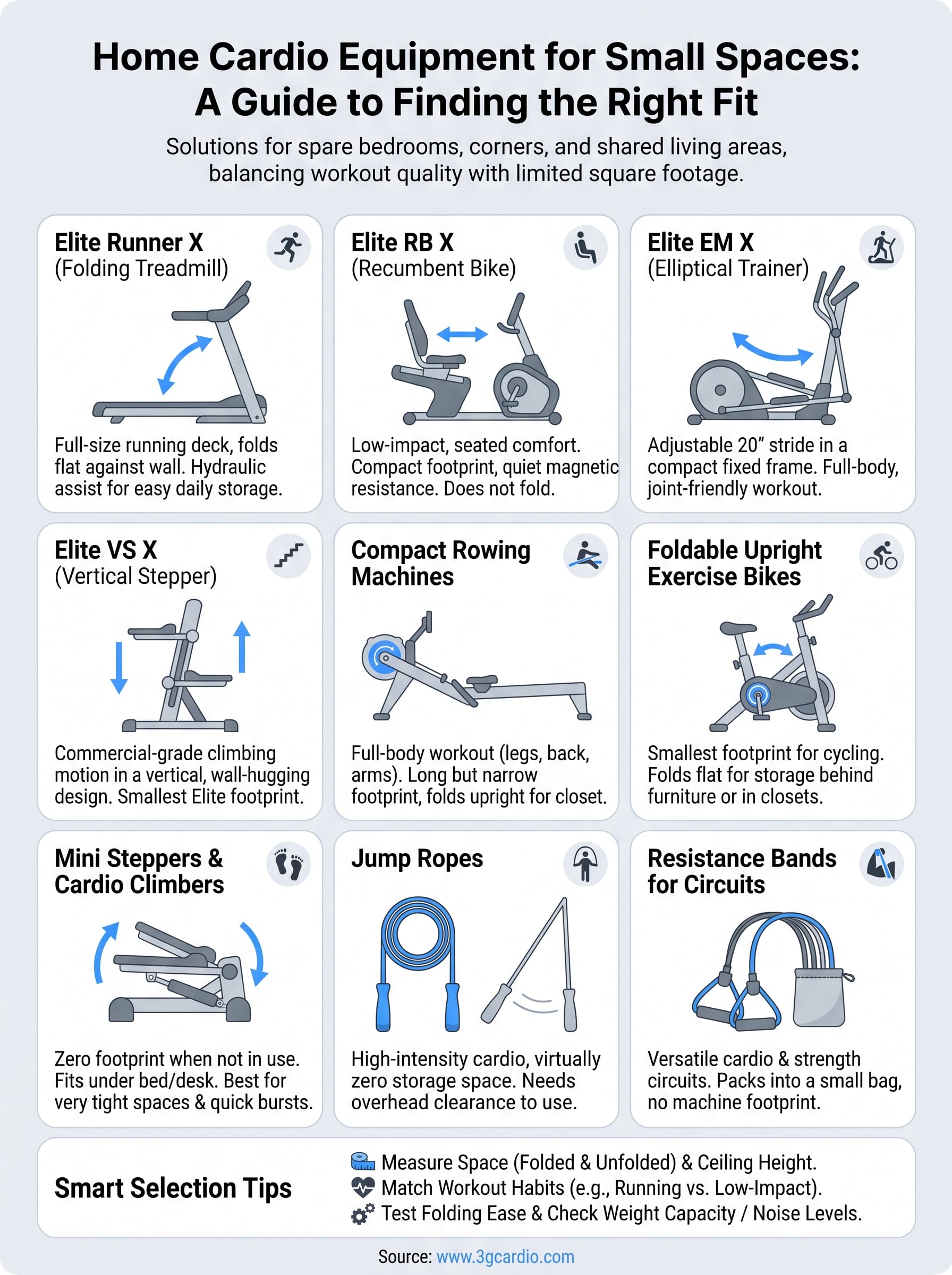
Choosing the right fit for your space
Small square footage doesn’t have to mean small results. Whether you land on a folding treadmill for real running mechanics, a recumbent bike for joint-friendly seated work, or something as simple as a jump rope, the machines that stick around are the ones that actually match your room and your habits, not the ones with the flashiest spec sheet. Measure first, decide on workout type second, and let storage and noise settle the final call.
If you want a machine built to handle daily folding, quiet operation, and app connectivity without a subscription tacked on, the Elite line covers most of what a small-space home gym needs. Take a closer look at the FreeSync FTMS Bluetooth equipment lineup to compare models side by side and find the one that actually fits your floor plan.



No Comments