

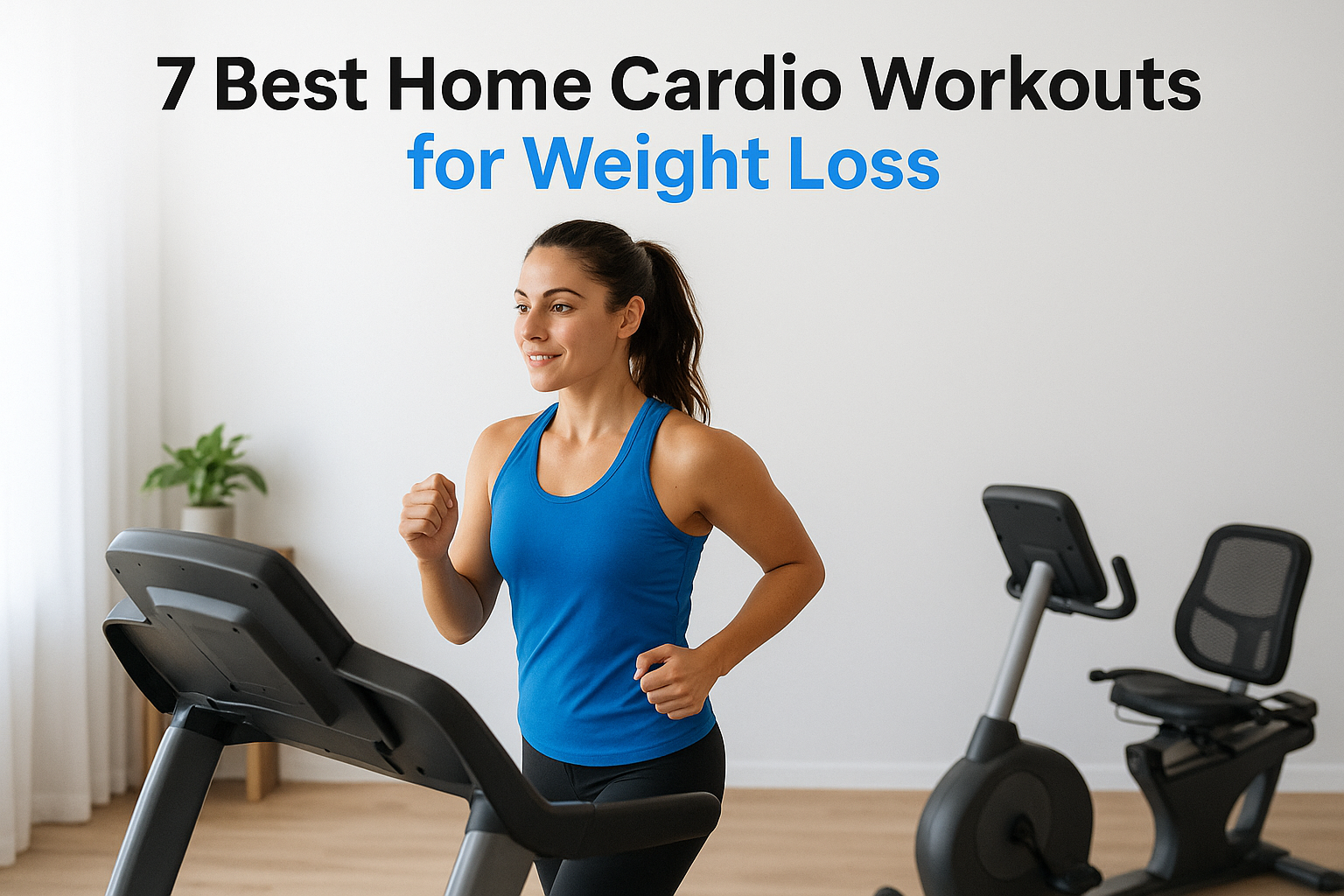
19 Jul 7 Best Home Cardio Workouts for Weight Loss
You want to drop weight without driving to a gym, waiting for machines, or paying a monthly membership just to walk on a treadmill. A solid home cardio workout for weight loss doesn’t need a fancy setup. It needs consistency, the right intensity, and moves that actually raise your heart rate for a sustained period.
The good news: you can burn real calories with minimal equipment or none at all, as long as you pick workouts that challenge your cardiovascular system and fit your fitness level. Some days that means bodyweight intervals in your living room. Other days it means a structured session on equipment you already trust, like a treadmill or recumbent bike, where you control speed, incline, and resistance precisely enough to track progress.
Below are seven home cardio workouts that deliver results, ranging from zero-equipment circuits to sessions using basic home fitness gear. Each one targets calorie burn differently, so you can rotate them based on your energy, your joints, and what equipment you have on hand. We’ll break down how each workout works, who it’s best suited for, and how to structure it into a weekly routine that actually moves the scale.
1. Treadmill walking and running intervals
How it works
Interval walking or running on a treadmill means alternating short bursts of higher speed or incline with slower recovery periods. A simple structure looks like this: warm up for 5 minutes at an easy pace, then cycle through 1 minute at a challenging speed followed by 2 minutes at a comfortable pace, repeated 8 to 10 times. Interval training forces your heart rate up and down repeatedly, which trains your cardiovascular system harder than steady-state walking alone. You can adjust the incline instead of speed if running isn’t comfortable for your joints, and that alone can spike calorie burn without added impact.
Calories burned and weight-loss benefits
A 45-minute interval session on a treadmill can burn anywhere from 350 to 500 calories depending on your weight, speed, and incline settings. The afterburn effect, known as excess post-exercise oxygen consumption, keeps your metabolism elevated for a while after you finish, according to research summarized by the American Council on Exercise. That means you keep burning slightly more calories even after you’ve stepped off the machine.
Interval walking beats a flat, steady pace almost every time when the goal is weight loss.
Consistency matters more than any single session, so treadmill intervals work best when you commit to 3 to 4 sessions a week rather than one long grind.
Who it’s for
Anyone who wants a home cardio workout for weight loss that’s easy to track and scale over time will benefit here. It suits beginners who need a controlled environment to build endurance, as well as experienced exercisers who want to push pace or incline for a harder session. It’s also a smart pick if you deal with joint pain, since you can dial impact up or down instantly.
Equipment needed
You need a reliable treadmill with accurate speed and incline controls. A model with a Bluetooth-enabled console, like the ones on 3G Cardio’s Elite Runner X and Pro Runner X treadmills, lets you sync with fitness apps and track heart rate through a wireless strap, so you can monitor intensity without guessing. A commercial-grade frame also holds up better to repeated interval pounding than a budget model built for occasional walking.
2. Recumbent bike cardio sessions
How it works
A recumbent bike puts you in a reclined seated position with back support, pedaling against adjustable resistance levels. Unlike an upright bike, the wider seat and lower center of gravity take pressure off your lower back and joints, so you can pedal longer without discomfort. A solid session mixes steady pedaling with resistance intervals: 3 minutes at a moderate level, then 1 minute at a tough setting, repeated for 30 to 40 minutes. Resistance training on a bike works your legs and glutes while keeping your heart rate in a fat-burning zone.
Calories burned and weight-loss benefits
A 40-minute recumbent bike session burns roughly 300 to 450 calories, depending on your weight and resistance level. Because the seated position removes strain from your core and back, you can often sustain a longer session than you could standing, which adds up to more total calories burned per week.
A recumbent bike lets you push harder for longer without punishing your joints.
Who it’s for
This workout suits people recovering from injury, dealing with back pain, or carrying extra weight that makes standing cardio uncomfortable. It’s also a great option for older adults who want a low-impact routine they can stick with daily without soreness slowing them down.
Equipment needed
You need a recumbent bike with smooth resistance adjustments and a comfortable seat. 3G Cardio’s Elite RB X, named best recumbent exercise bike of 2025 by Consumer Reports, includes Bluetooth connectivity and heart rate monitoring for tracking intensity.
3. Elliptical trainer workouts
How it works
An elliptical trainer moves your legs through an oval-shaped motion while your arms push and pull on attached handles, so you get a full-body cardio workout without your feet ever leaving the pedals. That zero-impact motion mimics running without the pounding, which is why so many home gyms lean on ellipticals as their go-to machine. A strong session alternates resistance and stride speed: 2 minutes at a brisk pace, 1 minute pushing hard against higher resistance, repeated for 30 minutes.
Calories burned and weight-loss benefits
A 30-minute elliptical session burns around 270 to 400 calories, and that number climbs when you engage the moving handles instead of just holding on. Working your upper body alongside your legs raises your overall calorie burn compared to lower-body-only machines, since more muscle mass is firing at once.
An elliptical lets you train your whole body without a single jarring step.
Because it’s gentle on joints, you can log more frequent sessions each week, and frequency is what drives steady weight loss over months, not just single hard workouts.
Who it’s for
This workout fits people with knee, hip, or ankle issues who still want an intense sweat session. It also suits anyone bored with treadmill walking who wants variety without buying a second cardio machine, since the elliptical trains different muscles through a different movement pattern.
Equipment needed
You need an elliptical with adjustable stride length and resistance, like 3G Cardio’s Elite EM X, which includes Bluetooth connectivity and a tablet shelf for tracking workouts through fitness apps.
4. Vertical stair stepper workout
How it works
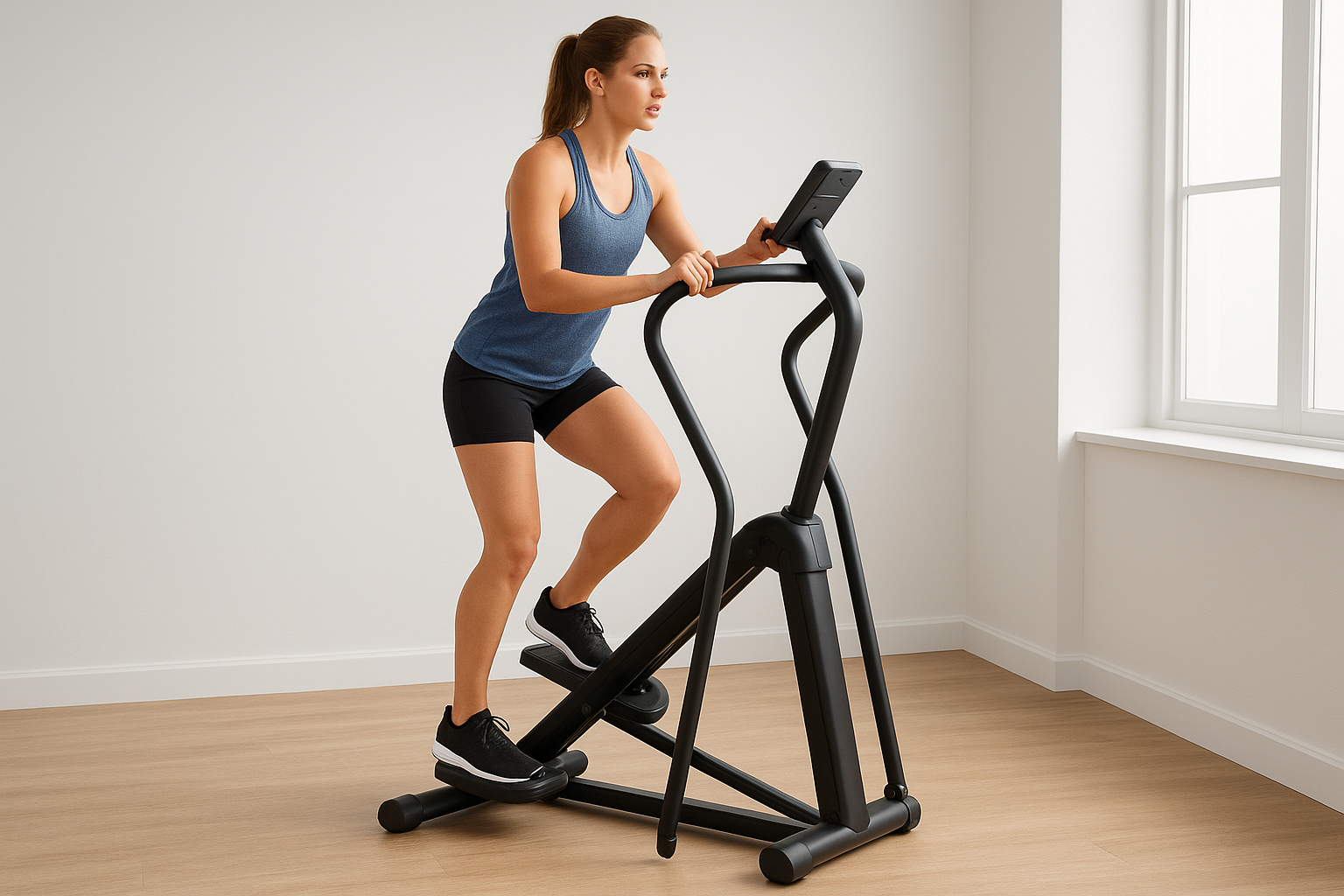
A vertical stair stepper simulates climbing an endless staircase, with two pedals moving independently against adjustable resistance. Unlike a stationary stepper that barely moves, this machine forces you into a real climbing motion, which recruits your glutes, quads, and calves far harder than flat-ground walking. A tough session looks like this: 2 minutes at a moderate step rate, then 1 minute at a faster pace with heavier resistance, repeated for 20 to 25 minutes. Because you’re fighting gravity with every step, your heart rate climbs fast, so sessions stay shorter than treadmill or bike workouts but still deliver a serious cardio challenge.
Calories burned and weight-loss benefits
A 25-minute stair stepper session can burn 300 to 400 calories, putting it among the most efficient calorie burners per minute on this list. The climbing motion also builds lower-body strength alongside cardio conditioning, so you’re toning muscle while stripping fat, which helps preserve metabolism during a weight-loss phase.
Minute for minute, stair climbing burns more calories than almost any other home cardio option.
Who it’s for
This workout suits people who already have a base level of fitness and want to shorten their sessions without sacrificing intensity. It’s less ideal for beginners or anyone with knee sensitivity, since the climbing motion loads joints more than an elliptical or recumbent bike.
Equipment needed
You need a stair stepper with independent pedal resistance and sturdy side rails. 3G Cardio’s Elite VS X offers Bluetooth connectivity and commercial-grade construction built to handle daily climbing sessions without wearing down.
5. Bodyweight HIIT circuit
How it works
A bodyweight HIIT circuit strings together moves like jumping jacks, burpees, mountain climbers, and squat jumps into short, intense rounds separated by brief rest. A typical structure runs 40 seconds of work followed by 20 seconds of rest, cycling through 5 to 6 exercises for 20 to 25 minutes total. High-intensity intervals spike your heart rate faster than steady cardio because you’re recruiting multiple muscle groups at once with no machine controlling your pace, so your effort determines the intensity.
Calories burned and weight-loss benefits
A 25-minute bodyweight circuit torches roughly 250 to 400 calories, and the metabolic disruption from all-out effort keeps your body burning extra calories for hours afterward. This afterburn effect rivals what you get from equipment-based intervals, but without needing anything beyond floor space.
Bodyweight HIIT proves you don’t need a machine to spike your metabolism.
Who it’s for
This workout fits people short on time, space, or budget who still want a serious calorie burn. It also suits travelers or anyone who wants a backup routine for days they can’t reach their usual equipment, since it scales from beginner-friendly modifications to advanced explosive movements.
Equipment needed
You need nothing but floor space and, ideally, a mat for joint comfort during floor exercises. A wireless heart rate strap helps you confirm you’re hitting the right intensity zones during work intervals, even without a console to display it.
6. Jump rope cardio
How it works
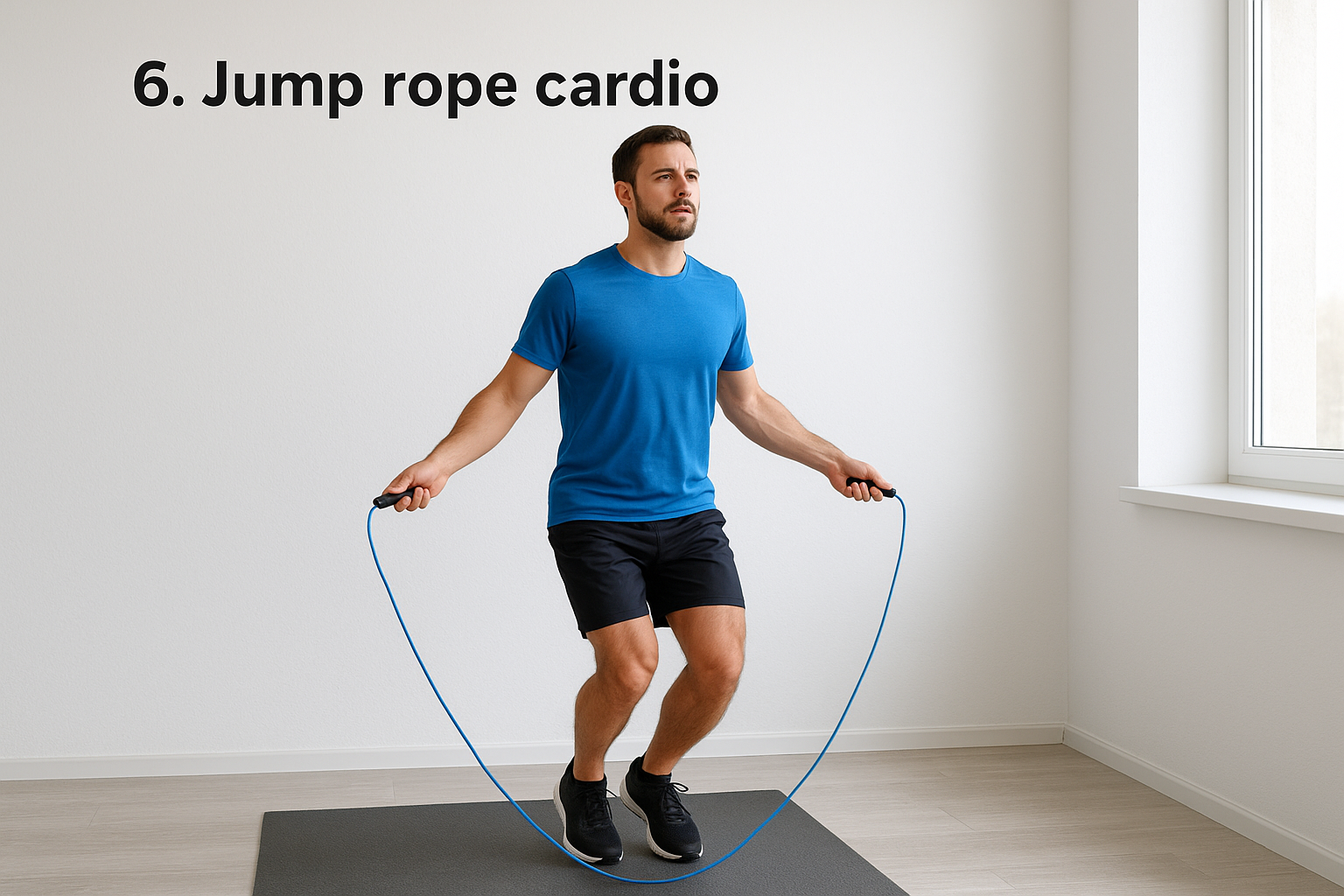
Jumping rope trains your calves, shoulders, and core all at once while keeping your feet moving in a rhythm that’s tough to fake your way through. A basic session mixes steady jumping with footwork variations: 1 minute of basic bounces, 30 seconds of alternating foot hops, then 30 seconds of high knees, repeated for 15 to 20 minutes. Rope jumping demands constant coordination, so your heart rate climbs almost as fast as sprinting, but in a fraction of the space.
Calories burned and weight-loss benefits
A 15-minute jump rope session burns roughly 200 to 300 calories, making it one of the fastest calorie burns per minute you’ll find in a home cardio workout for weight loss. Because the movement is repetitive and skill-based, your coordination improves alongside your conditioning, which means sessions get more efficient the longer you stick with them.
Few home workouts burn calories faster per minute than a jump rope.
Who it’s for
This workout suits people who want a high-intensity option that travels easily and takes almost no setup time. It’s less forgiving on ankles and knees than machine-based cardio, so anyone with joint issues should test it cautiously or lean on lower-impact alternatives from earlier on this list instead.
Equipment needed
You need a jump rope sized to your height and a floor surface with some give, like a rubber mat or carpet, to reduce impact on your joints during longer sessions.
7. Low-impact dance cardio
How it works
Low-impact dance cardio strings together simple steps like grapevines, side taps, and box steps set to music, so you’re moving continuously without jumping or pounding your joints. A typical routine runs through 4 to 5 choreographed blocks, each lasting 5 to 6 minutes, layering arm movements on top of footwork to raise your heart rate without added impact. Dance-based cardio keeps your body guessing since the sequences change, which helps you stay engaged for the full 30 to 40 minutes instead of clock-watching like you might on a machine.
Calories burned and weight-loss benefits
A 40-minute low-impact dance session burns roughly 250 to 350 calories, depending on how much arm movement and tempo you layer into the routine. The continuous movement pattern keeps your heart rate in a steady fat-burning zone longer than stop-and-start circuits, since there’s no rest between blocks.
Dance cardio proves you can sweat hard without ever leaving the ground.
Because it feels more like a class than a workout, adherence tends to run higher, and showing up consistently week after week matters more for weight loss than any single high-intensity session.
Who it’s for
This workout suits anyone who finds traditional cardio boring, along with people managing joint pain, pregnancy, or recovery from injury who still want their heart rate elevated. It also works well for beginners easing into a home cardio workout for weight loss without the intimidation of equipment or complex intervals.
Equipment needed
You need open floor space, supportive shoes, and a way to play music or follow along with a video. No machine or additional gear is required, making this the most accessible option on the list.
Finding the right cardio mix for you
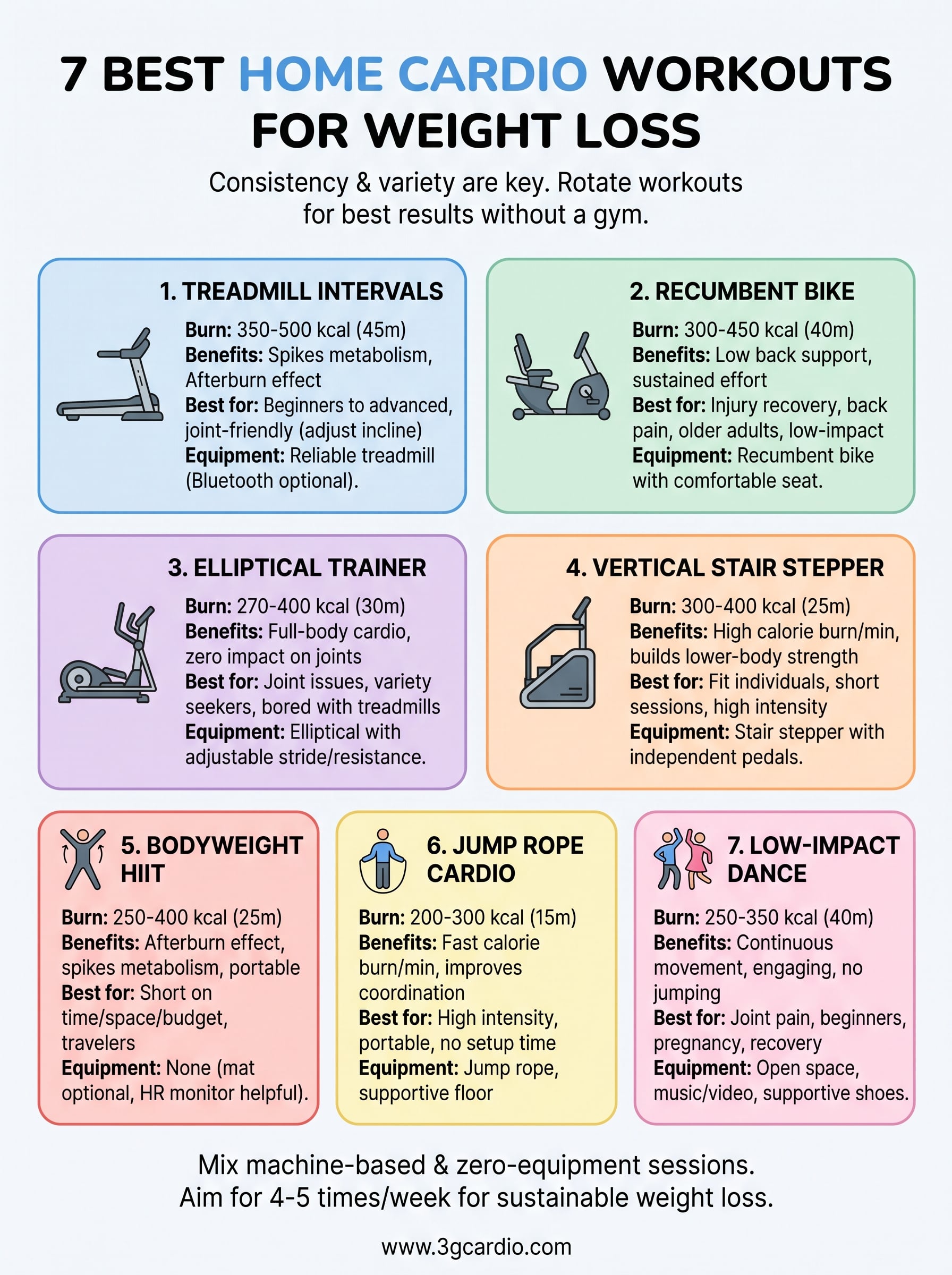
No single workout on this list will out-perform the others every week. The real formula for a home cardio workout for weight loss is rotation: pair a machine-based session like treadmill intervals or recumbent bike work with a zero-equipment option like bodyweight HIIT or jump rope, so your joints get variety and your motivation stays high. Weight loss comes from showing up 4 to 5 times a week, not from finding one perfect routine.
If you’re leaning toward equipment because you want consistent tracking, low joint strain, or a session you can measure and repeat, invest in a machine built to last. Commercial-grade construction matters once you’re using something daily instead of occasionally. Check out the full lineup of home cardio equipment at 3G Cardio to find a treadmill, bike, elliptical, or stair stepper that fits your body and your goals, backed by a warranty that reflects how seriously they build it.




Sorry, the comment form is closed at this time.