

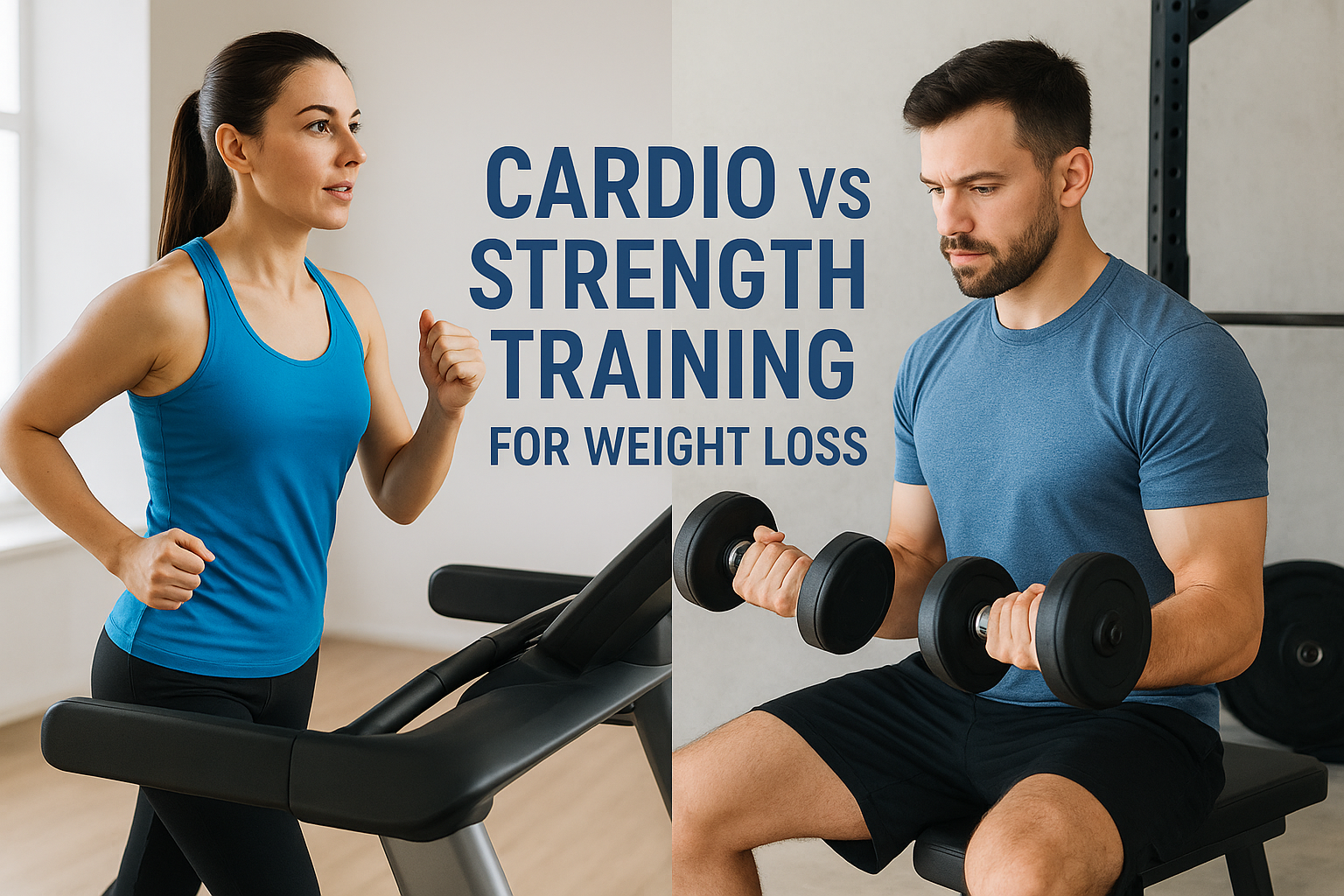
17 Jul Cardio vs Strength Training for Weight Loss: Which Wins?
You want to lose weight, and you’ve heard both sides of the argument. Cardio burns more calories per session. Strength training builds muscle that keeps burning calories at rest. The debate around cardio vs strength training for weight loss shows up in every gym conversation and fitness forum, and most answers you find online just repeat the same vague advice without settling anything.
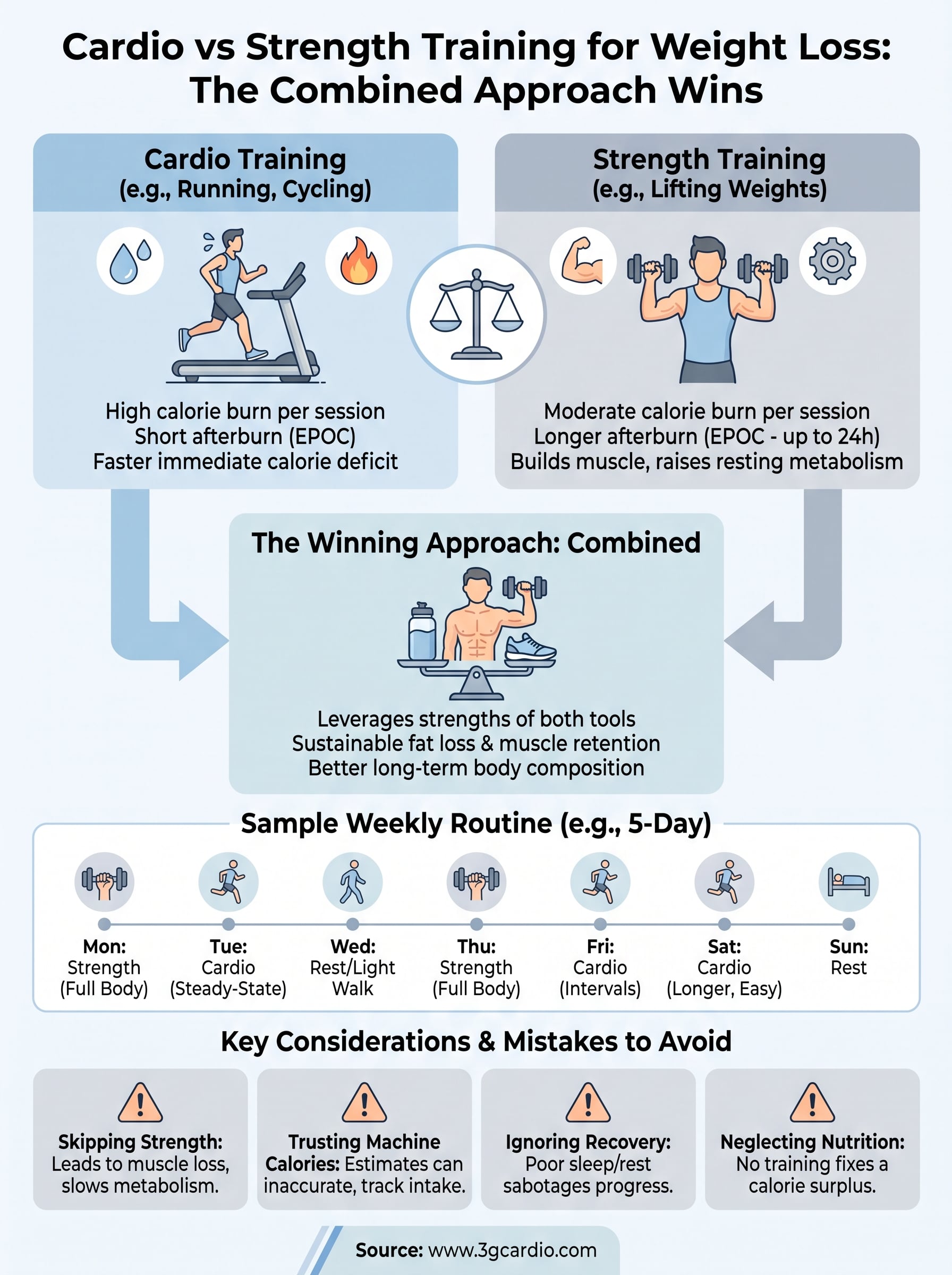
Here’s the direct answer: neither one wins alone. Cardio creates the calorie deficit faster in a single workout, while strength training protects and builds lean muscle that raises your resting metabolic rate over months and years. The real winner is a combined approach that uses each tool for what it does best, backed by consistent tracking so you know it’s working.
In this article, we break down the actual calorie burn, fat loss, and metabolic effects of each type of training, show you how they perform head to head, and explain how to structure a weekly routine that uses both. If you’re training at home, we’ll also touch on the type of equipment, like a treadmill or recumbent bike, that makes consistent cardio sessions realistic long term.
Why cardio and strength training burn fat differently
During a workout, your body pulls energy from two main systems, and cardio and strength training tap into them in almost opposite ways. Cardio training keeps your heart rate elevated for a sustained period, burning through glycogen and fat stores in real time. Strength training works in short, intense bursts that damage muscle fibers just enough to force your body to rebuild them stronger, which is a completely different metabolic process with effects that show up days later, not just during the session.
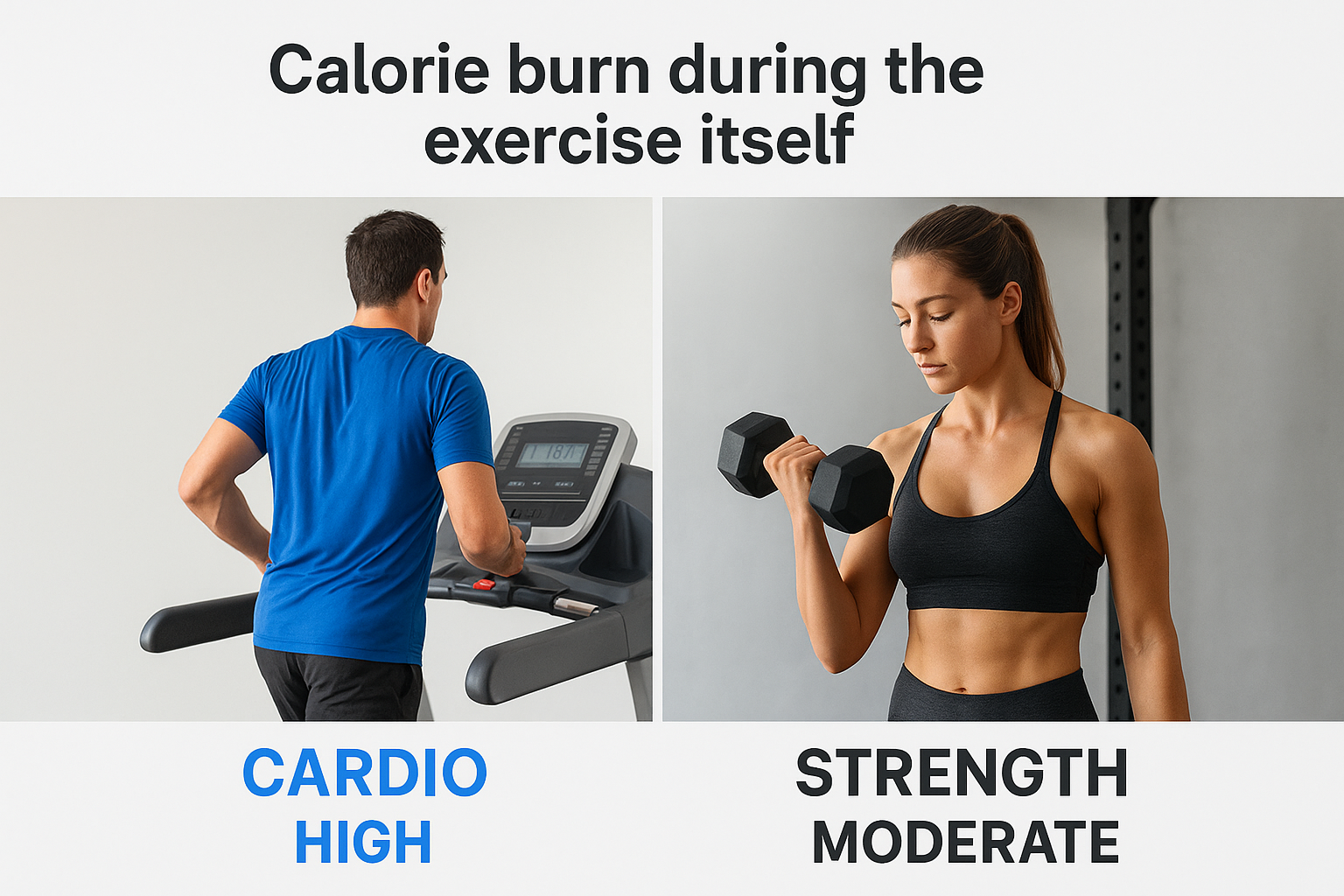
Calorie burn during the exercise itself
Running on a treadmill for 45 minutes at a moderate pace burns more calories than 45 minutes of lifting weights, and that’s just math. A 180-pound person burns roughly 400 to 500 calories during a brisk treadmill session, compared to 200 to 300 calories during a comparable strength session with rest periods between sets. This is why cardio for weight loss gets so much attention: the calorie deficit is immediate and easy to calculate. If your only goal is burning calories in the moment, steady-state cardio on a treadmill, elliptical, or recumbent bike wins that specific comparison every time.
The afterburn effect works in strength training’s favor
After you finish a strength session, your body keeps burning extra calories for hours as it repairs muscle tissue and restores oxygen levels. This is called excess post-exercise oxygen consumption, or EPOC, and it’s documented by the American Council on Exercise as lasting anywhere from a few hours up to 24 hours after intense resistance training. Cardio produces some afterburn too, but it’s smaller and shorter, especially at steady, moderate intensities. High-intensity interval training on cardio equipment narrows this gap somewhat, but traditional strength training with compound lifts still produces the longer metabolic tail.
Cardio burns more calories during the workout, but strength training keeps burning calories long after you’ve left the gym.
Muscle mass changes your resting metabolism
Muscle tissue is metabolically expensive to maintain, which means every pound of muscle you add increases the number of calories you burn just sitting still. A pound of muscle burns roughly 6 calories per day at rest, compared to about 2 calories for a pound of fat, according to research summarized by the National Academy of Sports Medicine. That difference sounds small until you build 5 to 10 pounds of lean muscle over a year of consistent strength training, which adds up to real, measurable increases in your daily calorie burn without doing anything extra. This is the mechanism behind the common advice that strength training for fat loss matters more over the long haul than most people realize, even though it doesn’t torch calories as fast in a single session.
What the research actually shows
Studies comparing the two head to head tend to land in the same place: cardio produces faster short-term weight loss on the scale, while strength training produces better body composition and long-term weight maintenance. A frequently cited study from Duke University found that participants who did aerobic exercise alone lost more total weight than those who did resistance training alone, but the resistance group lost more fat mass relative to lean mass. Neither result declares an outright winner. It just confirms that each method is solving a slightly different problem.
| Factor | Cardio | Strength Training |
|---|---|---|
| Calories burned during workout | High | Moderate |
| Afterburn (EPOC) duration | Short (1-2 hours) | Longer (up to 24 hours) |
| Effect on resting metabolism | Minimal | Significant over time |
| Best for | Fast calorie deficit | Long-term fat loss and muscle retention |
| Equipment example | Treadmill, recumbent bike, elliptical | Free weights, resistance machines |
Understanding this table matters more than picking a side. Weight loss isn’t just about the number on the scale dropping fastest, it’s about what kind of weight you lose and whether you can keep it off. Someone who only does cardio often loses muscle along with fat, which slows their metabolism over time and makes the next round of weight loss harder. Someone who only lifts weights might not create enough of a calorie deficit to see the scale move quickly, even while their body composition improves. Recognizing these tradeoffs is exactly why the next section focuses on building a routine that plays to both strengths instead of forcing you to choose one training style permanently.
How to choose the right mix for your weight loss goals
Your ideal ratio of cardio to strength training depends on what you’re actually trying to achieve, not on whatever split your favorite influencer recommends. Someone chasing a wedding date three months out needs a different plan than someone rebuilding their fitness after years of inactivity. The goal isn’t to find a universal formula, it’s to match your training split to your timeline, your starting fitness level, and how your body has responded to exercise in the past.
Start with your primary goal, not a generic split
If rapid weight loss is the priority and you have a deadline, lean toward 60 to 70 percent cardio and the rest strength training to protect the muscle you already have. If your priority is long-term body composition, meaning less fat and more visible muscle definition, flip that ratio so strength training takes the lead and cardio supports recovery and heart health. People who split time evenly between the two, roughly 50/50, tend to see the most balanced results over a full year, according to general findings from the American College of Sports Medicine on combined exercise programs.
Your training split should follow your goal, not the other way around.
Factor in how much time you actually have
Be honest about your weekly schedule before you commit to a plan you can’t sustain. A five-day training week gives you room for three cardio sessions and two strength sessions, or the reverse, without burning out. A three-day week forces harder choices, and in that case, full-body strength sessions that include short cardio intervals at the end give you more return per hour than splitting the two entirely. Consider these starting points based on available time:
- 2-3 days per week available: Combine strength and cardio in the same session using circuit-style training
- 4 days per week available: Alternate two dedicated cardio days with two dedicated strength days
- 5+ days per week available: Separate the two fully, with three cardio sessions and two to three strength sessions
Consistency beats perfection here. A realistic three-day plan you actually follow for six months outperforms an ambitious five-day plan you abandon after three weeks.
Account for your starting fitness level and joint health
Your current condition matters as much as your goal. Someone carrying significant extra weight often does better starting with low-impact cardio, like a recumbent bike or elliptical, before adding heavier strength work, since it builds cardiovascular capacity without stressing knees and hips that are already under load. Someone who is already lean but wants more visible muscle should weight the split toward strength training from day one, using cardio mainly to support recovery between lifting sessions. If you have a history of joint pain or old injuries, favor equipment and movements that let you control impact, and increase intensity gradually rather than jumping straight into high-impact intervals.
No single ratio works for everyone, and it shouldn’t. The right mix is the one that fits your schedule, protects your joints, and moves you toward the specific outcome you’re after, whether that’s a number on the scale or the way your clothes fit six months from now.
How to structure a weekly cardio and strength routine
Once you know your ratio, the next question is sequencing. Weekly structure matters because doing cardio and strength on the same day, in the wrong order, or without enough recovery between sessions can quietly sabotage the progress you’re working so hard for. A good routine isn’t complicated, but it does need a clear pattern you can repeat week after week without constantly renegotiating with yourself.
Build around a repeatable weekly template
Most people do best with a structure that separates hard strength days from cardio days, while leaving room for one or two lighter sessions that blend both. Here’s a sample week that works for someone training five days with a moderate weight loss goal:
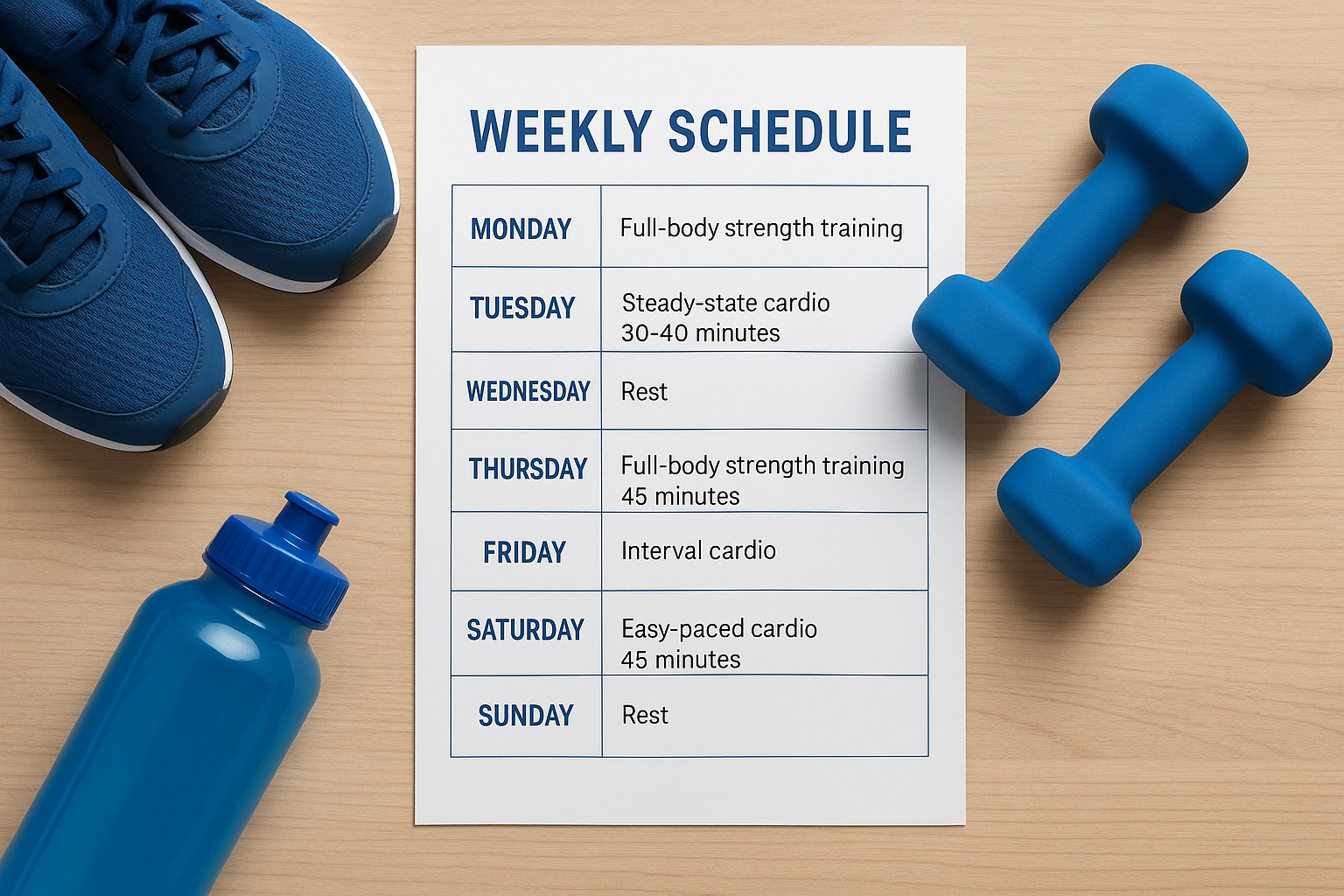
- Monday: Full-body strength training (45 minutes)
- Tuesday: Steady-state cardio on a treadmill or recumbent bike (30-40 minutes)
- Wednesday: Rest or light walking
- Thursday: Full-body strength training (45 minutes)
- Friday: Interval cardio session, alternating high and moderate effort (25-30 minutes)
- Saturday: Longer, easy-paced cardio, like a 45-minute elliptical session
- Sunday: Rest
This pattern gives your muscles 48 hours to recover between strength sessions, which is the minimum most trainers recommend for the same muscle groups, while still hitting three cardio sessions that keep your calorie deficit moving. Adjust the days, not the spacing, if your schedule shifts.
Decide what to do on days you combine both
If your week only allows three or four training days, you’ll need to combine strength and cardio in the same session more often. When you do this, train strength first while your muscles are fresh and your form is sharpest, then finish with 15 to 20 minutes of cardio. Doing cardio first tires your legs and core, which shows up as sloppy form on lifts like squats or deadlifts, and sloppy form is how people get hurt. The exception is a short 5-minute warm-up on a treadmill or bike before lifting, which raises your heart rate and loosens joints without draining your energy.
Lift while you’re fresh, do cardio when you’re already warm, and never reverse that order on a combined day.
Adjust intensity across the week instead of maxing out every session
Not every cardio session needs to be all-out, and not every strength session needs to be your heaviest lift of the month. Alternate one harder interval-style cardio day with one or two easier, steady-paced sessions, and do the same with strength, cycling between heavier lower-rep days and lighter higher-rep days. This kind of built-in variation, sometimes called periodization, keeps your joints from taking the same repetitive stress every single day and gives your nervous system a chance to recover between the sessions that push you hardest. Skipping this and treating every workout like a maximum effort is one of the fastest ways to end up injured, exhausted, or both, usually within six to eight weeks.
Follow this kind of structure for a full month before judging whether it’s working. Weekly routines take a few cycles to settle into your schedule, and small tweaks, like moving a rest day or swapping which cardio machine you use, matter far less than simply showing up on the days you planned.
Common mistakes that stall your weight loss progress
Even a well-designed plan falls apart if a few habits quietly undo your progress. Weight loss mistakes rarely look dramatic day to day, they show up as a stalled scale, frustration, and eventually giving up on a plan that was actually working. Catching these patterns early saves you months of spinning your wheels.
Doing cardio only and skipping strength work
Many people default to cardio because it feels productive and burns visible calories in real time, then avoid the weight room because it feels slower or intimidating. Over months, this approach often causes muscle loss alongside fat loss, which lowers your resting metabolic rate and makes each new round of dieting harder than the last. You end up smaller, but not stronger, and your metabolism works against you instead of for you.
Skipping strength training doesn’t just slow your results, it actively shrinks the metabolism you’re trying to protect.
Chasing calorie numbers on the machine display
Treadmill and elliptical calorie counters are estimates, not precise measurements, and they can overstate your burn by 20 to 30 percent depending on your age, weight, and the machine’s calibration. Trusting that number completely leads people to eat back calories they didn’t actually burn, which quietly erases the deficit they worked hard to create. Use the display as a rough guide for effort and consistency, not as an exact figure to build your nutrition around.
Skipping progressive overload in strength sessions
Lifting the same weights for the same reps month after month stops challenging your muscles, and without a new challenge, your body has no reason to build additional lean tissue. Watch for these signs that you’ve plateaued:
- You can complete every set without much effort by the last rep
- Your weights haven’t increased in six or more weeks
- Workouts feel routine instead of noticeably harder
Add weight, reps, or an extra set every few weeks to keep forcing adaptation, even in small increments.
Underestimating recovery and sleep
Training hard without enough sleep or rest days undermines both cardio and strength gains, since muscle repair and hormone regulation happen mostly during deep sleep. Poor recovery raises cortisol, which can increase cravings and make fat loss noticeably harder even when your training and diet look correct on paper. Skipping rest days because you feel guilty about taking a day off usually backfires within a few weeks, showing up as fatigue, irritability, or a nagging injury that forces a longer break than you would have taken voluntarily.
Treating nutrition as an afterthought
No amount of cardio or lifting fixes a diet that runs a consistent calorie surplus, and plenty of people undo an hour of hard training with one oversized snack afterward. Track your intake honestly for at least two weeks before assuming your training plan is the problem, since nutrition drives the deficit that both cardio and strength training depend on to actually produce fat loss.
Choosing home equipment that supports your routine
The best training plan on paper still fails if your equipment breaks down, feels flimsy, or bores you into skipping sessions. Home equipment quality directly affects whether you stick with the cardio and strength split you built, since a treadmill that rattles at speed or a bike seat that hurts after ten minutes gives you a reason to quit before the plan even gets a fair test. Choosing gear that matches your actual routine, not just your budget, is what turns a good plan into consistent months of training.
Match the machine to your cardio style
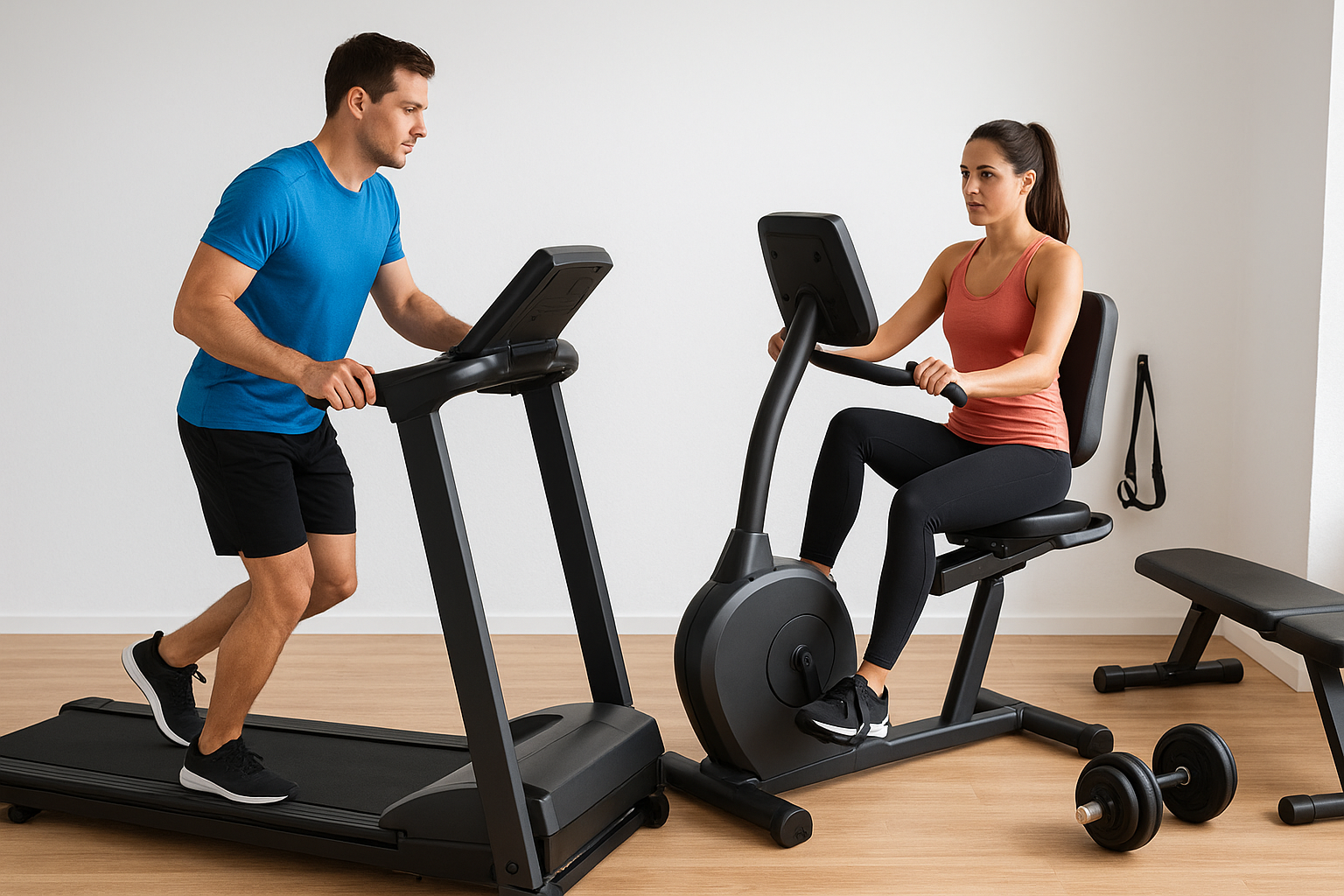
Different cardio sessions call for different machines, and owning the wrong one for your plan is a common reason people stop showing up. Steady-state cardio days work well on a treadmill or recumbent bike, since both let you settle into a pace for 30 to 45 minutes without much joint stress. Interval sessions need a machine that responds quickly when you shift from moderate to hard effort, which is where a treadmill with fast speed adjustments or an elliptical with resistance you can change mid-stride earns its price tag. If knee or hip pain limits your options, a recumbent bike or vertical stair stepper gives you a hard cardio session with far less impact than running.
| Cardio Goal | Best Equipment | Why It Works |
|---|---|---|
| Steady-state, low impact | Recumbent bike | Supports back and joints during long sessions |
| Interval training | Treadmill | Quick speed and incline changes |
| Low-impact, full-body | Elliptical | Works arms and legs without pounding joints |
| High calorie burn, low knee stress | Vertical stair stepper | Builds intensity without hard impact |
Look past the price tag to the parts underneath
Commercial-grade construction matters more than flashy screens when you’re training five or six days a week at home. Cheaper consumer machines often use lighter motors and frames built for occasional use, and they start showing wear within a year under a real training schedule. Equipment built with residential warranties that include a lifetime frame guarantee and multiple years of parts coverage, like the options on 3G Cardio’s treadmill lineup, signals that the manufacturer expects the machine to hold up under daily use, not just light weekend walks.
Buy the machine built for daily use, not the one built to look good in a showroom.
Add strength equipment that fits your actual space
You don’t need a full home gym to cover the strength side of your plan. A set of adjustable dumbbells, a bench, and resistance bands cover most compound lifts and take up a fraction of the space a rack of fixed weights requires. If your cardio machine includes Bluetooth connectivity to apps like Kinomap, pair your strength days with the same tracking habit, since seeing both types of training logged in one place makes it easier to spot when you’re neglecting one side of the split. Investing a little more upfront in equipment that fits your space and your goals almost always costs less than replacing a bargain machine twice.
Making cardio and strength work together
Stop asking which one wins. Cardio vs strength training for weight loss isn’t a competition, it’s two tools that solve different problems at the same time. Cardio burns calories fast and protects your heart. Strength training builds the muscle that keeps your metabolism working while you sleep. Use both, and you lose fat while keeping the lean tissue that makes your results last.
Your plan doesn’t need to be complicated. Pick a ratio that matches your goal, schedule your sessions so strength and cardio support each other instead of competing for recovery time, and fix the small mistakes, skipped strength work, sloppy nutrition tracking, ignored recovery, before they stall your progress.
None of that works without equipment you’ll actually use every week. Check out the full lineup at 3G Cardio and build a home setup that keeps you training on both sides of the split.




No Comments