

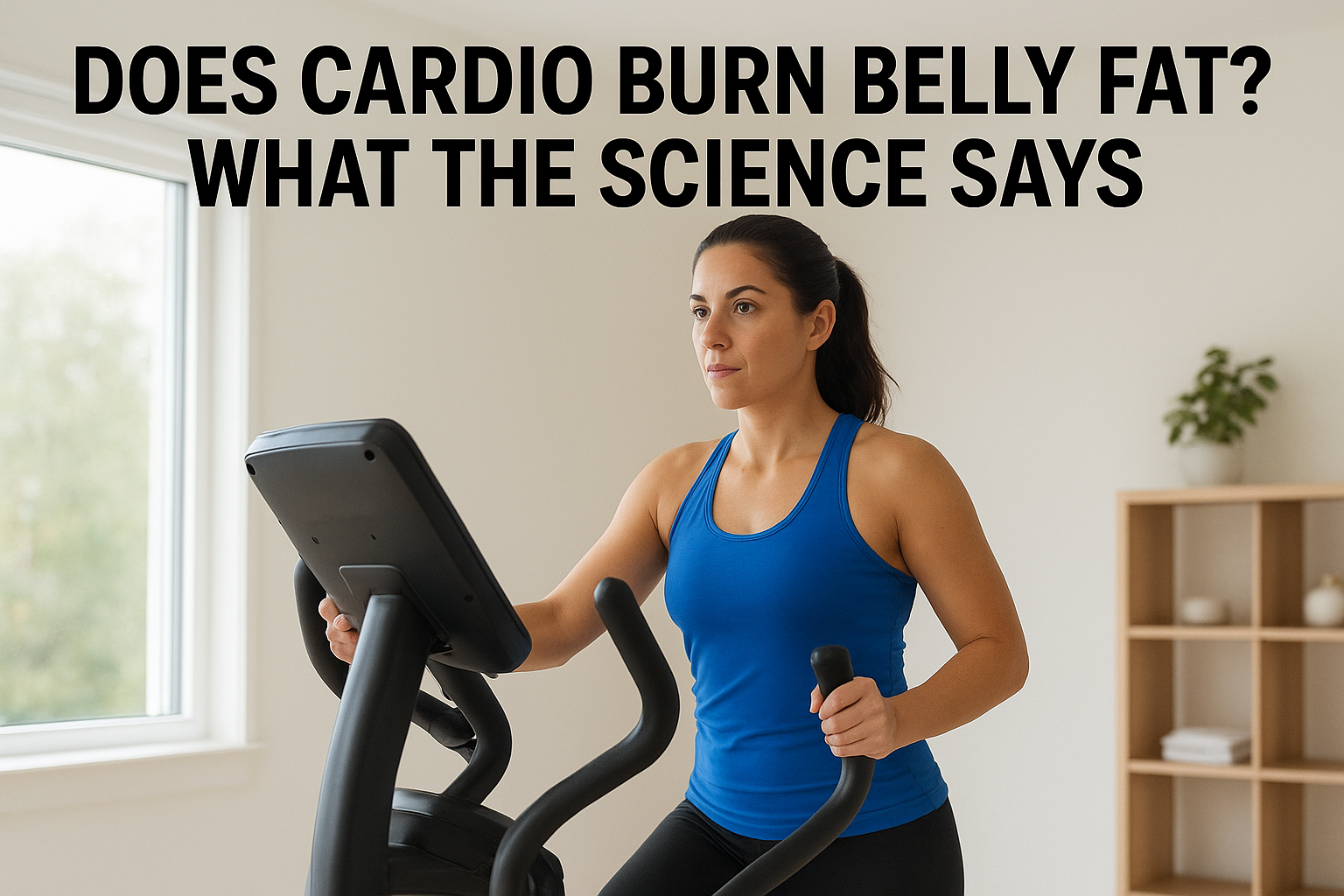
16 Jul Does Cardio Burn Belly Fat? What the Science Says
You’ve been putting in the work on the treadmill or bike, but that stubborn layer around your midsection just won’t budge. So you start wondering: does cardio burn belly fat, or is it just burning time? It’s a fair question, and the answer isn’t as simple as "just do more cardio."
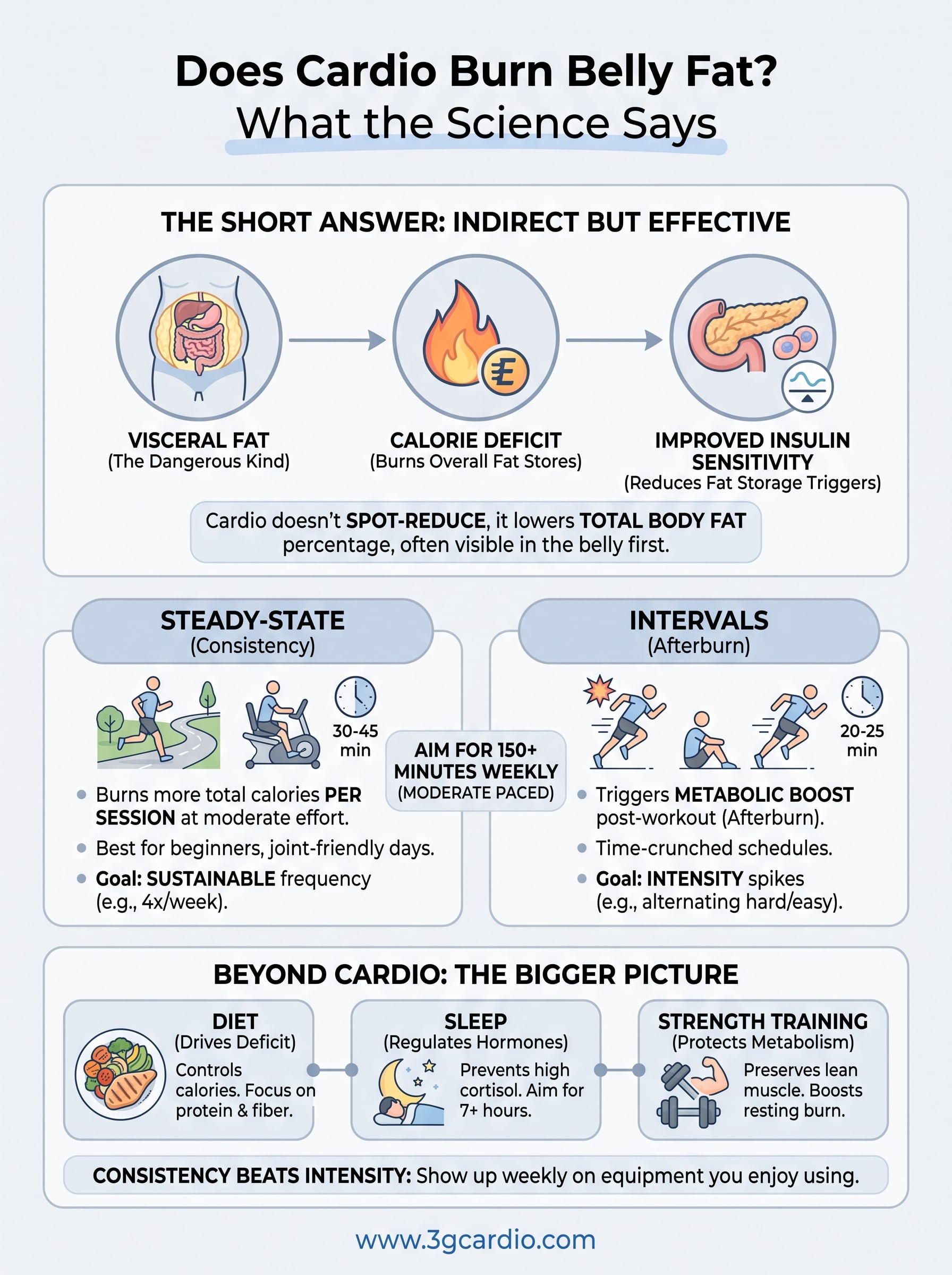
Here’s the short version: cardio does help reduce belly fat, but not by targeting it directly. Your body doesn’t let you choose where fat comes off first. What cardio actually does is create a calorie deficit and improve insulin sensitivity, two factors that are directly tied to how much visceral fat you carry around your organs and under your skin.
In this article, we’ll break down what the research actually shows, which types of cardio (steady-state versus intervals) perform best for fat loss, and how often you need to train to see real changes. We’ll also touch on why equipment choice, like a recumbent bike or treadmill you’ll actually use consistently, matters more than any single workout trick.
Why cardio matters for shrinking belly fat
Belly fat isn’t just one thing. Doctors split it into two types: subcutaneous fat, the soft layer you can pinch, and visceral fat, the deeper fat wrapped around your liver, intestines, and other organs. Visceral fat is the dangerous kind. It’s linked to insulin resistance, heart disease, and type 2 diabetes, and it responds especially well to aerobic exercise. According to the CDC, regular cardiovascular activity lowers the risk of conditions tied directly to excess visceral fat, which is exactly why cardio shows up in almost every doctor’s recommendation for reducing abdominal girth.
The calorie deficit connection
Cardio burns calories while you’re doing it, and that energy has to come from somewhere. Once your body runs through readily available glucose, it starts pulling from fat stores, including the fat around your abdomen. A 2015 study published in the Journal of Physical Activity found that participants who did aerobic exercise without changing their diet still lost measurable visceral fat over 8 to 12 weeks. No crash diet required, just consistent movement that kept them in a calorie deficit.
Cardio doesn’t melt fat off your stomach specifically, it lowers your body’s total fat percentage, and your belly is usually one of the first places that shows it.
Why you can’t spot-reduce
Here’s where a lot of people get frustrated. You can do a thousand crunches a day and your abs won’t get leaner unless your overall body fat drops. Fat loss is a whole-body process governed by hormones and energy balance, not by which muscle you’re working. Cardio helps because it’s one of the most efficient tools for creating that overall deficit without requiring you to slash calories to an uncomfortable degree.
Insulin sensitivity and stubborn fat
Cortisol and insulin both play outsized roles in how your body stores fat around the midsection. Chronic stress and poor blood sugar control tend to push fat storage toward the belly specifically, which is why some people stay lean everywhere except their stomach. Regular aerobic exercise improves how efficiently your muscles use glucose, meaning less sugar gets shuttled into fat storage. Over weeks and months, that shift shows up as a smaller waistline, even if your scale weight barely moves.
What this means for your routine
Putting this together, cardio earns its place in a belly-fat strategy for three concrete reasons:
- It burns calories that contribute directly to a deficit
- It improves insulin sensitivity, reducing fat storage triggers
- It’s sustainable enough to do consistently, which matters more than intensity alone
Consistency beats intensity here. A 30-minute session on a recumbent bike four times a week will outperform a single brutal workout you dread and skip next week.
How to structure cardio workouts for belly fat loss
Once you accept that cardio works through calorie burn and hormone regulation rather than magic, the next question is how to structure your workouts so belly fat actually comes off. Frequency, duration, and intensity all matter, but they matter less than whether you’ll actually show up week after week. Structuring your sessions around what fits your schedule beats chasing the theoretically perfect workout you’ll abandon in three weeks.
Steady-state vs. intervals
Research comparing steady-state cardio to high-intensity interval training (HIIT) shows both reduce visceral fat, but they do it differently. Steady-state sessions on a treadmill or bike burn more total calories per session at moderate effort, while interval training triggers a bigger afterburn effect, where your metabolism stays elevated for hours post-workout.
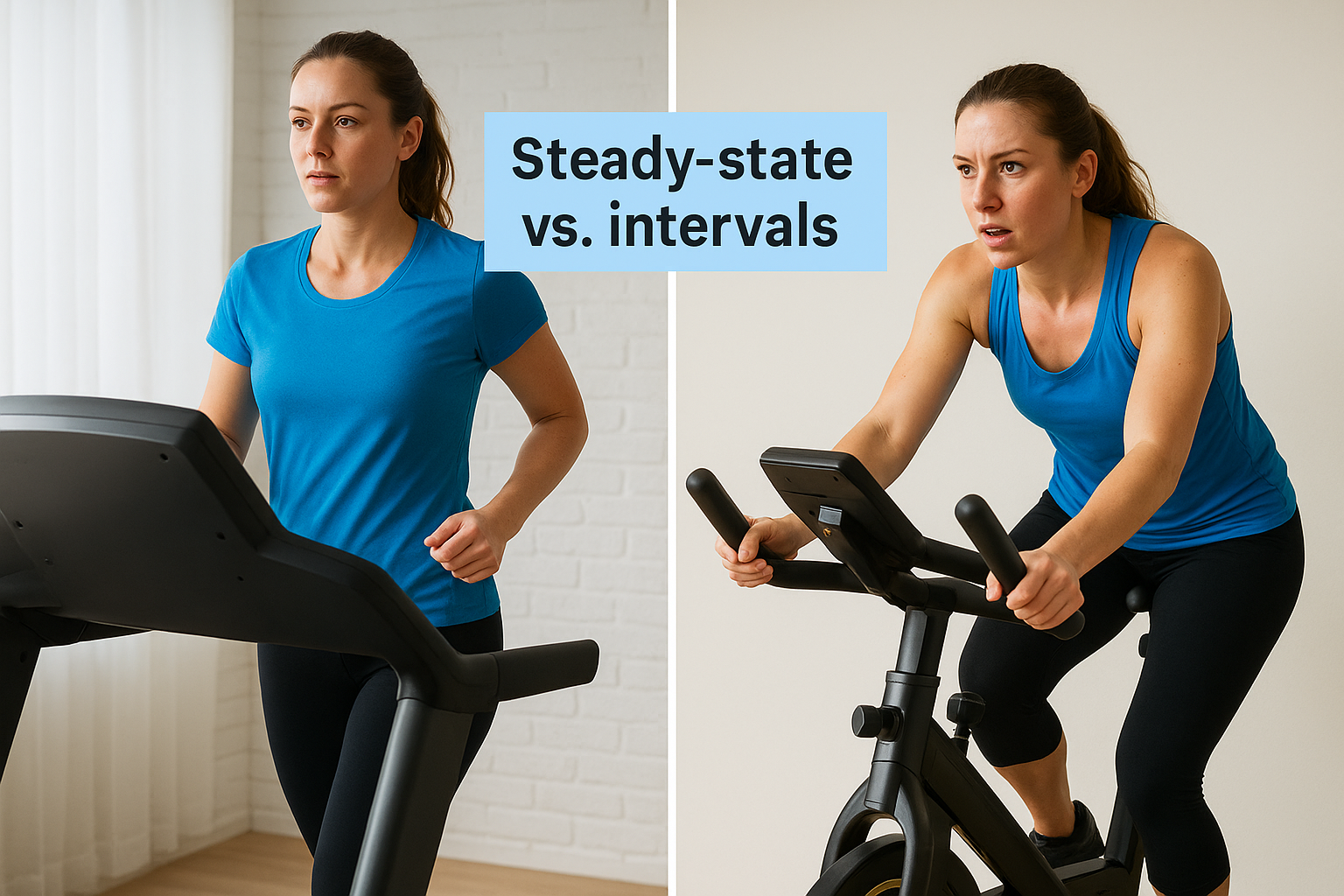
| Format | Typical Duration | Best For |
|---|---|---|
| Steady-state (moderate pace) | 30-45 minutes | Beginners, joint-friendly days, consistency |
| Intervals (alternating hard/easy) | 20-25 minutes | Time-crunched schedules, metabolic boost |
| Mixed approach | 3-4 sessions/week combined | Most people, based on the CDC’s physical activity guidelines |
The best cardio format for belly fat loss is the one you’ll repeat consistently for months, not the one that burns the most calories in a single session.
Weekly volume that actually moves the needle
Aim for at least 150 minutes of moderate cardio weekly, per CDC guidance, split into sessions that feel sustainable rather than punishing. Splitting that into four 35-40 minute sessions on a recumbent bike or treadmill tends to work better than cramming everything into two exhausting workouts.
Progressing without burning out
Gradually increase resistance, incline, or interval intensity every two to three weeks once sessions start feeling easy. Tracking your heart rate through a built-in monitor or chest strap keeps you honest about whether you’re actually working hard enough to trigger fat loss, or just going through the motions.
Best home cardio machines for burning belly fat
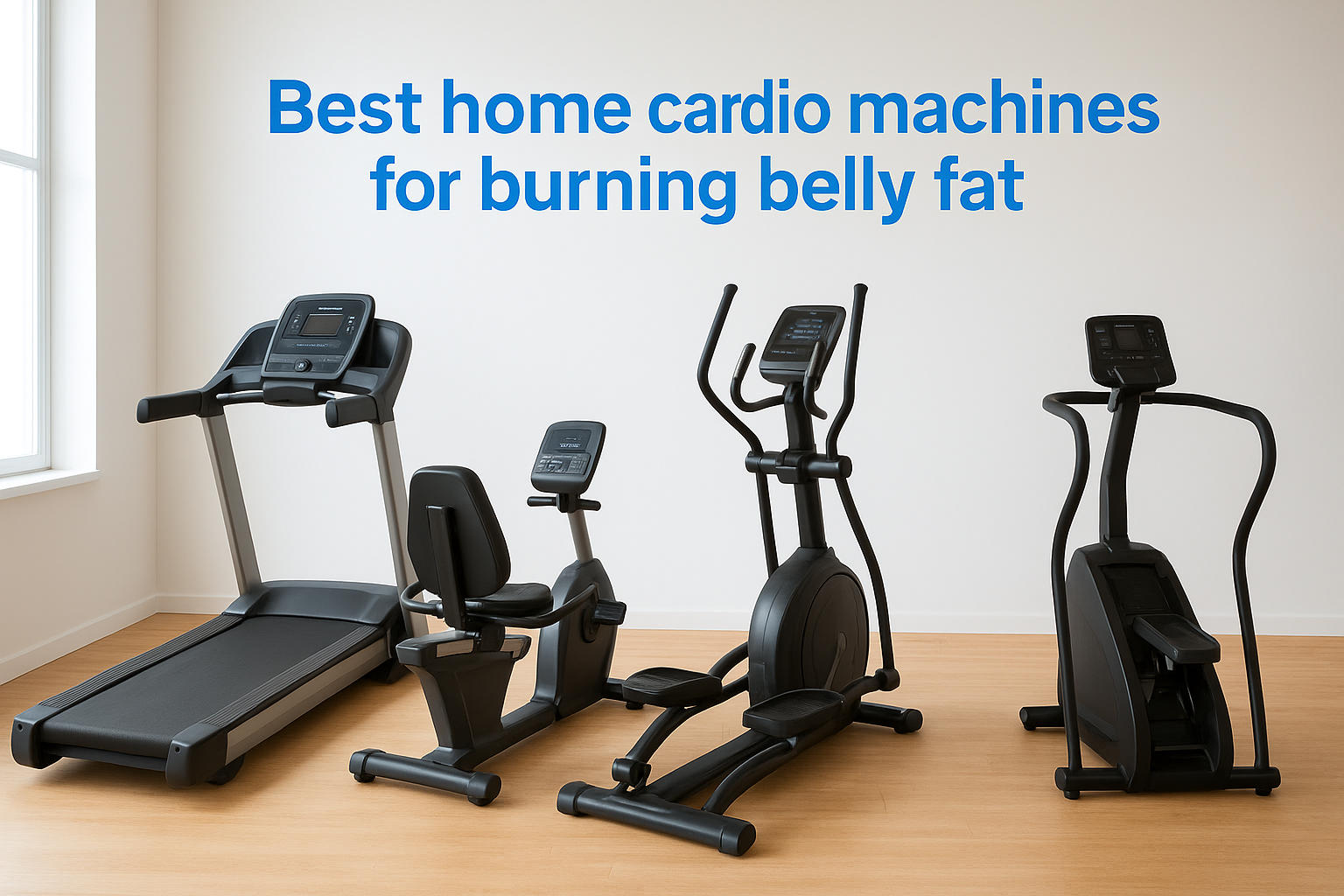
Picking the right machine matters because the best cardio workout is the one you’ll actually finish. Treadmills, recumbent bikes, ellipticals, and vertical stair steppers all burn calories effectively, but each suits different bodies and goals. If your joints ache after a run, a bike or elliptical lets you log the same calorie burn with far less impact.
Matching the machine to your body
Someone recovering from a knee injury shouldn’t force themselves onto a treadmill just because running feels like "real" cardio. A recumbent bike like the Elite RB X supports your lower back while still letting you push resistance high enough to spike your heart rate. Meanwhile, a vertical stair stepper recruits your glutes and core harder than flat walking, which adds a metabolic bump without added joint stress.
| Machine | Impact Level | Calorie Burn Potential | Best For |
|---|---|---|---|
| Treadmill (Elite Runner X) | Moderate-high | High | Runners, incline intervals |
| Recumbent bike (Elite RB X) | Low | Moderate-high | Joint issues, long steady sessions |
| Elliptical (Elite EM X) | Low | High | Full-body burn, low impact |
| Vertical stair stepper (Elite VS X) | Moderate | High | Glutes, core, metabolic boost |
The machine that burns the most belly fat is the one that keeps you moving five days a week, not the one with the highest calorie count on paper.
Why built-in tracking helps
Consoles with FreeSync FTMS Bluetooth connectivity let you sync workouts to apps like Kinomap, which keeps your heart rate zones visible and your progress logged automatically. That kind of feedback matters more than people expect, because seeing your numbers climb week over week keeps you showing up when motivation dips.
Commercial-grade construction pays off
Home machines built with residential-grade parts wear out fast under daily use, which kills consistency exactly when it matters most. Equipment built to commercial-grade specs, with adjustable resistance and stride length, holds up through years of regular sessions instead of quitting on you after six months.
Why diet, sleep, and strength training still matter
Cardio pulls a lot of weight in the belly fat conversation, but it’s not the whole story. Skip the other pillars and you’ll plateau no matter how many miles you log on the treadmill. Nutrition, sleep, and resistance training each interact with the same hormones that cardio influences, and ignoring them undercuts the progress you’re working so hard for.
Diet still drives the deficit
Eating back the calories you burn on the bike defeats the purpose of the workout entirely. A 45-minute session on the Elite RB X might burn 300-400 calories, but a single fast food meal can wipe that out in minutes. Focus on protein and fiber at each meal to control hunger, since both help you stay in a calorie deficit without feeling deprived. Track your intake for a week if you’re stalling. Most people underestimate portions by a wide margin.
Sleep regulates the hormones that store belly fat
Poor sleep raises cortisol and disrupts insulin sensitivity, both of which push fat storage straight to your midsection. The CDC recommends seven or more hours nightly for adults, and research consistently links short sleep to higher visceral fat regardless of exercise habits. Fix your sleep before adding another cardio session. It’s often the faster lever.
You can out-train a bad diet for a while, but you can’t out-train chronic sleep deprivation.
Strength training protects your metabolism
Muscle tissue burns calories at rest, so losing it while dieting slows your metabolism exactly when you need it working hardest. Two strength training sessions a week preserve lean mass while cardio handles the calorie burn, and the combination outperforms either approach alone. Bodyweight squats, rows, and presses cover the basics without requiring a gym membership.
Putting cardio to work for a leaner belly
So, does cardio burn belly fat? Yes, but only as part of a bigger picture. Consistent aerobic exercise creates the calorie deficit and hormonal shift that shrink visceral fat over time, while diet, sleep, and strength training keep that progress from stalling out. Chasing a perfect workout isn’t the goal here. Showing up four or five times a week on equipment you actually enjoy using is what moves the needle month after month.
The biggest factor separating people who succeed from people who quit isn’t willpower, it’s whether their machine holds up and stays comfortable enough to use daily. A durable, low-impact machine removes the excuses that derail most home fitness plans by month three.
If you’re ready to build a routine you’ll stick with, check out the full lineup of home cardio equipment and find the machine that fits your body and your goals.




Sorry, the comment form is closed at this time.