

20 Apr Treadmill Buying Guide: How to Choose the Right One
Shopping for a treadmill without a plan is how people end up with a $600 machine that rattles apart in a year or a $3,000 machine loaded with features they never touch. A solid treadmill buying guide cuts through the marketing and focuses on what actually determines whether a treadmill lasts and performs: motor power, belt size, frame construction, and warranty terms.
If you’re wondering where to start, focus on matching the machine to how you’ll actually use it. A continuous-duty motor rated for your body weight and running style matters more than touchscreen size. So does a frame warranty that reflects real confidence in the build, not a marketing gimmick that expires the moment you unbox it.
We’ve built commercial-grade cardio equipment in Arizona for years, and we’ve seen firsthand which specs predict a treadmill that holds up and which ones just look good in a showroom. This guide walks through price ranges, motor and deck specifications, noise levels, app connectivity, and the warranty red flags to watch for, so you can buy once and run for years.
What to know before you start shopping for a treadmill
Most people shop for a treadmill the same way they shop for a TV: they compare screen size, touch buttons, and let the flashiest console win. That approach backfires with cardio equipment. A treadmill buying guide worth reading starts with the mechanical parts that determine how long the machine survives daily use, not the parts that look good in a store display. Before you compare a single model, you need to understand which specs are load-bearing and which ones are just decoration.
The specs that actually predict longevity
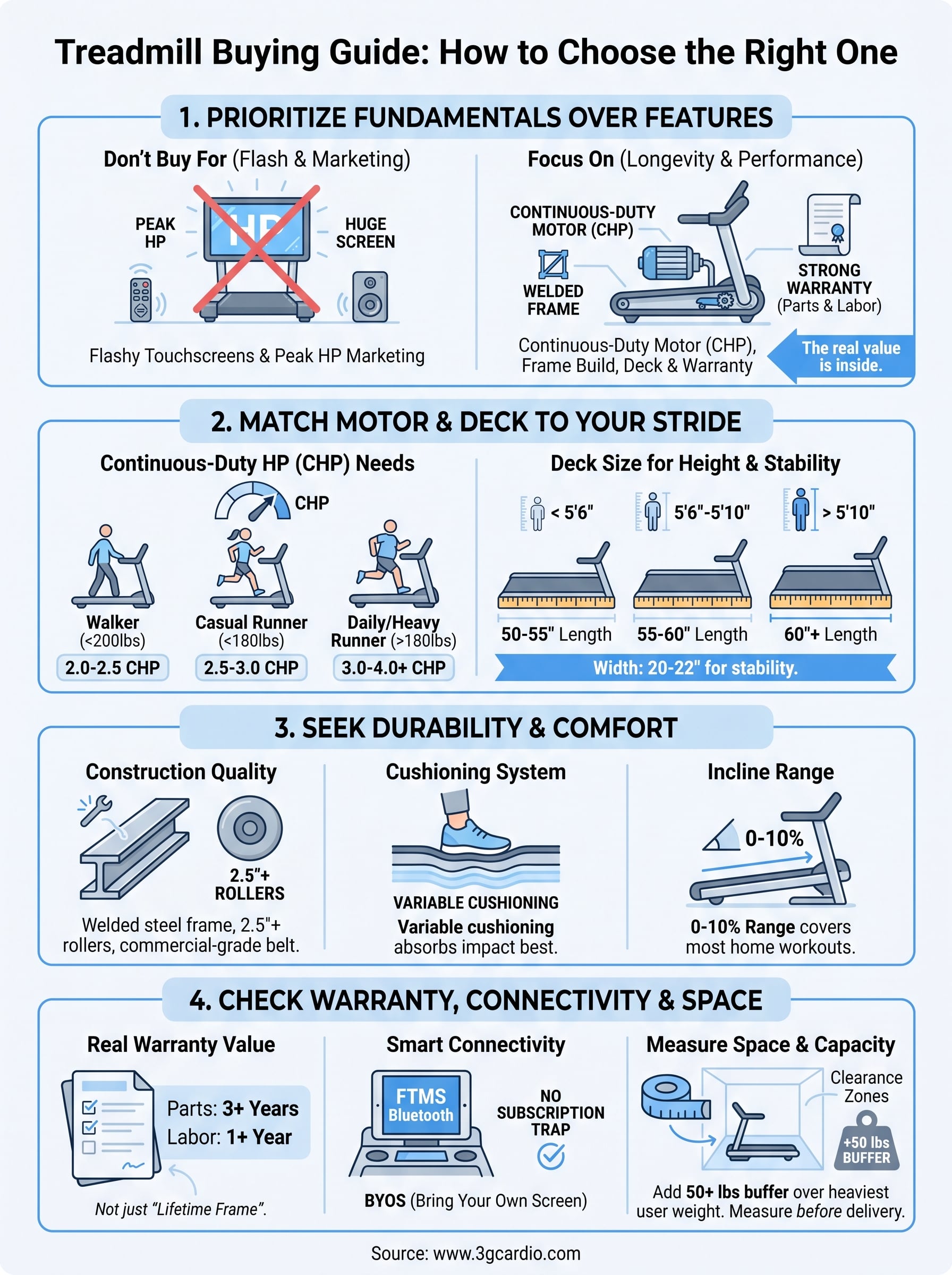
Four things determine whether a treadmill lasts five years or fifteen: motor duty rating, frame and deck construction, belt quality, and roller size. A continuous-duty motor means the horsepower rating holds up under sustained running, not just a quick burst during a treadmill test at the store. Cheap motors advertise peak horsepower, which is a number that only shows up for a few seconds before the motor throttles back. Frame construction matters just as much. Steel gauge, welded joints versus bolted brackets, and deck thickness all affect how the machine handles impact over thousands of miles.
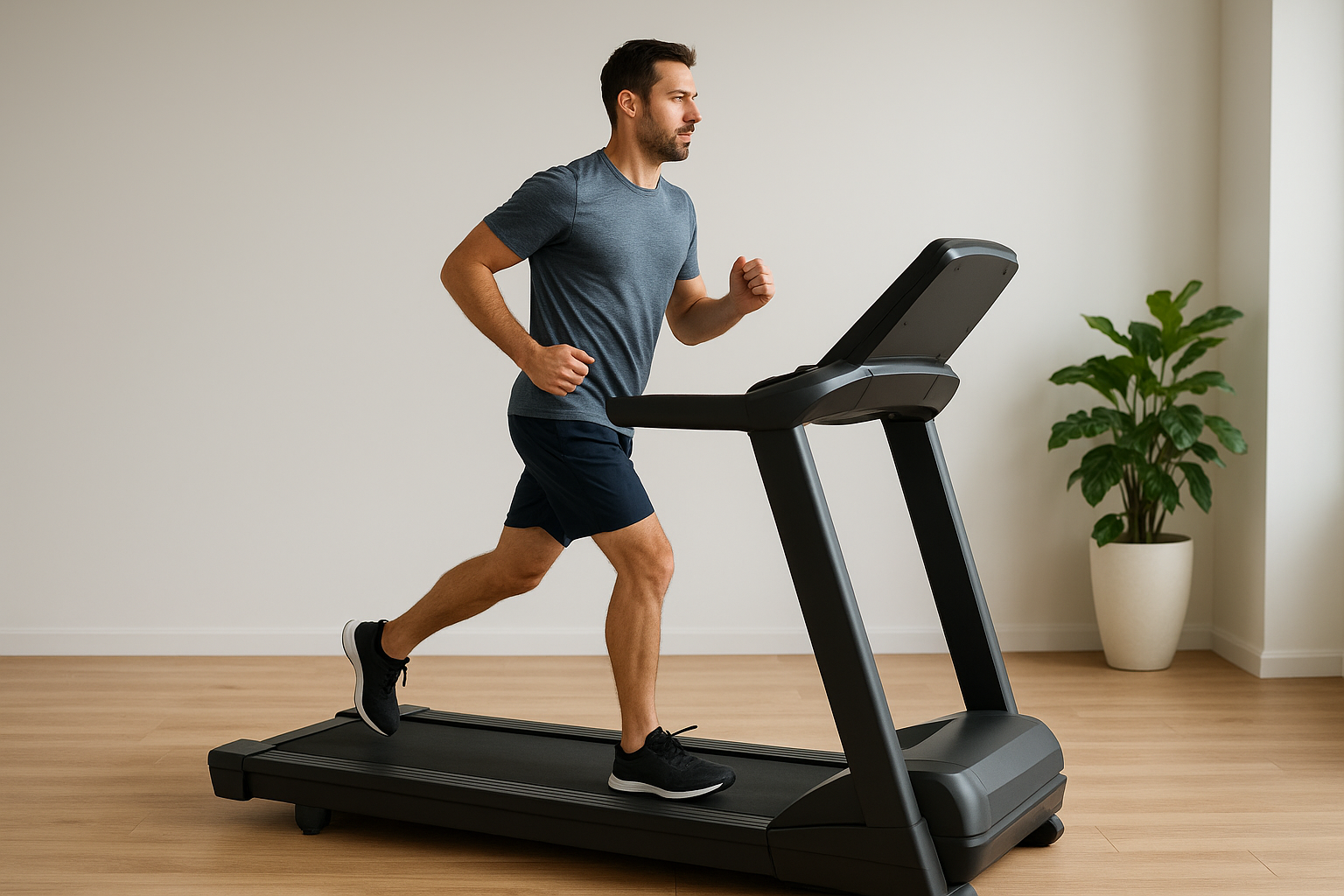
The motor and frame decide how long a treadmill lasts. Everything else is just convenience.
Roller size is the detail almost nobody checks, and it’s one of the biggest predictors of belt life and running smoothness. Bigger rollers, generally 2.5 inches or larger in diameter, spread the belt’s friction over more surface area, which means less heat buildup and less wear on the belt and deck over time.
Common mistakes that waste your money
Buyers who skip the fundamentals almost always regret it within a year or two. Here’s what trips people up most often when they buy without a plan:
- Buying on touchscreen size alone. A 22-inch display doesn’t matter if the motor can’t handle your weight and pace for 30 minutes straight.
- Ignoring the fine print on warranties. A “lifetime” warranty that only covers the frame, with parts coverage capped at 90 days, isn’t the deal it sounds like.
- Underestimating deck length for their height. Runners taller than 5’10” need at least a 60-inch deck to avoid clipping the front rail mid-stride.
- Assuming all horsepower ratings mean the same thing. Peak horsepower and continuous-duty horsepower are not interchangeable, and manufacturers rarely make the distinction obvious.
- Skipping the return-policy details. Big-box retailers often charge restocking fees of 15% to 20% if you need to send a treadmill back after assembly.
Who this guide is for
This guide works whether you’re outfitting a home gym for daily runs or adding a low-impact cardio option to recover from injury. The specs and priorities shift depending on your goals, so it helps to know where you land before you start comparing models.
| Buyer type | Priority specs | Typical use |
|---|---|---|
| Daily runner | Motor duty rating, deck length, cushioning | Training runs, race prep |
| Walker or low-impact user | Belt width, incline range, noise level | Rehab, weight management |
| Multi-user household | Weight capacity, warranty terms, console durability | Shared family equipment |
| Small commercial space | Commercial warranty, continuous-duty motor, frame rating | Light commercial or rental use |
Once you know which category fits you, the rest of this treadmill buying guide gets a lot easier to apply. You’ll spend less time chasing features that don’t matter to your situation and more time confirming the specs that do. The next seven steps walk through exactly how to do that, starting with matching the treadmill type to your actual training goals.
Step 1. Match the treadmill type to your goals
Start with why you’re buying a treadmill before you look at a single model, because the answer changes which spec actually matters. A treadmill buying guide only helps if you apply it to your specific use case, and most shoppers skip this step, jumping straight to price comparisons before deciding whether they need a running-focused machine or one built mainly for walking.
Running machines vs. walking machines
Runners put far more stress on a treadmill than walkers do, and the specs that matter shift accordingly. If you’re training for races or running daily miles, you need a continuous-duty motor rated at 3.0 CHP or higher and a deck at least 60 inches long so your stride has room at speed. Walkers and low-impact users can get by with a smaller motor, but they should prioritize a wider belt and a smooth incline range, since walking programs often lean on grade changes instead of speed to raise intensity.
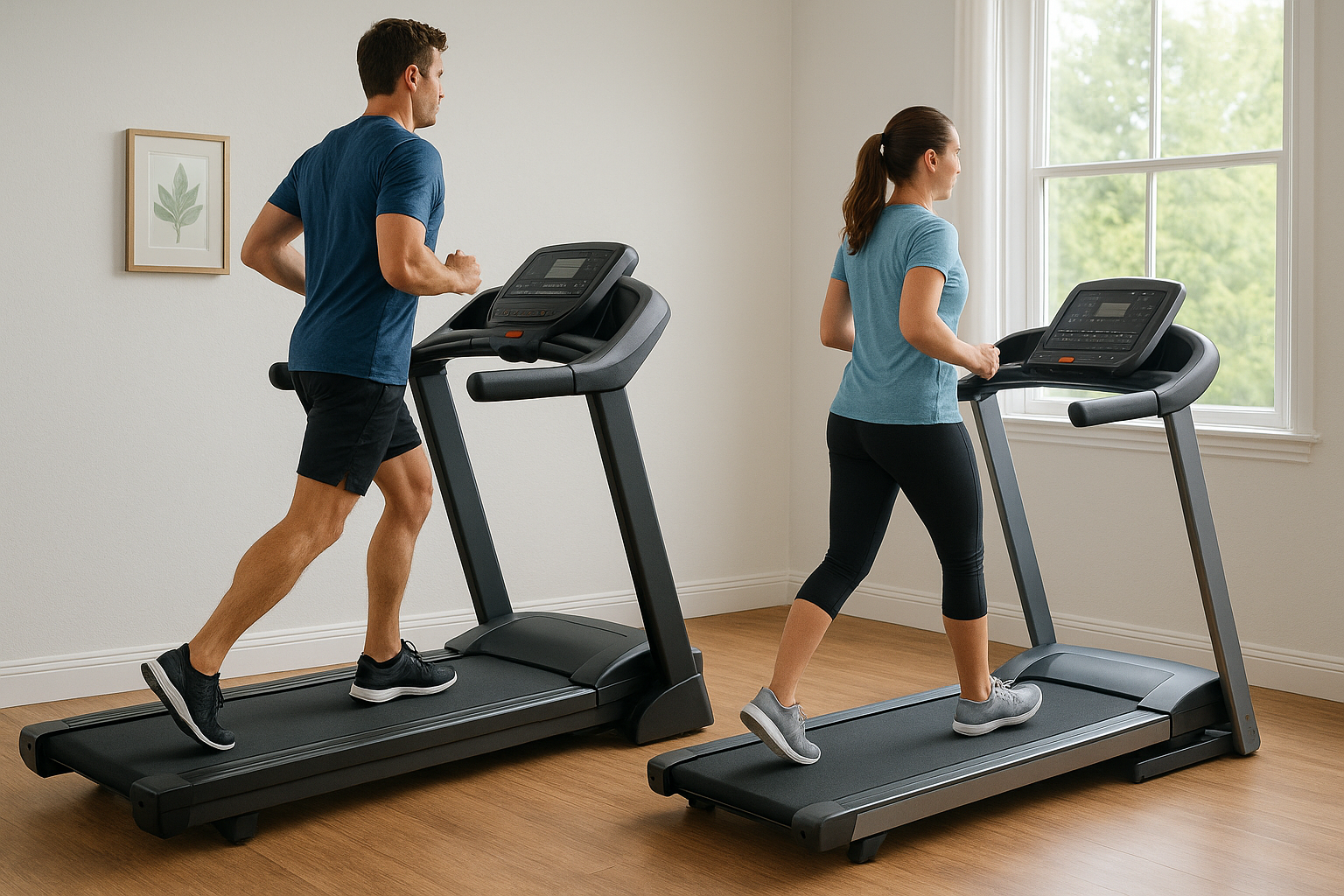
Buy for the workouts you’ll actually do, not the ones you imagine doing someday.
Folding vs. fixed-frame designs
Space constraints push a lot of buyers toward folding treadmills, and that’s a reasonable trade-off as long as you understand what you’re giving up. Folding frames use a hinge point that, over years of daily lifting and lowering, can loosen and introduce wobble that a fixed frame never develops. Fixed-frame treadmills also tend to handle higher weight capacities and faster top speeds, which matters if more than one person in the house will be running on it.
Matching type to your household
Think about who else will use the machine, because a treadmill bought for one runner’s marathon training won’t necessarily suit a spouse who walks at 2.5 mph or a teenager doing interval sprints. Multi-user households do best with a machine that covers the widest range of speed and incline, even if no single person needs the extremes.
| Treadmill type | Best for | Priority spec | Typical use case |
|---|---|---|---|
| Running-focused, fixed frame | Daily runners, race training | 3.0+ CHP continuous motor, 60″+ deck | Marathon prep, tempo runs |
| Walking-focused, compact | Low-impact users, rehab | Belt width, incline smoothness | Weight management, recovery |
| Folding, space-saving | Small rooms, apartments | Frame stability, storage mechanism | Occasional use, mixed household |
| Multi-user, wide range | Families sharing one machine | Speed range, weight capacity | Shared home gym |
Once you’ve placed yourself in one of these categories, you can move on to setting a realistic budget, since the type you need directly narrows the price range you should actually be shopping in.
Step 2. Set your budget
Money determines which specs you can actually get, so it helps to know what each price tier buys before you start browsing. A treadmill buying guide that skips price ranges leaves you guessing whether $1,500 or $3,500 is the right number for what you need, and that gap represents real differences in motor duty rating, frame steel, and warranty depth, not just cosmetic upgrades.
What separates budget, mid-range, and premium machines
Below $1,000, you’re almost always looking at a treadmill built for occasional walking, with a motor that struggles past 6 mph and a frame that won’t survive daily running. The $1,500 to $2,500 range is where commercial-grade construction starts showing up: continuous-duty motors rated at 3.0 CHP or higher, thicker decks, and warranties that actually cover parts for more than a year. Above $2,500, you’re paying for extras like larger touchscreens, longer decks, and higher weight capacities, but the core durability gains taper off once you’re past that mid-range threshold.
Spend on the motor and frame first. Everything above that is convenience, not durability.
A price breakdown you can use while shopping
| Price range | What you typically get | Best for |
|---|---|---|
| Under $1,000 | Light-duty motor, thin deck, short warranty | Occasional walking, light use |
| $1,000 to $1,500 | Entry commercial motor, basic cushioning | Casual home use, walkers |
| $1,500 to $2,500 | 3.0+ CHP continuous motor, solid frame, longer warranty | Daily runners, multi-user homes |
| $2,500 and up | Larger deck, premium console, extended weight capacity | Serious runners, small commercial use |
Use this table as a starting filter before you dig into individual listings. If a treadmill priced at $1,200 claims a 4.0 CHP continuous motor, that’s a red flag worth double-checking against the manufacturer’s spec sheet rather than taking the marketing copy at face value.
Financing and total cost of ownership
Options like 0% financing plans can make a $2,500 treadmill fit into a monthly budget without draining savings all at once, and plenty of manufacturers, including 3G Cardio, offer this through services like PayPal Credit. Remember that the sticker price isn’t the whole story. Factor in delivery, whether it’s free curbside drop-off or a paid White Glove installation, plus any accessories like a mat or a heart rate strap that might not be included.
Rather than fixating on the lowest number you can find, think about cost per year of expected use. A $2,200 treadmill that lasts twelve years costs less annually than an $800 treadmill you replace every two years. Once your budget range is set, the next step is verifying that the motor inside your price bracket can actually deliver the horsepower and speed range your training demands.
Step 3. Check the motor’s horsepower and speed range
Once your budget narrows the field, the motor spec sheet tells you which treadmills in that range are actually built to handle your training. A treadmill buying guide that skips motor terminology leaves you vulnerable to marketing language designed to make a weak motor look strong, and the difference between two treadmills that look identical on paper often comes down entirely to how the horsepower is measured.
Continuous-duty vs. peak horsepower
Manufacturers list horsepower two ways, and only one of them tells you anything useful. Peak horsepower measures a brief burst the motor can hit for a few seconds under no real load, and it’s the number you’ll see plastered on budget treadmills because it looks impressive. Continuous-duty horsepower, sometimes labeled CHP, measures what the motor sustains under real running conditions for an extended period. A motor rated at 4.0 peak HP might only deliver 2.0 CHP, which won’t hold up if you run for 45 minutes at 6 mph.
Ignore peak horsepower entirely. Continuous-duty horsepower is the only number that predicts real performance.
Matching horsepower to your body weight and pace
Heavier users and faster runners put more strain on a motor, so the CHP rating you need scales with both factors. Walkers under 200 pounds can get by with 2.0 to 2.5 CHP, but runners, especially those over 180 pounds, should look for 3.0 CHP or higher to avoid the motor bogging down mid-run.
| User profile | Minimum CHP | Recommended top speed |
|---|---|---|
| Walker, under 200 lbs | 2.0-2.5 CHP | 4 mph |
| Casual runner, under 180 lbs | 2.5-3.0 CHP | 8-10 mph |
| Daily runner, any weight | 3.0-4.0 CHP | 10-12 mph |
| Heavier or multi-user household | 3.5-4.0 CHP | 10-12 mph |
Speed range and how it affects your workouts
Speed range matters just as much as horsepower, since a motor can technically hit a top speed without sustaining it well. Sprint intervals demand a treadmill that ramps up quickly and holds speeds above 10 mph without lag, while walkers rarely need anything past 4 mph but benefit more from a motor that runs quietly at low speeds. Testing this in a showroom is nearly impossible, so check the manufacturer’s published CHP rating directly rather than trusting a quick five-minute walk on the display model.
Understanding your ideal CHP and speed range also helps you avoid overpaying for capability you won’t use. There’s no reason to spend extra on a 4.0 CHP motor rated for 12 mph if you’re walking at 3 mph three times a week. Once you’ve matched the motor to your actual training pace and body weight, the next thing to verify is whether the treadmill’s physical footprint, especially the deck size, actually fits your space and your stride.
Step 4. Measure your space and check the deck size
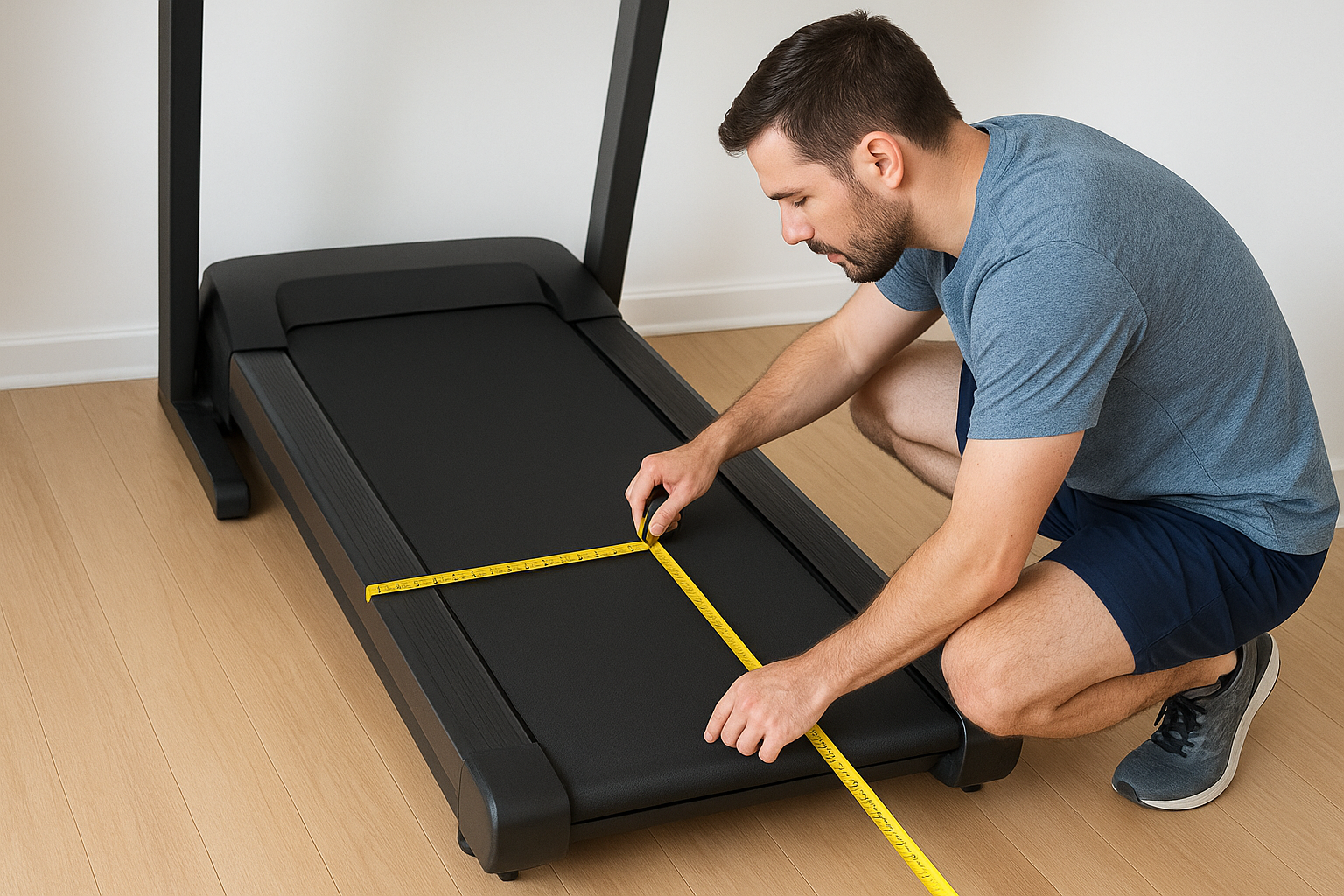
Before you fall in love with a specific model, grab a tape measure and figure out what will actually fit in your house. A treadmill buying guide that skips room measurements sets you up for a machine that blocks a doorway or forces you to run with your arms brushing a wall. Deck size and floor footprint matter just as much as motor specs, because a treadmill that’s too small for your stride or too big for your room turns into an expensive obstacle instead of a workout tool.
Room dimensions you need before you buy
Measure the space where the treadmill will actually live, not just the floor footprint of the machine itself. You need clearance behind the belt for safe dismounts, overhead room if you’re tall or plan to add a fan or shelf, and enough width that the console doesn’t sit inches from a wall.
- Length: Add at least 24 inches behind the treadmill for a safe stepping-off zone.
- Width: Leave 20 inches of clearance on each side if the room allows it.
- Height: Check ceiling clearance, especially in basements, since the console can add 5 to 6 inches to your standing height.
- Power access: Confirm an outlet sits within reach, since most treadmills need a dedicated circuit and shouldn’t run off an extension cord.
Deck length and width by height and use
Deck length matters more than most buyers expect, and it’s directly tied to your height and stride length. Someone 5’6″ can run comfortably on a 55-inch deck, but a runner over 6 feet will feel cramped and risk clipping the front rail mid-stride on anything shorter than 60 inches.
| Height | Minimum deck length | Recommended deck width |
|---|---|---|
| Under 5’6″ | 50-55 inches | 18-20 inches |
| 5’6″ to 5’10” | 55-60 inches | 20 inches |
| Over 5’10” | 60-63 inches | 20-22 inches |
| Runners at any height | 60+ inches | 20-22 inches |
A cramped deck doesn’t just feel uncomfortable, it’s a real fall risk at running speed.
Width deserves attention too, since a narrower deck can feel unstable at higher speeds even if the length is generous. Twenty inches is the practical minimum for anyone running regularly, while walkers can manage with slightly less.
Folding clearance and floor space
Folding treadmills solve a lot of space problems, but they come with their own measurement quirks. You still need clearance for the fold itself, plus enough ceiling height for the machine to stand upright in storage mode without hitting a sloped ceiling or light fixture. Check the folded footprint listed in the spec sheet, since some folding models save floor length but barely shrink in width.
Once you’ve confirmed the deck and room dimensions actually work in your space, the next thing worth checking is how the ride feels once you’re on the belt, which comes down to cushioning, incline range, and how much noise the machine makes while you run.
Step 5. Compare cushioning, incline, and noise levels
Once the deck fits your space and stride, the next question is how it feels to actually run on it, which comes down to three things: cushioning, incline range, and noise. A treadmill buying guide that only covers motor and frame specs misses the part of the machine you’ll notice every single workout. Get these wrong and you end up with a treadmill that’s technically powerful enough but uncomfortable or disruptive enough that you stop using it.
Cushioning systems and joint impact
Good cushioning absorbs impact at the belt-deck interface, and it matters most for runners logging daily miles or anyone recovering from knee or hip issues. Look for variable cushioning that softens toward the front of the deck where your heel strikes and firms up toward the back where you push off, since a flat, uniform deck transmits more shock straight into your joints. Cheaper decks skip this entirely and rely on a single foam layer that compresses unevenly within a year of regular use.
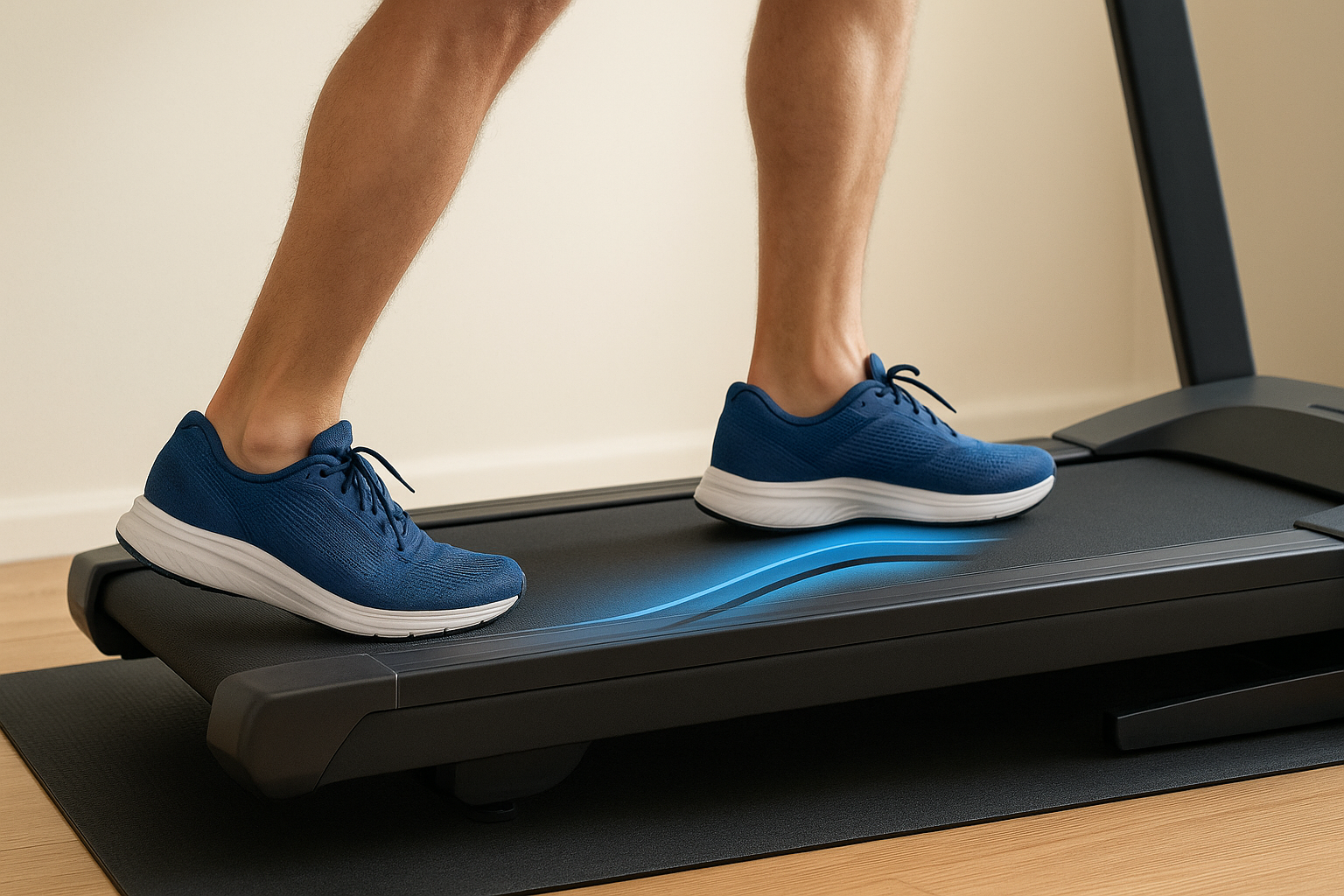
Cushioning quality decides whether your knees feel fine after a 5-mile run or ache the next morning.
Incline range and what it actually does for your workout
Incline changes the intensity of a workout more than speed does for most people, and it’s especially useful for walkers who want a harder session without running. A 0 to 10% incline range covers most home training needs, including hill-simulation programs and fat-burning walk intervals, while anything below 10% starts limiting your options for serious incline training.
| Incline range | Best for | Limitation |
|---|---|---|
| 0-6% | Light walking, casual use | Can’t simulate steep hill training |
| 0-10% | Most home runners and walkers | Covers nearly all standard programs |
| 0-12%+ | Serious hill training, athletes | Rarely needed outside dedicated training |
Noise levels and where the treadmill will live
Motor and belt noise varies more between models than most shoppers expect, and it matters a lot if your treadmill sits near a bedroom, a shared wall, or a living room where someone else is watching TV. Belt-drive systems with larger rollers tend to run quieter than budget models with small rollers and thin belts, since more surface contact means less friction noise at speed. Ask for a decibel rating if the manufacturer publishes one, and treat any listing that doesn’t mention noise level at all as a sign the company hasn’t tested it under real running conditions.
Setting up on a rubber mat also cuts vibration noise transferred to the floor below, which matters more in apartments and multi-story homes than in a garage or basement gym. Once cushioning, incline, and noise match what your space and body need, you’re ready to look at connectivity and programming, the features that shape your day-to-day workout experience.
Step 6. Decide on connectivity and programming needs
Once the treadmill feels right under your feet, the next question is what it can do for your workouts beyond just running in place. A treadmill buying guide wouldn’t be complete without covering connectivity, since app support and built-in programming shape whether you actually stick with a routine or get bored within a month. This step is less about mechanical durability and more about whether the console fits how you like to train.
Bluetooth connectivity and app compatibility
Most treadmills now include some form of Bluetooth, but the quality of that connection varies a lot between brands. FTMS Bluetooth (Fitness Machine Service protocol) is the standard worth looking for, since it lets the treadmill talk directly to third-party apps like Zwift, Kinomap, or a fitness tracker without a proprietary bridge app getting in the way. Treadmills built around “Bring Your Own Screen” (BYOS) technology skip the built-in tablet entirely, letting you mount your own phone or tablet and run whatever app you already pay for. That approach saves money upfront and avoids paying for a console that becomes outdated in two years while your phone keeps improving.
Buy the motor and frame for durability, but buy the connectivity for whatever app you’ll actually use.
Built-in programs vs. streaming workouts
Built-in programs are convenient out of the box, but they rarely match the depth of a dedicated app subscription. Ask these questions before deciding how much you need built into the console itself:
- Do you already use a fitness app? If you’re loyal to a specific platform, prioritize FTMS compatibility over onboard programs.
- Do you want guided coaching? Some apps sync incline and speed automatically during a workout, which most standalone consoles can’t replicate.
- Will you use heart rate data? Look for a treadmill that includes a wireless heart rate strap rather than relying only on handlebar sensors, which are notoriously inaccurate.
- Do you need offline workouts? If your internet connection is unreliable near the treadmill, built-in programs stored on the console matter more.
Avoiding subscription traps
Some treadmill brands lock their best programming behind a required monthly subscription, and that cost adds up fast over the life of the machine. A $39-a-month subscription runs over $2,300 across five years, often exceeding what you paid for the treadmill itself. Look specifically for equipment that connects to apps you already own or pay for separately, rather than one that forces a proprietary subscription just to unlock incline control or coaching features. Once you’ve settled on how you want to train day to day, the last thing to check before buying is the fine print: warranty coverage, weight capacity, and how the treadmill actually gets into your house.
Step 7. Check warranty, capacity, and delivery
Before you finalize a purchase, the fine print determines whether you’re protected if something breaks or stuck paying out of pocket for a repair six months in. A treadmill buying guide isn’t complete without covering warranty terms, weight capacity, and delivery, because these details rarely show up in the flashy product photos but decide how much the ownership experience actually costs you over time.
Warranty terms that actually matter
Companies love the word “lifetime” on a warranty label, but that term almost always applies to the frame alone, not the motor, electronics, or labor. Ask specifically how long parts are covered and how long labor is covered, since a treadmill with a lifetime frame warranty but only 90 days of parts coverage will cost you a service call the first time a belt or roller fails. Look for residential warranties that cover parts for at least three years and labor for at least one year, and treat anything shorter as a sign the manufacturer doesn’t fully trust the build.
A warranty only protects you if it covers parts and labor, not just the frame you’ll never actually break.
| Warranty component | Weak coverage | Strong coverage |
|---|---|---|
| Frame | 5 years | Lifetime |
| Motor | 1 year | 5+ years |
| Parts | 90 days | 3+ years |
| Labor | None | 1+ year |
Weight capacity and multi-user households
Weight capacity isn’t just about the heaviest person in the house. A treadmill rated close to its limit will feel less stable and wear out faster than one with a comfortable buffer, even if the person using it falls under the stated max. Add at least 50 pounds of buffer above the heaviest regular user’s weight, and if more than one person shares the machine, size the capacity to the largest person rather than an average. Commercial-grade frames built for capacities of 350 pounds or more tend to hold up better long term, even for lighter users, simply because the underlying construction is sturdier.
Delivery, setup, and what to check on arrival
Getting the treadmill into your house is its own logistics problem, and it’s worth sorting out before you buy rather than after a 250-pound box shows up at your door. Curbside delivery is usually free but leaves assembly to you, while White Glove delivery costs more but includes setup, testing, and often hauling away the packaging.
- Confirm the delivery type: curbside drop-off, room-of-choice, or full White Glove installation.
- Check doorway and stairwell width: measure before delivery day, not after the truck arrives.
- Ask about assembly time: some treadmills take 30 minutes to assemble, others take three hours with two people.
- Verify return logistics: know the restocking fee and return window before you sign for delivery.
Once warranty, capacity, and delivery are settled, you’ve covered every major decision point in this treadmill buying guide, and you’re ready to compare specific models with confidence instead of guesswork.
Finding the treadmill that fits your life
Seven steps sound like a lot until you realize they’re really just one question asked seven different ways: will this machine hold up to how you actually plan to use it? Get the continuous-duty motor and frame right, size the deck to your height and stride, and confirm the warranty covers parts and labor, not just the frame. Everything else, screens, apps, and console extras, matters far less than those fundamentals.
Buyers who skip straight to price or touchscreen size usually end up replacing a treadmill within a couple of years. Buyers who check motor duty rating, deck length, and warranty depth first tend to run on the same machine for a decade or more. That’s the real payoff of a treadmill buying guide: fewer surprises after the truck leaves your driveway.
If you’re ready to compare specs on machines built with that same philosophy, take a look at what 3G Cardio’s commercial-grade treadmills offer before you buy.




Sorry, the comment form is closed at this time.