

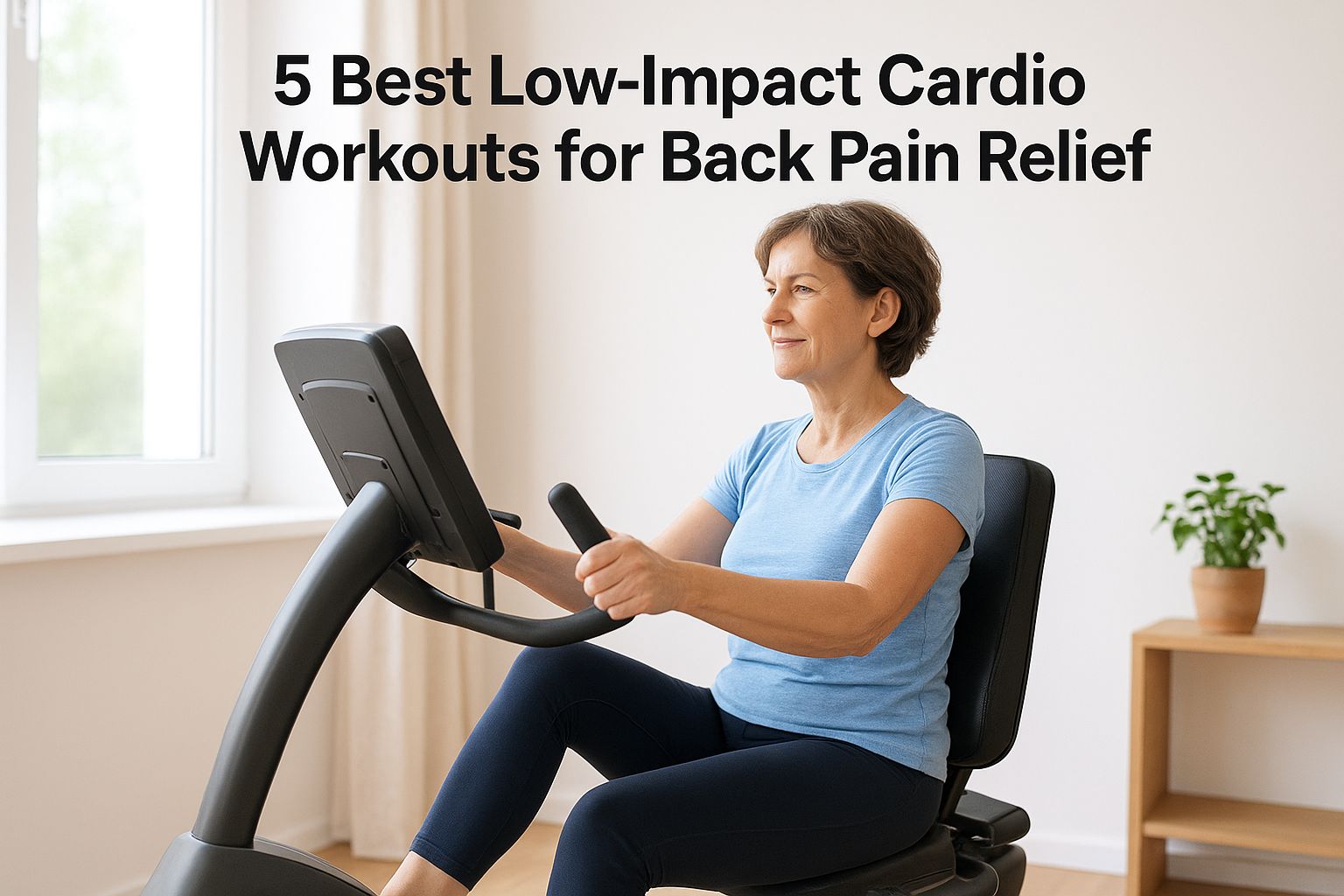
25 Jul 5 Best Low-Impact Cardio Workouts for Back Pain Relief
Back pain has a way of shutting down your workout routine fast. You want to stay active, but running or jumping around a HIIT class feels like a gamble your spine isn’t willing to take. The good news is that low impact cardio for back pain doesn’t mean giving up on fitness, it means choosing movement that supports your spine instead of jarring it.
The exercises that work best share a few traits: they keep your joints moving through a controlled range of motion, avoid sudden impact forces, and let you build cardiovascular endurance without spiking pain the next morning. Think smooth, repetitive motion rather than pounding your feet against pavement or asphalt.
In this article, we’ll walk through five workouts that consistently get recommended by physical therapists and trainers for people managing back pain, from recumbent cycling to elliptical training. We’ll cover why each one is easier on your spine, what to watch for with form, and which equipment features actually matter when you’re shopping for something to use at home.
1. Recumbent bike cycling
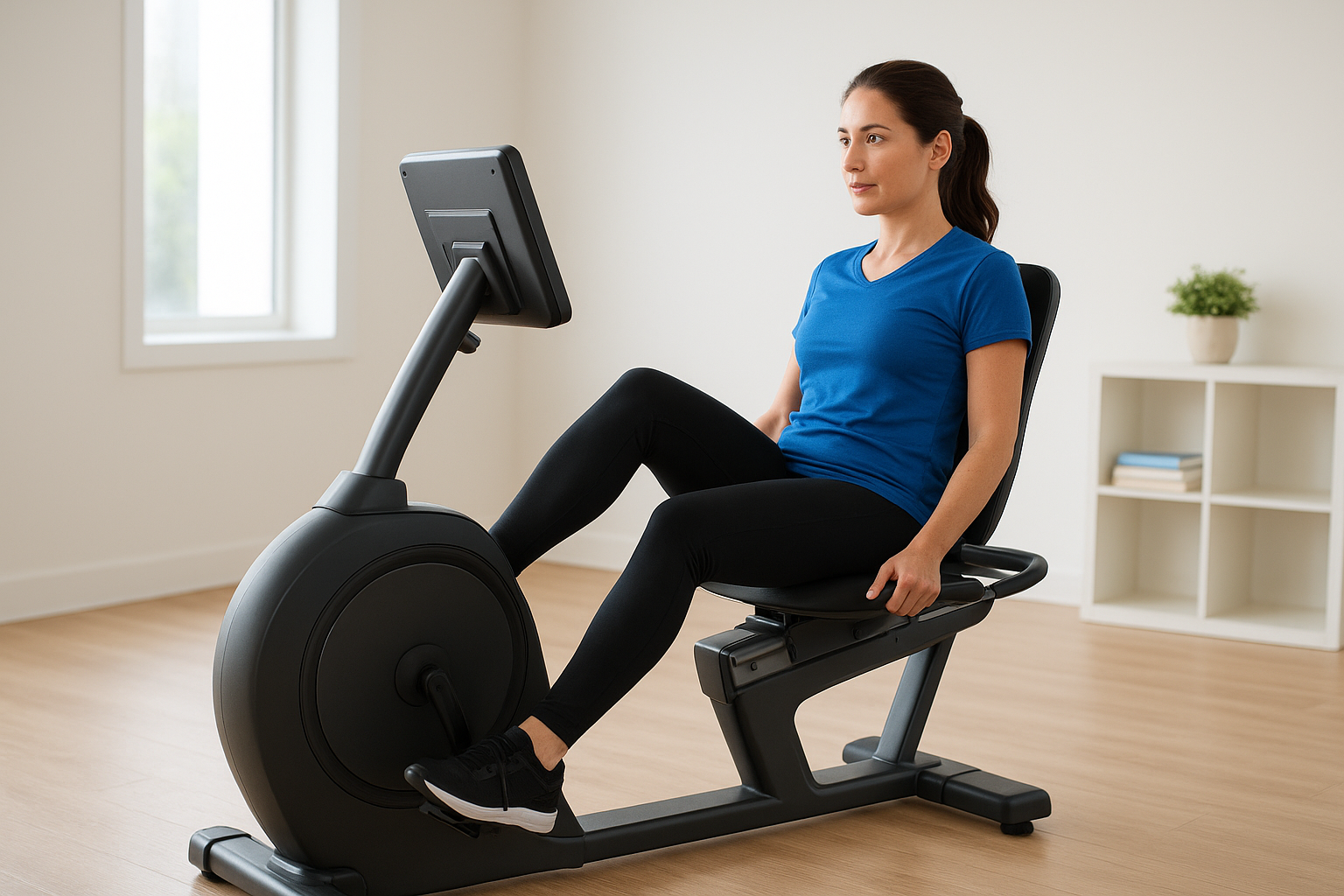
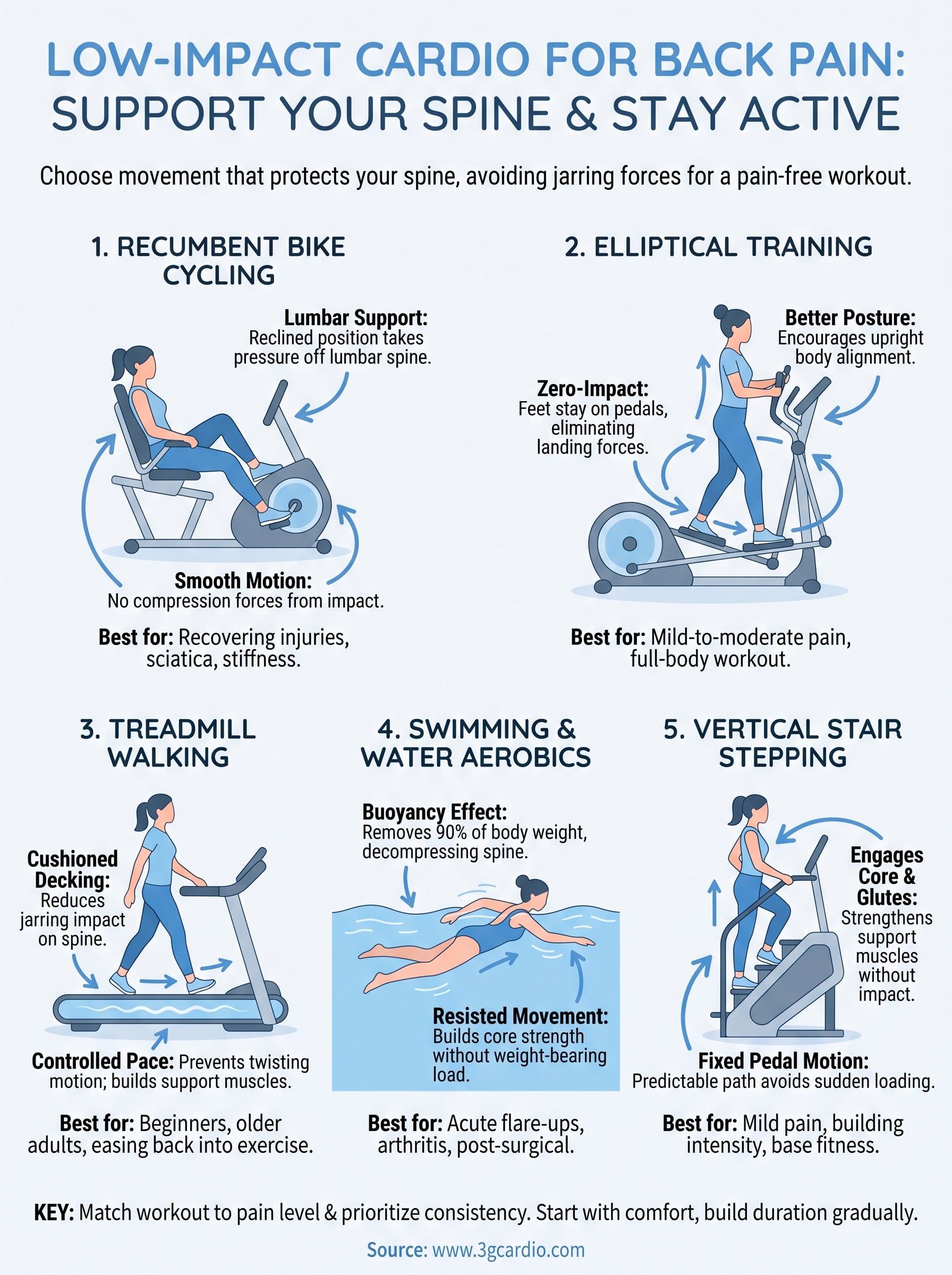
A recumbent bike puts you in a reclined seated position with your legs extended in front of you instead of underneath you like a traditional upright bike. That seat design shifts your center of gravity and takes the compression off your spine that you’d otherwise get from leaning forward over handlebars. For anyone dealing with a stiff or aching lower back, this is often the single most comfortable piece of cardio equipment in the gym.
How it works
You sit back in a bucket-style seat with lumbar support built into the backrest, then pedal against adjustable resistance while your back stays flush against the frame. The pedaling motion is smooth and circular, with no jarring or sudden stops, so your spinal discs never experience the compression forces that come from impact activities. Most recumbent bikes let you dial resistance up or down in small increments, which means you control the workout intensity without changing your body position.
Back pain benefits
The reclined posture takes pressure off the lumbar spine that upright cycling or walking can aggravate. Lower back support built into the seat back keeps your spine in a neutral, supported position throughout the entire workout, which matters if you’re recovering from a disc issue or dealing with chronic tightness.
A recumbent bike lets you build cardio endurance while your spine stays supported instead of loaded, which is exactly what most back pain sufferers need.
Who it’s best for
This workout suits people recovering from lower back injuries, those with sciatica, and anyone who finds upright cycling or walking painful after just a few minutes.
Getting started tips
- Adjust the seat so your knee has a slight bend at full pedal extension
- Start with 10 to 15 minutes at low resistance and build up gradually
- Keep your back flat against the seat rather than leaning forward
- Look for a model with a wireless heart rate strap so you can monitor intensity without overexertion
2. Elliptical training
An elliptical trainer moves your feet through a smooth, oval-shaped path that mimics walking or running without either foot ever leaving contact with the pedals. That continuous motion eliminates the impact spike you get from a treadmill or outdoor jog, making it a solid option for low impact cardio for back pain when you want a full-body workout instead of just legs.
How it works
Your feet stay locked into pedals that glide forward and back in a fixed elliptical path, while moving handlebars let your arms and core join in. The fixed foot path keeps your stride consistent, so you’re not making unpredictable movements that could tweak an already sensitive back.
Back pain benefits
Because your feet never leave the pedals, there’s no landing force traveling up through your ankles, knees, and spine. Standing upright also encourages better posture than a hunched treadmill stride.
Zero-impact pedaling lets you train your whole body without a single jarring footstrike.
Who it’s best for
Ellipticals suit people with mild to moderate back pain who still want an upper-body challenge alongside their cardio.
Getting started tips
- Keep your torso upright, not hunched over the handlebars
- Start with a shorter stride length if you feel any pulling in your lower back
- Use the moving handles lightly rather than gripping and pulling hard
3. Treadmill walking
Walking on a treadmill gives you control that outdoor walking can’t match. You set the incline, the speed, and the surface cushioning, which means you can dial the workout to match exactly what your back can handle that day. For low impact cardio for back pain, a treadmill’s biggest advantage is consistency, you’re not dodging potholes or cambered sidewalks that twist your spine unexpectedly.
How it works
Belts with built-in cushioning absorb some of the shock that concrete sidewalks send straight up your legs. Slower, controlled pacing lets you keep an upright posture instead of the slight forward lean that creeps in when you’re rushing.
Back pain benefits
Cushioned decking reduces the jarring impact that aggravates disc and joint pain during outdoor walks. Steady, level walking also strengthens the muscles that support your spine without the twisting motion that running or trail walking introduces.
A cushioned treadmill belt turns ordinary walking into one of the gentlest cardio options available for a sore back.
Who it’s best for
Treadmill walking works well for beginners, older adults, and anyone easing back into exercise after a back injury.
Getting started tips
- Start flat, no incline, at a comfortable pace
- Keep your shoulders back and eyes forward, not down
- Use handrails only briefly for balance, not for support
4. Swimming and water aerobics
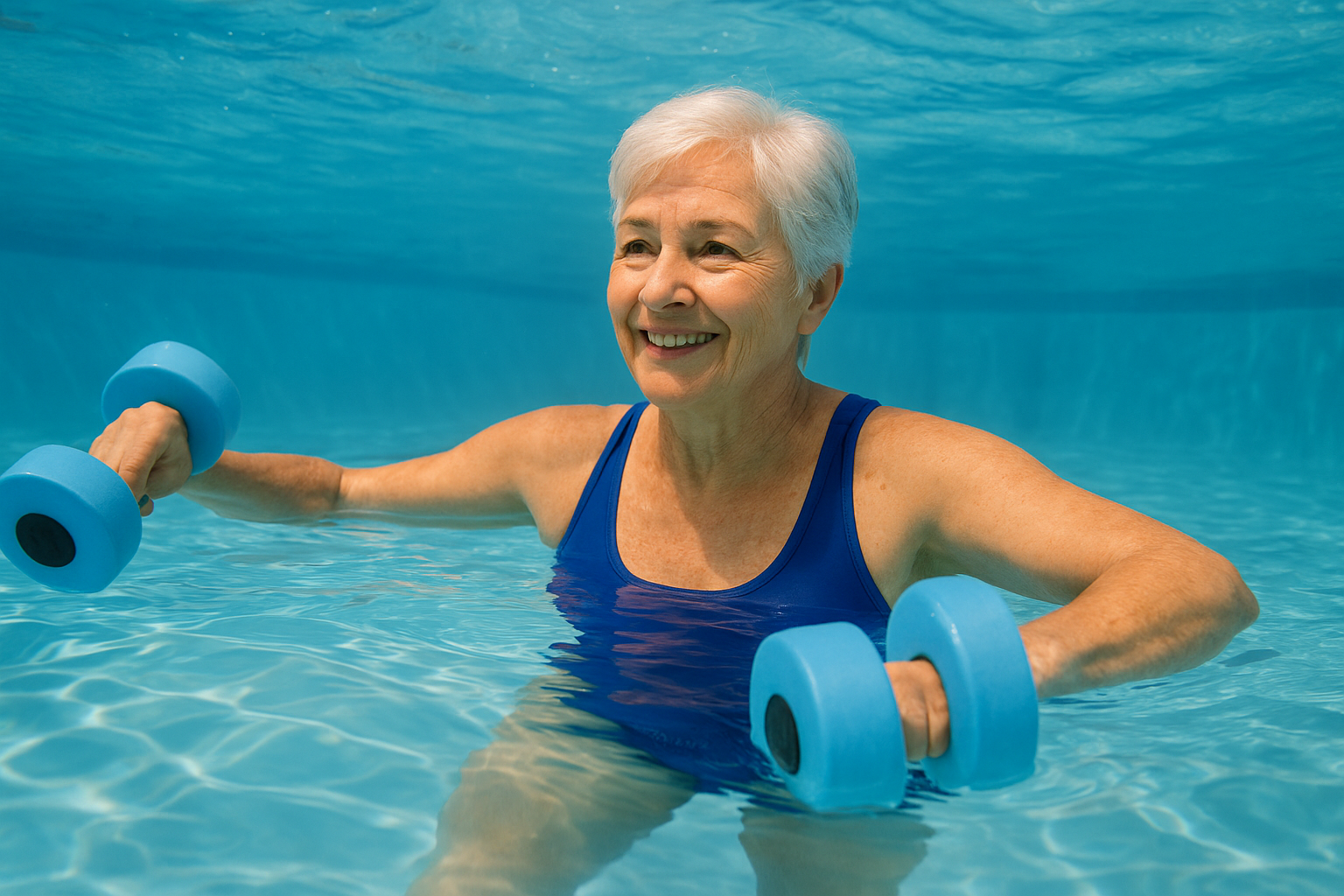
Water does something no gym machine can replicate: it takes nearly all your body weight off your spine the moment you submerge to chest depth. That buoyancy makes swimming and water aerobics one of the gentlest forms of low impact cardio for back pain, especially on days when even a recumbent bike feels like too much.
How it works
Submerging to shoulder depth removes roughly 90% of your body weight from your joints and spine, according to research cited by the Cleveland Clinic. Your muscles still work hard against water resistance, but there’s no landing force or compression involved.
Back pain benefits
The buoyancy effect decompresses your spine while you move, which many people find eases chronic stiffness almost immediately. Water aerobics classes also build core and back strength through resisted movement rather than weight-bearing load.
Water removes the weight your spine carries all day, letting you exercise pain-free while it heals.
Who it’s best for
This suits anyone with acute flare-ups, arthritis, or post-surgical restrictions who needs zero-impact movement.
Getting started tips
- Start with 20-minute sessions, twice a week
- Try a beginner water aerobics class for guided form
- Avoid strokes that twist your spine, like butterfly
5. Vertical stair stepping
Vertical stair steppers move you through a smooth up-and-down climbing motion instead of the pounding you get from a real staircase. That controlled range makes this machine a surprisingly good pick for low impact cardio for back pain, especially if you want a tougher workout than walking without adding jarring impact.
How it works
Your feet stay planted on pedals that rise and fall in a fixed vertical path, so there’s no free-falling step landing on concrete stairs. The fixed pedal motion keeps your stride predictable, which matters when your back can’t handle sudden, unpredictable loading.
Back pain benefits
Climbing engages your glutes, hamstrings, and core, muscles that directly support your lower spine, without any impact force traveling upward. Standing tall through the motion also reinforces upright posture instead of the slouch that creeps in on other cardio machines.
Stair stepping builds real leg and core strength while your spine stays completely impact-free.
Who it’s best for
This suits people with mild back pain who’ve built some base fitness and want more intensity than walking offers.
Getting started tips
- Hold the rails lightly for balance, not for weight support
- Start with short 10-minute intervals at a slow step rate
- Keep your torso upright rather than leaning on the handles
Staying active without hurting your back
You don’t need to choose between fitness and a pain-free back. Recumbent cycling, elliptical training, treadmill walking, swimming, and vertical stair stepping all give you real cardiovascular benefit while keeping impact forces away from your spine. The key is matching the workout to your current pain level and letting consistency, not intensity, drive your progress.
Start with whichever option feels most comfortable today, then build duration before you build difficulty. Pay attention to how your back feels the morning after, that feedback tells you more than any fitness tracker. If a home cardio machine fits your budget, it removes the guesswork of pool schedules or gym hours and lets you exercise the moment your back allows it.
If you’re ready to bring low-impact cardio home, check out the 3G Cardio Elite RB X Recumbent Bike, rated the best recumbent exercise bike of 2025 and built with back support in mind from the first pedal stroke.




Sorry, the comment form is closed at this time.