

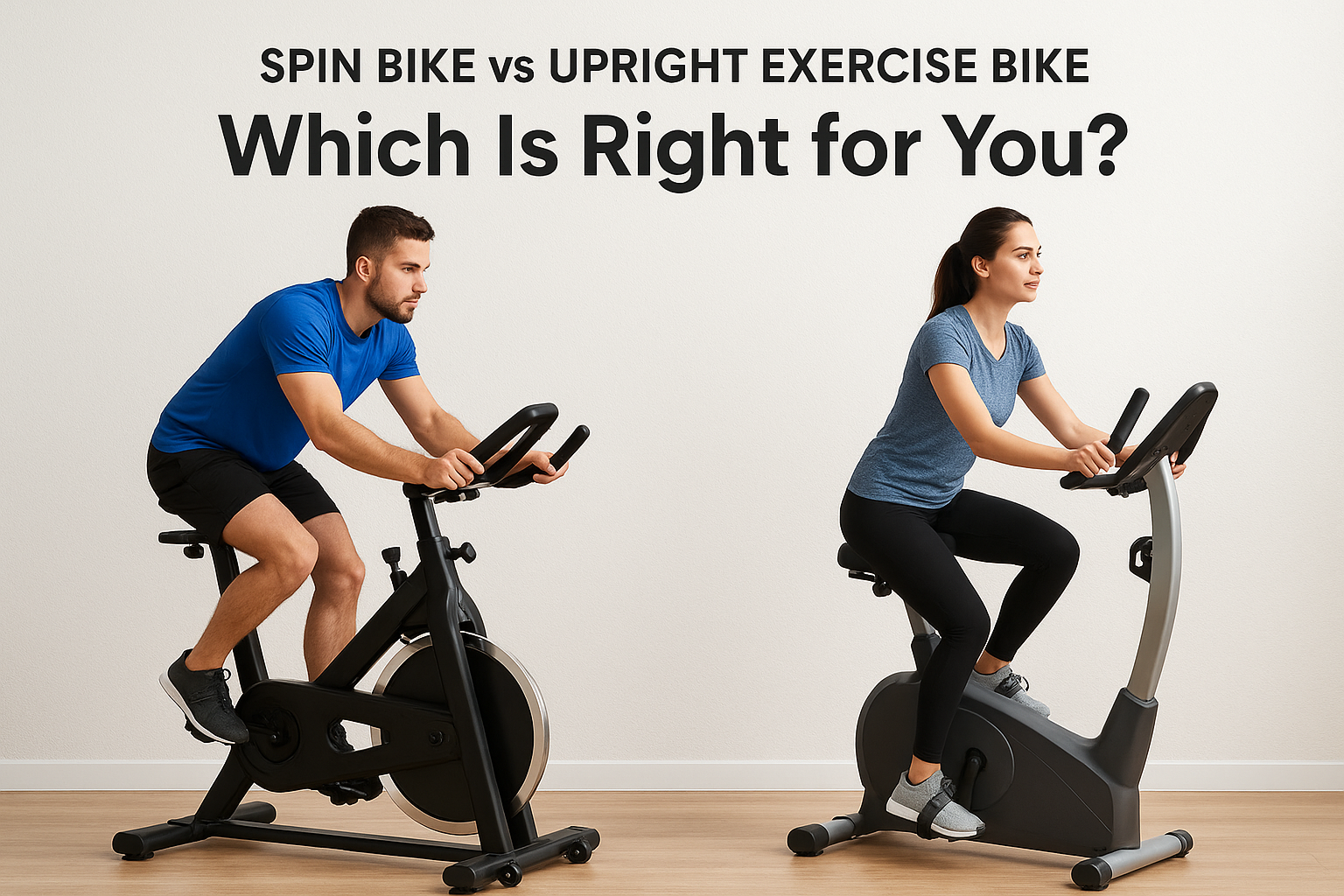
01 Aug Spin Bike vs Upright Exercise Bike: Which Is Right for You?
Standing in a showroom or scrolling through listings, you’ve probably noticed two very different bike shapes competing for your workout space, and they don’t deliver the same experience. The exercise bike spin vs upright decision comes down to how you sit, how hard you can push, and what your joints can tolerate over months of consistent use. Get this choice wrong and you either abandon a bike that’s too punishing or get bored with one that’s too tame.
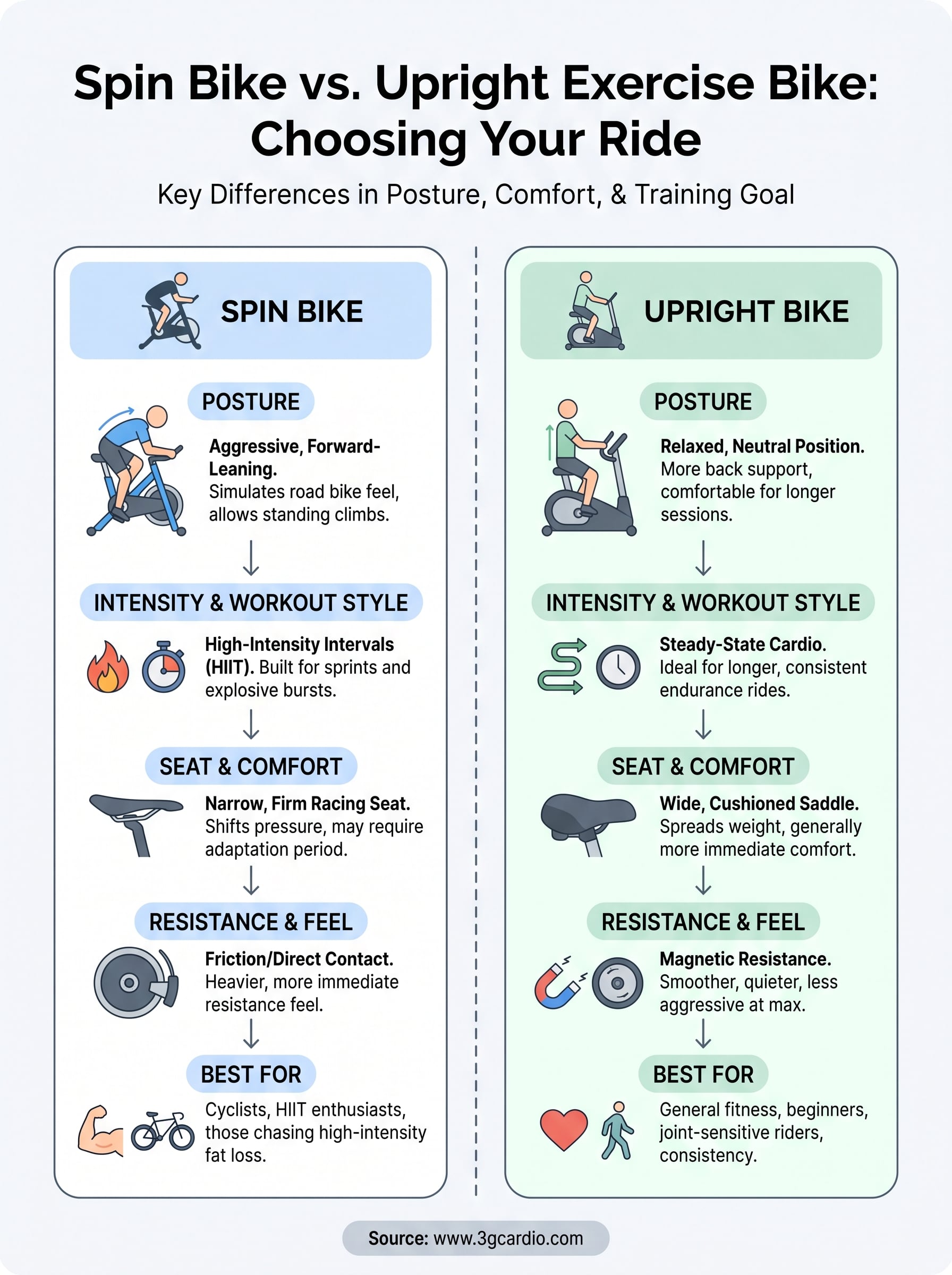
Here’s the short answer: spin bikes favor an aggressive, forward-leaning posture built for high-intensity intervals and standing climbs, while upright exercise bikes put you in a more relaxed, natural riding position that’s easier on your back and better suited for steady, longer sessions. Neither is objectively superior. The right pick depends on your fitness goals, your body, and whether you want a machine that mimics a road bike or one that feels closer to a traditional stationary bike.
Below, we break down the real differences in frame design, resistance systems, seating comfort, and calorie burn between a spin bike versus upright exercise bike, so you can match the equipment to how you actually want to train at home.
Why the right choice matters for your fitness goals
Choosing between these two bike styles isn’t a cosmetic decision. It changes what your body does every single session, which means it shapes whether you stick with a routine for years or quit after a month. A poor match between your fitness goals and your equipment is one of the most common reasons home gym gear ends up gathering dust in a garage.
The intensity gap between bike types
Spin bikes are built for high-intensity training, with a heavier flywheel and a forward-leaning frame that lets you stand, sprint, and simulate hill climbs the way you would on a road bike. Upright models keep you seated in a more neutral riding posture, which favors longer, steadier cardio sessions rather than explosive intervals. If your goal is fat loss through short, brutal workouts, a spin bike edges out an upright almost every time.
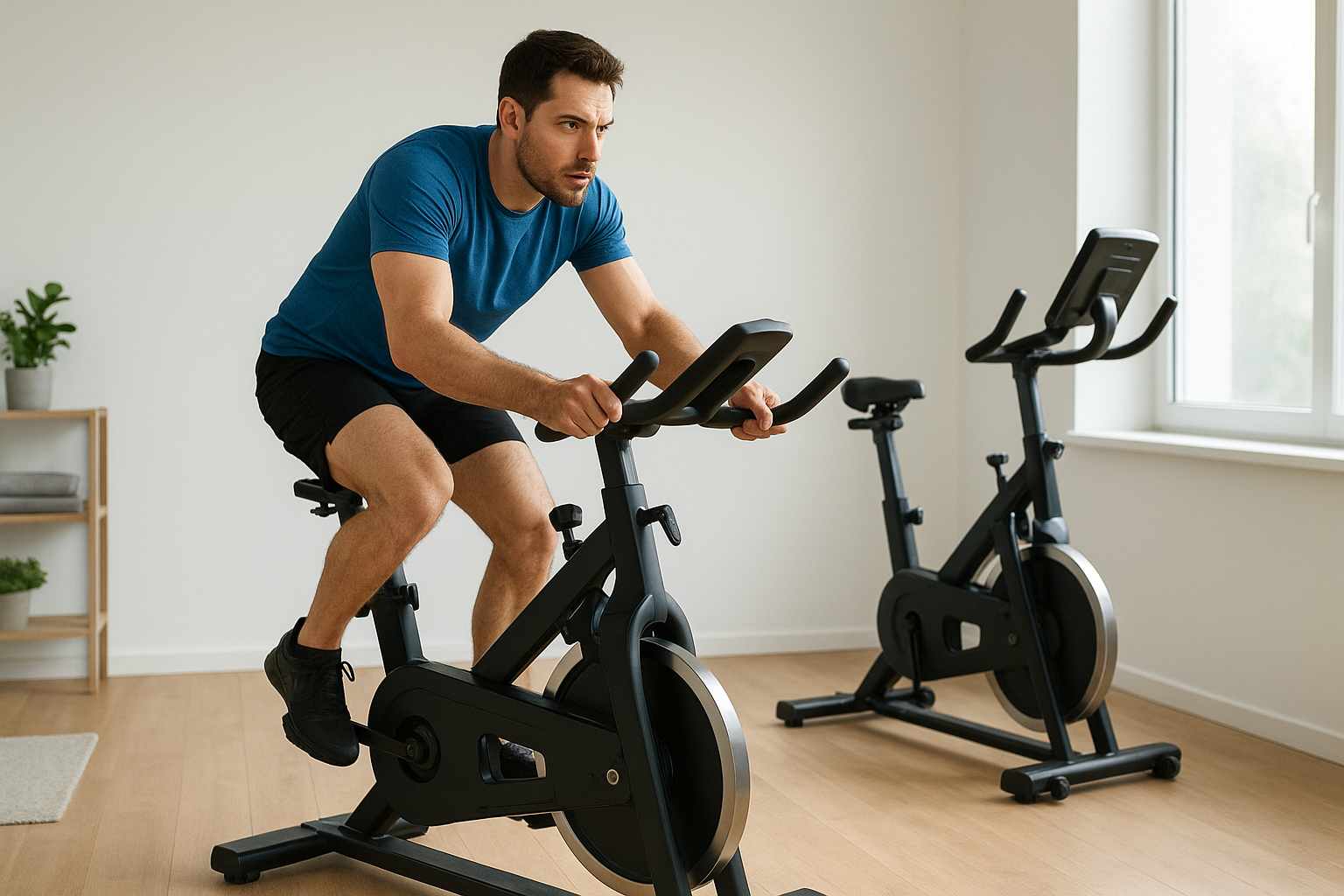
The bike that matches your training style will always outperform the one that just looks impressive in a showroom.
Joint impact and injury risk over time
Overuse injuries creep in slowly, and bike choice plays a bigger role than most people expect. Riders with lower back sensitivity often do better on upright bikes because the seated position keeps the spine more supported, while spin bikes place more load on the wrists, shoulders, and knees during standing intervals. Anyone recovering from a joint issue should weigh this before committing to either machine.
Matching bike type to your training goals
Goals should drive the decision more than trends do. Someone training for outdoor cycling events benefits from the spin bike’s road-bike geometry, while someone focused on general cardiovascular health and consistency will likely stay more engaged on an upright. Getting honest about what you actually want from your workouts saves you from buying equipment that fights against your own habits.
How to decide between a spin bike and an upright bike
Deciding between a spin bike vs upright exercise bike gets easier once you stop asking which one is better and start asking which one fits your body and your schedule. Start with how you plan to train, then work backward to the frame style that supports that plan.
A quick self-check before you buy
Run through this checklist before you commit to either machine:
- Workout style: Do you want quick, intense intervals or longer, steady rides?
- Body position: Can you comfortably hold a forward lean for 20-30 minutes, or do you need an upright spine?
- Space and noise: Spin bikes often run louder flywheels; upright models tend to be quieter for apartments.
- Experience level: Beginners usually adapt faster to upright bikes before graduating to spin-style training.
If you can’t answer how you’ll actually use the bike, you’re not ready to buy either one yet.
Much of the confusion around upright or spin exercise bike comparisons disappears once you honestly answer those four questions instead of just comparing price tags or console features.
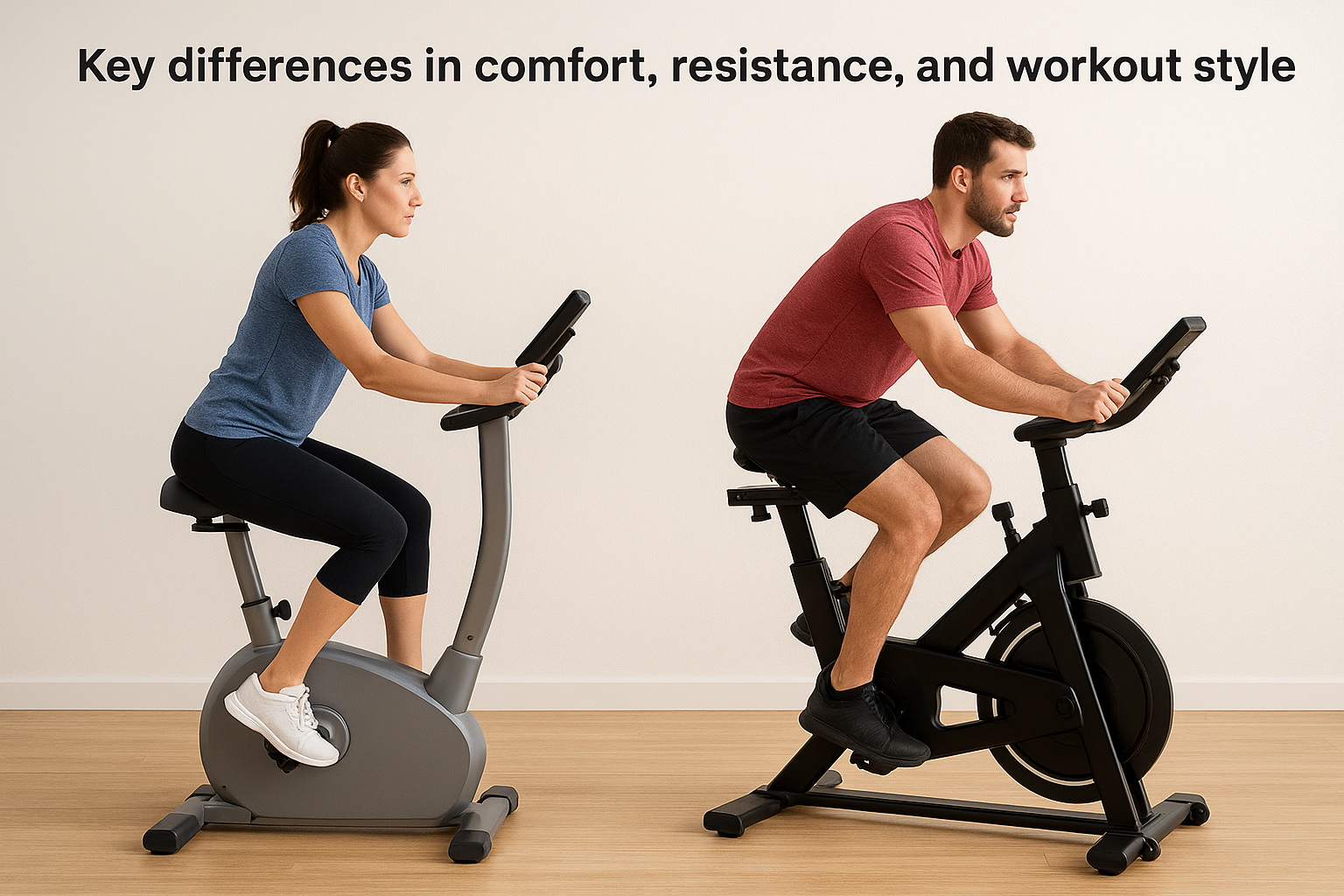
Key differences in comfort, resistance, and workout style
Once you get past posture, the real differences show up in how each bike resists your effort and how your body feels afterward. Comparing exercise bike upright vs spin models side by side makes these gaps obvious fast.
Seat design and body contact
Upright bikes use a wider, cushioned saddle similar to a traditional stationary bike, spreading weight across your hips. Spin bikes use a narrow, hard racing seat that shifts pressure toward your sit bones, which takes some riders weeks to adjust to.
Resistance systems compared
Spin bikes typically rely on friction or direct-contact flywheels, giving a heavier, more immediate feel when you crank up intensity. Uprights often use magnetic resistance, which feels smoother and quieter but less aggressive at max settings.
Comfort and resistance aren’t separate decisions, they’re the same decision viewed from two angles.
| Feature | Spin Bike | Upright Bike |
|---|---|---|
| Seat | Narrow, firm | Wide, cushioned |
| Resistance | Friction/flywheel | Magnetic |
| Standing rides | Yes | Rarely |
| Noise level | Higher | Lower |
Think about which trade-offs you can live with every single session, not just on day one.
Who should choose a recumbent bike instead
Not everyone belongs on a spin bike or an upright, and that’s fine. Riders with chronic back pain, hip replacements, or balance issues often find both styles uncomfortable no matter how the seat is padded. A recumbent bike puts you in a reclined position with back support and pedals out in front, removing most of the spinal load that upright and spin bikes create.
When a reclined position makes more sense
Older adults, anyone rehabbing a lower-body injury, or people who simply want to read or watch TV during cardio tend to stick with recumbent bikes longer than either alternative. Larger riders also benefit from the wider seat and lower step-through height.
If you dread getting on the bike because of pain, the bike is wrong, not your effort.
Specifically, if your priority is joint-friendly consistency over intensity, a recumbent model like 3G Cardio’s Elite RB X deserves a serious look before you buy either an upright or spin bike.
Common questions about spin and upright bikes
A handful of questions come up over and over once people move past the basic comparison and start thinking about real-world use. Answering them upfront saves you from second-guessing your purchase later.
Is a spin bike better for weight loss than an upright?
Generally yes, because the standing intervals and heavier flywheel push your heart rate higher in shorter bursts. But an upright bike ridden consistently for 45 minutes can burn similar calories over time. Consistency beats intensity if you can’t stick with the harder workout.
Can beginners start on a spin bike?
Absolutely, but expect a rough first few weeks. The narrow seat and forward lean take adjustment, and most new riders find an upright bike gentler while they build cardio base and core strength.
The best bike is the one you’ll still be riding in six months, not the one that burns the most calories on paper.
Do spin bikes require more maintenance?
Friction-based flywheels wear brake pads faster than magnetic systems, so expect occasional part replacement on true spin bikes that uprights rarely need.
Finding the bike that fits your routine
Picking between these two frames comes down to honesty about how you actually train, not which one looks more serious in a gym photo. A spin bike rewards riders chasing intensity and standing climbs, while an upright exercise bike rewards riders who want steady, comfortable sessions they’ll repeat for years without dreading the seat. Neither wins the exercise bike spin vs upright debate outright, because the win depends on your joints, your goals, and your schedule.
Whatever you choose, prioritize a frame built for daily use, not a flimsy model that rattles after six months. If a wider saddle, adjustable resistance, and app connectivity without subscription fees sound like what your routine actually needs, take a closer look at the Elite UB X Upright Bike and see if it fits your space and your goals better than a spin bike ever could.




Sorry, the comment form is closed at this time.