

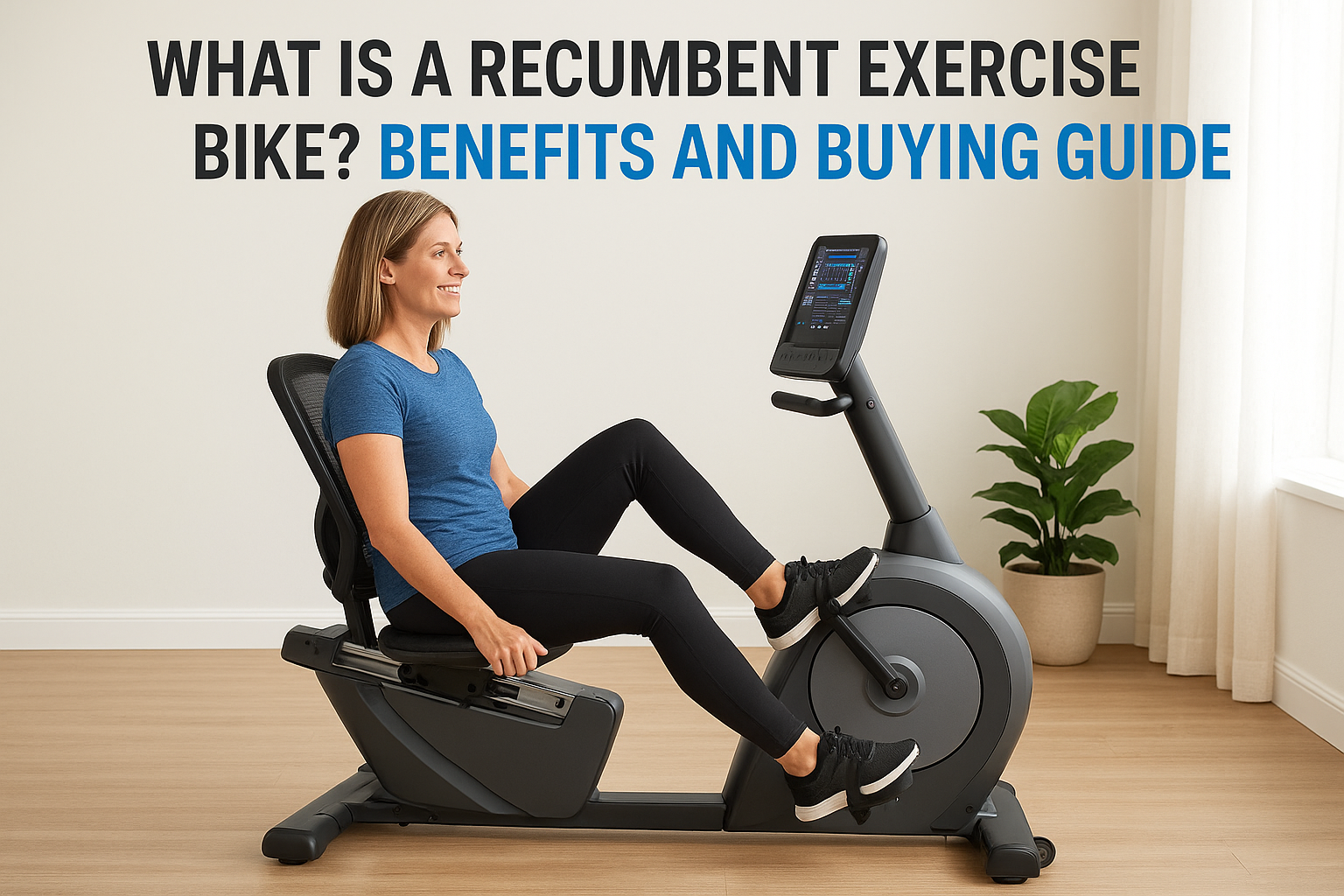
04 Sep What Is a Recumbent Exercise Bike? Benefits and Buying Guide
If your knees ache after a spin class or you just want a cardio machine that won’t punish your lower back, a recumbent bike deserves a look. Unlike upright bikes, this style of stationary recumbent exercise bike puts you in a reclined seat with your legs out in front, so your joints handle less stress while your heart still gets a solid workout. It’s one of the most forgiving pieces of cardio equipment you can own, which is why physical therapists and longtime gym-goers alike keep coming back to it.
So what exactly makes this design different, and is it the right fit for your home gym? In short: yes, if you want low-impact training that’s easy on the body but still builds real cardiovascular fitness. The seat position, back support, and pedal placement all work together to reduce strain while letting you push resistance levels hard when you’re ready.
This guide breaks down how a recumbent workout bike actually works, who benefits most from one, and what separates a well-built commercial-grade machine from a flimsy big-box model. We’ll also cover what to check before you buy a recumbent bike for home use, so you spend your money on a machine that lasts.
Why choose a recumbent exercise bike for your workouts
Most people switch to a recumbent bike because something else stopped working for their body, and once they ride one they understand what a reclined seat actually does for the body. Maybe your knees flare up on a road bike, or a treadmill leaves your lower back stiff by evening. The reclined seat and wide backrest change the entire mechanics of the workout, spreading your weight across your hips and back instead of stacking it on your spine and knee joints. That single design shift is why so many physical therapy clinics keep a recumbent bike in the rehab room, and why it’s often the first cardio machine recommended after knee surgery or a back injury.
Lower-impact training that protects your joints
Sitting back with your legs extended in front of you takes pressure off the lower back that upright bikes and treadmills put directly on your spine, which is why it ranks among the best cardio workouts for back pain relief. Your knees move through a smoother, more controlled arc because the pedals sit at hip height rather than below you, which reduces the shearing force that aggravates arthritis or old sports injuries. This is the main reason recumbent bike exercise equipment shows up so often in orthopedic offices and senior fitness centers, alongside the other cardio machines that spare your knees and hips. You still build strength and endurance, but you’re not grinding through pain to get there.
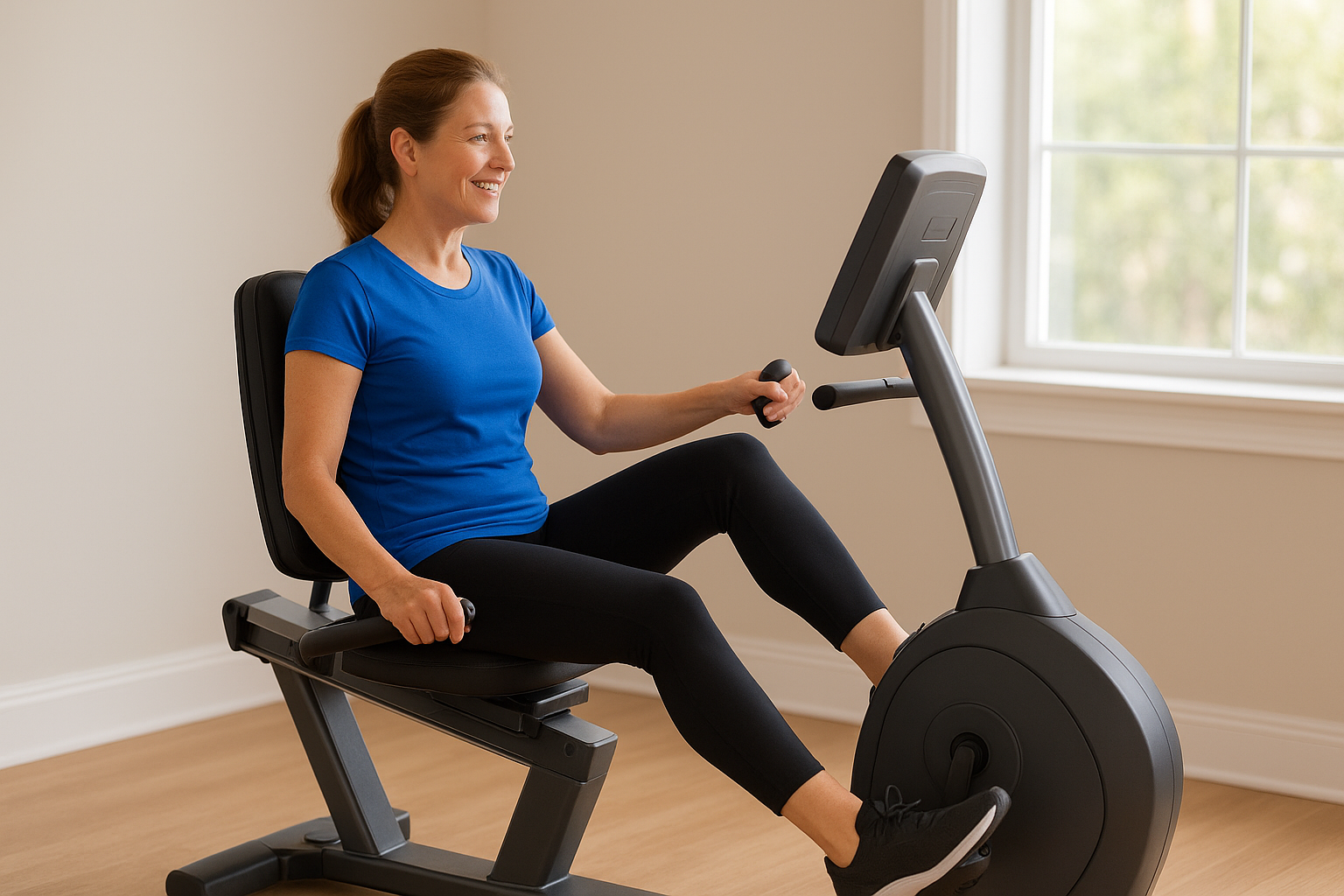
A recumbent bike lets you push your cardio hard without asking your joints to absorb the impact.
Real cardiovascular benefits, not just comfort
Don’t mistake low-impact for low-effort, because you can absolutely get a serious workout riding a recumbent bike. A well-built stationary bike recumbent design still lets you dial resistance up to a serious challenge, and the seated position actually makes it easier to sustain a hard effort for longer because you’re not fighting to stay balanced or supporting your upper body weight on your hands. Your heart rate climbs the same way it would on any cardio machine, and models with adjustable resistance and incline let you structure real interval workouts, not just steady, easy pedaling. On 3G Cardio’s Elite RB X, for example, riders get 20 resistance levels, which is enough range to go from a warm-up pace to a genuinely tough session without switching machines.
Who gets the biggest payoff from a recumbent bike
Certain groups see outsized benefits from switching to a recumbent training bike, and if you fall into one of these categories, the case for buying one gets a lot stronger:
- Older adults who want cardio without the fall risk of a treadmill or the balance demands of an upright bike, which is why a low step-through bike suits senior riders so well
- People recovering from injury or surgery, especially knee, hip, or lower back procedures where a physical therapist has cleared low-impact cycling, including rehab after a knee replacement
- Anyone with chronic joint pain, including arthritis, who still wants a serious cardio habit
- Beginners easing into fitness who need a machine that won’t intimidate or exhaust them in the first week
- Long-session cardio fans who want to watch TV, read, or work through a podcast during a 45-minute ride without discomfort
Each of these groups shares one thing in common: they need a machine that lets them show up consistently, and consistency is what actually drives fitness results, not the intensity of any single workout.
Built for consistency, not just comfort
Sustainability matters more than most people admit when they’re shopping for cardio equipment. A machine you dread using ends up as an expensive coat rack within a few months, which is the quiet failure story behind a lot of home gyms. Recumbent bikes solve this by making the workout genuinely pleasant rather than something you have to grit your teeth through. The back support means you can hold good posture for the full session instead of hunching forward the way you might on an upright bike after twenty minutes.
Quality construction is what turns that comfort into a long-term habit rather than a short-lived one. Cheaper models wobble under higher resistance, squeak within a year, or have consoles that stop syncing with apps after a firmware update. A commercial-grade frame, sealed bearings, and a console built for recumbent bike fitness tracking hold up to daily use for years, which matters if you’re planning to ride most days of the week rather than a few times a month. Riders looking for that kind of durability are exactly why Consumer Reports named the 3G Cardio Elite RB X its top recumbent bike pick for 2025, a recognition based on real testing rather than marketing claims. When you’re deciding which recumbent exercise bike is worth owning, that combination of comfort, real cardio output, and build quality is what actually pays off month after month.
How to choose the right recumbent exercise bike for your home
Shopping for a recumbent bike for home use gets overwhelming fast once you start comparing specs across brands. Prices range from under $500 for big-box models to $2,000 or more for commercial-grade machines, and the difference isn’t marketing fluff. It’s frame gauge, bearing quality, and how long the console actually keeps working. Before you buy, narrow your search using a few concrete criteria for choosing a recumbent bike instead of getting distracted by flashy screens or gimmick features you’ll stop using after week two.
Frame quality and seat adjustability
Start with the frame, since that’s what determines whether your bike lasts five years or fifteen. Heavier steel gauges and a wider footprint mean less wobble at higher resistance levels, which matters once you start pushing harder efforts. Seat adjustability is just as important as steel thickness. You want a seat that slides forward and back easily, ideally without tools, so multiple household members can find their own comfortable leg extension. A backrest with real lumbar support, not just a flat pad, is what keeps a 45-minute ride comfortable instead of something you’re counting down the minutes to finish.
The frame and seat determine whether a recumbent bike lasts for years or turns into a bedroom clothes rack within months.
Console features and connectivity that actually matter
Consoles vary wildly across the stationary recumbent bike market, and a lot of that variation is unnecessary. Skip anything that locks core features behind a subscription fee, since that turns a one-time purchase into an ongoing bill. Instead, look for a console with built-in heart rate monitoring, a decent number of resistance levels (20 is a solid benchmark), and Bluetooth connectivity that lets you pair with fitness apps you already use. 3G Cardio’s FreeSync FTMS Bluetooth machines that pair with your own tablet are a good example of this approach: they connect to third-party apps through Bring Your Own Screen technology instead of forcing you onto a proprietary app or a locked tablet.
Weight capacity, warranty, and delivery
Check the weight capacity against your household’s actual needs, not just your own, since a shared machine needs enough headroom for anyone who might use it. Warranty terms tell you a lot about how confident a manufacturer is in their own construction. A lifetime frame warranty paired with several years of parts coverage signals a company that expects the machine to hold up, while a one-year warranty on everything is a red flag no matter how nice the console looks.
Running through this checklist before you buy saves you from an expensive mistake:
- Frame gauge and stability under higher resistance settings
- Seat adjustability and lumbar backrest quality
- Resistance levels (aim for at least 15 to 20 for real workout variety)
- Bluetooth and app connectivity without subscription requirements
- Weight capacity that fits every household member who’ll use it
- Warranty length, especially on the frame and parts
- Delivery options, including whether white glove setup is available
Getting this right upfront means you won’t be shopping for a replacement in eighteen months. A well-built recumbent exercise bike should be the last one you ever need to buy for your home gym.
Recumbent bike vs. upright bike: what’s the difference
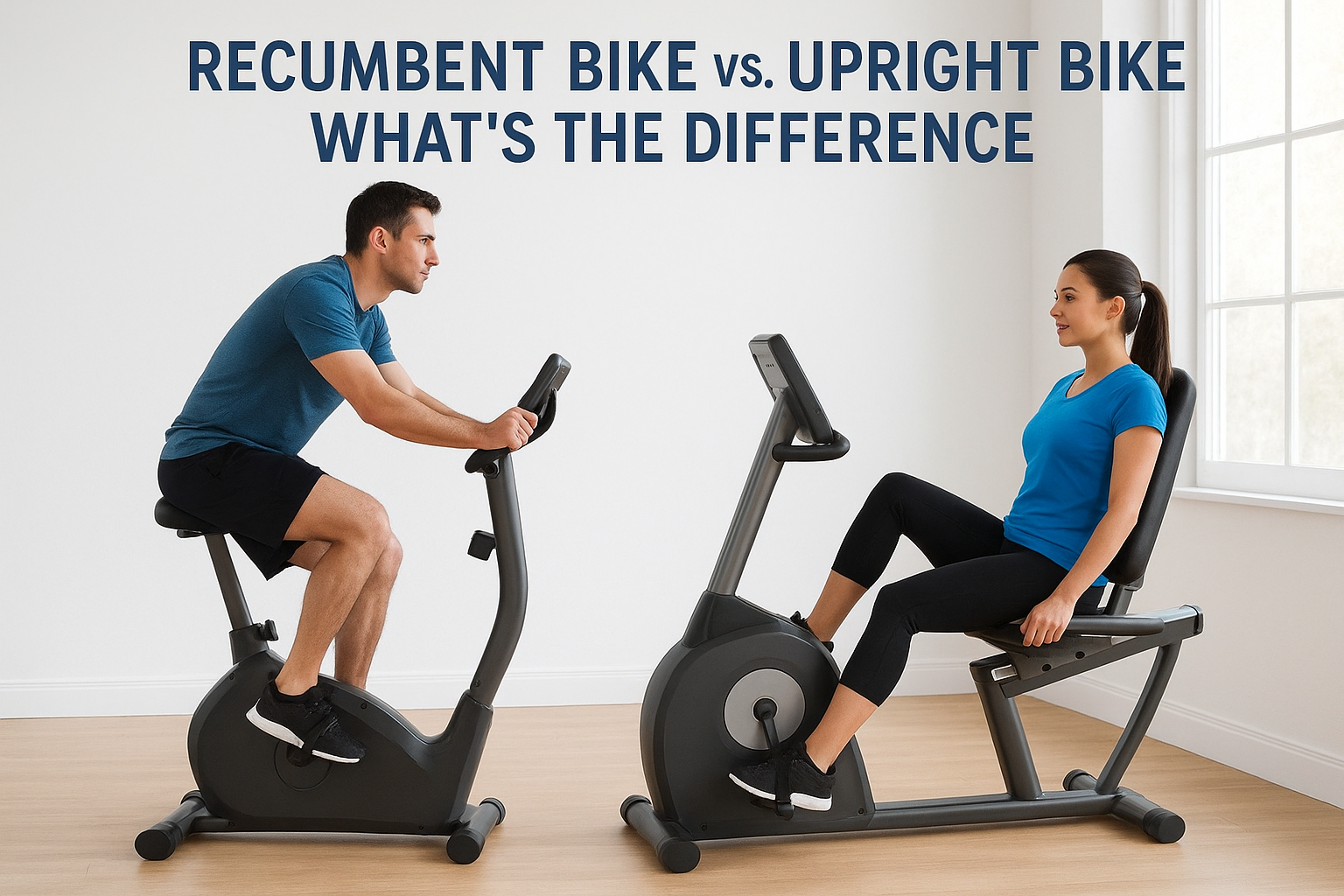
An upright bike puts you in the same body position as an outdoor road bike: leaning slightly forward, gripping handlebars, and supporting part of your weight on your arms and core. A recumbent bike flips that setup entirely. You sit back in a bucket seat with a full backrest, your legs extend forward instead of down, and your hands rest at your sides or on light handles instead of bearing weight. That single change in geometry affects everything from how your joints feel afterward to which muscles do the heaviest lifting.
Seating position and body mechanics
Body position is where the two machines diverge the most. On an upright bike, your spine curves forward and your lower back does constant stabilizing work just to keep you balanced over the pedals. A recumbent design supports your entire back and distributes your weight across a wider seat, which is why it shows up so often as the machine of choice after a back or hip injury. Your knees also move through a gentler arc on a recumbent bike because the pedals sit roughly level with your hips rather than below your body, cutting down on the shearing stress that aggravates arthritis.
The seat, not the pedals, is what makes a recumbent bike easier on your body than an upright one.
Muscle engagement and calorie burn
Calorie burn and muscle recruitment differ too, though not as dramatically as some people assume. Upright bikes engage your core and stabilizer muscles more, since you’re actively holding your posture and balancing over the frame. Recumbent bikes shift more of the workload onto your quads, hamstrings, and glutes in isolation, since your upper body isn’t doing any stabilizing work at all. Neither pattern is objectively better; it depends on whether you want a total-body engagement or a focused, joint-friendly leg workout you can sustain for longer stretches.
Comparing the two side by side
Seeing how the two bike styles stack up side by side makes the decision easier than reading feature lists in isolation:
| Factor | Recumbent Bike | Upright Bike |
|---|---|---|
| Body position | Reclined, full back support | Forward-leaning, no back support |
| Joint impact | Low, gentler knee arc | Moderate, more knee flexion |
| Core engagement | Minimal | Higher, active stabilizing |
| Comfort for long sessions | High | Lower after 20-30 minutes |
| Best for | Rehab, seniors, chronic pain, long rides | Athletes, cyclists, higher-intensity intervals |
Which one actually fits your goals
Goals should drive this decision more than trends or what’s popular at your gym. If you’re managing joint pain, recovering from surgery, or you simply want a machine you’ll actually use five days a week without dreading it, a recumbent bike wins on nearly every count. If you’re training specifically for outdoor cycling performance or you want a workout that doubles as core training, the compact Elite UB X upright bike mimics that experience more closely. Most home users, especially those over 40 or managing any kind of joint issue, get more consistent, sustainable results from a recumbent bike simply because it’s a machine they’ll return to day after day instead of one they abandon after a few sore weeks.
Types of recumbent bikes: stationary, outdoor, and trikes
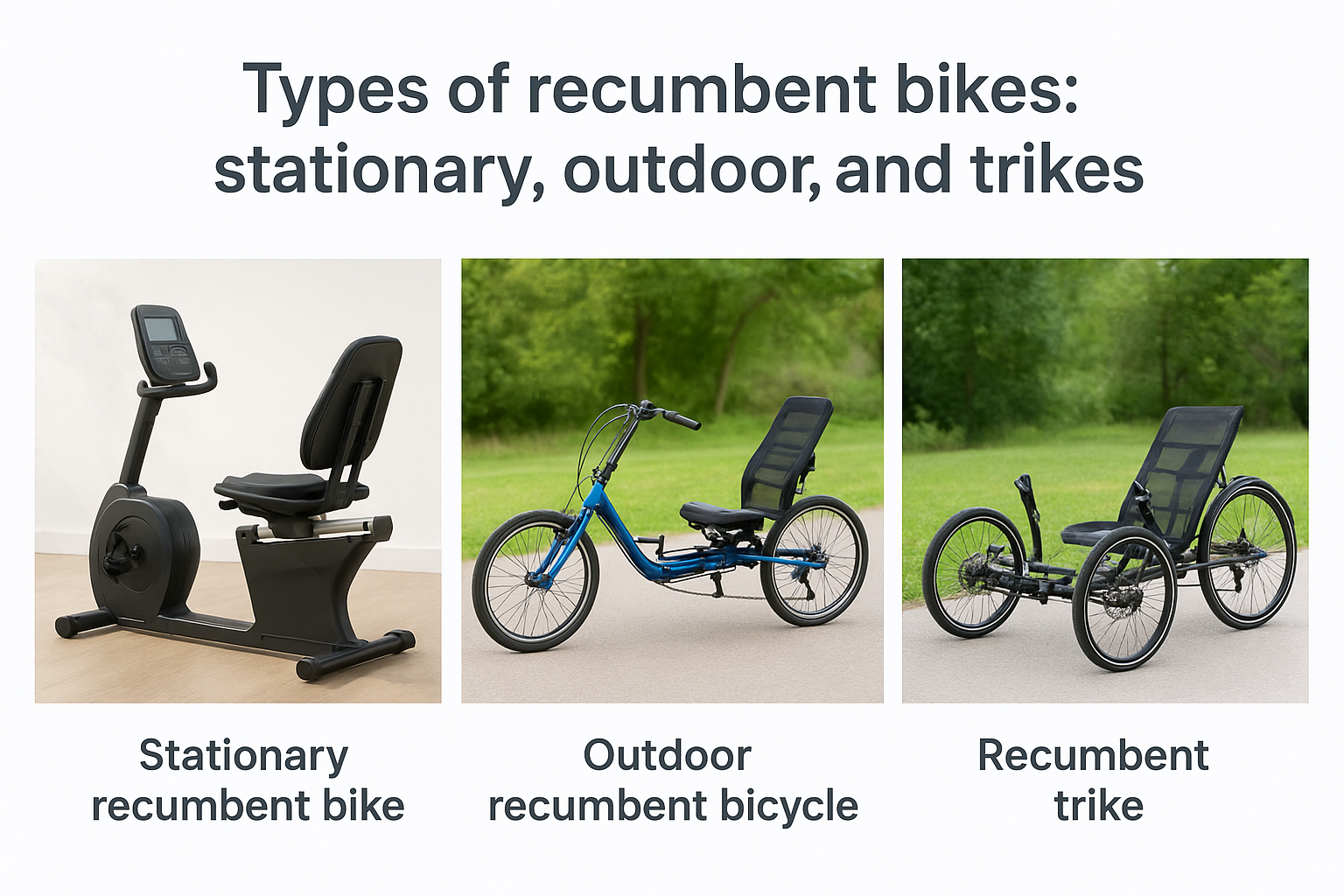
When most people search for a recumbent bike, they picture the stationary version sitting in a living room or home gym, but the category actually covers three distinct machines. Stationary recumbent bikes stay indoors and never move. Outdoor recumbent bicycles are two-wheeled road machines you pedal on actual pavement. Recumbent trikes add a third wheel for stability and are almost always ridden outside. All three share the same reclined seat and forward leg extension, but the experience of using each one is different enough that picking the wrong type means picking a machine you’ll rarely use.
Stationary recumbent bikes: the home fitness standard
Stationary machines are what most buyers actually want when they search for a stationary recumbent bike for home use, since they deliver consistent, weatherproof cardio without any balance requirement at all. You set the resistance, adjust the seat once, and get on and off without the wobble or coordination that outdoor riding demands. This makes stationary units the default recommendation for rehab, older adults, and anyone building a daily cardio habit indoors.
A stationary recumbent bike removes weather, balance, and traffic from the equation entirely, so the only variable left is your effort.
Outdoor recumbent bicycles: two wheels, real road miles
Outdoor recumbent bicycles look similar from the seat but ride nothing like their indoor counterparts. You’re balancing on two wheels at a much lower center of gravity than a standard road bike, which takes real practice before it feels natural. Riders choose these for touring and long-distance cycling because the reclined position reduces neck and wrist strain over hours in the saddle, but they require storage space, regular maintenance, and decent weather to be worth owning.
Recumbent trikes: stability without giving up the outdoors
Recumbent trikes solve the balance problem that keeps some people away from outdoor two-wheelers. Three wheels mean you never have to worry about tipping over at a stoplight or on loose gravel, which is why trikes are popular among seniors, people recovering from strokes, or anyone with an inner ear or balance condition that rules out a standard bicycle. Many models fold down for easier transport, and some riders use a trike as their only form of outdoor exercise once traditional cycling becomes too risky.
Comparing the three types at a glance
| Type | Setting | Balance Required | Weather Dependent | Best For |
|---|---|---|---|---|
| Stationary recumbent bike | Indoor | None | No | Daily home cardio, rehab, joint pain |
| Outdoor recumbent bicycle | Road or trail | Moderate | Yes | Touring cyclists, long-distance riders |
| Recumbent trike | Road or trail | Minimal | Yes | Seniors, balance-limited riders, casual outdoor rides |
Given that most readers here are shopping for recumbent bike exercise equipment they’ll use consistently at home, a stationary model is the practical choice for the vast majority of households. It skips the maintenance, storage, and weather headaches of the outdoor versions while still delivering the same low-impact, joint-friendly workout. If you’re comparing options, 3G Cardio’s Elite RB X is built specifically for that year-round, indoor use case, with commercial-grade construction meant to handle daily riding rather than occasional weekend use.
How to get the most out of your recumbent bike workouts
Owning a recumbent workout bike is only half the equation. The recumbent bike exercises you choose determine whether you see real fitness gains or just log time in a comfortable chair. A lot of riders default to the same steady, low-resistance pace every session because it feels easy, but that approach plateaus fast. Structuring your rides with intention, varying resistance, tracking your heart rate, and setting up your seat correctly, turns a passive habit into a workout that actually moves the needle on cardiovascular fitness and endurance.
Set up your seat and posture before you pedal
Getting your seat position right matters more than most riders realize. Your knee should have a slight bend at the furthest point of the pedal stroke, not a full lockout, since a locked knee puts unnecessary strain on the joint over a 30 or 45 minute ride. Slide the seat until your leg reaches that position naturally, then check that your lower back sits flush against the backrest instead of arching forward. A few minutes spent dialing this in before your first ride, along with a handful of setup tips for riding a recumbent bike, saves you from soreness that has nothing to do with cardio effort and everything to do with poor alignment.
Use intervals to actually challenge your cardiovascular system
Steady, low-effort pedaling has its place, but interval training is what pushes your recumbent training bike sessions from maintenance into real improvement. Alternating between higher resistance bursts and easier recovery periods raises your heart rate more effectively than any flat, constant pace, and it keeps sessions from feeling monotonous.
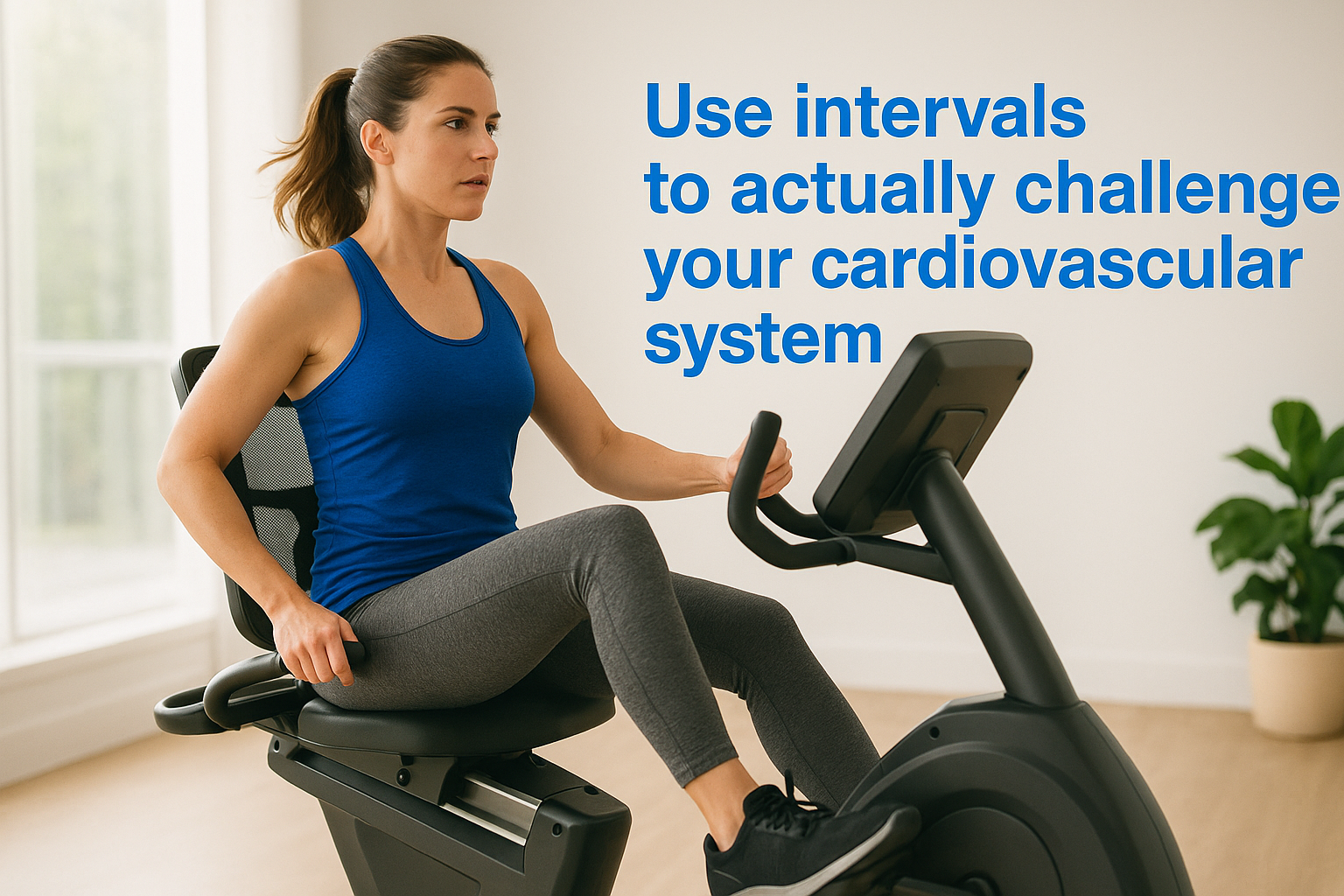
Steady pedaling maintains fitness, but resistance changes are what actually build it.
A simple interval structure looks like this:
- Warm up for 5 minutes at low resistance to get your joints moving
- Push hard for 1 minute at a resistance level that makes conversation difficult
- Recover for 2 minutes at your warm-up pace
- Repeat the push and recovery cycle 6 to 8 times
- Cool down for 5 minutes at low resistance to bring your heart rate back down
This pattern works on any stationary bike recumbent model with at least 15 to 20 resistance levels, since you need enough range between your recovery and push settings to feel a real difference.
Track your heart rate and let the numbers guide you
Guessing your effort level leaves a lot of progress on the table. A built-in heart rate monitor, or a wireless chest strap paired to your console, tells you exactly how hard you’re working instead of relying on how tired your legs feel. Most riders should aim for 60 to 70 percent of their max heart rate during steady sessions and closer to 80 percent during interval pushes. The American Heart Association publishes target heart rate ranges by age that make a useful reference point if you’re not sure where you fall. Consoles with Bluetooth connectivity, like 3G Cardio’s FreeSync FTMS system, let you pair a heart rate strap and sync that data straight into the fitness app you already use, so you’re not stuck squinting at a tiny built-in screen mid-workout.
Build consistency before you chase intensity
Frequency beats intensity for anyone building a long-term habit on recumbent bike exercise equipment. Riding four or five days a week at a moderate effort, with each session lasting as long as your goal calls for, produces better long-term results than one brutal weekly session followed by four days off. Pick a time of day you can realistically protect, whether that’s early morning before work or a wind-down ride in the evening, and treat it as non-negotiable for at least a month. Once the habit sticks, layering in intervals and resistance progression becomes a lot easier than trying to build both the habit and the intensity at the same time.
What to expect: pricing, warranties, and where to buy
Pricing on a recumbent bike spans a wide range, and understanding why helps you avoid overpaying for junk or underpaying for something that won’t last. Big-box retailers sell entry-level models for $300 to $600, and those prices reflect thinner steel, plastic components, and consoles that often stop syncing with apps within a year or two. Commercial-grade machines built for daily home use, like 3G Cardio’s Elite RB X, typically run $1,999 to $2,999, and that price reflects a heavier frame, sealed bearings, and a console designed to hold up to years of regular riding rather than occasional use.
What you’re actually paying for at each price point
Comparing price tiers side by side makes it obvious where the real value sits:
| Price Range | Typical Build | Expected Lifespan | Console Features |
|---|---|---|---|
| Under $600 | Light steel, plastic parts | 1-3 years | Basic display, limited connectivity |
| $600-$1,500 | Mid-weight steel frame | 3-5 years | Some Bluetooth, moderate resistance range |
| $1,999-$2,999 | Commercial-grade steel, sealed bearings | 10+ years | Bluetooth, heart rate monitoring, app pairing |
Paying more upfront for a commercial-grade recumbent bike almost always costs less per year of use than replacing a cheap one every couple of seasons.
Warranty coverage worth checking before you buy
Warranty terms tell you how confident a manufacturer actually is in their own construction, and they’re worth reading closely before you buy a stationary recumbent bike. Residential warranties on a well-built machine should include a lifetime frame guarantee, several years of parts coverage, and at least a year of labor. 3G Cardio’s residential and commercial warranty coverage includes a lifetime frame warranty, 7 years on parts, and 1 year of labor, which signals a company willing to stand behind daily use rather than occasional weekend rides. If you’re buying for a small commercial gym or a shared apartment fitness room, ask specifically about the commercial warranty terms, since residential coverage often shrinks dramatically once a machine sees multiple users per day.
Financing, delivery, and where to buy
Buying direct from a manufacturer’s website usually gets you better pricing and support than shopping for a recumbent exercise bike near you, since there’s no middleman markup and you can call the actual company that built the machine if something goes wrong. 3G Cardio sells its full lineup directly through its website and also lists equipment on Amazon for buyers who prefer that checkout process, and the company backs both channels with a price matching guarantee within six months of purchase, so you’re never stuck overpaying if a sale comes along later.
A few practical purchase details worth confirming before you check out:
- Financing options, such as 6 months 0% financing through PayPal Credit, which spreads out the cost of a commercial-grade machine
- Delivery choice between free curbside delivery and paid White Glove delivery with full assembly
- Direct customer support by phone or email, not just a chatbot or ticket queue
- Return window and whether it covers buyer’s remorse or only defects
Getting these details settled before you buy means the only surprise waiting for you is how much you enjoy the workouts.
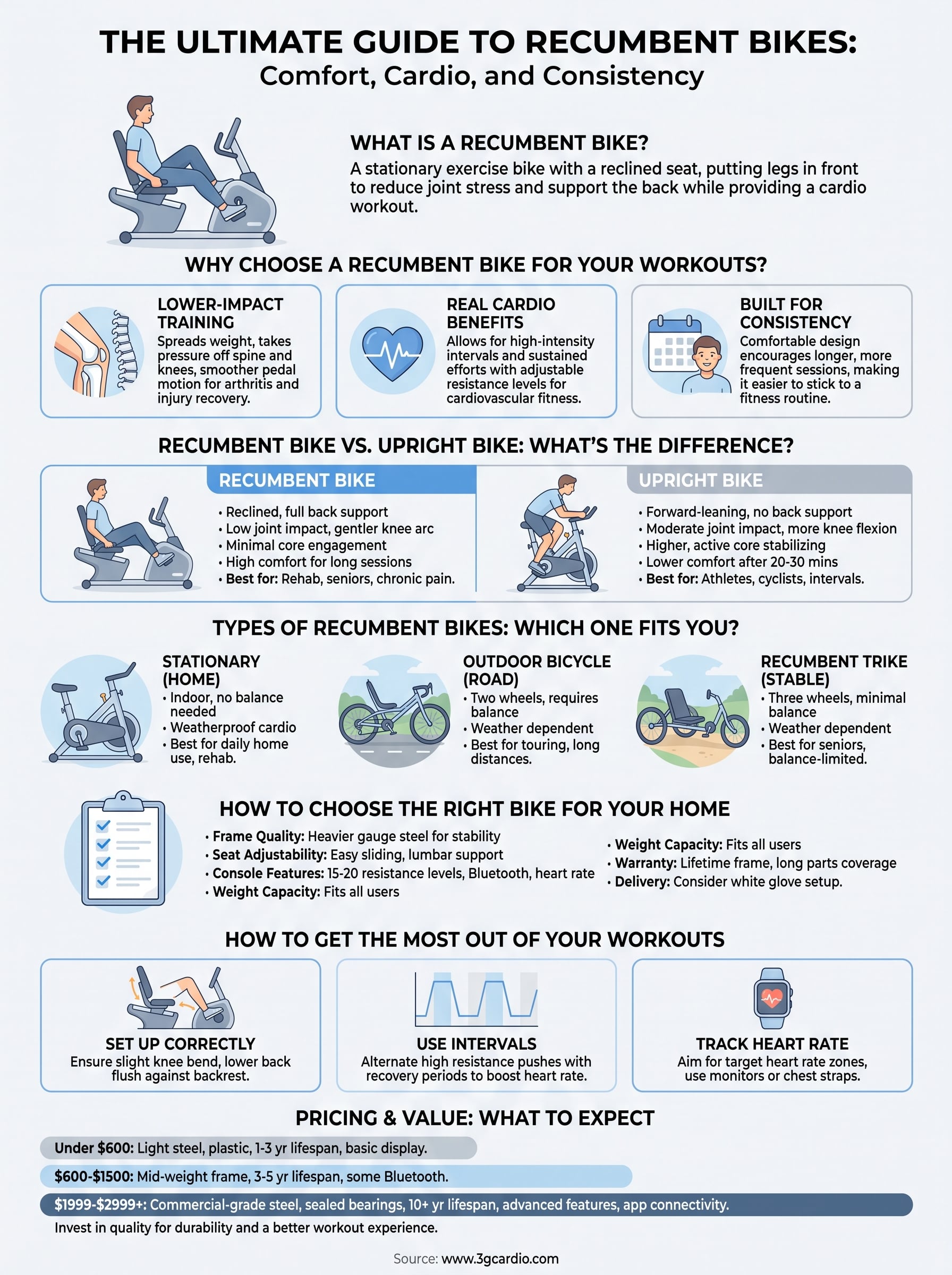
Making comfort part of your fitness routine
Comfort and results aren’t opposites when it comes to cardio, they’re partners. A recumbent bike proves that point every time someone with cranky knees or a tired lower back finally sticks with a workout routine because the machine stopped fighting them. You get real cardiovascular gains, joint-friendly mechanics, and a seat you’ll actually want to return to tomorrow.
Getting the buying decision right matters just as much as the workout itself. Frame quality, seat adjustability, resistance range, and warranty coverage separate a machine that lasts fifteen years from one you’ll be replacing next spring. Skip the guesswork and shop equipment built for daily use rather than occasional weekends.
Riders who want that combination of comfort and commercial-grade durability, plus the Bluetooth connectivity to pair with the fitness apps they already use, should look at the Elite RB X, the recumbent bike built for daily riding and the machine Consumer Reports named best in its class for 2025.




No Comments