

31 Aug 8 Walking Treadmill Benefits for Health and Weight Loss
You don’t need to run yourself ragged to get real results from a treadmill. Walking is one of the most underrated tools in fitness, and understanding the walking treadmill benefits backed by research might be exactly what convinces you to use the machine sitting in your garage more often, or to finally invest in one.
If you’re wondering whether walking on a treadmill actually moves the needle for your health, the short answer is yes. It lowers your risk of heart disease, helps manage blood sugar, strengthens joints without the pounding of running, and burns real calories when done consistently. It’s also one of the few forms of exercise that almost anyone can start today, regardless of age or fitness level, and stick with long enough to see lasting weight loss.
Below, we break down eight specific benefits of treadmill walking, from cardiovascular health to mental clarity, so you can see exactly why this simple habit deserves a spot in your routine. We’ll also touch on what kind of treadmill setup makes walking workouts more effective and enjoyable, since the right equipment matters more than people think, and our guide to picking a treadmill that fits your walking goals covers the specs in detail.
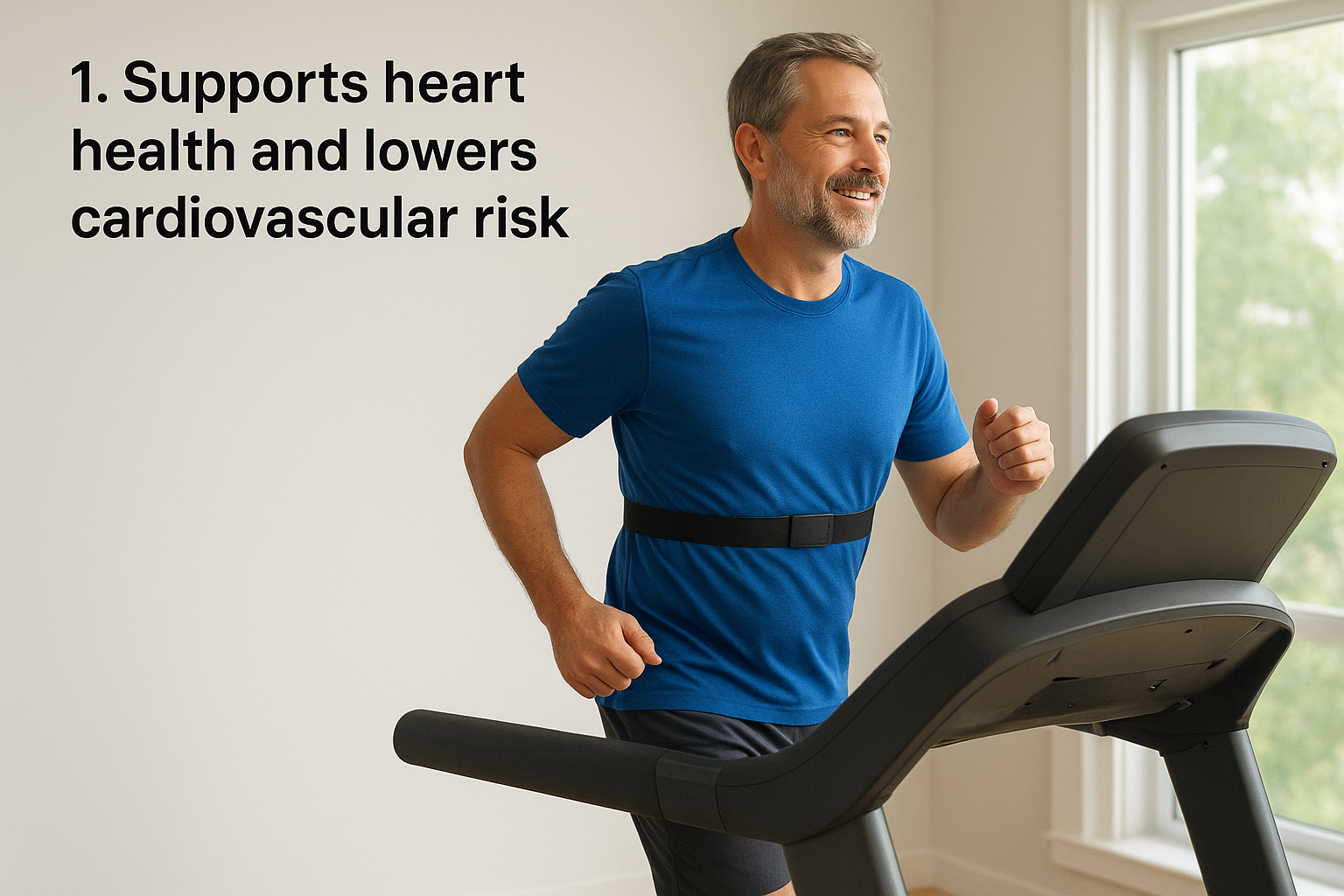
1. Supports heart health and lowers cardiovascular risk
Walking on a treadmill gets your heart pumping at a pace your joints can handle, and that steady rhythm is exactly what your cardiovascular system needs. Among all the walking treadmill benefits, this one carries the most weight because heart disease remains the leading cause of death in the United States, according to the CDC. Regular brisk walking strengthens your heart muscle, improves circulation, and helps your blood vessels stay flexible over time, which is why walking on a treadmill counts as good cardio exercise even if you never jog a step.
The science behind it
Research consistently links moderate-intensity walking to lower blood pressure, improved cholesterol ratios, and reduced resting heart rate. When you walk briskly, your heart adapts by pumping more blood per beat, which means it works less to do the same job over months of consistent effort. The American Heart Association recommends at least 150 minutes of moderate aerobic activity weekly, and brisk treadmill walking checks that box without the joint stress that comes with running.
A daily 30-minute brisk walk can lower your risk of cardiovascular disease as effectively as more intense workouts, without the recovery time.
How to maximize this benefit
Aim for a pace that raises your heart rate into the moderate zone, roughly 50 to 70 percent of your max heart rate, where you can talk but not sing. A treadmill with incline settings helps you hit that zone without walking unnaturally fast. Consistency matters more than intensity here, so five 30-minute sessions a week beat one exhausting hour-long walk.
- Warm up for 3 to 5 minutes at an easy pace
- Increase incline gradually instead of speed alone
- Track heart rate with a wireless heart rate strap to stay in your target zone
- Cool down for 5 minutes before stopping
Who benefits most
People managing high blood pressure, prediabetes, or a family history of heart disease see some of the biggest gains from this habit. It’s also ideal for anyone returning to exercise after a long break, since treadmill walking builds cardiovascular endurance gradually rather than shocking the system. Older adults especially benefit, since low-impact walking delivers real heart protection without the fall risk or joint wear that comes with higher-impact cardio options.
2. Helps you lose weight and burn fat
Walking on a treadmill burns calories steadily, and that steady burn adds up faster than most people expect. A 160-pound person walking briskly for 30 minutes torches roughly 150 to 200 calories, and doing that five times a week creates a real calorie deficit without the joint pounding of running, which answers the common question of whether you can lose weight just walking on a treadmill. This is one of the most practical walking treadmill benefits for anyone trying to shed pounds without overhauling their entire routine.
The science behind it
Studies on moderate-intensity walking show it primarily taps fat stores for fuel, especially when sessions last 30 minutes or longer, and the same evidence explains whether cardio actually burns belly fat. Your body shifts from burning stored glycogen to burning fat once you settle into a sustained pace, which is why longer, consistent walks outperform short bursts for fat loss. Adding incline walking increases the calorie burn significantly, sometimes by 50 percent or more compared to flat walking at the same speed, so it pays to know how steep an incline to set on a treadmill.
Thirty minutes of brisk incline walking burns nearly as many calories as jogging, minus the joint impact.
How to maximize this benefit
Bump the incline to 3 to 5 percent instead of increasing speed, since incline settings raise your heart rate and calorie burn without adding impact stress. Pair your walks with a protein-focused diet to preserve muscle while losing fat.
Who benefits most
Anyone carrying extra weight that makes running uncomfortable will find treadmill walking is the easiest path forward. It also works well for people who’ve hit a plateau with other workouts and need a sustainable, joint-friendly option they’ll actually keep doing.
3. Strengthens bones without joint strain
Walking on a treadmill is weight-bearing exercise, which means your bones respond to the impact by building density instead of breaking down over time. Unlike swimming or cycling, treadmill walking forces your skeleton to support your body weight with every step, and that mechanical load is exactly what triggers bone-strengthening adaptations. Among the health benefits of treadmill walking, this one matters most for anyone worried about osteoporosis or age-related bone loss.
The science behind it
Bone tissue remodels in response to stress, and walking provides just enough load to stimulate new bone formation without the jarring force that running or jumping create, which is also why people ask whether treadmill running is safe for your knees. The National Institute on Aging notes that regular weight-bearing activity slows bone density loss, particularly in the hips and spine, two areas most prone to fracture as people age.
Treadmill walking builds bone density the same way running does, just without punishing your knees to get there.
How to maximize this benefit
Add incline whenever possible, since uphill walking increases the load on your bones without adding harmful impact. Walking three to five times weekly for 30 minutes delivers noticeable bone-density benefits within several months.
Who benefits most
Postmenopausal women, who lose bone density faster due to hormonal shifts, gain the most from consistent treadmill walking. Older adults recovering from joint issues, plus anyone with a family history of osteoporosis, should treat this habit as preventive medicine rather than optional exercise.
4. Builds lower-body strength and mobility
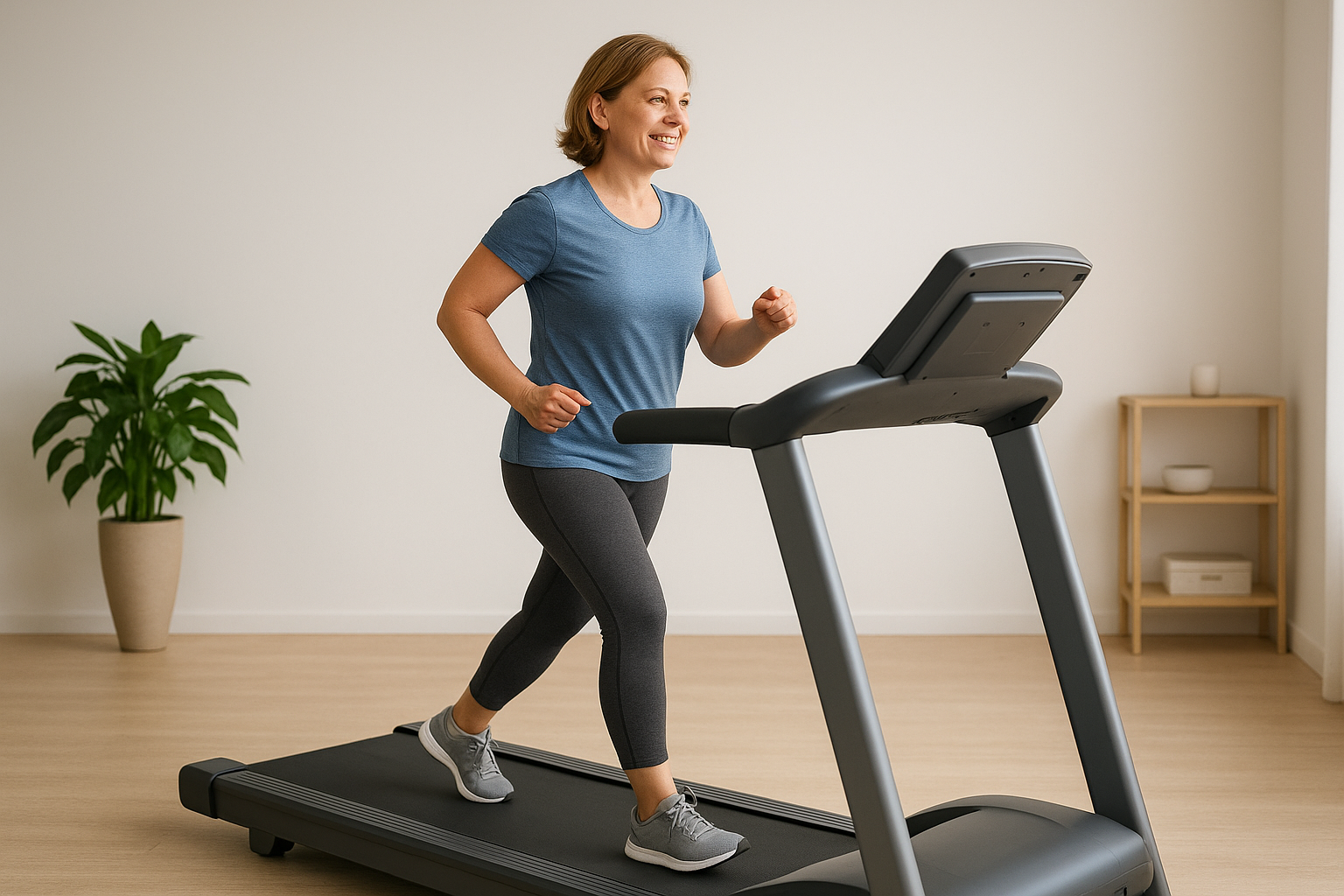
Every step on a treadmill engages your calves, quads, hamstrings, and glutes in a pattern that mirrors natural walking, but with more control over intensity than you get outdoors. This repetitive loading builds functional strength in muscles you rely on daily, and it keeps your hips and ankles moving through a full range of motion. Among the walking treadmill benefits tied to physical function, this one shows up fastest in everyday tasks like climbing stairs or standing up from a chair.
The science behind it
Muscle fibers respond to repeated contraction by growing stronger and more efficient, and incline walking recruits your posterior chain, glutes and hamstrings, more heavily than flat walking does, much like the muscle groups a climbing motion targets. Joint mobility improves too, since consistent movement lubricates cartilage and keeps connective tissue pliable rather than stiff.
Walking uphill on a treadmill builds real leg strength while keeping every joint moving through its natural range.
How to maximize this benefit
Rotate incline levels between 2 and 8 percent across your week to target different muscle groups. A treadmill with adjustable stride settings, like the models on the Elite Runner X, lets you vary your gait without straining your hips or knees.
Who benefits most
Older adults working to maintain mobility, plus anyone recovering from a lower-body injury, gain the most from this steady, low-impact strength work.
5. Boosts mood and lowers stress levels
Stepping onto a treadmill after a rough day does more than distract you, it changes your brain chemistry. Walking triggers the release of endorphins and serotonin, the same chemicals targeted by many anti-anxiety treatments, which is why a 20-minute walk can leave you feeling noticeably calmer and why treadmill exercise can help fight depression. This is one of the walking treadmill benefits people notice almost immediately, often before any physical changes show up.
The science behind it
Rhythmic, repetitive movement like walking lowers cortisol, your body’s main stress hormone, while boosting blood flow to areas of the brain tied to mood regulation. Research from the National Institute of Mental Health links regular aerobic activity to reduced symptoms of anxiety and depression, with effects comparable to some talk-therapy approaches for mild cases.
A brisk 20-minute treadmill walk can lower stress hormones as effectively as a short meditation session.
How to maximize this benefit
Walk without your phone glued to your hand. Letting your mind wander, or pairing your walk with music or a podcast you enjoy, amplifies the mood boost. Morning sessions tend to set a calmer tone for the rest of your day.
Who benefits most
Anyone dealing with chronic stress, mild anxiety, or the mental fog that comes with a demanding job will feel this benefit fastest. Shift workers and parents juggling packed schedules often find treadmill walking is the only reliable stress outlet they can fit into a busy day.
6. Sharpens memory and brain function
Walking on a treadmill doesn’t just move your legs, it pumps fresh blood and oxygen straight to your brain, and that boost shows up in sharper thinking and better recall. Regular aerobic movement like treadmill walking increases the size of the hippocampus, the brain region responsible for memory, which is one of the more surprising walking treadmill benefits most people never expect from a simple daily habit.
The science behind it
Studies from the National Institute on Aging show that moderate aerobic exercise increases levels of brain-derived neurotrophic factor, a protein that supports new neuron growth and strengthens existing connections. Older adults who walk regularly show slower rates of cognitive decline compared to sedentary peers, and even younger walkers report clearer focus after consistent sessions.
Thirty minutes of brisk walking a few times a week can grow the part of your brain responsible for memory.
How to maximize this benefit
Keep sessions to at least 30 minutes, since shorter bursts don’t sustain the blood flow increase long enough to trigger lasting cognitive gains. Varying your incline and pace throughout the walk, rather than holding one steady speed, seems to engage more brain regions and deepen the benefit over time.
Who benefits most
Older adults concerned about memory loss or early cognitive decline see the clearest results from consistent treadmill walking, and there’s evidence that vibration training may improve memory as well. Students, professionals facing mental fatigue, and anyone juggling demanding cognitive work also benefit, since a midday walk often clears mental fog faster than a coffee break does.
7. Improves sleep quality
Falling asleep faster and staying asleep longer are two of the more overlooked walking treadmill benefits, especially for people who toss and turn after stressful days. Regular treadmill sessions tire your body in a healthy way, using up physical energy that would otherwise keep you restless at night. This benefit compounds over weeks, so the longer you stick with a walking routine, the deeper and more consistent your sleep tends to become.
The science behind it
Exercise raises your core body temperature during the walk, and the gradual drop afterward signals your brain that it’s time to wind down. Moderate aerobic activity also increases slow-wave sleep, the deep restorative stage where your body repairs tissue and consolidates memory. The CDC notes that adults who get regular physical activity fall asleep faster and report fewer nighttime awakenings than sedentary adults.
A consistent evening or afternoon treadmill walk can shave minutes off the time it takes you to fall asleep.
How to maximize this benefit
Schedule your walk at least three hours before bedtime, since exercising too close to sleep can leave you too alert to wind down. A steady 30-minute session at a moderate pace, rather than an intense sprint session, delivers the calming effect without overstimulating your nervous system.
Who benefits most
People with insomnia, shift workers with irregular schedules, and anyone whose mind races at night gain the most from adding treadmill walks to their daily routine.
8. Delivers convenient, weather-proof workouts
Rain, ice, triple-digit heat, none of it matters when your treadmill sits in the garage or spare room. This is one of the most practical walking treadmill benefits because it removes every excuse tied to weather, daylight, or safety concerns about walking alone outside after dark, and it tops the list of reasons to own your own treadmill. Consistency drives every other benefit on this list, and a treadmill removes the biggest obstacle to staying consistent.
The science behind it
Behavioral research on exercise adherence points to environmental friction as one of the top reasons people quit a routine. When a walk requires checking the forecast, driving to a trail, or bundling up against wind, the odds of skipping it climb fast. A treadmill collapses that friction to almost nothing, which is why home equipment owners tend to log more weekly minutes than outdoor-only walkers.
Removing weather and daylight from the equation is often the single biggest reason a walking habit actually sticks.
How to maximize this benefit
Keep your treadmill somewhere visible, not tucked in a corner you forget about. A model with Bluetooth connectivity, like the Elite Runner X, lets you stream a show or fitness app during walks from your own tablet with no subscription fees, which makes the convenience factor even harder to ignore.
Who benefits most
Parents with tight schedules, shift workers, and anyone living somewhere with harsh winters or summers gain the most from year-round, indoor walking access.
Walking your way to better health
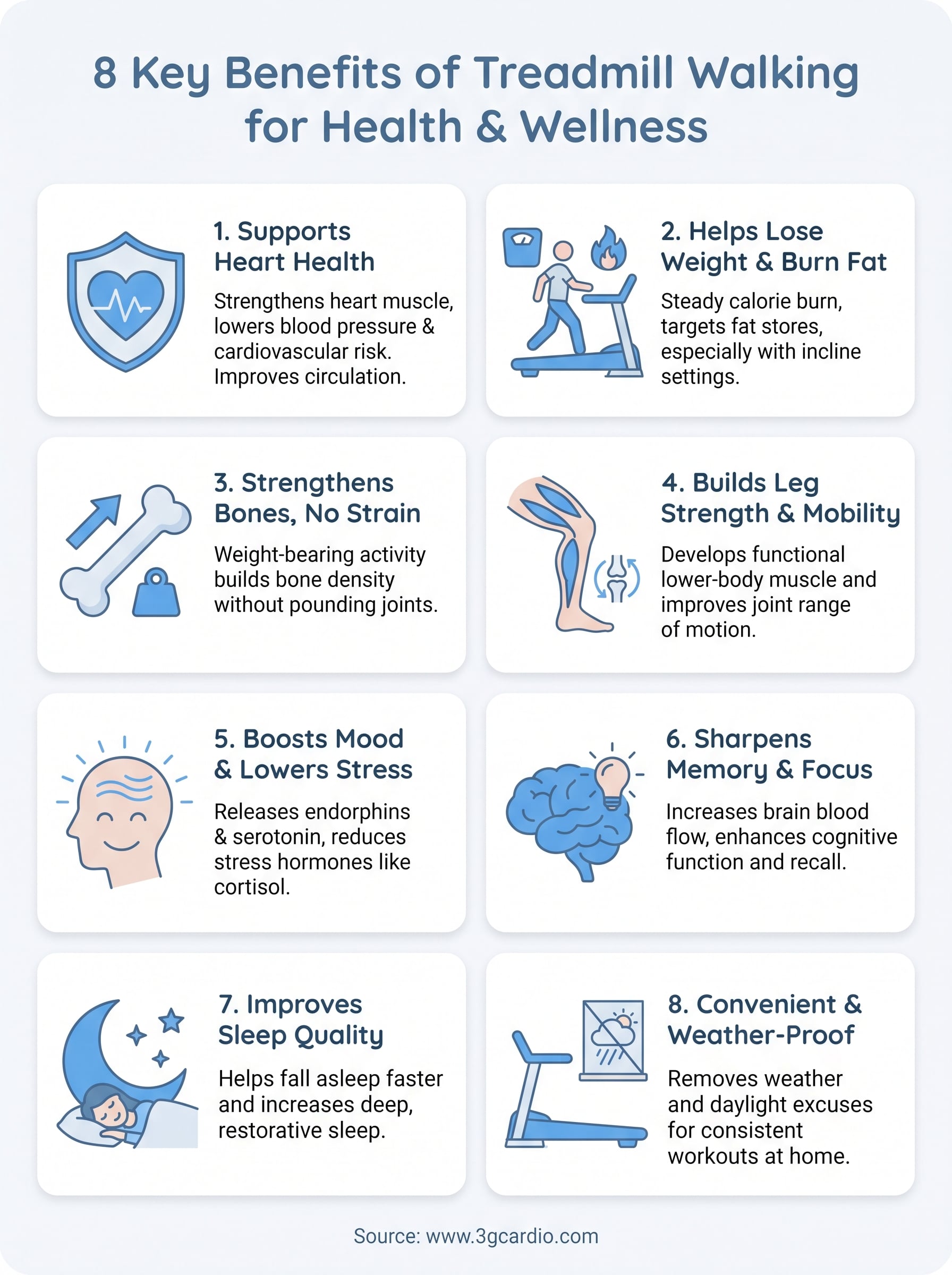
Eight benefits, one simple habit. Walking on a treadmill strengthens your heart, trims fat, protects your bones, builds usable leg strength, lifts your mood, sharpens your thinking, deepens your sleep, and removes weather as an excuse. None of that requires sprinting or exhausting yourself. It just requires showing up consistently, which is exactly what a treadmill makes easier than any outdoor route ever could.
Realizing these walking treadmill benefits comes down to the machine underneath your feet. A cramped belt, a weak motor, or a console that nags you for a subscription will quietly kill your motivation faster than bad weather ever did. Commercial-grade construction and a smooth, cushioned deck make the difference between a habit that lasts years and equipment that becomes a coat rack by spring.
If you’re ready to put these benefits to work at home, take a look at the Elite Runner X, a club-quality walking and running treadmill with a cushioned 22-inch-wide deck, and start walking toward real results today.




No Comments