

03 Sep 8 Quietest Treadmills for Home Use in 2026
Your neighbor bangs on the ceiling every time you run before work. Your spouse can’t sleep because the belt thumps through the floor above the bedroom. If you live in an apartment or share thin walls with anyone, treadmill noise isn’t a minor annoyance, it’s the reason your equipment ends up as a clothes rack in the corner. Finding the quietest treadmill for home use means looking past marketing claims and checking actual motor design, deck cushioning, and belt construction.
A truly quiet treadmill for home workouts comes down to a few mechanical details: a well-balanced motor, a shock-absorbing deck, and a belt system that doesn’t slap with every stride. We tested and compared machines against these standards, not just decibel numbers pulled from spec sheets, because how a treadmill sounds during an actual run matters more than a lab reading.
This list breaks down eight treadmills built for quiet operation in 2026, covering motor quality, noise reduction features, and real-world running feel. We built our own Elite Runner X and Pro Runner X models with commercial-grade components and quiet performance in mind, so we know what separates a genuinely silent machine from one that just claims to be. Read on to find the right fit for your space.
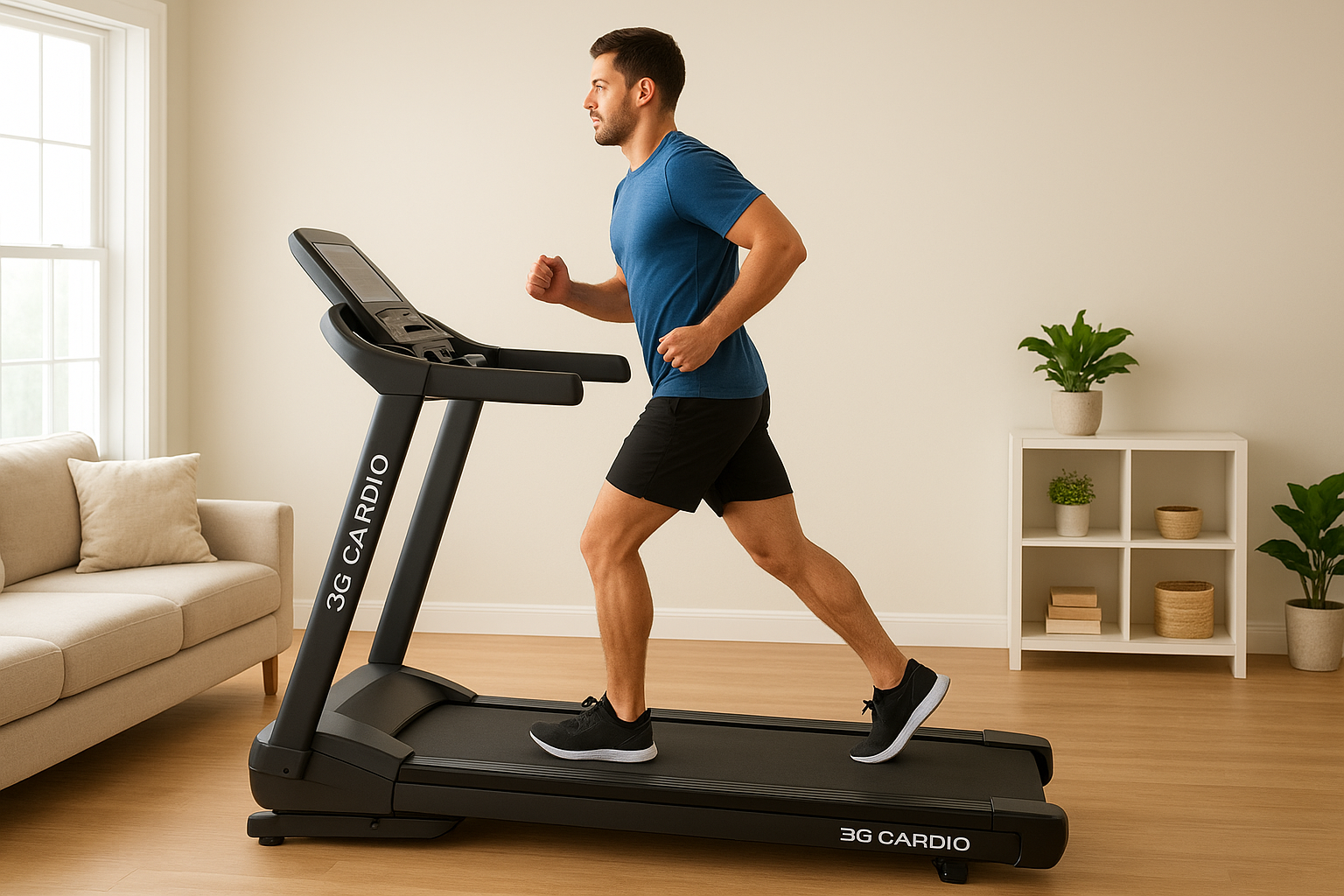
1. 3G Cardio Elite Runner X Treadmill
The Elite Runner X sits at the top of this list because we designed it from the ground up to solve the exact problem you’re dealing with. Living rooms, apartments, and second-floor home gyms all punish loud equipment, so every part of this treadmill, from the motor mount to the deck suspension, got built to keep sound down without cutting corners on performance.
Noise level and quiet features
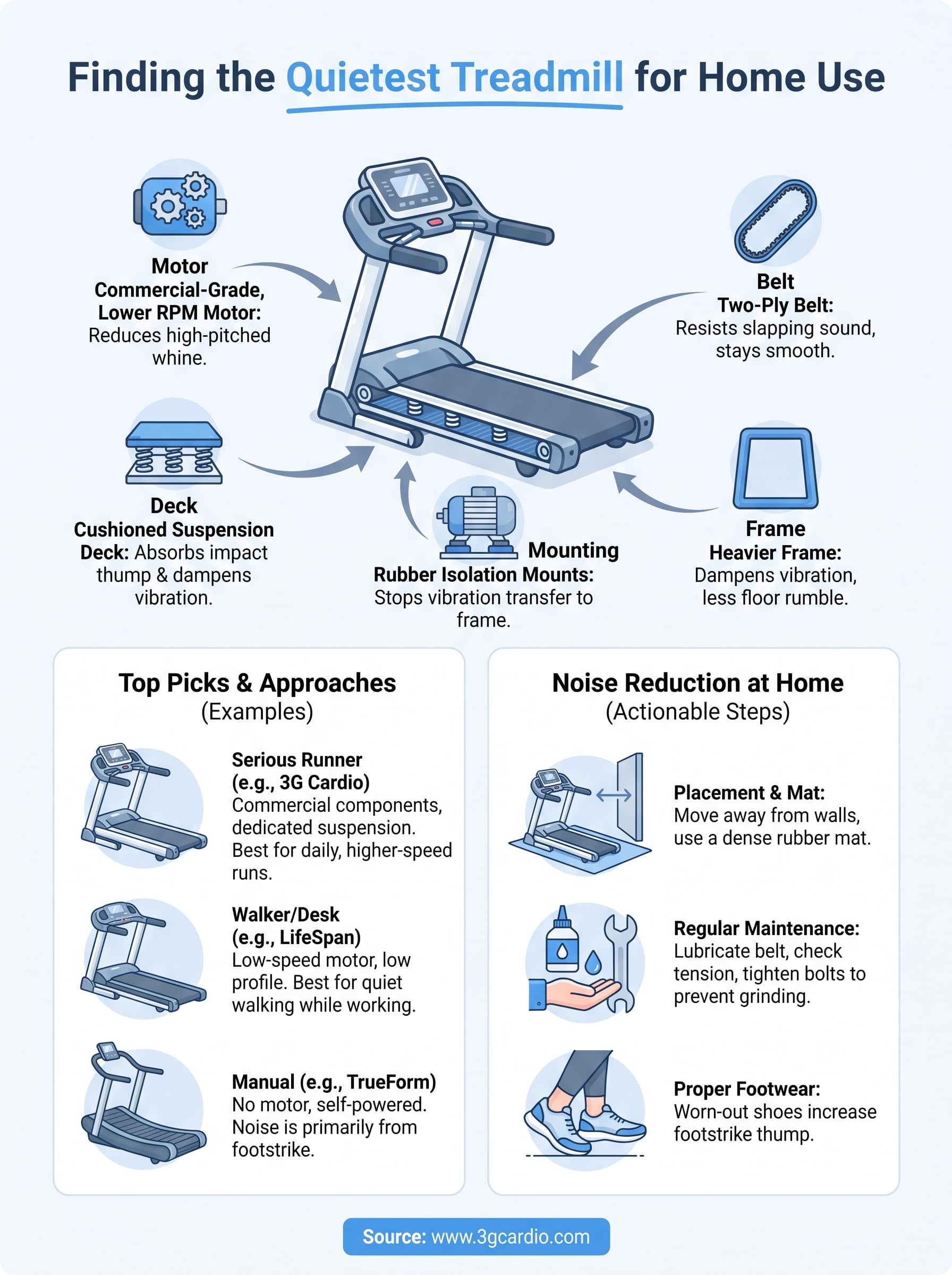
Much of the quiet comes from a commercial-grade 4.0 HP motor that runs at lower RPMs than cheaper consumer motors, which cuts the whine you hear on budget machines. The deck uses a cushioned suspension system with shock absorbers positioned under the belt path, so foot strikes get dampened before that impact turns into a thump you’d hear in the room below. The belt itself is a two-ply design that resists the slapping sound thin, single-ply belts produce once they stretch out after a few months of use.
A quiet treadmill isn’t one loud part fixed well, it’s a dozen small design choices working together.
We also isolated the motor housing with rubber mounts rather than bolting it directly to the frame, which stops vibration from transferring into the floor. Runners who’ve used both budget and commercial-grade machines consistently tell us this is the difference they notice first, less floor-borne rumble even at faster paces, and it’s part of why Business Insider named the Elite Runner the best treadmill for quiet workouts.
Best for
This treadmill fits serious home runners who train regularly and need a machine that can handle daily five-mile runs without breaking down or getting louder over time. It also suits apartment dwellers and shared households where a loud treadmill would create real friction with neighbors or family members trying to sleep or work nearby. If you want a machine you can run on at 6 a.m. without waking anyone up, this is built for that use case specifically.
Key specs
| Spec | Detail |
|---|---|
| Motor | 4.0 HP commercial-grade, continuous duty |
| Running surface | 22" x 62" |
| Max speed | 12 mph |
| Incline | 0-15% power incline |
| Max user weight | 400 lbs |
| Console | FreeSync FTMS Bluetooth, connects to Kinomap and other apps |
| Extras | Tablet shelf, USB charging, wireless heart rate strap included |
Bluetooth connectivity through our FreeSync FTMS system lets you pair the console with Kinomap or other third-party apps using Bring Your Own Screen (BYOS) technology, so you’re not locked into a subscription just to see your workout data.
Price and warranty
Pricing lands in the $3,000 to $4,000 range depending on current promotions, which is lower than most commercial-spec treadmills from bigger brands carrying similar motor and deck quality. Every Elite Runner X ships with a lifetime frame warranty, 7-year parts coverage, and 1-year labor, plus free curbside delivery or optional White Glove delivery and installation if you’d rather not assemble it yourself. We also back it with a price match guarantee within six months of purchase, so you’re not stuck wondering if you overpaid. If you’re comparing this against other quiet options on this list, the combination of commercial components at a residential price point is what tends to seal the decision for buyers dealing with noise-sensitive living situations.
2. NordicTrack Commercial 1750 Treadmill
NordicTrack built a name on iFit-driven training, and the Commercial 1750 carries that reputation into a fairly quiet package for a mass-market machine. It won’t match a purpose-built quiet treadmill for home runners who log serious mileage, but for casual to moderate use it holds up well against louder budget competitors.
Noise level and quiet features
Owners consistently mention that the 3.75 CHP motor runs smoother than older NordicTrack models, with less of the high-pitched whine that plagues cheaper drive systems. The deck cushioning, branded FlexSelect, lets you adjust firmness between joint-friendly and firm road-like feel, and softer settings noticeably reduce impact noise during heavier footstrikes. That said, the incline and decline motors can produce audible whirring during automatic terrain changes if you’re running iFit workout videos, something to keep in mind if you’re on a lower floor with people below you.
Adjustable cushioning helps with noise, but automated incline motors can undo some of that quiet during interval workouts.
Best for
This treadmill suits iFit subscribers who want guided trainer-led runs and don’t mind paying an ongoing membership fee for content. It also works for households with moderate noise concerns, like a detached home or a garage gym, rather than an apartment where every incline shift might be audible through the ceiling.
Key specs
| Spec | Detail |
|---|---|
| Motor | 3.75 CHP |
| Running surface | 22" x 60" |
| Max speed | 12 mph |
| Incline/decline | -3% to 15% |
| Max user weight | 300 lbs |
| Touchscreen | 14" HD, iFit integration |
Price and warranty
Pricing generally runs between $1,800 and $2,200, though iFit membership adds a recurring monthly cost on top of that. The warranty covers a 10-year frame, 2-year parts, and 1-year labor, shorter than what you’ll find on commercial-grade residential machines. Delivery typically requires assembly unless you pay extra for white glove service.
3. Horizon 7.0 AT Treadmill
Horizon built its reputation on affordable machines that still feel solid underfoot, and the 7.0 AT is the brand’s answer for buyers who want a quiet treadmill for home use without paying commercial prices. It’s one of the treadmills that fold up for storage, which matters if you’re squeezing a treadmill into a small apartment or a shared living space where every square foot counts.
Noise level and quiet features
The 3.5 CHP motor stays relatively quiet at walking and jogging speeds, though you’ll notice more motor drone once you push past 6 mph. Horizon’s Perfect Flex Cushioning system uses variable-response elastomers under the deck, softening impact at the front of the belt where your foot lands hardest. This is one of the more affordable machines on this list that still manages to qualify as a quietest treadmill for home pick in its price bracket, mostly because the folding hinge is reinforced to stop the rattling that cheaper foldable decks develop after a year of use.
Cheap foldable treadmills often get louder with age; Horizon’s reinforced hinge is built to resist that.
Belt tracking stays consistent out of the box, which matters because a belt that drifts and needs constant re-centering tends to rub against the frame and create a grinding noise over time.
Best for
Casual walkers and joggers who want quiet operation on a tighter budget fit this machine well. Renters and apartment dwellers who need to fold the deck upright between workouts will also appreciate the compact footprint.
Key specs
| Spec | Detail |
|---|---|
| Motor | 3.5 CHP |
| Running surface | 20" x 60" |
| Max speed | 12 mph |
| Incline | 0-15% |
| Max user weight | 375 lbs |
| Console | 8" LCD, Bluetooth, Horizon ViewFit app |
Price and warranty
Expect to pay between $999 and $1,199, making it one of the cheapest options here and a close cousin to the sub-$1,000 home treadmill picks we’ve compared elsewhere. Horizon backs it with a lifetime frame and motor warranty, 2-year parts, and 1-year labor, solid coverage for the price point, though shorter than what commercial-grade machines typically offer.
4. Sole F80 Treadmill
Sole has built a loyal following among home gym buyers who want commercial-feel machines without commercial-size price tags, and the F80 continues that pattern. It’s heavier and more substantial than most treadmills in this price range, and that extra mass plays directly into how quiet it runs.
Noise level and quiet features
Underneath the deck sits a 3.5 CHP motor paired with Sole’s Cushion Flex Whisper Deck, a suspension system built specifically to cut impact noise at the point where your foot lands. The heavier steel frame absorbs vibration that lighter, budget decks simply pass through to the floor, which is why owners on upper floors report less rumble below them compared to similarly priced machines. Belt tension stays consistent thanks to a wider roller design, and that reduces the slapping sound that develops on cheaper belts once they stretch.
A heavier frame isn’t just about durability, it’s often the single biggest factor in how much noise reaches the floor below you.
Running at higher speeds does bring out a bit more motor hum than you’d get from a true commercial unit, but it stays well below what you’d hear from entry-level folding treadmills.
Best for
Home gym owners who want a durable, quiet treadmill for home use without stepping up to full commercial pricing will find the F80 a solid match. It also suits heavier users since the frame and deck are rated for higher weight capacities than most machines in this bracket.
Key specs
| Spec | Detail |
|---|---|
| Motor | 3.5 CHP |
| Running surface | 22" x 60" |
| Max speed | 12 mph |
| Incline | 0-15% |
| Max user weight | 375 lbs |
| Console | 9" LCD, Bluetooth speakers, USB charging |
Price and warranty
Sole prices the F80 around $2,199, positioning it between budget folding treadmills and true commercial machines. The warranty includes a lifetime frame and motor, 5-year parts, and 2-year labor, which holds up well against most competitors at this price. Delivery arrives curbside by default, with white glove setup available as a paid add-on.
5. Peloton Tread
Peloton built its business on group fitness energy, but the Tread itself is quieter than its reputation suggests once you separate the machine from the instructor shouting through the speakers. Buyers drawn to this list because they want a quiet treadmill for home setup with built-in classes will find the hardware holds up, even if the subscription model isn’t for everyone.
Noise level and quiet features
Below the touchscreen sits a belt design borrowed from Peloton’s commercial studio units, which resists the slap noise that budget belts develop after months of use. The deck cushioning softens footstrike without feeling mushy, and the drive motor runs quiet enough that most owners say the loudest sound during a run is their own breathing, not the machine. Where it loses points against a purpose-built quiet unit is the fan, which kicks on during class-based workouts and adds a steady hum that’s noticeable in small rooms.
The Tread’s motor is quiet, but the cooling fan and subscription-driven classes add noise a standalone treadmill wouldn’t.
Speaker volume during instructor-led classes is really the bigger noise factor here, not the mechanical parts, so keeping headphones handy solves most of the issue.
Best for
This machine suits subscribers who want guided workouts and don’t mind paying a recurring membership fee for content. It also works well for detached homes or basements where the class audio won’t travel through shared walls the way it might in an apartment.
Key specs
| Spec | Detail |
|---|---|
| Motor | Commercial-grade, belt-drive |
| Running surface | 20" x 59" |
| Max speed | 12.5 mph |
| Incline | 0-12.5% |
| Max user weight | 297 lbs |
| Touchscreen | 23.8" HD, Peloton app required |
Price and warranty
Peloton prices the Tread around $2,995, plus a required monthly app membership to access classes and full functionality. The warranty covers a 12-month frame, parts, and labor, notably shorter than the lifetime coverage found on commercial-grade home machines. Delivery includes assembly, though white glove setup costs extra depending on your location.
6. Echelon Stride-6s Treadmill
Echelon built its name on compact, budget-friendly cardio machines that ship folded and mount a tablet where a full console would normally go. The Stride-6s follows that same playbook, trading bulk for a smaller footprint that suits tight apartments where a full-size treadmill just won’t fit.
Noise level and quiet features
A 2.75 CHP motor keeps this machine quiet at walking speeds, though it strains audibly once you push toward jogging pace, which is really where this treadmill’s comfort zone ends. The deck uses basic foam cushioning rather than a dedicated shock-absorption system, so footstrike noise stays low mostly because the machine discourages hard running in the first place. Echelon’s folding hinge is lighter-duty than what you’ll find on Horizon or Sole machines, and it can develop a faint rattle after a year of regular folding and unfolding.
A quiet motor at walking speed doesn’t guarantee a quiet treadmill once you pick up the pace.
Belt tracking holds up reasonably well for the price, though the narrower rollers mean it needs more frequent lubrication to avoid the friction squeak that shows up on budget belts left unmaintained.
Best for
This treadmill fits walkers and light joggers in small apartments who prioritize a compact, foldable frame over top-end performance, alongside other cardio machines sized for tight apartments. It also suits Echelon ecosystem users already subscribed to the brand’s app for bikes or rowers, since the membership carries over across equipment.
Key specs
| Spec | Detail |
|---|---|
| Motor | 2.75 CHP |
| Running surface | 20" x 55" |
| Max speed | 10 mph |
| Incline | 0-10% |
| Max user weight | 275 lbs |
| Console | Tablet holder, Echelon app required for full features |
Price and warranty
Echelon prices the Stride-6s around $1,000 to $1,300, with an optional monthly app subscription for guided content. The warranty covers a 1-year frame, parts, and labor, notably shorter than what you’ll see on commercial-grade or even mid-range residential treadmills. Delivery ships curbside, and assembly falls entirely on the buyer unless you arrange separate installation help.
7. LifeSpan TR1200 Under-Desk Treadmill
LifeSpan designed the TR1200 for a completely different use case than everything else on this list: walking while you work, not running while you sweat, which puts it in the same category as under-desk mini treadmills. It’s low-profile, sits under a standing desk, and tops out at speeds meant for movement, not cardio training, which shapes everything about how quiet it runs.
Noise level and quiet features
A 2.25 CHP motor running at slow, steady speeds produces almost no audible whine, which makes sense since this treadmill rarely exceeds 4 mph. The low-profile deck sits just a few inches off the floor, and that reduced belt-to-motor distance actually helps dampen vibration compared to taller cabinets found on running-focused machines. Because there’s no incline motor and no high-speed drive system working hard, you lose the mechanical noise sources that show up on treadmills built for jogging or sprinting.
Slower speeds mean fewer moving parts working hard, and that’s often the simplest path to a quiet treadmill for home offices.
The belt itself uses a whisper-quiet design rated for continuous walking use throughout an eight-hour workday, so it holds up to sustained, low-impact use without developing the rattling that faster machines pick up over time.
Best for
This machine suits remote workers and desk-based professionals who want to stay active during calls and meetings without disturbing anyone in the next room. It also works well for shared apartments or condos where any louder equipment would create tension with neighbors below, since walking speeds keep footfall noise minimal by design.
Key specs
| Spec | Detail |
|---|---|
| Motor | 2.25 CHP, continuous duty |
| Running surface | 20" x 56" |
| Max speed | 4 mph |
| Incline | None |
| Max user weight | 350 lbs |
| Console | LCD display, Bluetooth to LifeSpan app |
Price and warranty
Pricing typically runs between $999 and $1,199, competitive for a dedicated walking-pad style unit. LifeSpan backs it with a lifetime frame and motor warranty, 3-year parts, and 1-year labor. Delivery arrives curbside, and setup is minimal since there’s no incline mechanism to install.
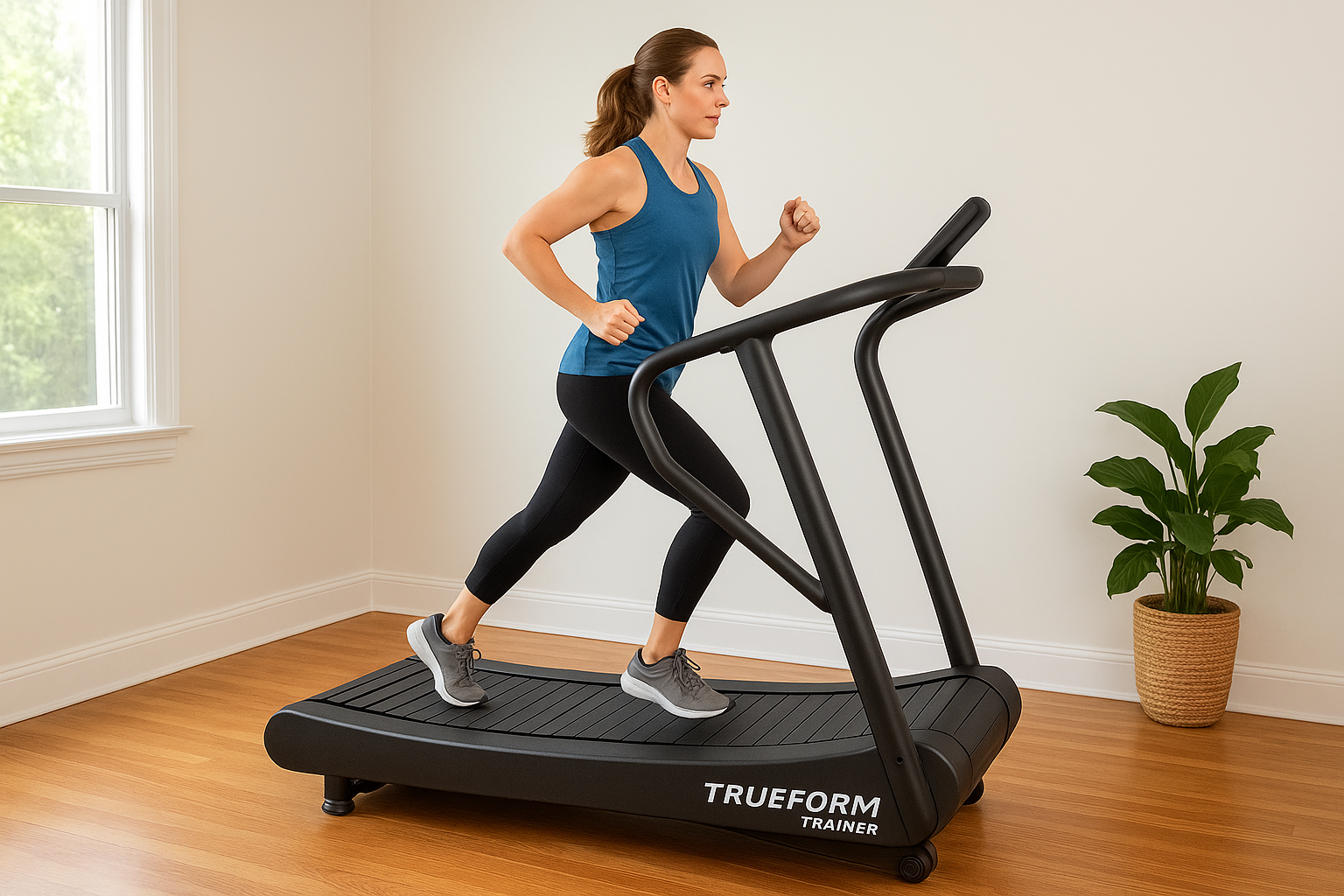
8. TrueForm Trainer Manual Treadmill
TrueForm takes a completely different approach than every other machine on this list: it has no motor at all. This curved, manually driven treadmill relies entirely on your own footstrike to move the belt, which eliminates the single biggest noise source in treadmill design from the start. If you’ve ever wondered whether a quiet treadmill for home use could mean zero motor hum whatsoever, this is the closest you’ll get.
Noise level and quiet features
Without a drive motor, there’s no whine, no belt-drive whir, and no incline motor grinding away during workouts. The curved slat belt runs on a low-friction bearing system that produces a soft, rhythmic swish rather than the mechanical hum you’d hear on motorized machines. Noise here comes almost entirely from your own footfall, so a lighter runner on the balls of their feet will barely register any sound, while a heavier heel-striker will hear more thump regardless of the machine underneath them.
Remove the motor entirely, and footstrike becomes the only sound left to manage.
Because the belt only moves when you push it, there’s also no ambient noise between workouts, no standby hum, no fan running in the background.
Best for
This treadmill suits serious runners who train for speed and sprint work and want a machine that responds instantly to effort rather than lagging behind a motor’s speed adjustment. It also fits noise-sensitive households willing to trade convenience for the quietest possible mechanical footprint, since there’s genuinely no motor to make noise in the first place.
Key specs
| Spec | Detail |
|---|---|
| Motor | None, self-powered curved belt |
| Running surface | 14" x 46" curved slat belt |
| Max speed | Unlimited, user-driven |
| Incline | Fixed curve, no motorized incline |
| Max user weight | 400 lbs |
| Console | Basic LCD, speed and distance tracking |
Price and warranty
TrueForm trainers run considerably higher than motorized options, typically $4,000 to $6,000 depending on the model. The warranty covers a lifetime frame and 5-year parts, with labor coverage varying by model year. Delivery usually requires freight shipping given the unit’s weight, and white glove installation is worth the added cost here.
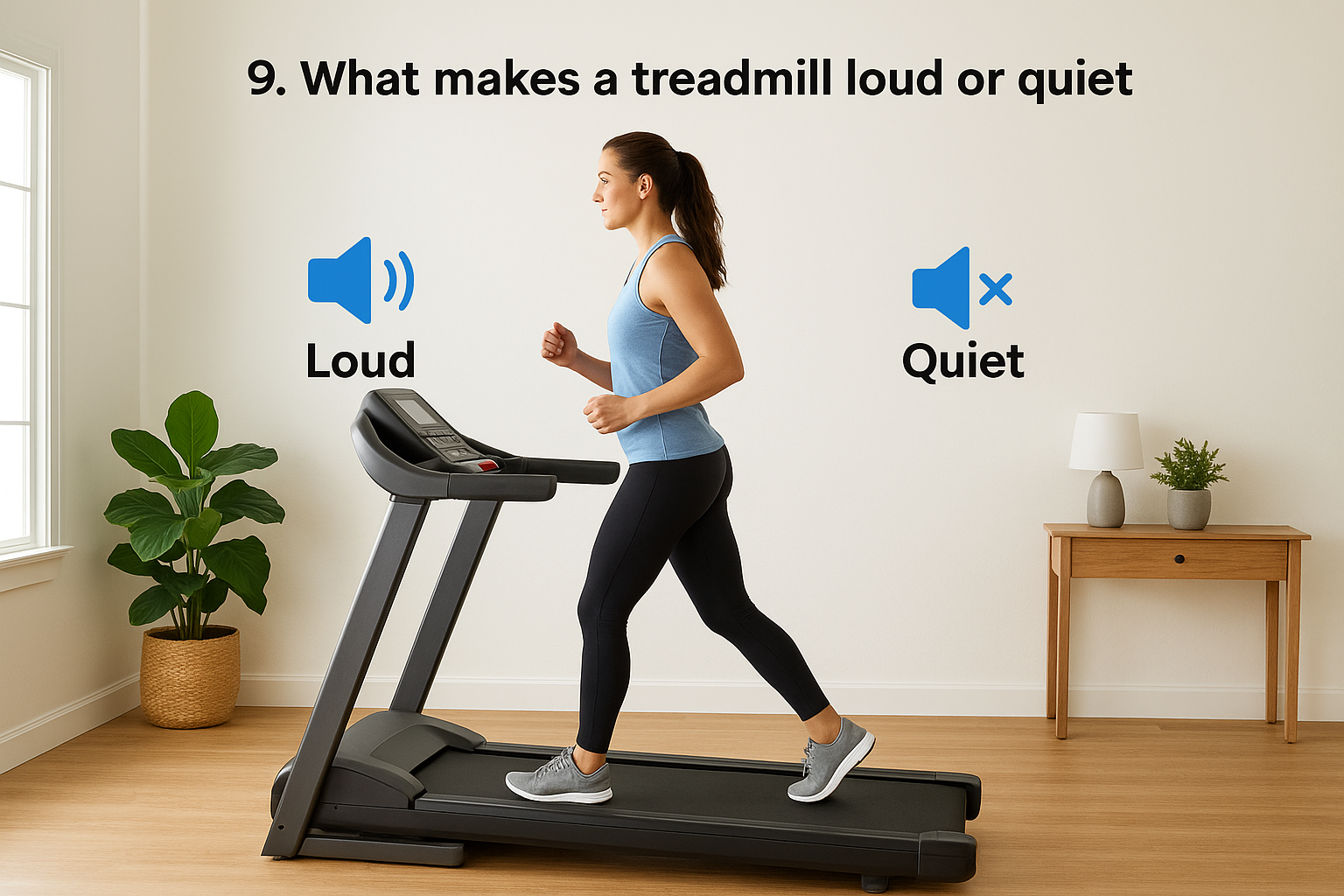
9. What makes a treadmill loud or quiet
Four mechanical systems decide how much noise a treadmill sends into your room, and none of them show up clearly on a spec sheet. The motor design and mounting matter most because a motor spinning at high RPM to hit top speed produces more whine than a larger, lower-RPM motor doing the same job at a relaxed pace. How that motor attaches to the frame matters just as much as the motor itself, since a rigid bolt-on mount transmits vibration straight into the floor while rubber isolation mounts absorb it before it travels anywhere.
Belt and deck construction come next. A single-ply belt stretches faster than a two-ply belt, and once it stretches it starts slapping against the deck with every stride instead of gliding smoothly. Deck cushioning works the same way in reverse: a thin, unpadded deck passes footstrike impact straight through to the frame and into your floor joists, while a properly cushioned deck absorbs that shock before it becomes sound, though there’s a limit to how soft a deck should feel underfoot.
The quietest treadmill for home use isn’t the one with the fewest features, it’s the one where every mechanical part was chosen to reduce vibration before it starts.
Incline motors and cooling fans add a second layer of noise most buyers don’t think about until they own the machine, and there’s also a surprising reason new treadmills make strange noises during their first miles. Automatic incline changes during app-driven workouts introduce a whirring sound that has nothing to do with running speed, and touchscreen consoles often run internal fans that add a constant low hum even when you’re standing still.
| Noise source | What causes it | What reduces it |
|---|---|---|
| Motor whine | High RPM at top speed | Larger, lower-RPM commercial motor |
| Floor vibration | Rigid motor mounting | Rubber isolation mounts |
| Belt slap | Stretched single-ply belt | Two-ply belt, proper tension |
| Impact thump | Thin, unpadded deck | Cushioned suspension system |
| Whirring | Automatic incline motor | Manual or no incline adjustment |
Lastly, overall frame weight plays a role few shoppers consider. Weight adds mass that dampens vibration rather than transmitting it, which is why heavier commercial-grade machines almost always run quieter than light, budget frames built for easy shipping rather than sound control.
10. How to make any treadmill quieter at home
Before you replace a treadmill you already own, try fixing the noise at the source. Placement matters more than most owners realize: putting a treadmill directly against a shared wall or centered on a joist span transmits vibration straight into your neighbor’s ceiling or your own bedroom below. Move it a few feet away from walls and toward the center of a room, over a floor joist intersection if you know where they run, and you’ll cut a surprising amount of transmitted rumble without spending a dollar.
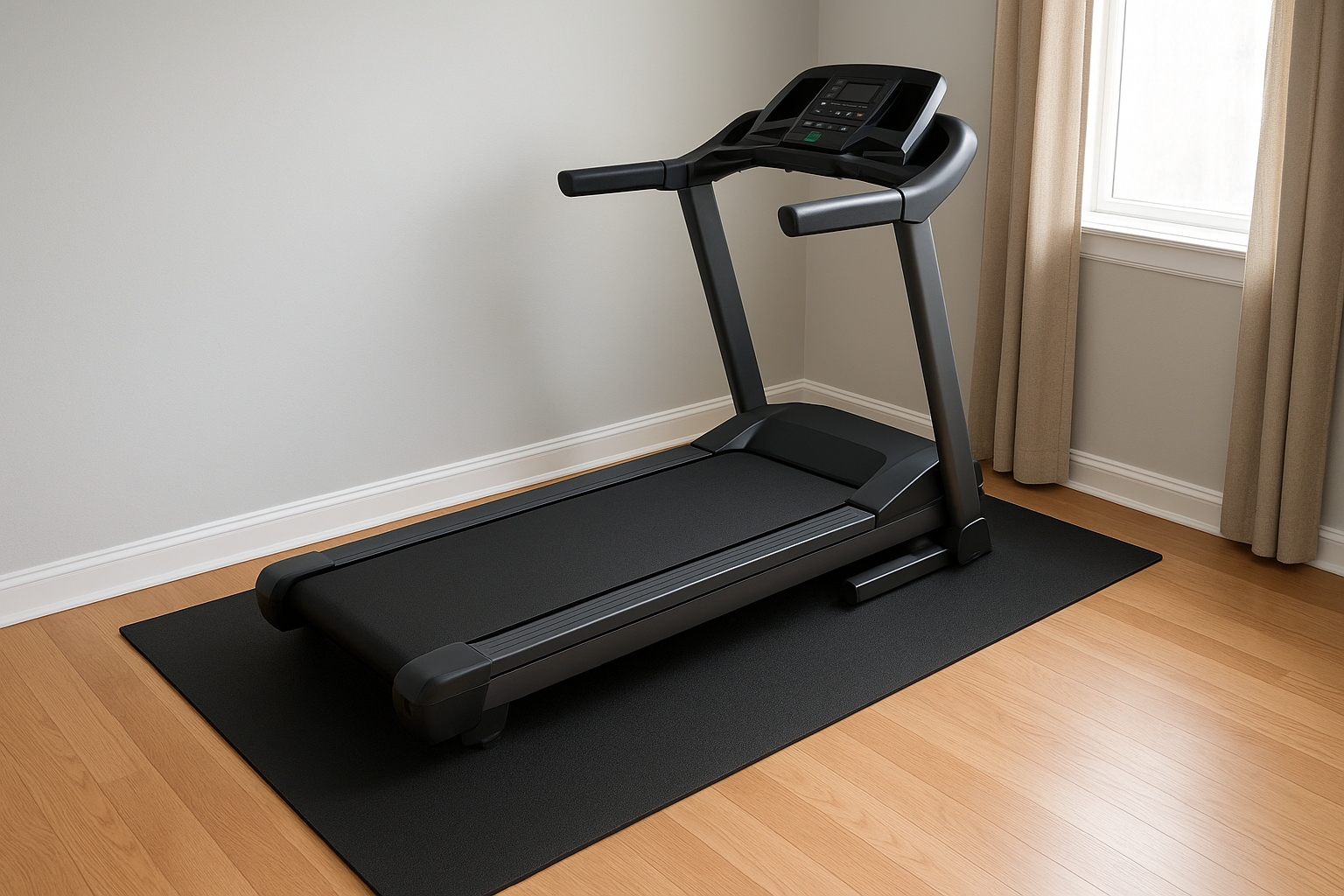
Equipment upgrades come next. A dense rubber treadmill mat placed under the entire frame absorbs vibration before it reaches the subfloor, and it’s one of the cheapest fixes available for a quiet treadmill for home setup. Anti-vibration pads or pucks placed under each leg do a similar job on a smaller scale, isolating point contact instead of spreading weight across a full mat.
A treadmill mat costs less than a dinner out and solves more noise complaints than any console feature ever will.
Maintenance plays a bigger role than most people expect, and keeping your treadmill working better, longer starts with a short routine. Run through this list every few months:
- Lubricate the belt according to the manufacturer’s schedule; a dry belt grinds against the deck and gets louder every week you skip it
- Check belt tension and tracking since a loose or off-center belt slaps and rubs against the frame; here’s how to properly tighten and adjust a walking belt
- Tighten deck bolts and frame screws that loosen from vibration over time
- Vacuum under the deck regularly, since dust buildup on rollers adds friction noise
- Level the frame with the adjustable feet so the unit doesn’t rock during footstrikes
Footwear even factors in here. Running in worn-out shoes with flattened cushioning sends more impact force through the deck, which shows up as extra thump downstairs regardless of how well-built your machine is.
11. How we evaluated these quiet treadmills
Ranking a quiet treadmill for home use isn’t as simple as pulling decibel numbers off a spec sheet, because manufacturers rarely test noise the same way or at the same distance from the machine. We built our evaluation around actual running conditions instead: motor sound at walking pace, jogging pace, and top speed, plus how much vibration transferred through a standard wood-frame floor. That approach matters more to someone in an apartment than a single lab number ever could.
Specifications came first, but only as a starting point, using the same standards laid out in our guide to choosing a treadmill. We compared motor horsepower and RPM ratings, deck cushioning systems, belt ply construction, and frame weight across every model on this list, since those four factors consistently predict real-world noise better than anything printed on a box. Owner reviews and forum feedback filled in the gaps specs can’t cover, especially complaints about rattling hinges, whining incline motors, or belts that got louder after a few months of regular use.
A treadmill’s true noise level shows up after months of use, not during a five-minute showroom test.
Pricing and warranty coverage factored into every ranking too, because a quiet machine that fails within a year isn’t actually a good value regardless of how silent it ran on day one. We weighed each treadmill against these criteria:
- Motor design and RPM range at various speeds
- Deck cushioning and belt ply construction
- Frame weight and how well it dampens vibration
- Owner-reported noise complaints after extended use
- Warranty length relative to price point
- Fit for specific living situations, from apartments to detached homes
Experience with our own manufacturing process shaped this list as well. Building the Elite Runner X taught us firsthand which design choices actually reduce sound and which ones just look impressive in marketing copy, and we applied that same scrutiny to every competitor here.
12. Quiet treadmill questions, answered
Is a treadmill ever completely silent? No. Even a manual, motorless model like the TrueForm Trainer produces some sound from footstrike and the belt’s bearing system. What you’re really chasing when you search for the quietest treadmill for home use is a machine where mechanical noise drops low enough that footfall becomes the dominant sound, not the motor or the frame.
Can I run on a treadmill in an apartment without bothering downstairs neighbors? Yes, if you pair the right machine with the right setup. A commercial-grade motor paired with a dense rubber mat and a placement away from shared walls handles most noise complaints, even in older buildings with thin floor joists.
The right treadmill plus the right mat solves more apartment noise problems than moving to a new unit ever will.
Does treadmill price always predict how quiet it runs? Not directly, but it correlates strongly. Higher-priced machines typically use heavier frames and better motor mounting, both of which dampen sound before it reaches your floor. A $1,000 folding treadmill can still run acceptably quiet, but it rarely matches a commercial-spec unit at higher speeds.
How long before a quiet treadmill starts getting noisier? Most machines show increased noise within one to two years of regular use if maintenance gets skipped, especially belt lubrication and tension adjustments. Even the best-built deck develops belt slap once the belt stretches past its ideal tension, so this isn’t just a budget-machine problem.
Should I buy based on decibel ratings listed by manufacturers? Treat published decibel numbers skeptically. Testing conditions vary wildly between brands, and a rating taken at walking speed from three feet away tells you almost nothing about how the machine sounds during a hard interval run at top speed in your actual living room.
What’s the single biggest noise fix most owners overlook? Placement. Moving a treadmill even two feet away from a shared wall, combined with a proper floor mat, cuts more transmitted vibration than most equipment upgrades costing hundreds of dollars more.
Finding the right quiet treadmill for your space
Quiet treadmill shopping comes down to matching mechanical quality to your living situation. An apartment above a neighbor’s bedroom demands a commercial-grade motor and cushioned deck, not just a low price tag. A detached home with a basement gym has more room for compromise, though nobody actually enjoys a machine that whines at every stride.
Every option on this list solves the noise problem differently, from TrueForm’s motorless design to LifeSpan’s slow-speed walking pad. But if you want a quiet treadmill for home running that holds up under daily mileage without getting louder as the months pass, commercial-grade construction is what separates a five-year investment from a machine you’re replacing next year.
We built the Elite Runner X specifically to answer that need. See the club-quality Elite Runner X treadmill with its 4.0 HP motor and cushioned Ortho Flex Shock deck and decide if it fits your space and your budget.




No Comments