

26 Aug Front Drive Elliptical Trainer: What It Is and How to Buy
Shopping for an elliptical and keep seeing the term front drive elliptical trainer without a clear explanation? You’re not alone. Most shoppers land on spec sheets loaded with jargon about drive placement, flywheel weight, and stride path, but nobody actually explains what it means for your workout or your living room.
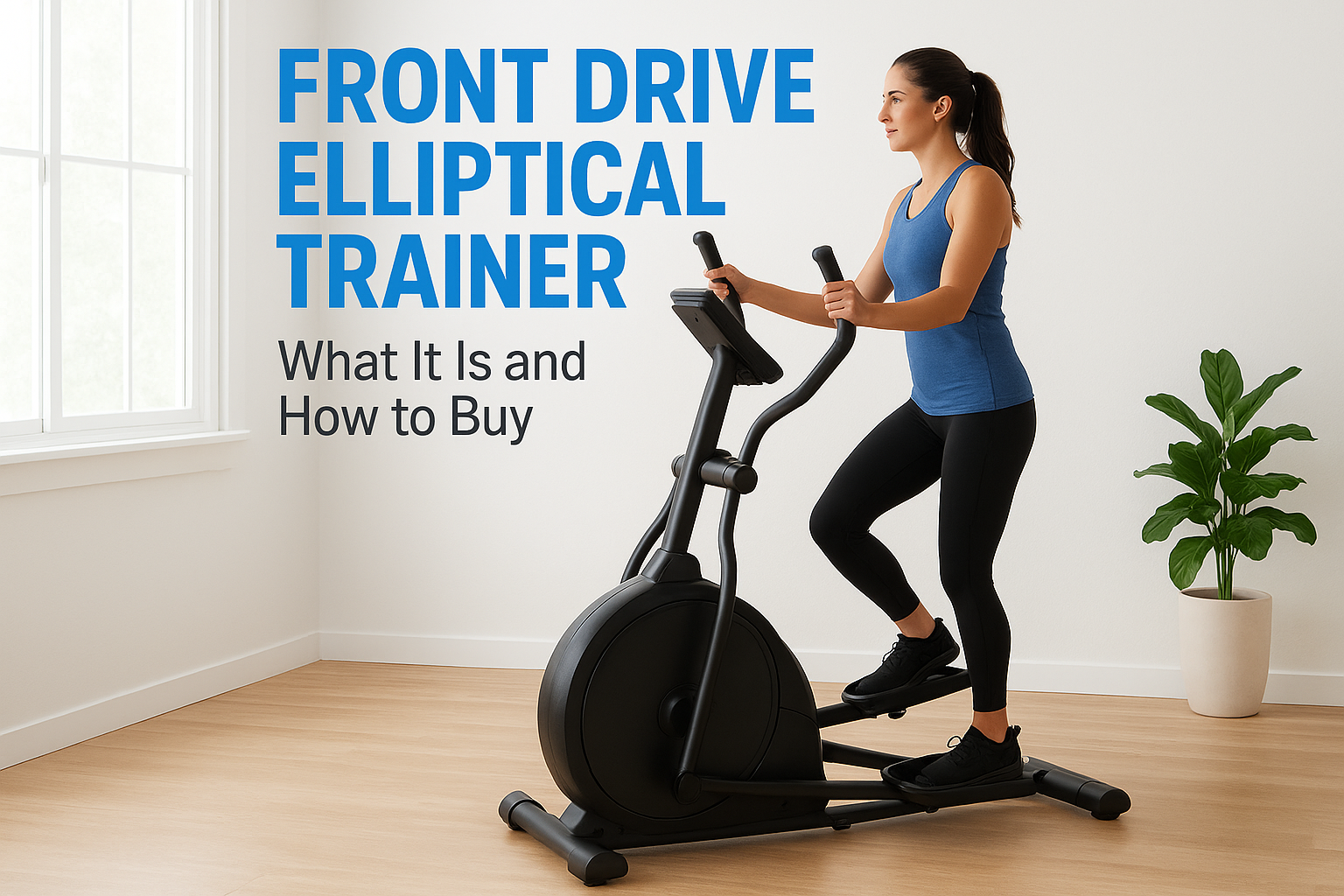
A front drive elliptical puts the flywheel and pedal arms out in front of you instead of underneath or behind. That design creates a steeper stride angle that mimics stair climbing more than walking, and it tends to have a smaller footprint than rear drive machines, which matters if you’re fitting equipment into a bedroom or basement corner rather than a dedicated gym room.
This article breaks down exactly how front drive machines work, how they stack up against rear drive and center drive designs in stride feel, noise, and durability, and what to actually check before you buy one. We’ll also point out where commercial-grade construction, like what you’ll find on the Elite EM X, makes a real difference in how long the machine lasts under daily use.
Why the flywheel position matters for your workout
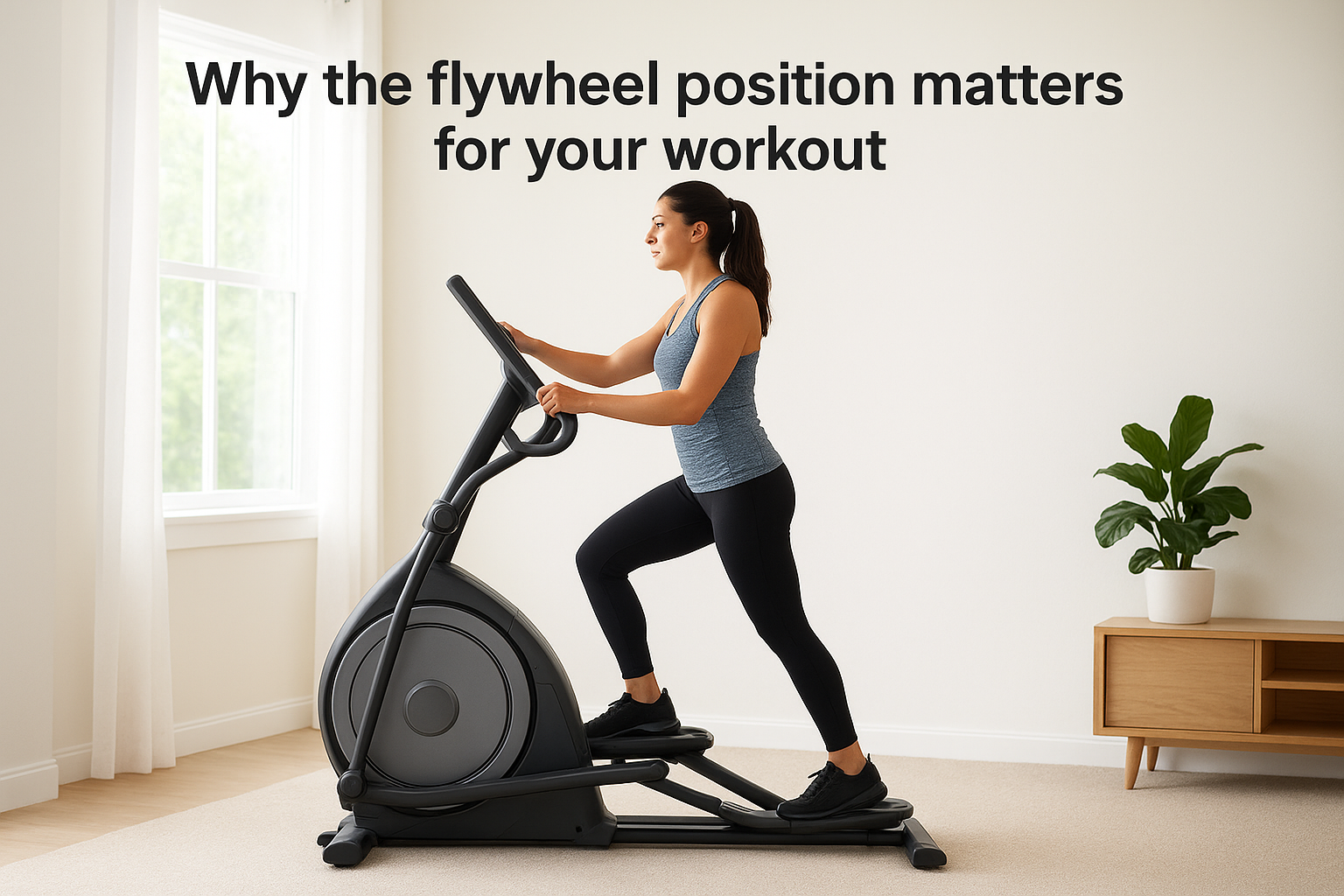
The flywheel is the heavy spinning wheel that creates resistance, and where it sits changes almost everything about how the machine feels under your feet. On a front drive elliptical trainer, the flywheel sits ahead of the pedals rather than tucked underneath or behind you, which forces your feet to travel in a taller, more diagonal loop instead of a flat, gliding oval. That single design choice ripples through stride angle, pedal weight, and even how much floor space the machine needs.
Stride angle and joint impact
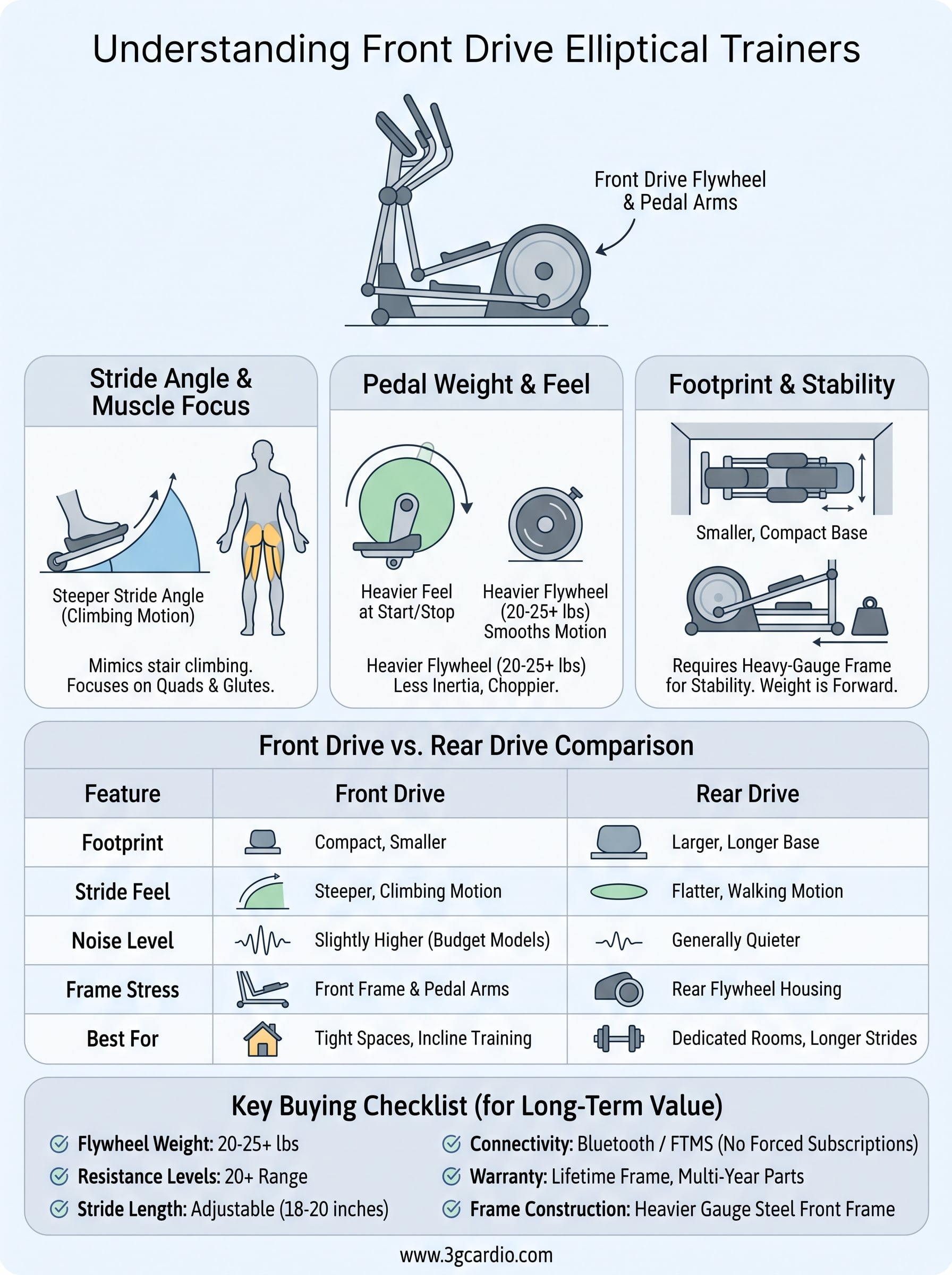
Because the pedals sit closer to the flywheel’s pull, your feet travel through a steeper arc that resembles climbing a hill or a staircase more than walking on flat ground. This steeper incline path shifts more work onto your quads and glutes compared to the flatter stride you get on a rear drive machine, and it changes which muscles the elliptical stride recruits. Runners and hikers training for elevation gain often prefer this feel because it mimics real-world climbing without pounding your knees the way a treadmill incline does.
A steeper stride path means your quads and glutes do more of the work, without your joints taking the hit.
Pedal weight and momentum feel
Riders sometimes describe front drive machines as feeling a touch heavier or choppier through each pedal stroke, especially at the top and bottom of the stride. That happens because the flywheel’s mass sits closer to where your foot starts and stops its rotation, so you feel more of its inertia directly through the pedal arms. Manufacturers offset this with heavier flywheels and dual-position pedals, which is why the flywheel weight listed on a spec sheet matters more than most shoppers realize. A machine with a light flywheel and a front drive layout can feel jerky, while a heavier flywheel smooths that same stride into something closer to a rear drive glide.
Footprint and stability trade-offs
Stacking the flywheel and pedal arms toward the front lets manufacturers shrink the base, which is exactly why front drive models tend to have a smaller footprint than rear drive units of similar quality. That compact base is a real advantage in a bedroom, apartment, or basement corner where floor space is tight. The trade-off is that weight sits farther forward, so stability depends heavily on the frame’s construction and stabilizer bar design rather than sheer footprint length. This is where commercial-grade steel construction, like what you’ll find in the Elite EM X compact elliptical frame, earns its keep. A heavier gauge frame keeps the machine planted through a hard stride, even with the flywheel pulling weight toward the front, so you’re not fighting wobble every time you push hard through a climb.
Front drive vs. rear drive: how the two compare
Comparing a front drive elliptical trainer to a rear drive model comes down to three things you’ll actually notice in daily use: stride feel, noise level, and how the machine holds up over years of hard workouts. Rear drive elliptical cross trainers place the flywheel behind you, which creates a flatter, more natural walking motion and generally quieter operation since the flywheel spins farther from your ears. Front drive units trade some of that smoothness for a smaller footprint and a steeper, climbing-style stride that many users prefer for building leg strength.
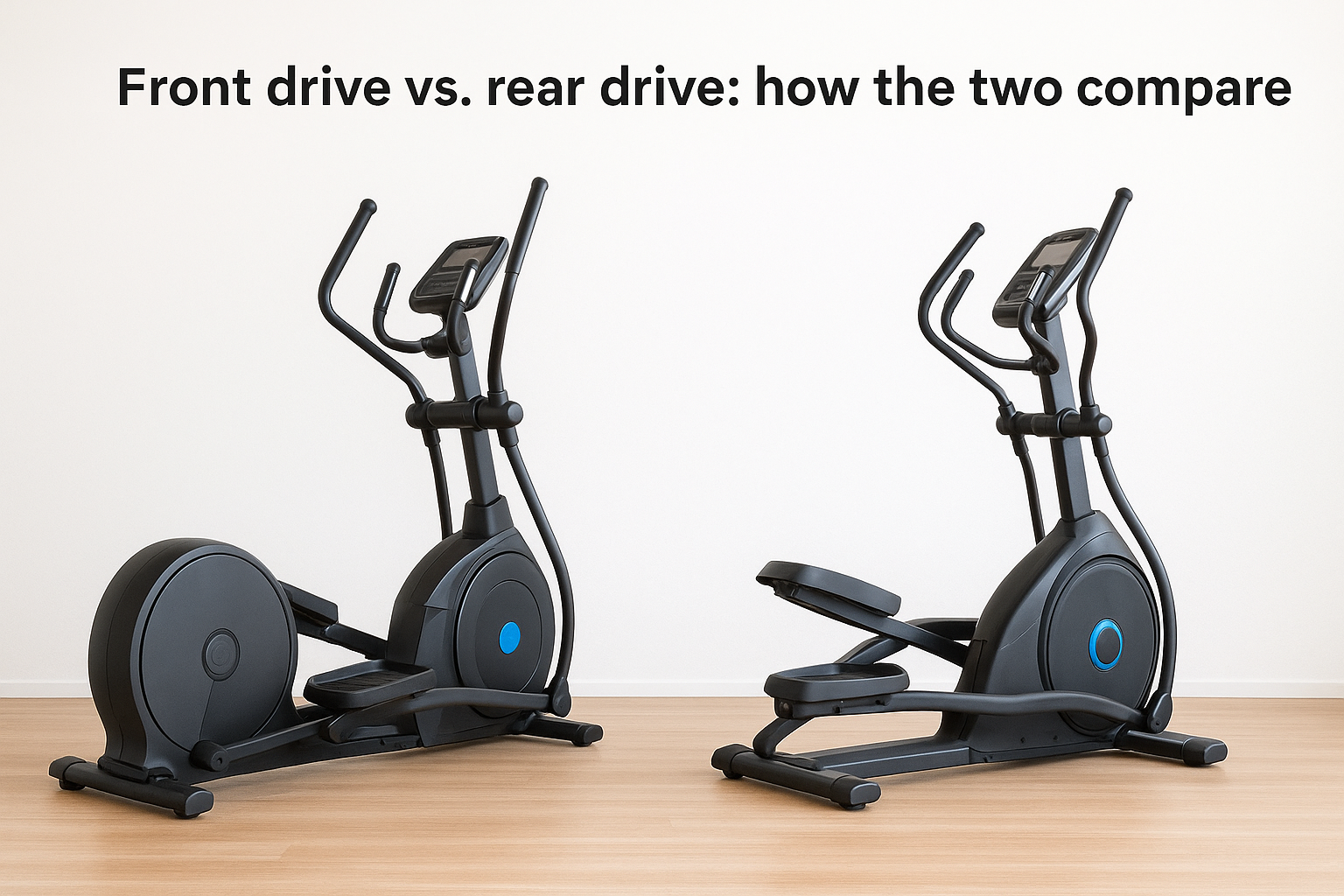
Noise is where the two designs split most noticeably. Rear drive flywheels tend to run quieter because the mechanism sits away from your body and often uses a longer belt path that dampens vibration. Front drive machines can run a touch louder, particularly on cheaper models with light flywheels and undersized bearings, though commercial-grade bearings close that gap significantly. If you’re working out early in the morning or live in an apartment with shared walls, this is worth testing before you buy.
The quietest ride usually goes to rear drive, but the smallest footprint almost always goes to front drive.
Durability depends less on drive position and more on build quality, but front drive machines put more stress on the front frame section since that’s where the flywheel’s weight and pedal force concentrate. A thin-gauge front frame will flex and loosen over time under that load, which is why heavier steel construction matters more on front drive units than it does on rear drive machines with better-distributed weight.
| Feature | Front Drive | Rear Drive |
|---|---|---|
| Footprint | Smaller, compact base | Larger, longer base |
| Stride feel | Steeper, climbing motion | Flatter, walking motion |
| Noise level | Slightly higher on budget models | Generally quieter |
| Frame stress point | Front frame and pedal arms | Rear flywheel housing |
| Best for | Tight spaces, incline-style training | Dedicated gym rooms, longer strides |
Center drive ellipticals split the difference by placing the flywheel under the user, which levels out stride feel but usually comes with a higher price tag and a bulkier frame. For most home buyers choosing between front and rear drive, the decision boils down to available floor space and whether you want a walking stride or a climbing stride.
How to choose the right front drive elliptical trainer
Picking the right front drive elliptical trainer means looking past the price tag on the sticker and checking the specs that actually determine how the machine feels five years from now. Flywheel weight, stride adjustability, and warranty coverage tell you more about long-term value than any touchscreen or app icon on the console, which is why it helps to see how home ellipticals compare once they’re tested side by side.
Flywheel weight and resistance levels
Start with the flywheel weight, since that number directly controls how smooth or choppy your stride feels on a front drive machine. Look for at least 20 to 25 pounds of flywheel mass paired with a wide resistance range, ideally 20 levels or more, so the machine still challenges you as your fitness improves. A light flywheel under 15 pounds on a front drive layout tends to feel jerky no matter how good the rest of the build is.
The flywheel weight on the spec sheet tells you more about ride quality than any feature list.
Stride length and pedal design
Check the stride length next, and don’t assume one size fits every household. A machine with adjustable stride length, typically in the 18 to 20 inch range, accommodates taller users comfortably while still working for shorter household members without forcing an unnatural gait, and there’s a real difference between a stride that actually adjusts and one that’s only advertised that way. Oversized, cushioned pedals with a slight tilt also reduce ankle and knee strain during longer sessions, something worth testing in a showroom if you can.
Console connectivity and warranty coverage
Next, look at what the console actually offers versus what it charges you for later. Bluetooth connectivity through open standards like FTMS lets you pair the machine with fitness apps on your own tablet instead of paying for a proprietary subscription screen, which is exactly how every FreeSync machine handles connectivity without a monthly fee.
Finally, run through this checklist before you commit:
- Flywheel weight of at least 20 pounds
- 20+ resistance levels
- Adjustable stride length between 18 and 20 inches
- Bluetooth or FTMS app connectivity without forced subscriptions
- Lifetime frame warranty and multi-year parts coverage
- Heavier gauge steel front frame construction
Skipping any of these usually shows up later as squeaky pedals, a wobbly frame, or a console you outgrow within a year.
Who a front drive elliptical trainer is best for
A front drive elliptical trainer fits a specific type of buyer better than others, and knowing where you land on that list saves you from buying the wrong machine. If you value floor space, a steeper stride, or a lower price point without sacrificing build quality, front drive is likely your best match.
Space-constrained homes and apartments
Given the smaller footprint of front drive units, they make the most sense for bedrooms, apartments, condos, or basement corners where a longer rear drive frame simply won’t fit, the same logic behind most cardio equipment picks for small spaces. Homeowners converting a spare room into a workout space often choose front drive machines specifically because they can push the unit against a wall without losing several feet of usable floor. If your workout area doubles as a guest room or home office, that compact base is often the deciding factor over any other spec on the sheet.
Hikers, climbers, and strength-focused users
Users training for hiking trips, ski season, or general leg strength tend to prefer the steeper, climbing-style stride that front drive machines deliver. Because the motion loads the quads and glutes more heavily than a flatter rear drive stride, it works well as cross-training for anyone who spends time on inclines outdoors. Runners recovering from joint issues also lean toward this style since it builds climbing strength without the pounding of an actual hill or staircase, and anyone who wants that climbing motion taken further should look at a vertical stair stepper with an adjustable hiking stride.
If your goal is climbing strength in a small space, a front drive elliptical checks both boxes at once.
Who should consider rear drive instead
Meanwhile, buyers who prioritize the flattest, most natural walking stride, or who have the floor space for a longer frame, often do better with a rear drive machine. People sensitive to noise, particularly those working out in early mornings or shared living situations, may also prefer the quieter operation rear drive units typically offer. And if balance is a concern, the more forward weight distribution on front drive machines means frame rigidity matters even more, so stick to commercial-grade construction rather than a budget model with a thin front frame.
Finding the right fit for your home
A front drive elliptical trainer earns its keep in tight spaces, delivering a steeper, climbing-style stride while asking less of your floor plan than a rear drive machine ever could. Getting the fit right comes down to checking flywheel weight, stride adjustability, and frame construction before you look at a single console feature, since those specs decide how the machine feels five years from now, not just five minutes into a demo.
Buying direct also means skipping inflated markups without giving up commercial-grade steel or real warranty coverage. Comparing a few models side by side, rather than settling for the first one you see in a showroom, pays off once you’re logging miles week after week.
Ready to put this into practice? Take a look at the Elite EM X front drive elliptical trainer for a compact, commercial-grade build that fits right into your home without the subscription strings attached.




No Comments