

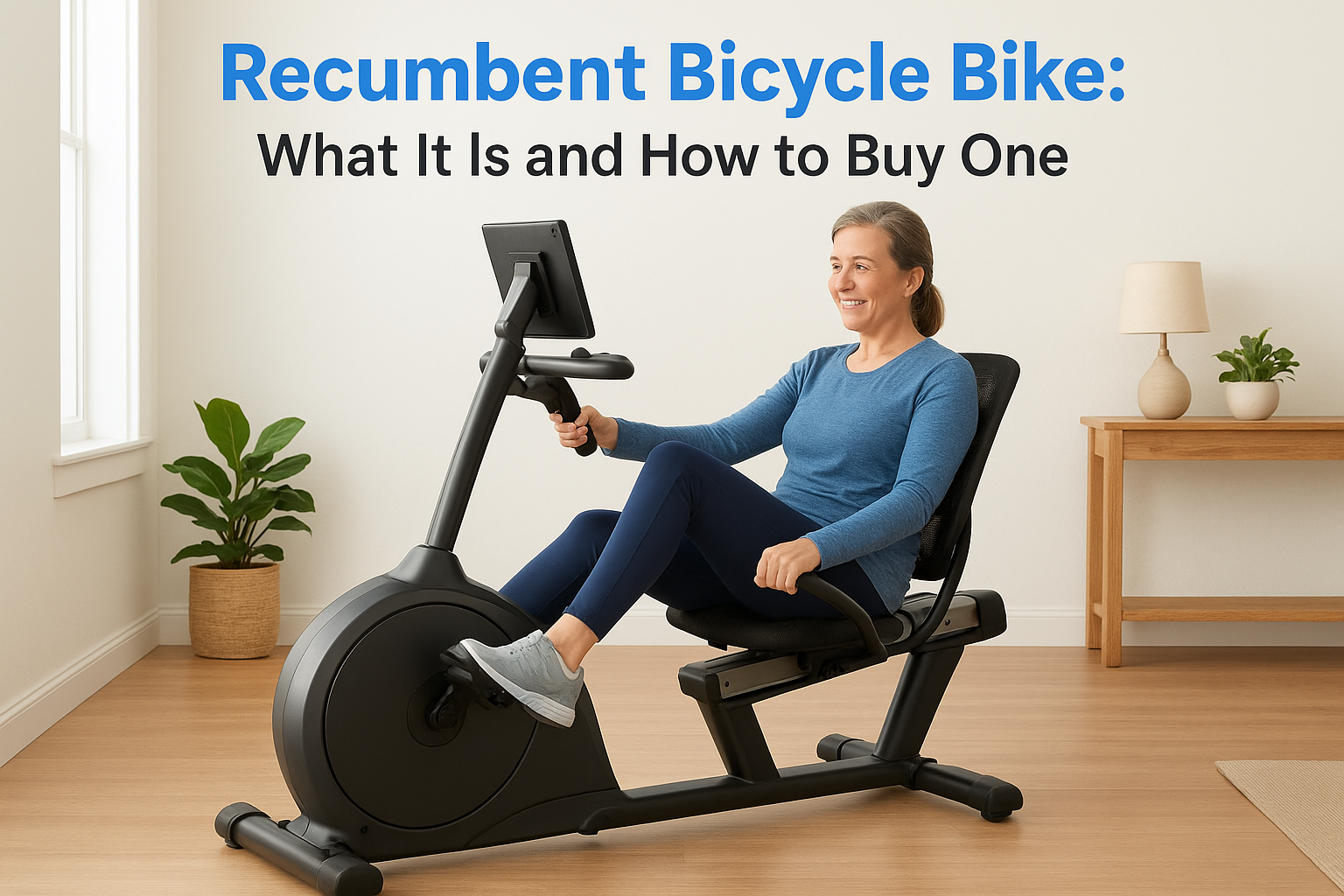
25 Aug Recumbent Bicycle Bike: What It Is and How to Buy One
A recumbent bicycle bike puts you in a reclined seat with your legs out in front instead of underneath you, and that one design change fixes a lot of problems people have with upright bikes. If your knees ache after a spin class, or your lower back can’t handle another ride on a traditional saddle, this seat position takes the pressure off joints while still giving you a real cardio workout.
This guide answers the two questions most people actually search for: what makes a recumbent different from other exercise bikes, and how to buy one without overpaying or getting stuck with a flimsy machine. You’ll see the difference between outdoor recumbent trikes and indoor recumbent exercise bikes, plus what specs actually matter, like seat adjustability, resistance range, and frame construction.
We’ll also walk through what to check before you buy a recumbent bike online, since photos and marketing copy can hide a lot about build quality. As a manufacturer that builds commercial-grade recumbent bikes for home use, we know exactly where cheaper models cut corners, and we’ll point out those weak spots so you know what separates a bike that lasts ten years from one that rattles apart in ten months.
Why riders are switching to recumbent bikes
Comfort is the biggest reason people move to a recumbent bicycle bike, but it’s far from the only advantage a recumbent exercise bike offers. The reclined seat spreads your weight across a wide backrest and seat pan instead of concentrating it on a narrow saddle, which means no numbness, no saddle sores, and no shifting around every five minutes trying to find a position that doesn’t hurt. That comfort isn’t a minor perk. It’s often the difference between someone who exercises consistently and someone who quits after two weeks because the equipment made them dread getting on it.
Lower joint stress, same cardio benefit
Joint-friendly design is what pulls in a lot of former runners and upright cyclists. With your legs extended forward instead of pedaling underneath your hips, the recumbent position reduces strain on the knees, hips, and lower back. This makes it a common recommendation for people managing arthritis, dealing with chronic back pain, or rehabbing after knee surgery or a knee replacement. You still raise your heart rate and burn calories, you’re just doing it without grinding on joints that are already worn down. The American Heart Association notes that low-impact aerobic activity like recumbent cycling still delivers real cardiovascular benefits when done consistently, which matters more than intensity for most home users (https://www.heart.org/en/healthy-living/fitness/fitness-basics/aha-recs-for-physical-activity-in-adults).
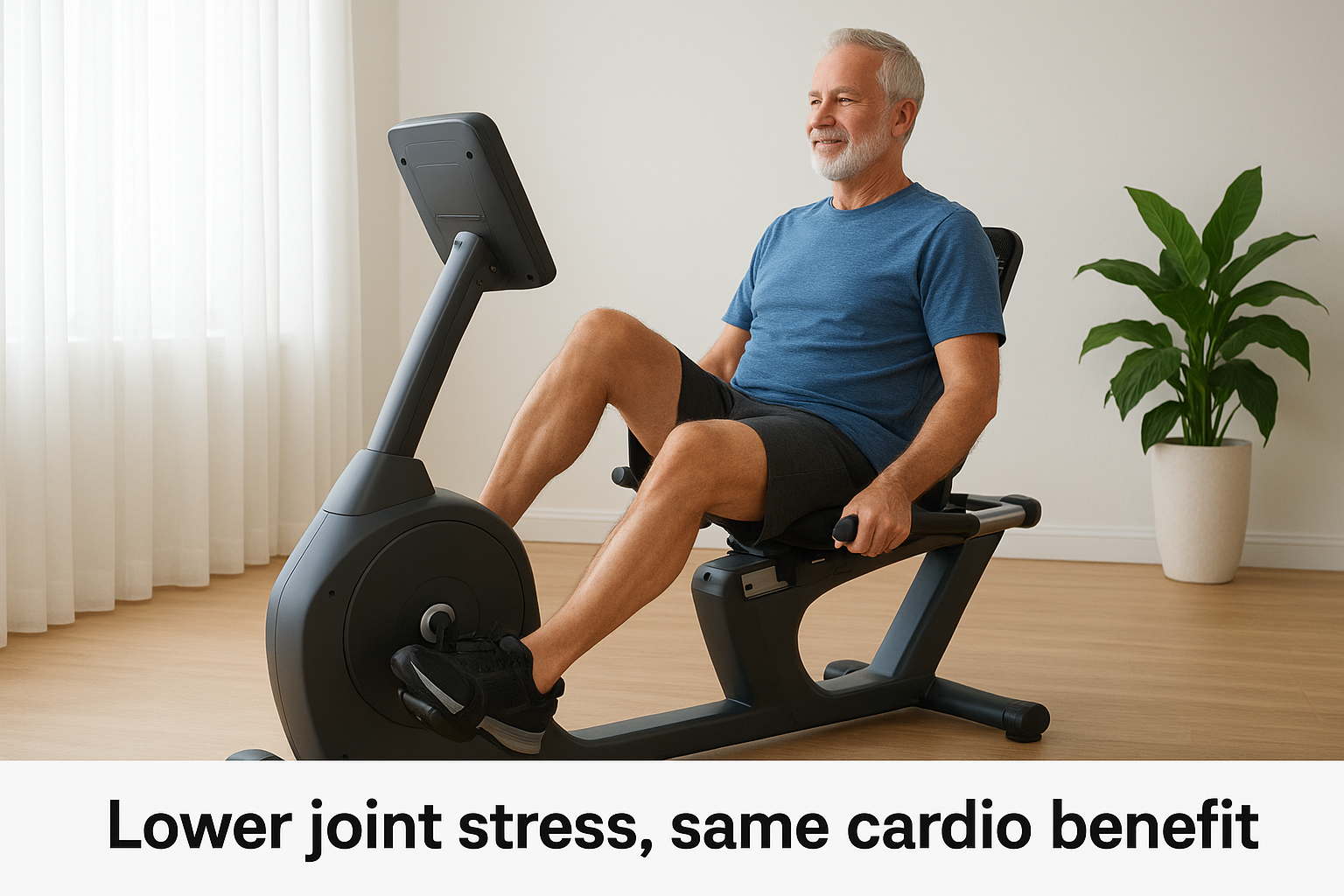
A recumbent bike removes the pain points that make people quit exercising, not the workout itself.
Built for longer sessions
Duration is where recumbent bikes quietly win. Because the seat supports your back and there’s no pressure on your hands or wrists like there is with upright bars, riders tend to stay on a recumbent bike longer than they would on a treadmill or upright bike. Longer, low-impact sessions add up over a week better than short, painful ones. Some models, like the 3G Cardio Elite RB X recumbent bike, are built with a wide range of resistance and seat adjustability specifically so both a 20-year-old and a 70-year-old parent can use the same machine comfortably.
Who tends to make the switch
Every group below shows up regularly in recumbent bike buyers:
- Older adults who want cardio built for senior citizens without stressing hips or knees
- Rehab patients cleared for low-impact activity after surgery or injury
- People with back pain who can’t tolerate a forward-leaning riding position
- Heavier riders who need a stable, wide seat and higher weight capacity
- Long-session cardio users who want to read, watch TV, or work while pedaling
Growth in this category isn’t a fad. It reflects an aging population that still wants real fitness equipment, not a machine that punishes them for using it. If you’ve been putting off cardio because your knees or back can’t handle another upright bike or treadmill session, a recumbent model solves the actual problem instead of just distracting you from it.
How to choose the right recumbent bike for you
Picking the right recumbent bicycle bike comes down to matching the machine to your body and your goals, not just grabbing whatever’s cheapest at a big box store. Start with weight capacity and seat range, since a bike that’s too small or too narrow will undo every comfort benefit you’re trying to get. Then look at resistance type, because magnetic resistance tends to run quieter and needs less maintenance than older friction-based systems.
Match the specs to your body
How far the seat actually adjusts matters more than most buyers realize going in. A seat that only slides a few inches forward and back won’t work if more than one person in your house plans to use the bike, or if you’re outside the average height range. Check the step-through height too, especially if balance or mobility is a concern.
| Feature | Look for | Why it matters |
|---|---|---|
| Seat adjustment range | 10+ inches of travel | Fits multiple riders comfortably |
| Resistance levels | 20+ magnetic levels | Room to progress as fitness improves |
| Weight capacity | 300+ lbs | Stability and long-term durability |
| Frame material | Steel, commercial-grade | Won’t flex or rattle over years of use |
| Console connectivity | Bluetooth/FTMS | Works with fitness apps without a subscription |
Decide what tech you actually need
Console features are where people either overpay or underbuy. You don’t need a giant touchscreen tied to a monthly subscription to get a good workout, but built-in heart rate monitoring and app connectivity through Bluetooth are worth having. FreeSync FTMS Bluetooth, for example, lets a recumbent bike talk to apps like Kinomap or Zwift without locking you into proprietary software.
Buy for the frame and the fit first. The screen is the last thing that should decide your purchase.
Warranty length tells you a lot about how a manufacturer feels about their own build quality. A company offering a lifetime frame warranty is telling you something a 90-day warranty never will. Once you’ve nailed down these specs, you’re ready to actually shop, and that’s where a lot of buyers run into trouble.
How to buy a recumbent bike online with confidence
Buying a recumbent bike online means you can’t sit on the seat or test the resistance dial before you pay, so you have to shop with a different kind of caution. When you buy recumbent bike online, the listing photos and glowing star ratings only tell part of the story, so it helps to run through the practical tips for buying a recumbent bike first. What actually protects you is the fine print: return policy, warranty terms, and whether the company answers the phone when something goes wrong six months after delivery.
Check the warranty before the price tag
Compare warranty coverage the same way you’d compare specs. A lifetime frame warranty paired with a multi-year parts warranty signals a company confident in its own welds and bearings. A vague "limited warranty" with no timeframe listed is a red flag, not a technicality. 3G Cardio backs its equipment with a residential warranty that includes a lifetime frame guarantee, 7 years on parts, and 1 year of labor, which gives you a real benchmark to measure other listings against.
If a seller won’t put the warranty terms in writing before you buy, don’t assume they’ll honor them after you do.
Look past the price and into the delivery details
Delivery terms change the real cost of the bike more than people expect. Some retailers advertise a low price, then charge extra for curbside delivery, assembly, or removal of the old equipment. Ask these questions before you check out:
- Does the price include curbside delivery, or is White Glove setup an added fee?
- Is there a price match guarantee if you find it cheaper elsewhere within a few months?
- Does the seller offer 0% financing, or will interest get added if you pay over time?
- Who do you call if a part fails, the manufacturer directly or a third-party marketplace seller?
Online reviews help, but weigh them against how long the company has been building equipment, not just how many five-star ratings show up in the first search result.
Recumbent bikes vs. upright and stationary bikes
Comparing a recumbent bicycle bike to an upright or standard stationary bike comes down to body position, not just brand preference, and that recumbent-versus-upright decision is worth thinking through carefully. Upright bikes mimic road cycling, putting your weight on your hands, wrists, and a narrow saddle while your torso leans forward. That posture engages your core more, but it also concentrates pressure on the exact spots that cause numbness and back strain during longer rides. A recumbent bike removes that forward lean entirely, so your spine stays supported and your hands are free to hold a tablet, a book, or nothing at all.
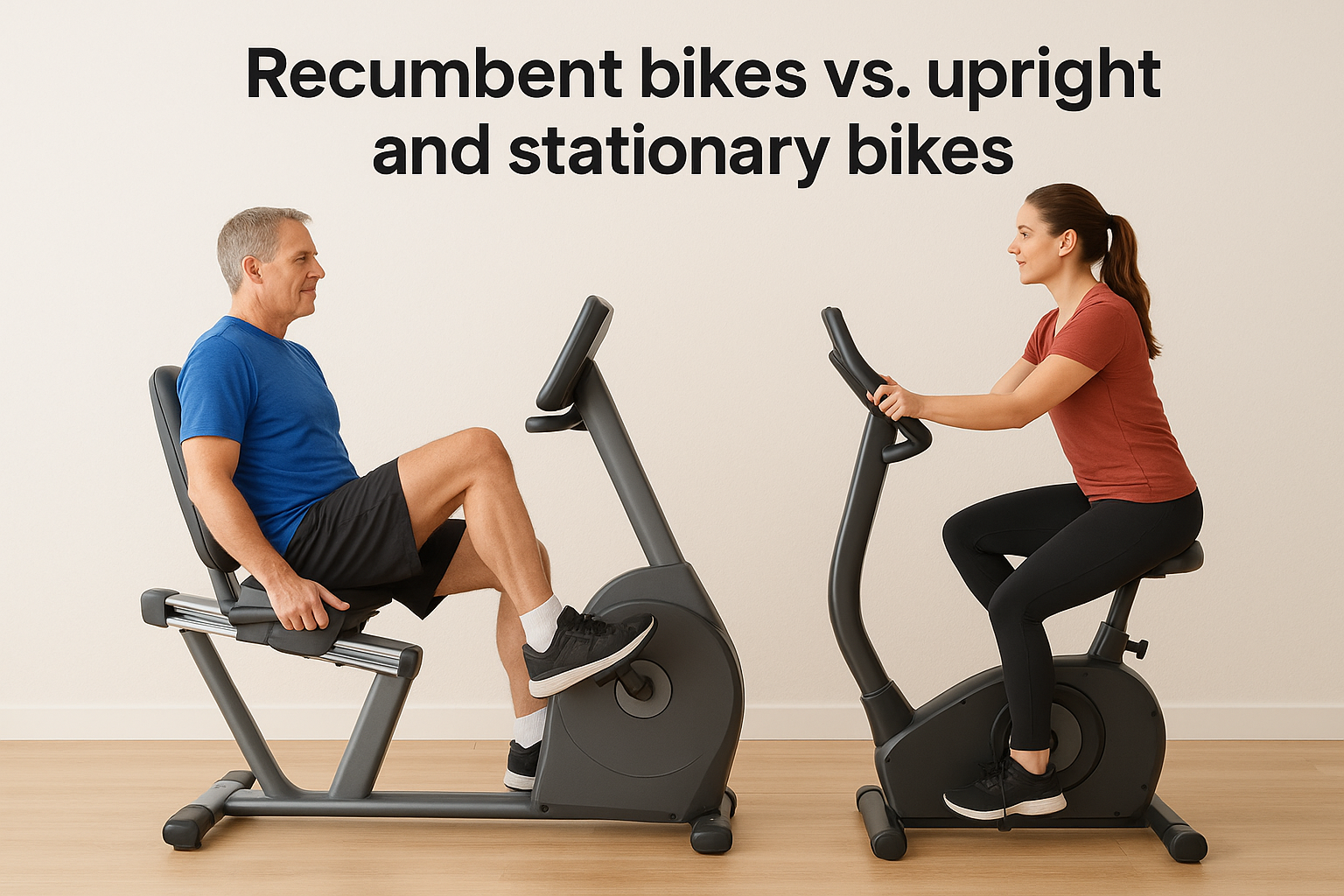
Where each style actually wins
Neither style is objectively better for every rider, but the right pick depends on your joints, your goals, and how long you plan to stay on the machine.
| Factor | Recumbent bike | Upright/stationary bike |
|---|---|---|
| Seat comfort | Wide seat, back support | Narrow saddle, no back support |
| Joint impact | Very low | Low to moderate |
| Core engagement | Lower | Higher |
| Best for | Rehab, seniors, long sessions | Cycling training, higher intensity intervals |
| Entry/exit ease | Easier, lower step-through | Requires more balance |
If your goal is joint-friendly cardio you can sustain daily, the recumbent position wins on comfort every time.
Matching the bike to the goal
Goal-setting should drive this decision more than habit. Someone training for outdoor road cycling might prefer a commercial-grade upright exercise bike because it more closely mirrors that riding posture and builds the same muscle recruitment pattern. But someone managing arthritis, recovering from hip or knee surgery, or simply trying to build a consistent daily habit without pain usually does better on a recumbent model. Stationary upright bikes also tend to demand more balance and core stability, which can be a benefit for younger, healthy users but a barrier for older adults or anyone with limited mobility.
Think about which bike you’d actually use five days a week, not just which one looks more like "real" exercise equipment. A bike that sits unused in the garage burns zero calories, no matter how it’s built.
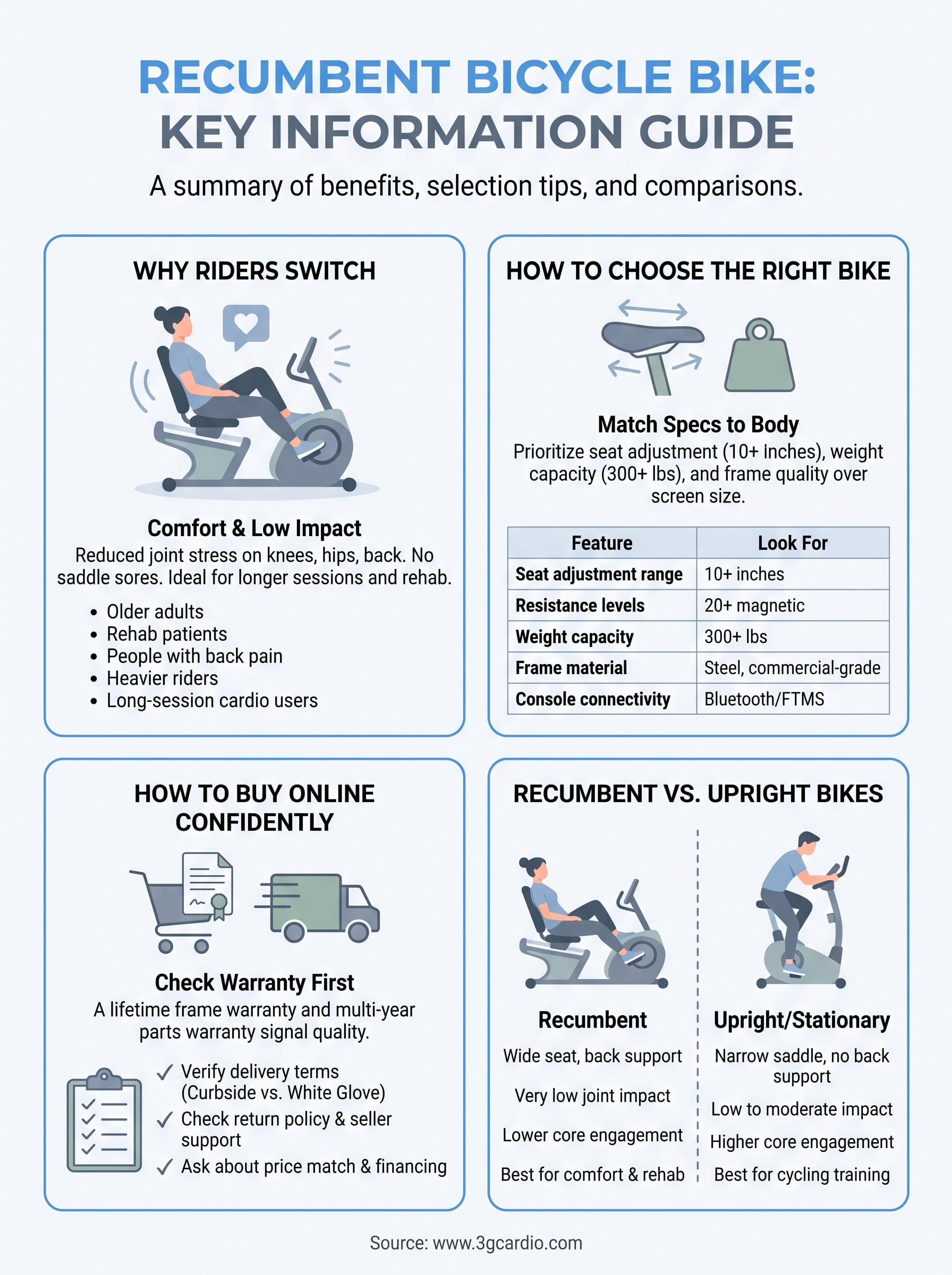
Finding the right fit for your ride
A recumbent bicycle bike earns its place in a home gym by solving a real problem: joint pain and discomfort that keep people off equipment they already own. You now know what separates a durable frame from one that rattles apart, which specs matter more than screen size, and what warranty terms actually protect you after checkout. That knowledge is what turns an online purchase into a confident one instead of a gamble.
Don’t settle for a bike that looks fine in photos but skimps on seat adjustability, resistance range, or frame steel. Match the machine to your body, your goals, and how long you’ll actually want to sit on it five days a week. If you’re ready to compare specs on a model built for comfort and backed by a lifetime frame warranty, see the most comfortable recumbent bike of 2025 and why it’s rated best in its class.




No Comments