

23 Aug 9 Best Home Treadmills for Serious Runners in 2026
Most treadmills sold to home users are built for walkers, not runners. You find that out the hard way, usually around month three, when the belt starts slipping at higher speeds or the deck feels flimsy under a real stride. If you’re training for a race or just running enough miles to notice the difference between mediocre and commercial-grade equipment, that gap matters, and it’s why finding the best in home treadmill for running takes more digging than checking star ratings.
This guide skips the marketing copy and focuses on what to look for in a treadmill built for running miles: motor size, belt length, deck cushioning, and top speed, since anything under 12 mph will frustrate a runner doing intervals. We tested and compared machines across price points to identify the best home treadmill for runners who log real miles, not just occasional walks.
Below you’ll find nine treadmills built for home running, from budget-conscious options to commercial-grade decks that rival what you’d find at a gym. Each pick includes specs on motor power, running surface, and durability under daily use, along with who each machine actually fits, whether you’re a 5K regular or training for your next marathon. We’ll also flag the warranty coverage and construction details that separate machines meant to last from ones that won’t survive a serious training block.
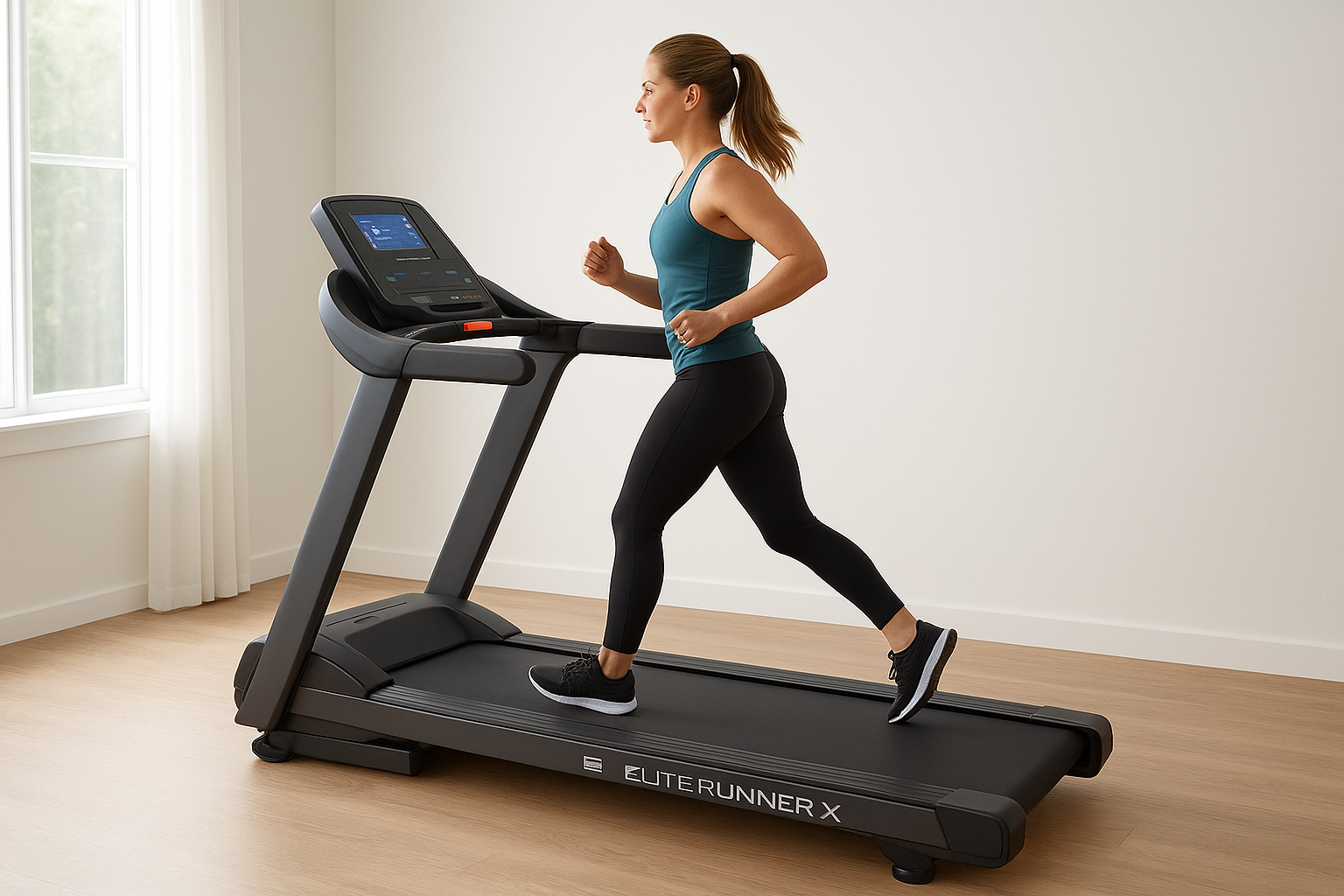
1. 3G Cardio Elite Runner X Treadmill
The 3G Cardio Elite Runner X is the machine we point runners toward first, and not because we make it. It’s built on a commercial platform meant for gyms that run equipment eight hours a day, then scaled down for home use without cutting the parts that matter. If you want the best home treadmill for running without paying gym-membership prices for years to get there, this is where to start looking.
Key specs
The Elite Runner X uses a continuous-duty motor and a running deck long enough for actual stride length, not a shortened "home" version that forces you to shorten your gait at speed.
| Spec | Detail |
|---|---|
| Motor | 4.0 HP continuous duty |
| Running surface | 22" x 62" |
| Top speed | 12 mph |
| Incline | 0-15% |
| Max user weight | 400 lbs |
| Console | FreeSync FTMS Bluetooth |
That 62-inch belt matters more than most spec sheets let on. Shorter decks force taller runners to shorten their stride at speed, which changes your form and increases injury risk over months of training.
Standout features
What sets this treadmill apart is the FreeSync FTMS Bluetooth console, one of the 3G Cardio machines with no-subscription Bluetooth connectivity, which connects to apps like Zwift, Kinomap, and other third-party training platforms without locking you into a proprietary subscription. 3G Cardio calls this its "Bring Your Own Screen" approach, and it means you’re not paying a monthly fee just to see your workout data. The deck cushioning is tuned for impact absorption at running speeds specifically, not just walking, which is a distinction most budget machines skip entirely.
A treadmill built for walking will always feel undersized the moment you start actually running on it.
The frame construction uses heavier-gauge steel than you’ll find in typical retail treadmills, and the roller and belt system is rated for the kind of daily mileage a marathon-training runner puts in, not the occasional 20-minute walk a big-box store machine expects.
Who it’s for
This machine suits runners who train consistently, whether that’s five days a week of easy miles or structured interval work that demands a stable belt at 10-plus mph. If you’re a serious home treadmill for running shopper who’s outgrown a starter machine and doesn’t want to repeat that mistake, the Elite Runner X is built to be the last treadmill you buy for a decade. It’s also a smart pick if you’ve been running at a commercial gym and want the same feel without leaving your house. Casual walkers or people who just want an occasional light jog probably don’t need this much machine, and 3G Cardio’s other lines (like the adjustable-stride Elite EM X elliptical) might fit that use case better.
Price and warranty
The Elite Runner X lands in the mid-to-upper range of home treadmill pricing, reflecting its commercial-grade components rather than retail markup. 3G Cardio backs it with a residential warranty that includes a lifetime frame guarantee, 7 years on parts, and 1 year of labor, which is longer coverage than most competitors offer at this price point, and it’s worth knowing how to compare treadmill warranties before you buy. The company also offers commercial warranty terms if you’re outfitting a small studio or gym. You can buy directly through the 3G Cardio site with free curbside delivery, or upgrade to White Glove delivery and installation if you’d rather not assemble it yourself. A price-match guarantee within six months of purchase adds a layer of confidence if you’re comparing this against other listings on this page.
2. NordicTrack Commercial 1750
The NordicTrack Commercial 1750 has been a staple recommendation for home runners for years, and it earns that spot with a strong motor and a touchscreen console that keeps interval workouts interesting. It’s a solid step below commercial-only machines like the Elite Runner X, but it still handles daily mileage better than most retail treadmills in its category.
Key specs
NordicTrack builds this machine around a 3.75 CHP motor and a deck long enough for most runners under 6’2" to stretch out at speed.
| Spec | Detail |
|---|---|
| Motor | 3.75 CHP |
| Running surface | 22" x 60" |
| Top speed | 12 mph |
| Incline/decline | -3% to 15% |
| Max user weight | 300 lbs |
| Console | 14" HD touchscreen |
Decline capability is the standout number here, since few home treadmills in this price range let you train downhill grades at all.
Standout features
Owners buy this treadmill mostly for the iFIT-powered touchscreen, which streams trainer-led runs and automatically adjusts incline and speed to match the workout. That’s genuinely useful for runners who get bored on a treadmill and want guided programming rather than staring at a wall.
Automatic incline adjustment during a guided run changes how a treadmill workout actually feels.
The catch is that most of that functionality sits behind an ongoing iFIT subscription, so the sticker price doesn’t reflect the long-term cost of owning a treadmill if you want the screen to do anything beyond basic display.
Who it’s for
Runners who like structured, trainer-led workouts and don’t mind paying a monthly fee for content will get real value here. It suits people training for a first half marathon or looking for variety in a home routine, more than someone who just wants a stable belt and a heart rate strap. If ongoing subscription costs bother you, this isn’t the pick.
Price and warranty
Expect to pay in the mid-range for the machine itself, plus the recurring iFIT membership if you want full functionality. NordicTrack’s warranty covers 10 years on the frame and motor, 2 years on parts, and 1 year of labor, shorter coverage overall than 3G Cardio’s lifetime frame guarantee.
3. Horizon 7.4 AT Treadmill
The Horizon 7.4 AT targets runners who want commercial-feel cushioning without stepping up to a four-figure premium machine. Horizon builds its home line around a folding frame, which makes this one of the few treadmills on this list that actually saves floor space, a real consideration if you’re training in a spare bedroom or garage corner rather than a dedicated gym room, much like the space-saving Pro Runner X with its cushioned Ortho Shock deck.
Key specs
Horizon pairs a mid-size motor with its patented cushioning system, aiming at runners who want joint protection more than raw top-end speed.
| Spec | Detail |
|---|---|
| Motor | 3.5 CHP |
| Running surface | 22" x 60" |
| Top speed | 12 mph |
| Incline | 0-15% |
| Max user weight | 375 lbs |
| Console | 10" touchscreen with Bluetooth |
The 375 lb weight capacity is generous for a folding treadmill, and the deck holds up well at speed despite the frame’s ability to fold up for storage.
Standout features
Horizon’s variable response cushioning lets you adjust deck softness by zone, softer under the heel strike area, firmer toward the front for push-off, which is a feature you typically only see on treadmills costing considerably more. The folding frame uses a hydraulic assist that makes raising and lowering it a one-hand job, not a wrestling match.
A folding deck only earns its place in a runner’s home if the cushioning doesn’t feel like a compromise, and this one doesn’t.
Bluetooth connectivity lets you pair heart rate straps and pull workout data into third-party apps, though the ecosystem isn’t as open as 3G Cardio’s FreeSync FTMS setup.
Who it’s for
This machine fits runners with limited space who still want a stable, cushioned deck for regular training runs. It’s a strong option if you’re managing knee or joint sensitivity and want adjustable cushioning zones rather than a one-setting deck. Runners chasing serious speed work above 12 mph, or those who want a permanent, non-folding platform for stability during hard intervals, should look elsewhere on this list.
Price and warranty
The 7.4 AT sits in the lower-to-mid price range, making it accessible for runners who want quality cushioning without commercial pricing. Horizon backs it with a lifetime frame and motor warranty, 5 years on parts, and 2 years on labor, solid coverage though still short of 3G Cardio’s 7-year parts guarantee on the Elite Runner X.
4. Bowflex T6 Treadmill
The Bowflex T6 targets runners who want a compact, no-frills machine that still handles regular training miles without folding-frame compromises. Bowflex built its reputation on strength equipment, but the T6 shows the company can build a treadmill deck that holds up to more than casual walking, even if it doesn’t chase the commercial-grade specs of pricier machines on this list.
Key specs
Bowflex keeps the motor modest compared to the Elite Runner X, but the deck length still accommodates most runners without forcing a shortened stride.
| Spec | Detail |
|---|---|
| Motor | 3.0 CHP |
| Running surface | 20" x 55" |
| Top speed | 12 mph |
| Incline | 0-15% |
| Max user weight | 300 lbs |
| Console | 7" LCD with Bluetooth |
That 55-inch belt is shorter than most of the picks here, so taller runners doing tempo work should measure their stride before committing.
Standout features
The T6’s JRNY app integration adjusts speed and incline automatically during guided workouts, similar in concept to iFIT but built on a lighter subscription model with a free trial period before costs kick in. Bowflex also includes a media shelf and simple button controls that don’t require a touchscreen to operate, which some runners actually prefer over a distracting display.
Simple controls matter more than a big screen when you just want to log miles without fiddling with settings.
Bluetooth heart rate strap compatibility comes standard, letting you track effort without buying an extra accessory, a small but useful inclusion at this price point.
Who it’s for
This treadmill suits runners doing shorter daily runs, three to five miles at a time, rather than long marathon-training blocks that demand a wider belt and heavier-duty motor. It’s a reasonable fit if you’re newer to home running and want to test the habit before investing in a commercial-grade machine like the Elite Runner X. Runners who need incline work above moderate grades or who train at faster paces regularly will find the shorter deck and lighter motor limiting over time.
Price and warranty
The T6 sits at the budget end of this list, making it an entry point for runners not ready to spend on a commercial-grade deck. Bowflex covers it with a 10-year frame warranty, 2 years on parts, and 1 year of labor, coverage that’s reasonable for the price but noticeably shorter than 3G Cardio’s lifetime frame and 7-year parts guarantee on the Elite Runner X.
5. Sole F85 Treadmill
The Sole F85 has built a loyal following among home runners who want a heavy-duty deck without stepping into commercial-only pricing. Sole markets it as a workhorse, and the spec sheet backs that up: a strong motor, a wide belt, and a warranty that signals real confidence in the parts. If you’re comparing the best treadmill for runners at home against name brands you’ve seen at big-box stores, this is usually the one people mention first.
Key specs
Sole builds the F85 around a large motor and one of the widest belts on this list, which matters if you run with a wide gait or plan to share the machine with a taller household member.
| Spec | Detail |
|---|---|
| Motor | 4.0 CHP |
| Running surface | 22" x 60" |
| Top speed | 12 mph |
| Incline | 0-15% |
| Max user weight | 375 lbs |
| Console | 10.1" touchscreen |
That 4.0 CHP motor puts it in the same power class as the Elite Runner X, though the belt is two inches shorter.
Standout features
Cushioflex deck cushioning is the F85’s signature feature, using individual cushions at the front of the deck for softer landings while keeping the rear firmer for push-off stability. Owners also get a folding frame with hydraulic assist, so it collapses without a fight if floor space is tight, putting it among the folding treadmills that can actually handle running.
A wide belt paired with adjustable cushioning is what makes a folding treadmill feel stable at running speeds.
Built-in speakers and a cooling fan round out the console, small touches that matter more than they sound like during a long summer training run.
Who it’s for
Runners who want commercial-style power in a folding frame will find this a strong match, especially if storage space is a real constraint. It also suits heavier runners, since the 375 lb capacity and wide belt handle a broader range of body types comfortably. Serious marathoners chasing top-tier deck length or open app connectivity may still prefer a non-folding commercial platform.
Price and warranty
The F85 sits in the mid-range price bracket, positioned as a step up from Sole’s smaller models without reaching commercial pricing. Sole backs it with a lifetime frame and motor warranty, 5 years on parts, and 2 years on labor, solid coverage that still falls short of a full lifetime parts guarantee.
6. NordicTrack X24 Treadmill
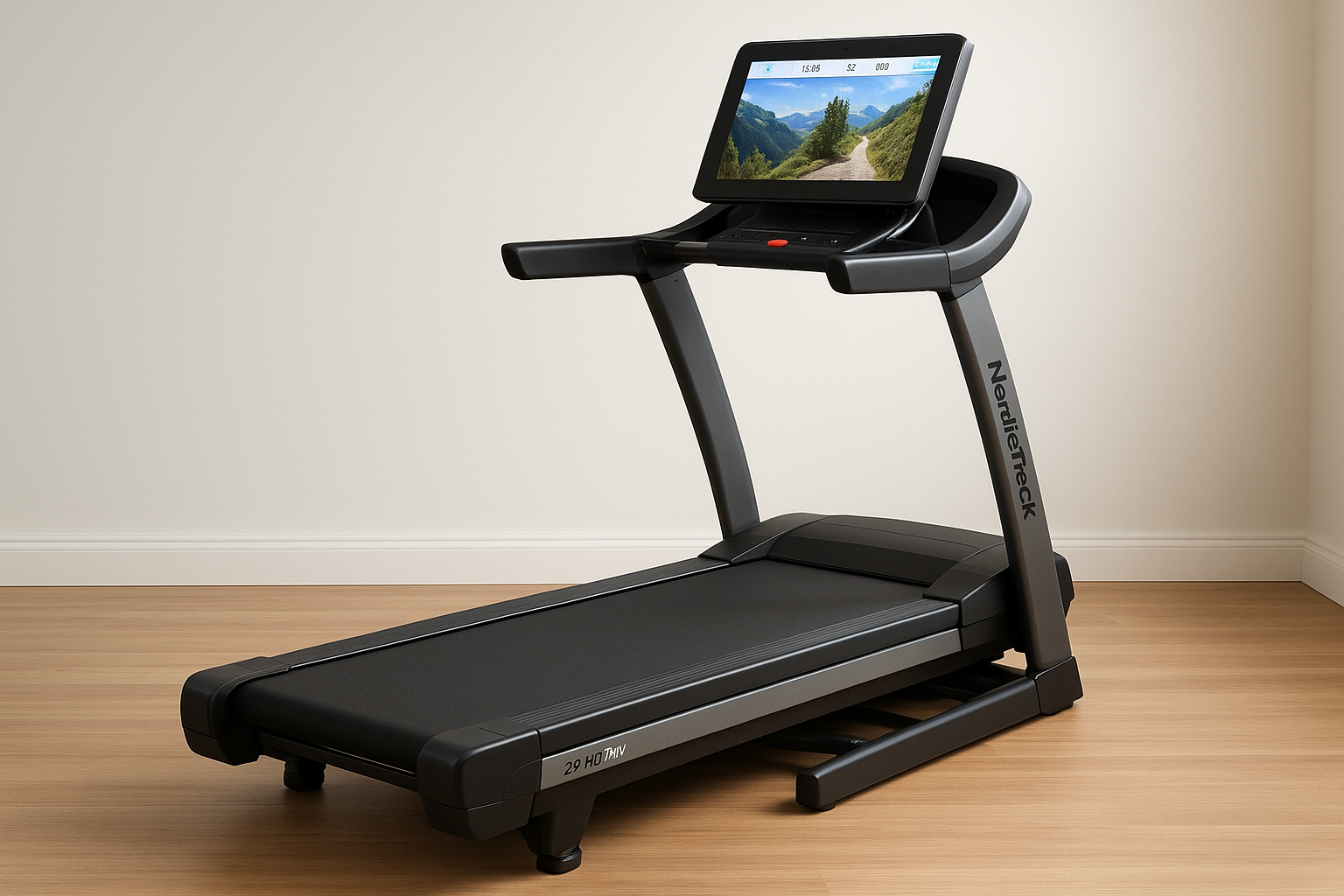
The NordicTrack X24 is the incline-focused flagship of this list, built for runners who train hills as seriously as flat miles. Its 24-inch touchscreen and steep incline range put it closer to a full training studio than a basic cardio machine, though that ambition comes with a price tag and a subscription model to match.
Key specs
NordicTrack pairs a commercial-grade motor with the widest incline and decline range on this list, aimed at runners who want elevation training without leaving the house.
| Spec | Detail |
|---|---|
| Motor | 4.25 CHP |
| Running surface | 22" x 60" |
| Top speed | 12 mph |
| Incline/decline | -6% to 40% |
| Max user weight | 350 lbs |
| Console | 24" HD rotating touchscreen |
That 40% incline ceiling is unmatched among home treadmills, letting you simulate mountain trail runs that most decks can’t come close to replicating.
Standout features
The rotating 24-inch touchscreen is the headline feature, swiveling to face floor-based workouts when you step off the belt for strength or stretching segments. Paired with iFIT’s global run series, the incline and decline adjust automatically to match filmed outdoor routes, so a hill repeat session actually feels like climbing terrain rather than pressing a button.
An incline range this wide turns treadmill training into legitimate hill-repeat practice, not a flat-mile substitute.
Dual 3-inch speakers and a cooling fan round out the console, and the deck cushioning is tuned to handle the added stress of steep incline running without feeling harsh on the knees.
Who it’s for
This machine suits runners specifically training for hilly races, trail events, or anyone using incline work to build strength without added joint impact. It’s a strong fit if you already value guided iFIT programming and don’t mind budgeting for the subscription long-term. Runners who mainly want flat, steady-state mileage or open third-party app connectivity, like what 3G Cardio’s FreeSync FTMS offers, will find less value paying for incline range they rarely use.
Price and warranty
The X24 sits at the premium end of this list, reflecting its screen size and incline hardware rather than deck construction alone. NordicTrack’s warranty covers 10 years on the frame and motor, 2 years on parts, and 1 year of labor, respectable but still shorter than the lifetime frame and 7-year parts coverage 3G Cardio includes on the Elite Runner X.
7. Echelon Stride-8S Treadmill
The Echelon Stride-8S brings a subscription-based training model to a treadmill priced well below most connected fitness equipment. Echelon built its name on connected bikes and rowers, and the Stride-8S extends that same app-first philosophy to running, betting that live and on-demand classes matter more to buyers than raw deck specs.
Key specs
Echelon keeps the motor and belt modest compared to commercial-grade decks, positioning this machine for consistent moderate mileage rather than heavy marathon training blocks.
| Spec | Detail |
|---|---|
| Motor | 3.0 CHP |
| Running surface | 20" x 55" |
| Top speed | 12 mph |
| Incline | 0-12% |
| Max user weight | 300 lbs |
| Console | Tablet holder, no built-in screen |
Notice there’s no built-in display here. You run your own tablet or phone through the Echelon app, which keeps the hardware cost down but shifts the training experience onto a screen you supply.
Standout features
The Echelon Fit app is the whole point of this machine, streaming live instructor-led classes and on-demand runs that adjust speed and incline as you go. It’s a genuinely engaging setup if you want coaching cues and community leaderboards rather than a quiet solo run.
A treadmill without a screen only works if the app filling that gap is worth paying for every month.
That app access requires an ongoing subscription, and without it the treadmill still runs, but you lose the guided programming that’s the main reason most buyers choose Echelon over a plain deck.
Who it’s for
This machine fits runners who thrive on class-style motivation and don’t mind supplying their own tablet and monthly membership. It suits people doing three or four moderate runs a week more than someone logging serious weekly mileage on a home treadmill for running that needs to survive daily marathon training. Runners who want open app connectivity without a required subscription, like 3G Cardio’s FreeSync FTMS setup, should look elsewhere on this list.
Price and warranty
The Stride-8S sits at the lower end of this list’s pricing before you factor in the membership cost. Echelon covers it with a 1-year warranty on the frame, motor, and parts, and 90 days on labor, meaningfully shorter than the lifetime frame and 7-year parts coverage 3G Cardio offers on the Elite Runner X.
8. Urevo CyberMega Treadmill
The Urevo CyberMega represents the budget-friendly end of this list, aimed at runners who want a foldable, no-subscription machine without spending commercial-grade money. Urevo built its reputation online through direct-to-consumer sales, and the CyberMega keeps costs down by trimming console features rather than cutting motor power or belt quality, a tradeoff that works better than you’d expect for a machine at this price.
Key specs
Urevo pairs a respectable motor with a belt sized for moderate training runs, not commercial daily use.
| Spec | Detail |
|---|---|
| Motor | 3.25 HP |
| Running surface | 20" x 59" |
| Top speed | 12 mph |
| Incline | 0-15% auto |
| Max user weight | 300 lbs |
| Console | LED display, Bluetooth speaker |
That 59-inch belt is longer than several pricier picks on this list, which helps taller runners avoid the cramped-stride problem common on budget decks.
Standout features
Quiet operation is the CyberMega’s calling card. Urevo built the motor housing with extra sound dampening, so early morning or late-night runs don’t rattle the rest of the house, a real consideration in apartments or shared living spaces. The frame also folds flat with an assisted hydraulic hinge, and built-in wheels make repositioning it a one-person job.
A quiet motor matters more than a flashy console if your only training window is before sunrise.
Auto-incline adjusts in small increments without you touching a button, and Bluetooth speakers let you stream workout audio directly through the deck instead of juggling headphones.
Who it’s for
This machine suits runners who train three to four times a week and want a home treadmill for running that won’t dominate a room or a budget. It’s a smart pick if you’re testing whether consistent home running sticks before committing to commercial-grade equipment. Runners chasing higher weight capacity, wider belts, or open third-party app ecosystems like 3G Cardio’s FreeSync FTMS setup will outgrow this machine faster than the pricier options here.
Price and warranty
The CyberMega sits at the low end of this list’s pricing, making it accessible for first-time treadmill buyers shopping alongside other treadmills for home use under $1,000. Urevo backs it with a 2-year warranty on the frame and motor and 1 year on parts, coverage that’s fair for the price but far short of the lifetime frame and 7-year parts guarantee 3G Cardio includes on the Elite Runner X.
9. TrueForm Trainer
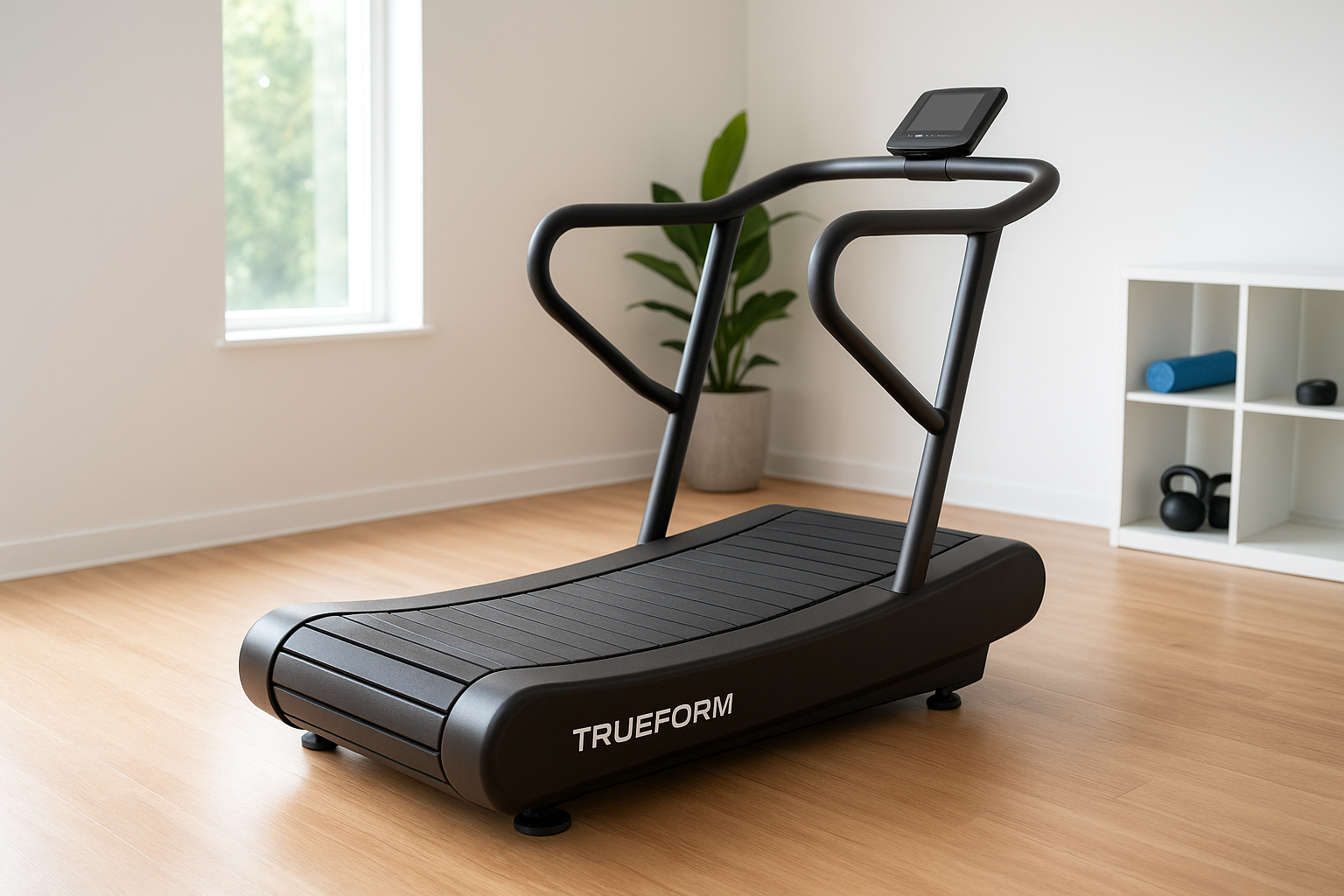
The TrueForm Trainer breaks from every other machine on this list because it has no motor at all. You power the curved slat belt yourself, the same way sprinters train on curved treadmills at university athletics programs. For runners chasing the best home treadmill for serious runners who want a tool that punishes bad mechanics and rewards good ones, this is a different category of equipment entirely.
Key specs
Because there’s no motor, several spec categories don’t apply the way they do on the rest of this list, but the build quality and belt design still matter enormously.
| Spec | Detail |
|---|---|
| Motor | None, self-powered curved belt |
| Running surface | Curved slat belt, adjustable resistance |
| Top speed | Unlimited, runner-driven |
| Incline | Built into curve, no mechanical incline |
| Max user weight | 400 lbs |
| Console | Basic LCD, speed and distance only |
That curved deck creates a natural incline effect at the front of the belt, so sprinting uphill happens automatically as you drive forward.
Standout features
The curved, motorless design forces a midfoot strike and forward lean, correcting heel-striking habits that flat motorized belts let you get away with. There’s no top speed limit either, since the belt only moves as fast as you push it, which makes this a favorite for sprint intervals and CrossFit-style conditioning work.
A treadmill with no motor can still be the toughest training tool on this entire list.
With no motor, there’s also nothing to burn out during years of hard interval sessions, and the simplified mechanics mean far fewer moving parts that can fail.
Who it’s for
This machine fits runners doing sprint work, hill simulation, or CrossFit-style conditioning rather than steady long-distance mileage. It rewards good running form and punishes poor mechanics, so beginners often find it exhausting before they find it useful. Distance runners logging easy recovery miles will prefer a motorized deck instead.
Price and warranty
The TrueForm Trainer sits at the premium end of this list, priced closer to commercial gym equipment than home treadmills. TrueForm backs it with a lifetime frame warranty and multi-year parts coverage, reflecting the reduced mechanical complexity of a motorless design.
10. How to choose the best home treadmill for running
Picking the right machine comes down to matching specs to how you actually train, not chasing the longest feature list. A runner doing three easy miles a few times a week needs less machine than someone building toward a marathon, and paying for capacity you’ll never use just wastes money. Use the categories below to filter the nine picks above down to the one or two that fit your actual training load.
Motor power and belt length
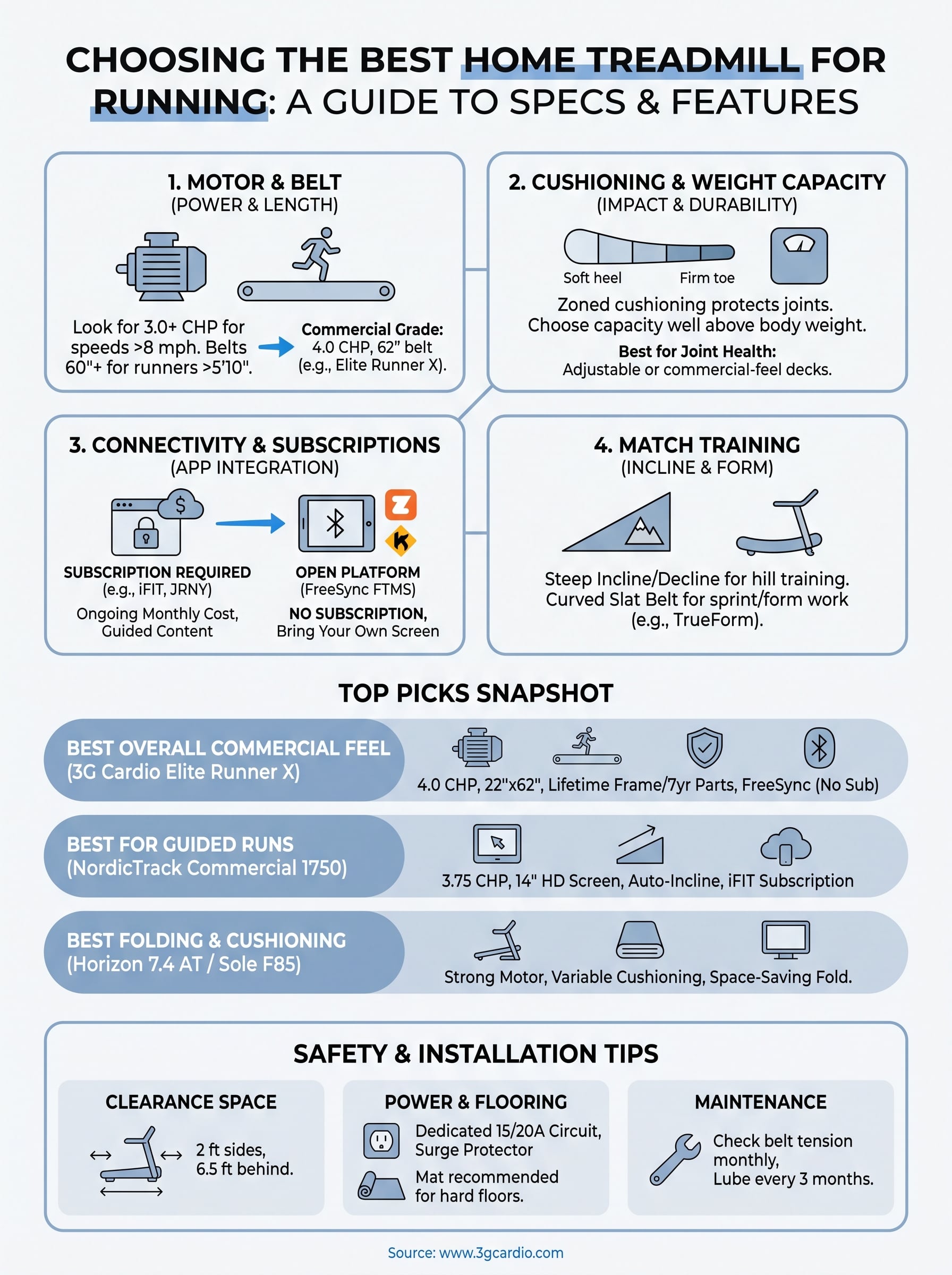
Anything under a 3.0 CHP motor struggles once you push past 8 mph for more than a few minutes, and the motor will run hot and wear faster under daily mileage, which is why it tops the list of treadmill specs worth comparing. Belt length matters just as much: runners over 5’10" need at least a 60-inch deck to avoid clipping the front rail mid-stride. If you’re comparing a home treadmill for running against a walking-focused model, these two numbers are the fastest way to tell them apart.
A short belt and an undersized motor will always show up in your stride before they show up on a spec sheet.
Deck cushioning and weight capacity
Cushioning systems vary more than most buyers expect, some decks soften impact evenly, others use zoned cushioning that’s firmer at push-off and softer at heel strike, so it helps to understand how much deck cushioning you actually need. Check the max user weight rating too, since running impact multiplies your body weight several times over with every stride, and a machine rated close to your actual weight will wear out faster than one with headroom.
Connectivity and subscription costs
Decide upfront whether you want an open system like FreeSync FTMS, which lets you connect a treadmill to Zwift or Kinomap without a required fee, or a closed ecosystem like iFIT or JRNY that bundles guided content into a monthly charge. Add up a year or two of subscription costs before comparing sticker prices, since a cheaper treadmill with a mandatory membership often costs more over time than a pricier machine with no subscription fees.
Matching the machine to your training
Finally, weigh your actual training plan against the machine’s strengths, incline range for hill work, decline for downhill practice, or a curved motorless belt for sprint conditioning. The best home treadmill for runners is the one built for the workouts you’ll actually do next month, not the one with the most impressive spec sheet sitting in a showroom.
11. Treadmill safety and installation tips for your home
Getting a treadmill into your house is only half the job. Where you put it, how it’s powered, and how often you maintain it all affect whether your home treadmill for running stays safe through years of hard mileage instead of becoming a hazard after month six.
Clearance and floor space
Manufacturers list a minimum clearance for a reason: a stumble at 10 mph needs room behind and beside the belt, not just in front of it, and cramped placement is one of the common treadmill mistakes to avoid. Plan for these minimums before you buy:
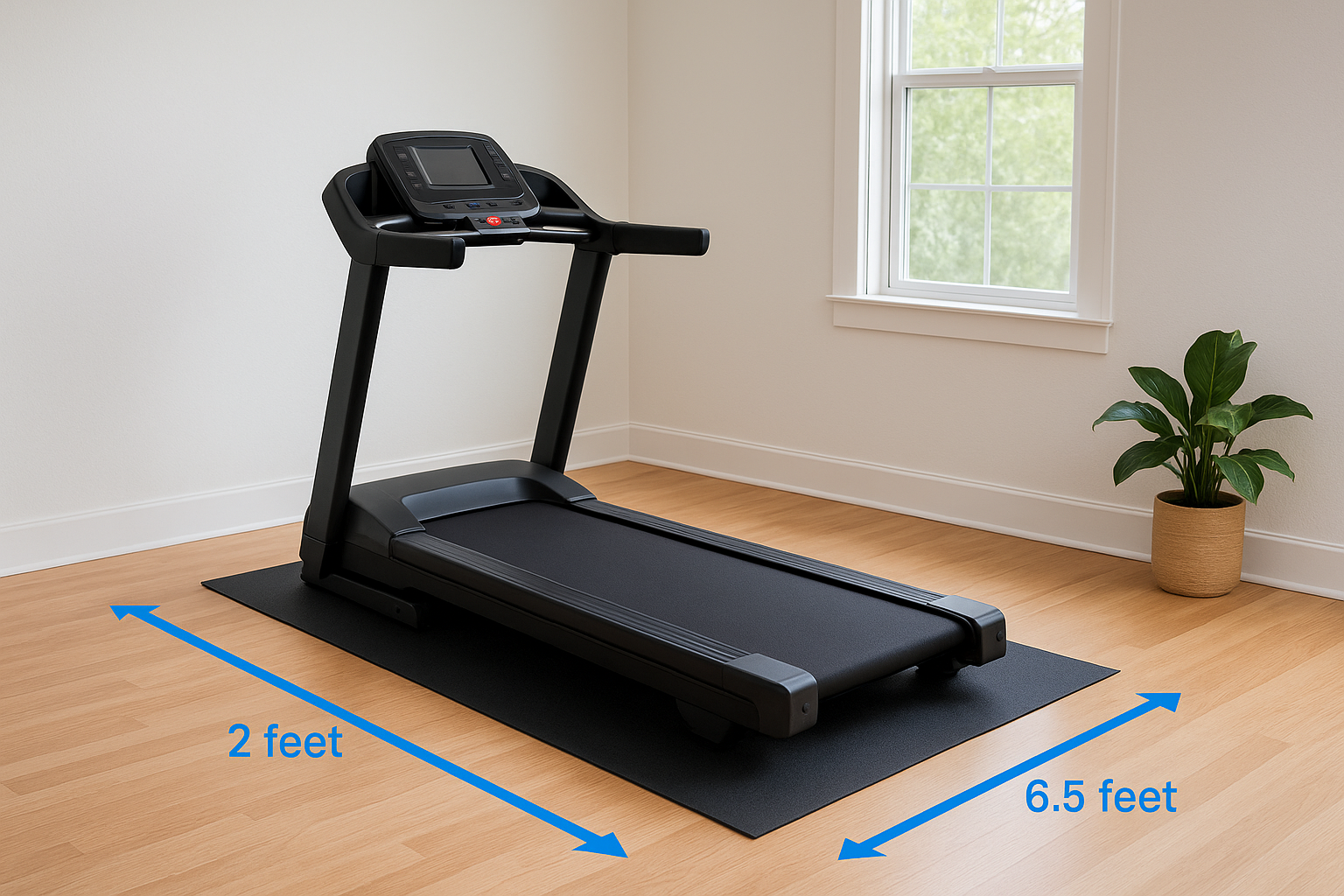
- 2 feet of clearance on each side of the frame
- 6.5 feet of open space behind the belt in case of a fall
- A ceiling height at least 1 foot above your head with the incline set at max
- A level, hard floor or a dedicated treadmill mat, not thick carpet that can shift the frame
Clearance behind the belt matters more than any spec sheet, because that’s the space that keeps a stumble from becoming an injury.
Electrical and flooring requirements
Most home treadmills draw enough current to need a dedicated 15 or 20-amp circuit, especially motors above 3.0 CHP like several on this list. Running one off a shared outlet with other appliances trips breakers and, over time, stresses the motor’s control board, which raises the question of using a surge protector or unplugging your treadmill between workouts. A rubber or foam mat under the deck also protects hardwood or tile from vibration damage and keeps the frame from creeping during long runs, so it’s worth deciding whether you need a mat under your treadmill.
Delivery, assembly, and setup
Commercial-grade decks are heavy, often 250 to 350 pounds assembled, so factor that into your setup plan before delivery day. Options generally break down like this:
| Delivery type | What’s included | Best for |
|---|---|---|
| Curbside | Drop-off only, self-assembly | Buyers comfortable with tools |
| White Glove | Room placement, full assembly, packaging removal | Most home buyers |
3G Cardio offers both free curbside delivery and White Glove delivery and installation on the Elite Runner X, which matters if you’re not confident wrestling a 300-pound frame up a staircase alone.
Ongoing safety checks
Belts stretch and lubrication wears down with regular running, so check belt tension monthly and re-lubricate per the manufacturer’s schedule, typically every three months under regular mileage, one of the simplest ways to keep your treadmill working better, longer. Loose bolts on the frame and console are the most common cause of unexpected wobble, so a quick tightening pass every few months keeps the deck stable at speed.
Finding the right treadmill for your training
Nine machines, one clear pattern: the treadmills that hold up to serious mileage share wide belts, strong motors, and cushioning built for running, not walking. Skip any deck that can’t clear a 3.0 CHP motor and 60 inches of belt if you’re training past 8 mph regularly, and factor in subscription costs before comparing sticker prices. Price alone won’t tell you which machine survives a real training block.
Once you’ve matched a machine to your mileage, weight, and budget, the decision gets simple. Runners who want commercial durability without the commercial price tag keep landing on the same answer throughout this list. If that’s you, take a closer look at the club-quality Elite Runner X treadmill built for daily training miles, a 4.0 HP deck backed by a lifetime frame warranty and free FreeSync connectivity with no subscription required.




Sorry, the comment form is closed at this time.