

24 Aug 9 Best Home Treadmills for Heavy People in 2026
Most treadmills on the market are built for a 250-pound frame, then marketed as if they’ll handle everyone. If you weigh more than that, you already know the wobble, the underpowered motor, and the belt that slips under real load. Finding the best home treadmill for heavy people means looking past marketing claims and checking actual frame construction, motor horsepower, and true weight ratings, not just the number printed on a spec sheet, which is exactly what separates a treadmill built for bigger guys from one that only claims to be.
This guide skips the generic rankings and focuses on treadmills that hold up under sustained heavy use at home. We looked at weight capacity ratings that come from real testing, deck and frame durability, motor size, and belt width, since a narrow belt makes even a high-capacity treadmill feel unstable. Warranty terms matter when you’re buying a treadmill online too, because a company that backs its frame for life usually built it to last.
Below you’ll find nine machines worth considering, each evaluated for build quality and long-term reliability rather than flashy touchscreens. Whether you’re replacing a gym membership or setting up a dedicated home cardio space, this list gives you the details needed to pick a heavy-duty treadmill that won’t let you down.
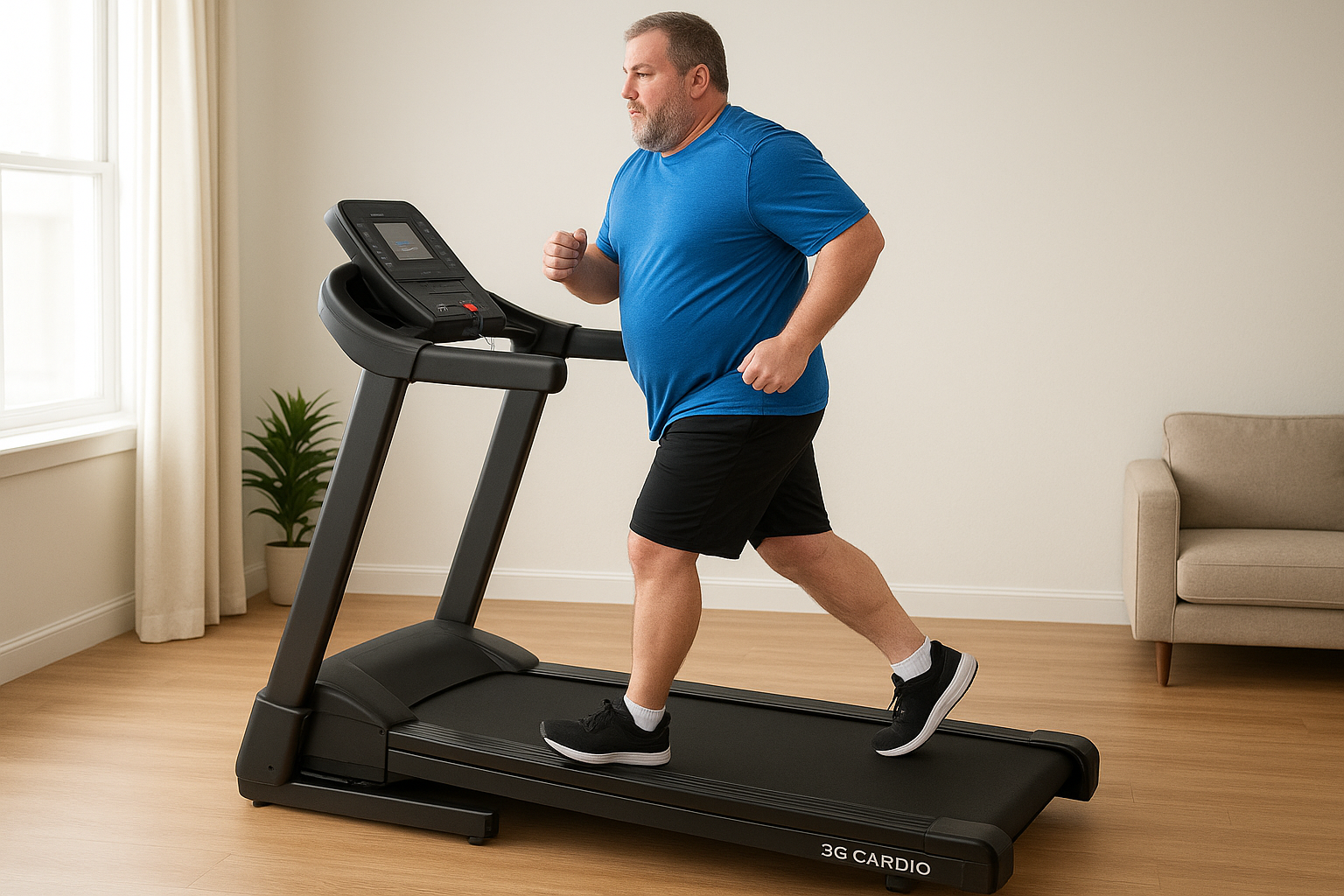
1. 3G Cardio Elite Runner X: Best overall for heavy users
When you weigh more than the average user, the deciding factor isn’t screen size or app integrations, it’s whether the frame flexes under you at mile three. The Elite Runner X’s 400-pound-rated frame is built on a commercial-style chassis that doesn’t buckle, which is why it tops this list for heavy-duty treadmill shoppers who want a machine that feels the same on day one and day five hundred. 3G Cardio designs and manufactures its own equipment out of Arizona, so the engineering choices here are aimed at durability rather than checking off a features list for the sake of a spec sheet.
Weight capacity and motor power
The Elite Runner X carries a 400-pound weight capacity, one of the higher ratings you’ll find on a residential treadmill, backed by a 4.0 continuous horsepower motor that doesn’t strain when a heavier runner pushes past 5 mph. Cheaper treadmills rate their motors at peak horsepower, a number that only applies for seconds at a time; 3G Cardio publishes continuous horsepower, which is the spec that actually predicts treadmill longevity once you’re thirty minutes into a workout. That distinction alone explains why so many budget machines overheat or lose belt tension under sustained heavy use while this one doesn’t.
A motor rated for continuous horsepower, not peak, is the single biggest predictor of whether a treadmill survives heavy daily use.
Deck size and cushioning
A wide, long deck matters more for heavier users than most buyers realize, since a narrower belt makes every stride feel like you’re balancing on a beam. The Elite Runner X uses a 22-inch by 62-inch running surface, giving taller and heavier runners full stride room without clipping the edges. Underneath, the cushioning system is tuned to absorb impact without feeling mushy or unstable at higher body weights, a balance that’s hard to get right and that a lot of competitors sacrifice in favor of a softer, gym-shoe-commercial feel.
Features and programming
This is where the "simple by design" philosophy shows up clearly. Instead of a proprietary subscription screen, the Elite Runner X ships with FreeSync FTMS Bluetooth connectivity, letting you pair your own tablet or phone with apps like Kinomap, Zwift, or Peloton’s app without paying a monthly fee to unlock the treadmill’s own display. It comes with a wireless heart rate strap included, a tablet shelf, and USB charging, so you get the practical extras without the forced software ecosystem.
- Incline range built for real hill simulation, not a token 2-3%
- Console readouts for speed, distance, calories, and heart rate zones
- Bring Your Own Screen (BYOS) compatibility for third-party fitness apps
- Folding deck for households tight on floor space
Price and warranty
The Elite Runner X sits in the mid-to-upper range for home treadmills, but the warranty coverage is where the value case gets stronger. 3G Cardio backs the frame for life, parts for 7 years, and labor for 1 year on residential use, terms that reflect confidence in the welds and components rather than marketing language. Financing is available through 6 months 0% interest with PayPal Credit, and every purchase includes a price match guarantee within six months, so you’re not left wondering if you overpaid.
| Spec | Elite Runner X |
|---|---|
| Weight capacity | 400 lbs |
| Motor | 4.0 CHP continuous |
| Deck size | 22" x 62" |
| Warranty | Lifetime frame, 7-yr parts, 1-yr labor |
| Connectivity | FreeSync FTMS Bluetooth, BYOS |
Owners transitioning off a gym membership tend to appreciate this machine most, since it replicates the stability of commercial equipment without the club fees or crowded treadmill rows. If you want one treadmill that won’t need replacing in three years, this is the one to start with.
2. Sole F80: Best budget-friendly heavy-duty treadmill
Budget and heavy-duty rarely go together, but the Sole F80 comes closest to proving that wrong. It’s the treadmill people mention when they want commercial-style durability without paying commercial-style prices, and it’s earned that reputation through consistent build quality across more than a decade of production runs. For shoppers comparing the best heavy-duty treadmill for home use at a lower price point, the F80 is usually the first name that comes up.
Weight capacity and motor power
Sole rates the F80 for a 375-pound weight capacity, just shy of the Elite Runner X but still well above what most residential treadmills claim. The motor is a 4.0 continuous horsepower unit, which holds pace steadily even when a heavier user is running rather than walking. Where it falls a bit short of the top pick is long-term motor life under daily heavy use; the components are solid, but they’re not built to quite the same commercial spec as machines designed with small-facility use in mind.
Deck size and cushioning
The running surface measures 22 inches by 60 inches, close to full commercial dimensions and plenty of room for taller or heavier runners to move naturally. Sole’s cushioning system uses a flex deck design that softens impact at the front third of the belt while staying firmer toward the back, a setup that works well for people who alternate between walking and jogging.
Deck cushioning that firms up toward the back of the belt gives heavier runners the push-off stability that all-soft decks can’t provide.
Features and programming
The F80 keeps its electronics practical rather than flashy. You get a large LCD console, built-in speakers, a cooling fan, and Bluetooth connectivity for basic app pairing, though it doesn’t offer the same open BYOS approach as FreeSync-enabled machines.
- 10 built-in workout programs plus manual mode
- Incline up to 15% for hill training
- Bluetooth speed and incline auto-adjust with compatible apps
- Folding frame with hydraulic assist for storage
Price and warranty
Pricing typically lands well under $2,500, making it one of the more affordable best home treadmill for heavy people options that doesn’t cut corners on frame strength. The warranty covers the frame for lifetime, motor for lifetime, parts for 3 years, and labor for 1 year, solid terms though shorter on parts coverage than 3G Cardio’s 7-year commitment. For buyers who want heavy-duty performance on a tighter budget and don’t mind a slightly shorter parts warranty, the F80 delivers real value without the compromises that plague cheaper machines.
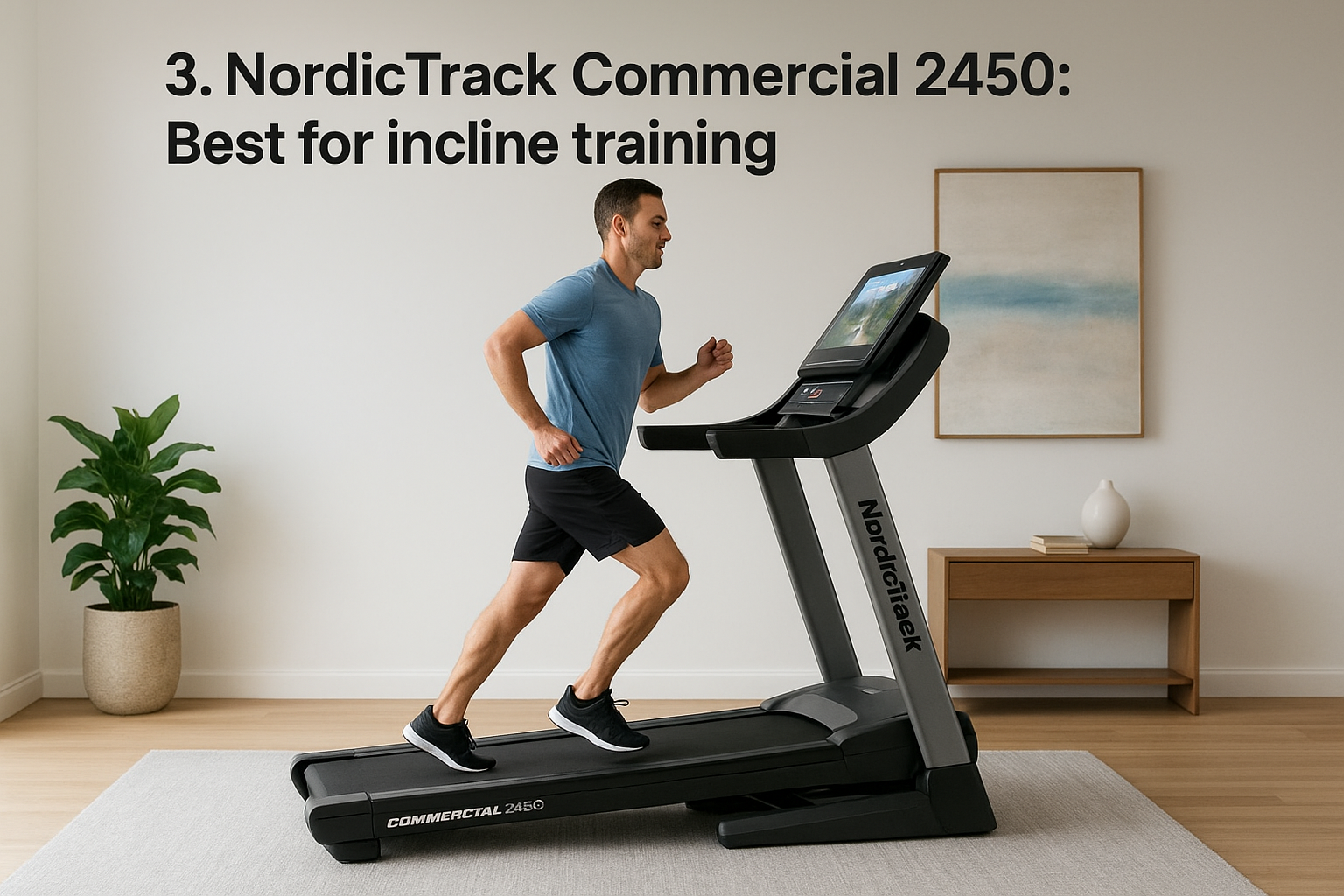
3. NordicTrack Commercial 2450: Best for incline training
If hill work is your main goal, the NordicTrack Commercial 2450 earns its spot through incline range rather than raw weight rating alone. It’s still a legitimate option for the best heavy-duty treadmill for home use search, but the reason people buy it specifically is the incline and decline capability that few competitors match at this price point.
Weight capacity and motor power
NordicTrack rates the Commercial 2450 for a 300-pound weight capacity, noticeably lower than the Elite Runner X or Sole F80, so it’s worth checking against your own body weight before committing. The motor delivers 3.6 continuous horsepower, enough for steady incline walking and moderate jogging, though heavier runners pushing higher speeds on flat ground may notice it working harder than the 4.0 CHP motors found on the top two picks. This treadmill suits incline-focused training more than sustained flat-ground running at heavier weights.
Deck size and cushioning
The running surface measures 22 inches by 60 inches, matching commercial dimensions and giving heavier users enough width to run without feeling boxed in. NordicTrack’s cushioning system, called Runners Flex, uses a series of shock absorbers under the deck that soften impact more at the front of the belt, similar in concept to Sole’s approach but tuned slightly softer overall.
A treadmill’s incline range only matters if the frame and motor can handle steep grades without straining, which is exactly where the Commercial 2450 was built to perform.
Features and programming
This is where the Commercial 2450 separates itself from the rest of the list. It offers incline up to 40% and decline down to -6%, a range built specifically for simulating outdoor terrain rather than the token 10-15% most home treadmills top out at, which matters if walking or running at an incline is the bulk of your training. The 14-inch HD touchscreen runs iFit programming, which auto-adjusts incline and speed during trainer-led workouts, though that convenience comes with an ongoing subscription requirement to unlock most of the console’s functionality.
- Incline range of -6% to 40% for real terrain simulation
- 14-inch rotating touchscreen for iFit classes
- Auto-adjust speed and incline during guided workouts
- Bluetooth heart rate strap compatibility
Price and warranty
The Commercial 2450 typically prices above $2,800, and that figure doesn’t include the iFit subscription needed to access most workout content, a recurring cost worth factoring into your total investment. NordicTrack backs the frame for 10 years, motor for lifetime, and parts and labor for 2 years, respectable terms but shorter than the lifetime frame and 7-year parts coverage 3G Cardio includes standard. Buyers who prioritize incline variety over top-end weight capacity or subscription-free operation will find good value here, but those weighing more than 300 pounds or wanting to avoid monthly fees should look elsewhere on this list first.
4. Horizon 7.8 AT: Best high-capacity treadmill
Weight capacity is the whole reason the Horizon 7.8 AT makes this list. It matches the top pick’s rating while coming in at a noticeably lower price, making it a strong pick for shoppers who need a high weight capacity but don’t need every extra that comes with a premium build. Horizon has built home fitness equipment for decades, and this model reflects that experience in the frame geometry more than in flashy add-ons.
Weight capacity and motor power
Horizon rates the 7.8 AT for a 400-pound weight capacity, tying it with the Elite Runner X for the highest rating on this list. The motor delivers 4.0 continuous horsepower, which holds steady during sustained jogging rather than dipping under load the way smaller 2.5 or 3.0 CHP motors do. Quick Dial controls on the handlebars let you adjust speed and incline without reaching for the console, a small but genuinely useful feature when you’re breathing hard mid-run.
A 400-pound rated frame paired with a 4.0 CHP motor gives heavier runners the same margin for error as far pricier commercial machines.
Deck size and cushioning
The running surface measures 22 inches by 60 inches, giving full stride room without the treadmill footprint growing unmanageable. Horizon’s cushioning system uses variable-response deck technology, softening under heel strike toward the front of the belt while staying firmer near the back for stable push-off. Testers who split time between walking and running tend to notice the deck adapts to pace rather than feeling uniformly soft or firm across the whole surface.
Features and programming
The console keeps things straightforward, pairing a 10-inch display with Bluetooth connectivity for the Horizon Fitness app rather than locking workouts behind a proprietary ecosystem. Incline runs from -3% to 15%, giving you decline training that few competitors at this price offer.
- Incline range from -3% to 15%, including decline simulation
- Bluetooth speaker and USB charging port
- Quick Dial speed and incline adjustment on the handlebars
- Folding deck with hydraulic assist
Price and warranty
The 7.8 AT typically prices in the mid-$2,000 range, undercutting several 400-pound-capacity competitors by several hundred dollars. Horizon backs the frame and motor for lifetime, parts for 5 years, and labor for 2 years, coverage that’s respectable but still shorter on parts than 3G Cardio’s 7-year commitment. Considering the price gap, though, it’s one of the better values for buyers specifically hunting the best home treadmill for heavy people without stretching their budget toward premium territory.
5. Bowflex Treadmill 10: Best for heavy walkers
Walking is where most heavier users log their miles, and since you can absolutely lose weight just walking on a treadmill, the Bowflex Treadmill 10 was clearly designed with that pace in mind rather than sprint work. It doesn’t chase the highest weight rating or the widest incline range on this list, but its adjustable cushioning and walker-friendly console make it a smart pick if running fast isn’t part of your routine. Anyone comparing options for the best home treadmill for heavy people who mostly walks for cardio should give this one a close look.
Weight capacity and motor power
Bowflex rates the Treadmill 10 for a 400-pound weight capacity, matching the top picks on this list despite a lower overall price point. The motor delivers 4.0 continuous horsepower, more than enough headroom for steady walking or light jogging without straining, though it’s not tuned the same way as machines built for daily heavy running. Owners who mix incline walking with occasional jogging report the motor holds pace consistently, which matters more for joint health than raw top speed.
Deck size and cushioning
The running surface measures 20 inches by 60 inches, slightly narrower than the Elite Runner X but still workable for most walkers who don’t need the extra width a fast runner requires. What stands out is the adjustable comfort cushioning, letting you dial in a firmer or softer feel across three settings depending on joint sensitivity or personal preference.
Adjustable cushioning matters more for heavy walkers than incline range, since every step’s impact compounds over an hour-long session.
Features and programming
The console centers on Bowflex’s JRNY app, which adapts workout intensity based on your performance history and syncs with the touchscreen for guided sessions. It’s a helpful feature for walkers who want structure without programming their own intervals, though full functionality requires an ongoing subscription after the trial period ends.
- Incline range up to 15% for varied walking intensity
- JRNY adaptive coaching with a monthly subscription
- Bluetooth heart rate strap compatibility
- Folding deck with SoftDrop assist
Price and warranty
The Treadmill 10 typically prices around $3,000, putting it in the same range as several higher-capacity competitors despite its narrower deck. Bowflex backs the frame for lifetime, parts for 5 years, electronics for 2 years, and labor for 1 year, solid mid-tier coverage that falls short of 3G Cardio’s 7-year parts warranty. For heavy walkers who value adjustable cushioning and app-guided coaching over top running speed, this machine earns its keep.
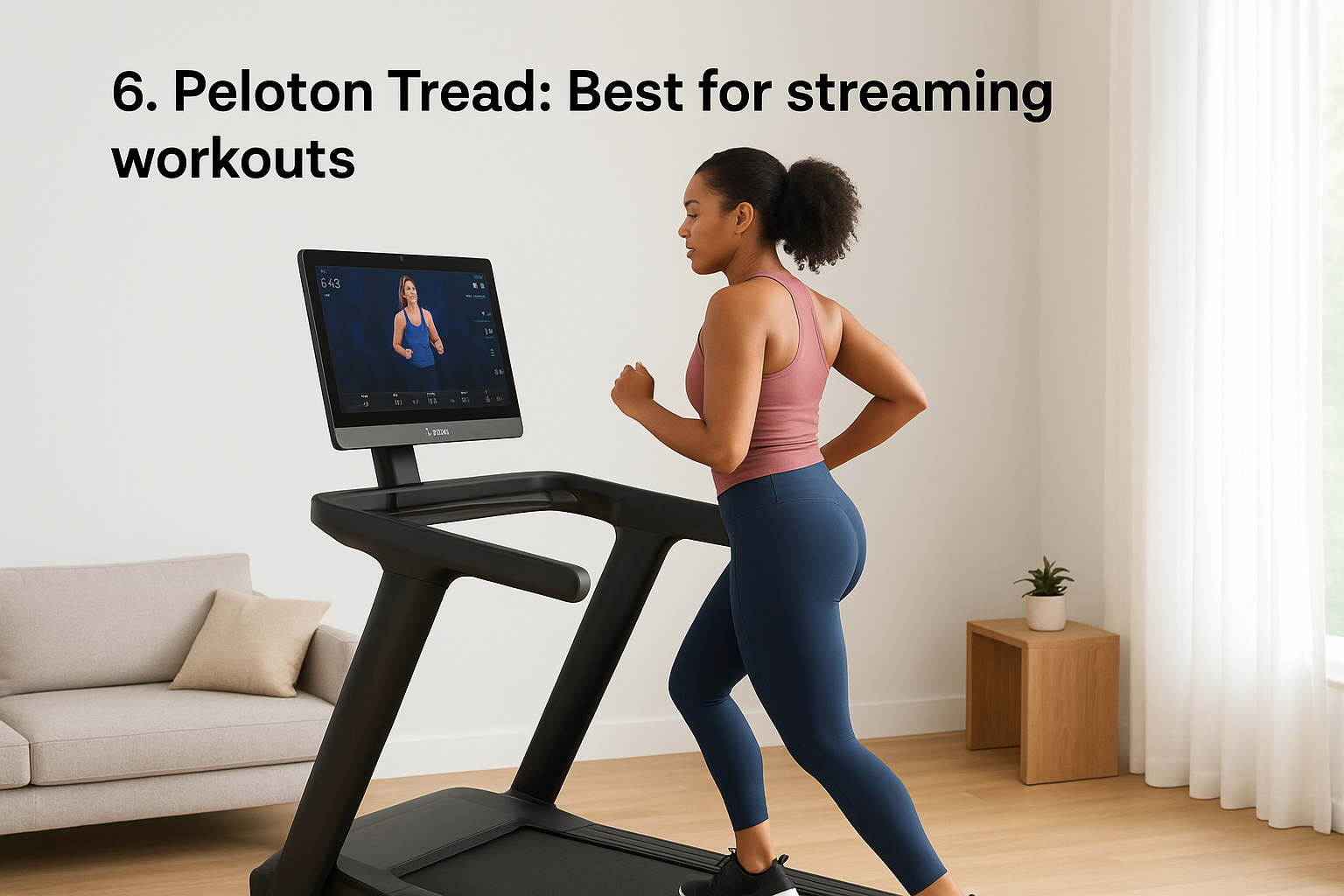
6. Peloton Tread: Best for streaming workouts
Streaming classes are the whole reason people buy a Peloton Tread, not weight capacity or motor specs. If your priority is a coach-led experience with live leaderboards and a huge on-demand library, this machine earns its spot even though it’s not the strongest performer on paper for the best home treadmill for heavy people search. Think of it as a media platform with a treadmill attached, rather than the reverse.
Weight capacity and motor power
Peloton rates the Tread for a 297-pound weight capacity, the lowest ceiling on this list by a wide margin. The motor specs aren’t published the way 3G Cardio or Horizon publish continuous horsepower, which makes it harder to judge how it performs under sustained heavy loads. Riders under that limit report smooth, quiet operation, but anyone near or above 297 pounds should look elsewhere on this list before committing.
A treadmill’s streaming content can’t compensate for a weight rating that excludes the exact buyer searching for a heavy-duty machine.
Deck size and cushioning
The running surface measures 20 inches by 59 inches, adequate for most strides but narrower than the commercial-style decks found on the Elite Runner X or Sole F80. Peloton’s cushioning uses a slat-belt design rather than a traditional rubber belt, which some runners find firmer underfoot and better for stability during faster intervals, though it offers less give for heavier joints during long sessions.
Features and programming
Here’s where the Tread earns its reputation. The 23.8-inch rotating HD touchscreen streams live and on-demand classes led by real instructors, with auto-follow technology that adjusts speed and incline automatically during guided workouts.
- Thousands of on-demand classes across running, walking, and strength
- Auto-follow speed and incline adjustment during live classes
- Built-in leaderboard for competitive motivation
- Requires a monthly All-Access Membership for full functionality
Price and warranty
The Tread itself typically prices around $3,000, but that figure doesn’t include the required membership, which adds roughly $44 a month on top of the hardware cost indefinitely and changes how subscription fees affect a treadmill’s real cost. Peloton backs the frame for 5 years, and parts and labor for 12 months, noticeably shorter than 3G Cardio’s lifetime frame and 7-year parts coverage. Between the subscription and shorter warranty terms, the Tread suits buyers chasing class content specifically, not those prioritizing frame durability or long-term cost per workout.
7. Life Fitness T5: Best quiet commercial-grade treadmill
Quiet operation and true commercial engineering are the two things Life Fitness built its reputation on, and the T5 brings both into a home-sized footprint. Gyms have run Life Fitness equipment for decades, so this model carries the same belt drive and frame philosophy used in facilities that see hundreds of users a day. For anyone comparing the best home treadmill for heavy people who also wants a treadmill quiet enough for early morning runs, the T5 deserves a spot on the shortlist.
Weight capacity and motor power
Life Fitness rates the T5 for a 350-pound weight capacity, backed by a 3.5 continuous horsepower motor built around the same drive system used in the company’s club-grade treadmills. Belt tracking stays consistent even during longer runs, a detail that traces back to Life Fitness’s commercial engineering rather than a residential redesign. Runners who’ve used this brand at a gym often notice the home version feels nearly identical underfoot, which isn’t something every manufacturer on this list can claim.
Deck size and cushioning
Measuring 22 inches by 60 inches, the running surface gives taller and heavier users the same stride room found on the top picks in this guide. Life Fitness uses its FlexDeck shock absorption system, a setup borrowed directly from commercial floors, that cuts joint impact without feeling unstable under a heavier stride.
Commercial-grade cushioning built for gym traffic tends to hold up better under a heavier home user than cushioning designed only for occasional light use.
Features and programming
The console keeps distractions to a minimum, favoring a 9-inch touchscreen over the oversized displays found on streaming-focused machines. Bluetooth connectivity pairs with the Life Fitness app and third-party fitness apps, so you’re not locked into a single ecosystem.
- 10 preset workout programs plus manual and heart rate control modes
- Whisper-quiet belt drive rated for extended daily use
- USB charging port and integrated tablet holder
- Bluetooth heart rate strap compatibility
Price and warranty
Expect to pay in the mid-$3,000 range, positioning the T5 as one of the pricier options here, largely because you’re paying for commercial-grade parts scaled into a residential shell. Life Fitness backs the frame for lifetime, motor for 10 years, and parts and labor for 3 years, solid terms though still short of 3G Cardio’s 7-year parts coverage. Shoppers who’ve used Life Fitness equipment at a gym and want that exact feel at home will find the price justified, but budget-conscious buyers may get more warranty value elsewhere on this list."}
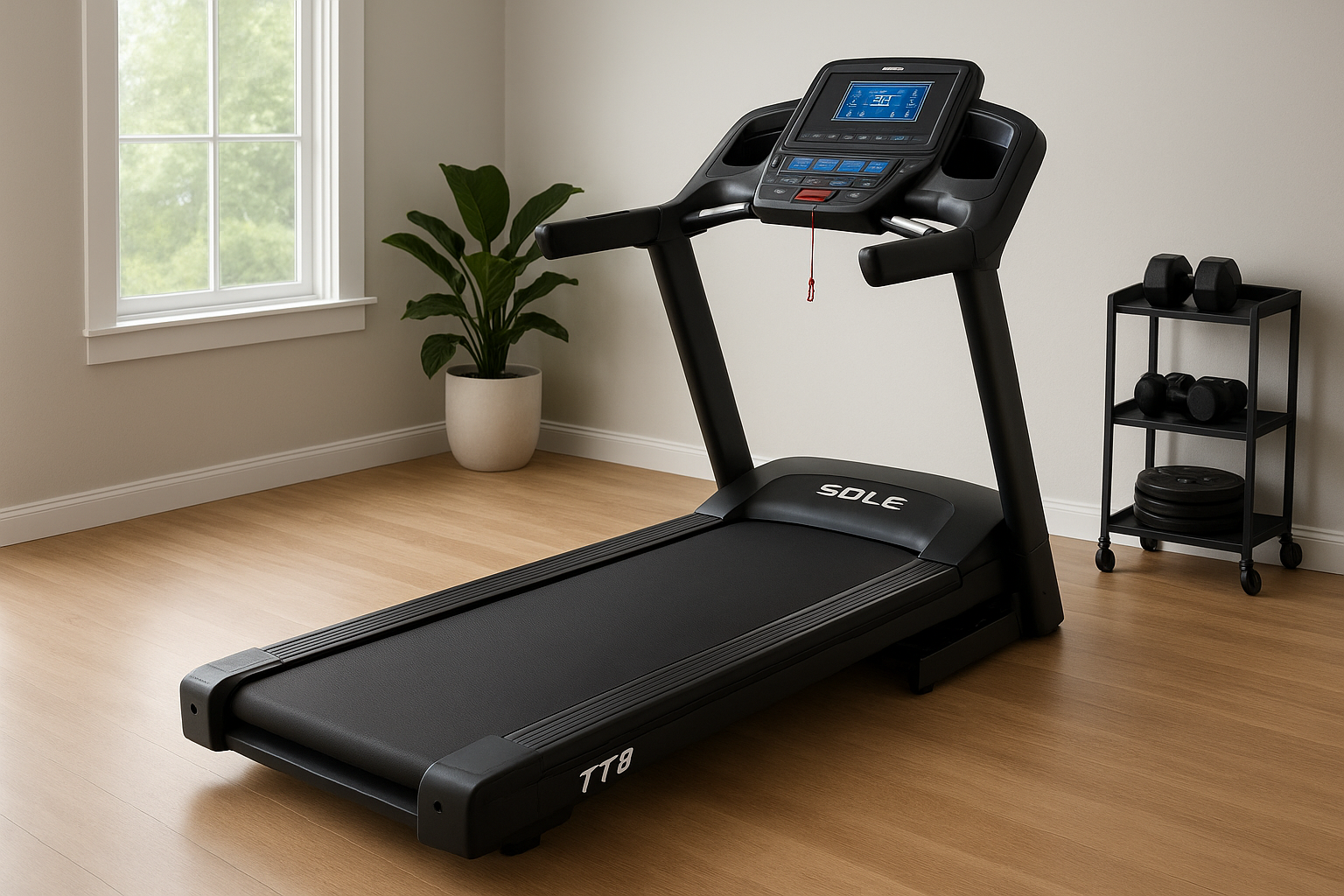
8. Sole TT8: Best heavy-duty non-folding treadmill
Some buyers don’t want a folding deck at all, since hinges and locking pins are just one more thing that can wear out under repeated heavy use. The Sole TT8 skips that mechanism entirely, using a fixed, one-piece frame that behaves more like a commercial floor model than a residential fold-up. For anyone hunting the best heavy-duty treadmill for home use who has the floor space to spare in a home gym built around a treadmill, that permanent frame is the whole appeal.
Weight capacity and motor power
Sole rates the TT8 for a 400-pound weight capacity, matching the top picks on this list, and pairs it with a 4.0 continuous horsepower motor built for daily use rather than occasional workouts. Because the frame doesn’t fold, there’s no hinge point flexing under load, which means the whole deck stays rigid mile after mile. Owners running at higher speeds tend to notice less side-to-side sway compared to folding models rated at the same weight.
A fixed, non-folding frame removes the one structural weak point that folding treadmills can’t fully engineer around.
Deck size and cushioning
The running surface measures 22 inches by 60 inches, giving heavier and taller runners full stride room without crowding the belt edges. Sole’s Cushion Flex Whisper Deck softens impact through a series of elastomer dampeners under the belt, tuned to feel firm enough for push-off while still cutting joint stress during longer runs. That balance holds up well for runners who log serious weekly mileage rather than the occasional walk.
Features and programming
A 10.1-inch console anchors the display, running Sole’s own workout programming alongside Bluetooth connectivity for compatible fitness apps. Incline goes up to 15%, and top speed reaches 12 mph, plenty of range for both walkers and heavier runners chasing faster paces.
- Bluetooth speakers built into the console
- USB charging port for phones and tablets
- Manual, program, and heart-rate-controlled workout modes
- Fixed frame footprint, no folding mechanism to maintain
Price and warranty
Expect to pay in the mid-$3,000 range, reflecting the heavier steel construction and commercial-style frame that non-folding treadmills require. Sole backs the frame, motor, and deck for lifetime, with 3 years on parts and 1 year on labor, solid terms though still short of 3G Cardio’s 7-year parts coverage on the Elite Runner X. Given the permanent footprint, this model suits a dedicated home gym room more than a shared living space, but for buyers who never plan to fold or move the machine, it’s a durable long-term investment.
9. NordicTrack Commercial 1750: Best value with iFit
Rounding out this list is a treadmill that splits the difference between the incline-focused Commercial 2450 and the budget-friendly Sole F80. The NordicTrack Commercial 1750 brings iFit’s trainer-led programming down to a more approachable price point, making it a reasonable pick for shoppers who want guided workouts without paying flagship prices. It’s not the strongest option on this list for the best home treadmill for heavy people search by weight rating alone, but the overall package earns it a spot for buyers who value content and coaching as much as raw durability.
Weight capacity and motor power
NordicTrack rates the Commercial 1750 for a 300-pound weight capacity, the same ceiling as the Commercial 2450 and noticeably lower than the 400-pound machines topping this list. The motor delivers 3.75 continuous horsepower, enough for steady jogging but with less headroom than the 4.0 CHP motors found on the Elite Runner X, Horizon 7.8 AT, or Sole TT8. Heavier runners who push past a light jog will likely feel this motor working harder than it should, so it’s worth weighing your typical pace before choosing this model over a higher-capacity option.
Deck size and cushioning
The running surface measures 22 inches by 60 inches, matching commercial dimensions and giving heavier users enough width to run comfortably. Cushioning comes from NordicTrack’s Runners Flex system, the same shock-absorbing design used on the Commercial 2450, softening impact at the front of the belt while staying firmer toward the back for stable push-off.
Guided coaching software can make a workout more engaging, but it can’t raise a motor’s horsepower or a frame’s weight rating.
Features and programming
The standout here is the 10-inch HD touchscreen running iFit, which streams trainer-led classes and automatically adjusts incline and speed to match the workout. Incline ranges from -3% to 12%, a smaller window than the Commercial 2450 but still enough for meaningful hill work. Like other iFit-equipped machines, most of the console’s value depends on an active subscription.
- Incline range of -3% to 12%
- 10-inch rotating touchscreen with iFit compatibility
- Auto-adjust speed and incline during guided workouts
- Bluetooth heart rate strap compatibility
Price and warranty
The Commercial 1750 typically prices under $2,000, making it one of the more affordable iFit-enabled machines on the market, though the subscription cost adds up over time and isn’t included in that figure. NordicTrack backs the frame for 10 years, motor for lifetime, and parts and labor for 1 year, coverage well short of 3G Cardio’s lifetime frame and 7-year parts warranty. For buyers who weigh under 300 pounds and want structured coaching at a lower entry price, this treadmill delivers real value, but heavier users chasing a sturdier frame should look toward the top of this list instead.
Choosing the right treadmill for your body and space
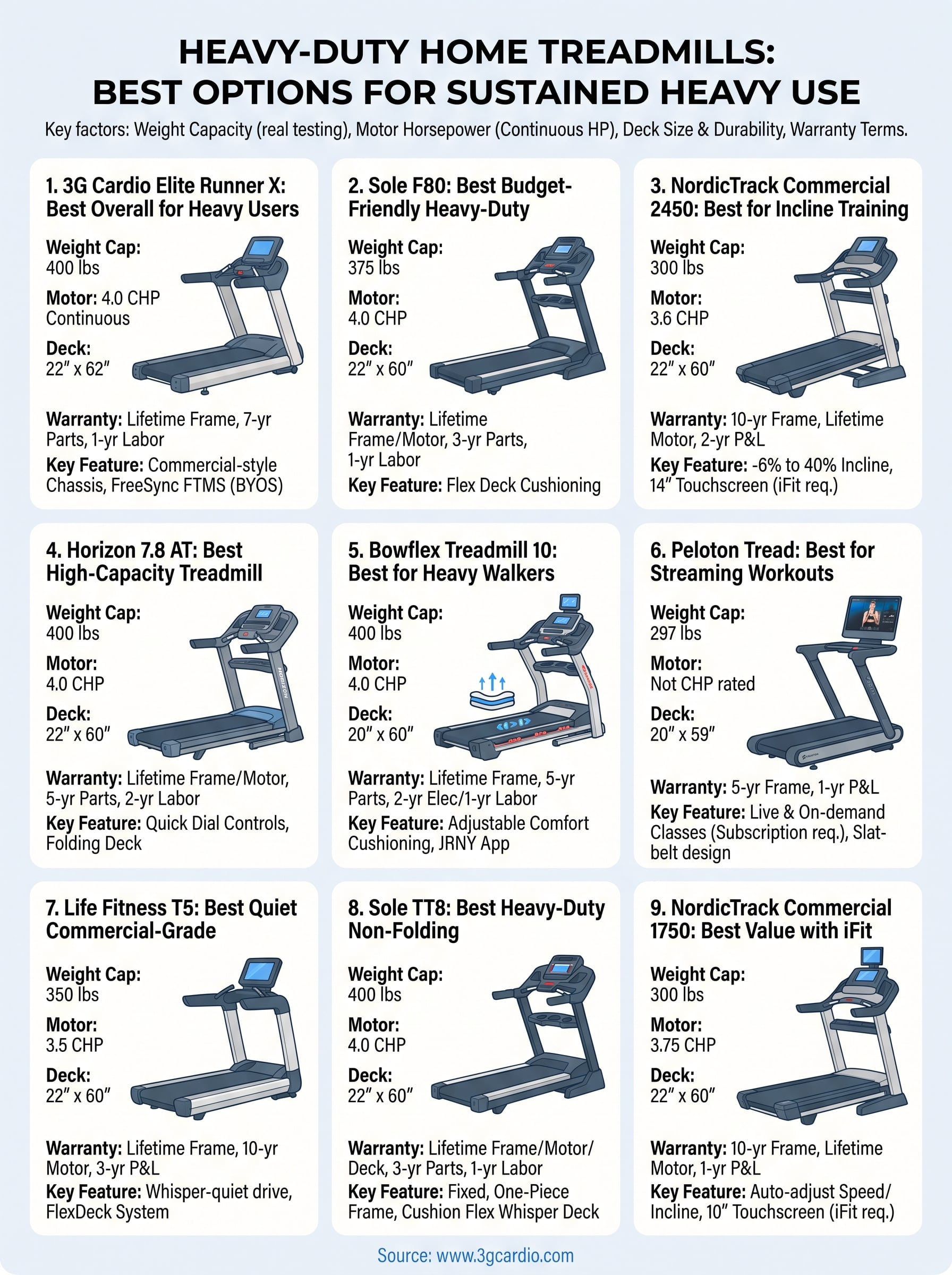
Weight capacity isn’t a marketing footnote, it’s the number that determines whether a treadmill lasts five years or fifty. Before you buy, match your body weight against the true rating with room to spare, measure your available floor space against the deck dimensions, and decide whether you actually need iFit-style coaching or just a stable machine that connects to apps you already use. Numbers on a spec sheet only tell part of the story; continuous horsepower and warranty terms tell you how a company actually built the thing.
Skip the treadmills that hide their real limits behind glossy touchscreens and subscription fees. Prioritize a wide belt, a motor rated for continuous use, and a frame backed by a warranty the manufacturer is confident enough to put in writing. If you want that combination without overpaying for features you won’t use, check out the 3G Cardio treadmills that stream from your own tablet and pair it with the apps you already love, no subscription required.




Sorry, the comment form is closed at this time.