

29 Aug Elliptical Trainer (Cross Trainer): What It Is and How to Buy
You want a low-impact machine that still gets your heart rate up, and you keep seeing two names for the same equipment: elliptical and cross trainer. That mix-up trips up a lot of shoppers before they even start comparing specs. An elliptical trainer elliptical combines a walking, running, or stair-climbing motion with zero jarring impact on your knees, hips, or back, which is exactly why so many people switch to one after years on treadmills.
If you’re trying to figure out whether a cross trainer elliptical belongs in your home gym, the short answer is yes, especially if joint pain or past injuries limit your options. This machine works your legs, glutes, and often your arms in one continuous motion, burning real calories without the pounding of running.
In this guide, we’ll break down how an elliptical trainer cross trainer actually works, the differences between stride lengths and resistance systems, and what separates a flimsy department store model from commercial-grade construction built to last. We’ll also cover what to look for when you shop, so you buy a machine that fits your body and your budget instead of returning it in six months.
Why an elliptical trainer might be right for you
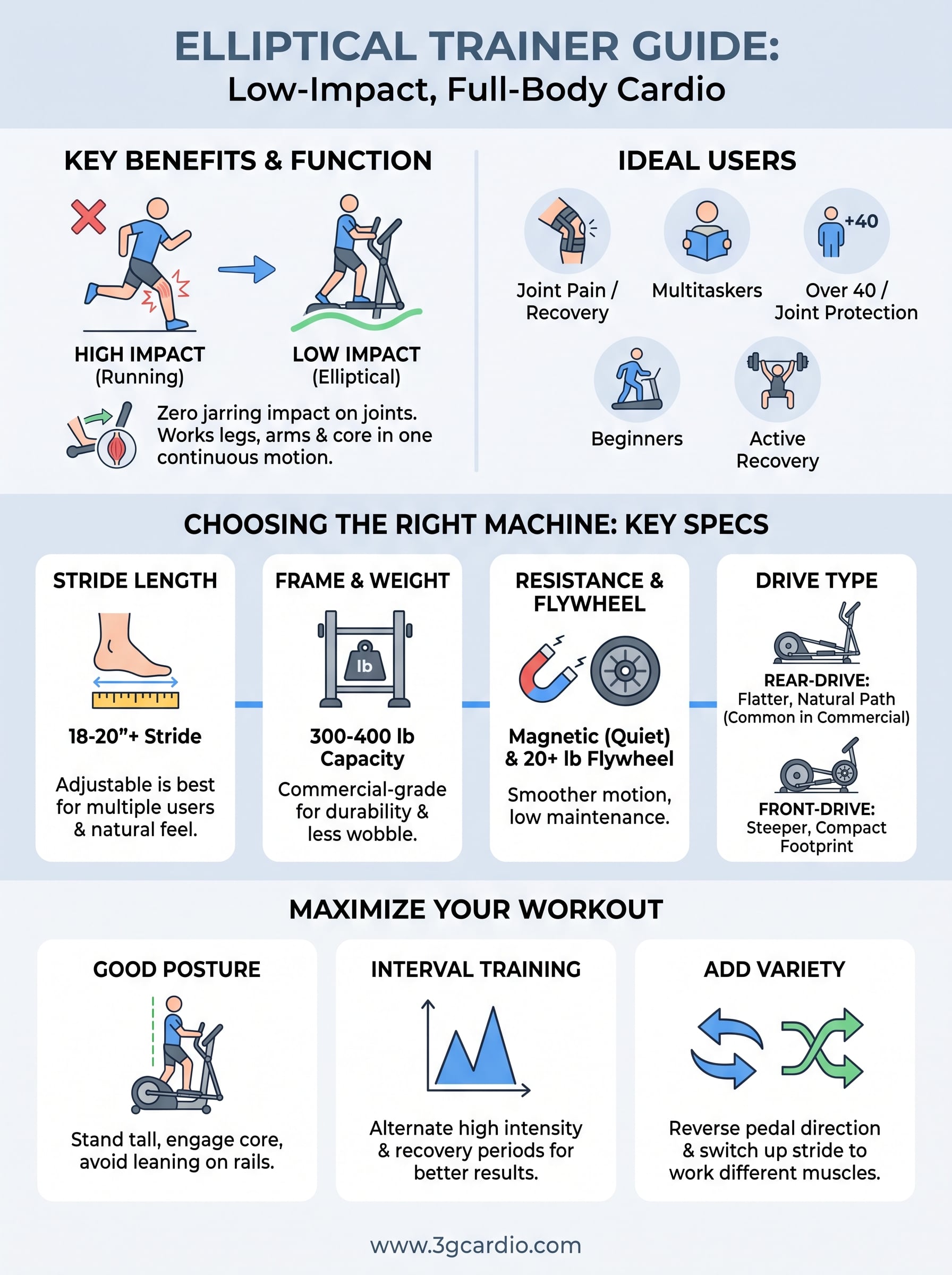
Joint pain sends more people shopping for a cross trainer elliptical than any other single reason. Running and jogging pound your knees and hips with three to four times your body weight on every stride. An elliptical keeps your feet planted on the pedals the entire time, so you get the cardio benefit of running without the joint stress. That’s why physical therapists often recommend ellipticals, along with other machines that deliver cardio without joint impact, to clients recovering from knee surgery or managing arthritis.
A well-built elliptical lets you push your heart rate up without ever pounding your joints down.
Full-body work in one motion
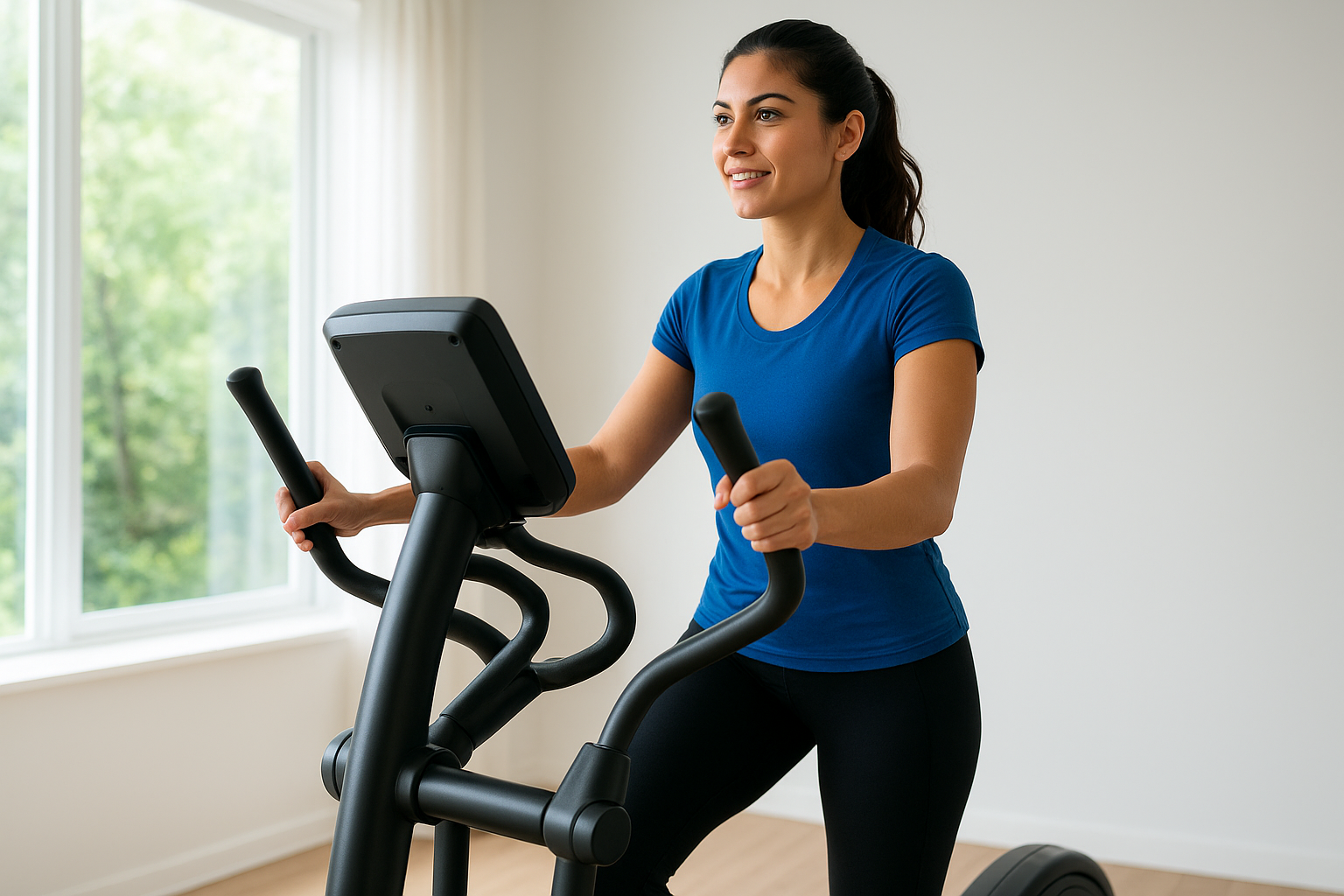
Unlike a treadmill, which mostly trains your legs, an elliptical trainer elliptical with moving handlebars engages your arms, shoulders, and core at the same time. Pushing and pulling the handles while your legs drive the pedals turns a simple cardio session into a full-body workout that hits nearly every muscle an elliptical can engage. Skip the handles and just hold on, and you shift almost all the load to your lower body instead, which is useful on days you want to isolate your legs.
Who gets the most out of one
Ellipticals fit a wide range of situations, and knowing where you land helps you decide if one belongs in your home:
- Former runners dealing with knee, hip, or back pain who still want intense cardio
- Beginners easing into consistent exercise without worrying about form or impact injuries
- Multitaskers who want to read, watch TV, or take a call while still working hard
- Strength trainers looking for active recovery days that don’t beat up sore joints
- Anyone over 40 who wants to protect their joints for the long haul while staying in shape
Beyond joint comfort, the calorie burn holds its own against running. A 180-pound person working at a moderate to vigorous pace on an elliptical can burn 500 to 700 calories an hour, according to estimates from the Harvard Medical School Family Health Guide. Combine that with the option to adjust incline, resistance, and stride length, and you have a machine that scales from easy recovery sessions to genuinely hard interval training.
How to choose the right elliptical trainer
Stride length matters more than most shoppers realize. A machine with a stride under 18 inches feels cramped if you’re over 5’8", forcing an awkward, choppy gait that stresses your knees instead of protecting them. Taller users need 20 inches or more for a natural, full extension. Some elliptical trainer cross trainer models offer adjustable stride length, letting multiple household members find their own comfortable range on the same machine, though it pays to know which machines truly adjust the stride and which only advertise it.
The right stride length turns a good elliptical into one that actually feels good to use every day.
Weight capacity and frame construction
Check the weight capacity before you check the price tag. Commercial-grade frames rated for 300 to 400 pounds hold up far longer than budget models capped at 250, even if you weigh less, because a sturdier frame means less wobble and noise at higher resistance levels. Look at the flywheel weight too. Heavier flywheels, generally 20 pounds or more, produce smoother, more natural pedal motion than the light, jerky flywheels found in cheap models.
Resistance and connectivity
Magnetic resistance systems run quieter and require less maintenance than old friction-based designs. Beyond resistance, decide what console features you actually need:
- Bluetooth connectivity to sync with fitness apps
- Built-in heart rate monitoring with a chest strap
- A tablet shelf and USB charging
- Preset workout programs versus manual control
Don’t pay extra for features you’ll never touch, but don’t skip heart rate tracking if you train by zones.
Elliptical trainer types and key features compared
Rear-drive and front-drive designs make up the two main categories you’ll encounter while shopping. Rear-drive elliptical cross trainers position the flywheel behind you, creating a longer, flatter stride path that feels closest to natural walking or running. Front-drive elliptical trainers put the flywheel up front, which often means a shorter footprint but a steeper, more compressed stride that some taller users find cramped. Most commercial-grade machines, including the 3G Cardio Elite EM X elliptical trainer, use rear-drive engineering because it holds up better under heavy daily use and delivers a smoother pedal motion.
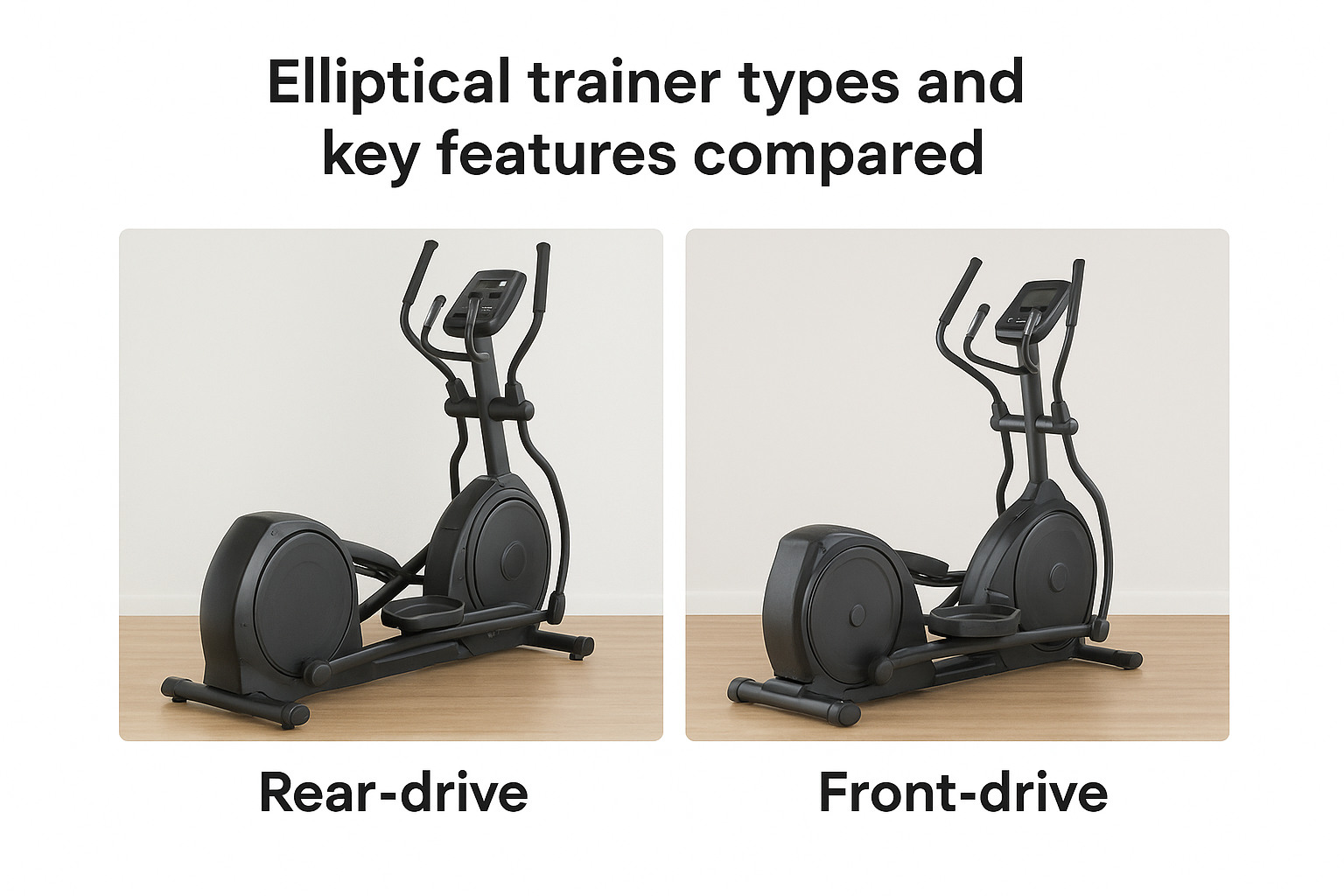
The drive system determines how a stride feels long before resistance level or console features ever matter.
Beyond drive type, a handful of features separate a machine you’ll use for years from one that ends up as a clothes rack.
| Feature | Budget models | Commercial-grade models |
|---|---|---|
| Stride length | Fixed, often under 18 inches | Adjustable, 18-20+ inches |
| Flywheel weight | Under 15 lbs | 20+ lbs |
| Resistance type | Friction-based | Magnetic |
| Weight capacity | 250 lbs or less | 300-400+ lbs |
| Connectivity | Limited or none | Bluetooth, app sync, heart rate |
Weighing these specs side by side, rather than relying on marketing copy, tells you far more about how a cross trainer elliptical will actually perform once you’ve owned it for a year than any glossy brochure ever will.
How to use an elliptical for real results
Posture makes or breaks your workout on a cross trainer elliptical, which is why correct elliptical technique is worth learning first. Stand tall, keep your core engaged, and resist leaning on the console rails for balance. Leaning shifts weight off your legs and glutes, cutting the muscle engagement that makes the elliptical worth using in the first place. Keep your knees soft and let your hips drive the motion instead of your ankles.
Good form on an elliptical turns a casual workout into real strength and cardio training.
Build intensity with intervals
Steady-state cardio has its place, but interval-based elliptical workouts push your results further in less time. Try alternating 30 seconds of hard resistance with 90 seconds at recovery pace, repeated 8 to 10 times. This pattern trains your heart at multiple intensities and burns more calories in a shorter session than a flat, unchanging pace.
- Warm up for 5 minutes at low resistance
- Alternate high-resistance bursts with recovery intervals
- Reverse pedal direction periodically to work your hamstrings and calves differently
- Use the handlebars part of the time, then go hands-free for a lower-body focus
- Cool down for 5 minutes before stepping off
Switching your stride length and pedal direction throughout a session, if your machine allows it, keeps your muscles guessing and prevents the plateau that comes from repeating the exact same motion every single day.
Finding your fit
A good elliptical trainer elliptical comes down to matching stride length, flywheel weight, and frame durability to how you actually move and how much you weigh. Skip the machines built for a showroom floor and look for the specs that hold up after year two: heavier flywheels, magnetic resistance, and a frame rated well above your body weight. Getting this right up front saves you from the frustration of a wobbly, noisy machine six months in.
Once you know what to look for, comparing real specs beats comparing marketing claims every time. The Elite EM X adjustable-stride elliptical for home gyms gives you a three-level adjustable stride, 32 quiet magnetic resistance levels, and a 350-pound capacity in a footprint that fits most spaces. If you’re ready to stop researching and start moving, that’s a solid place to plant your feet.




No Comments