

27 Aug Elliptical vs Arc Trainer: Which Machine Should You Choose?
You want low-impact cardio that actually works your legs and lungs, but you’re stuck choosing between two machines that look almost identical on a gym floor. That’s the elliptical vs arc trainer question, and it trips up more shoppers than it should because the differences aren’t obvious until you’ve used both.
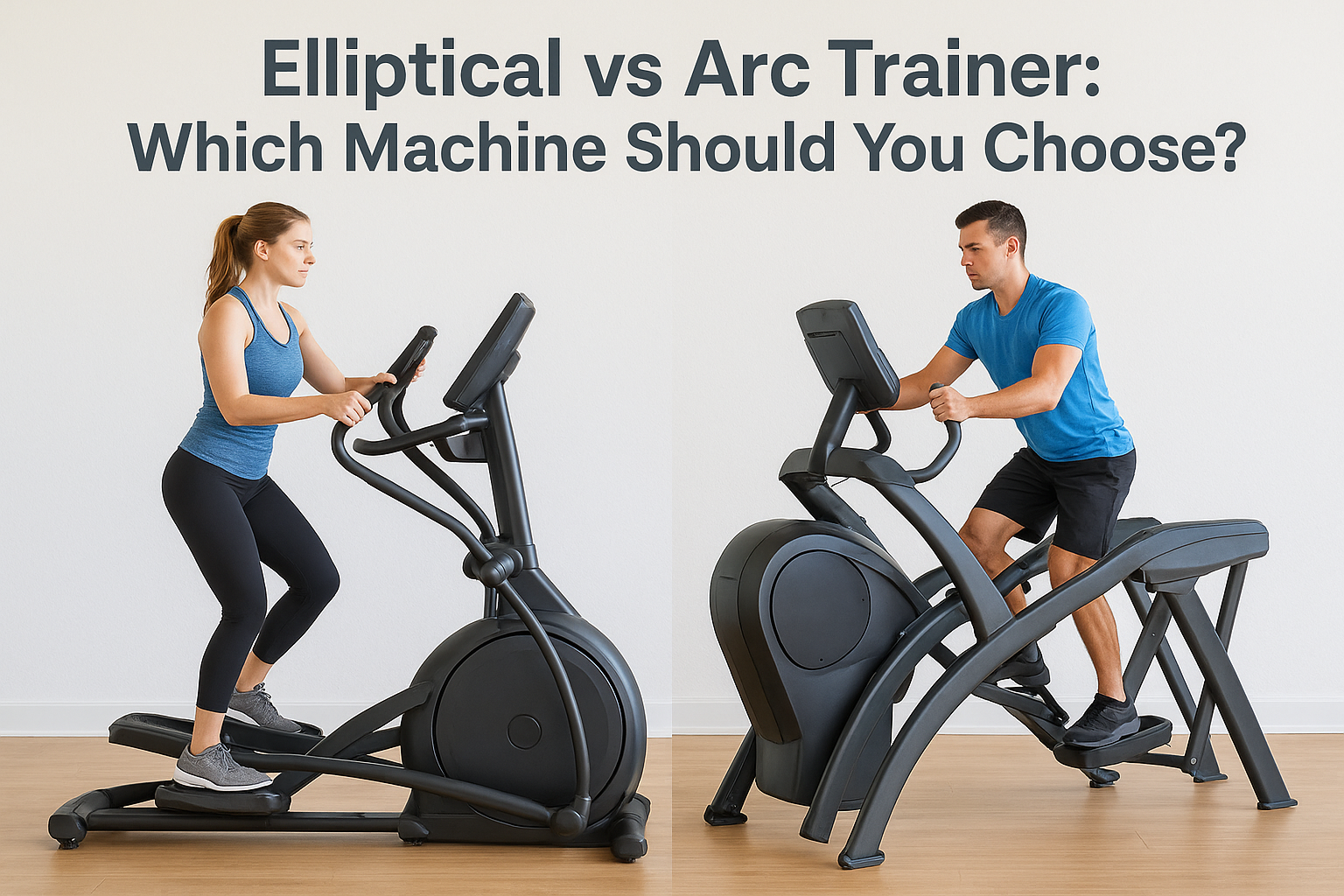
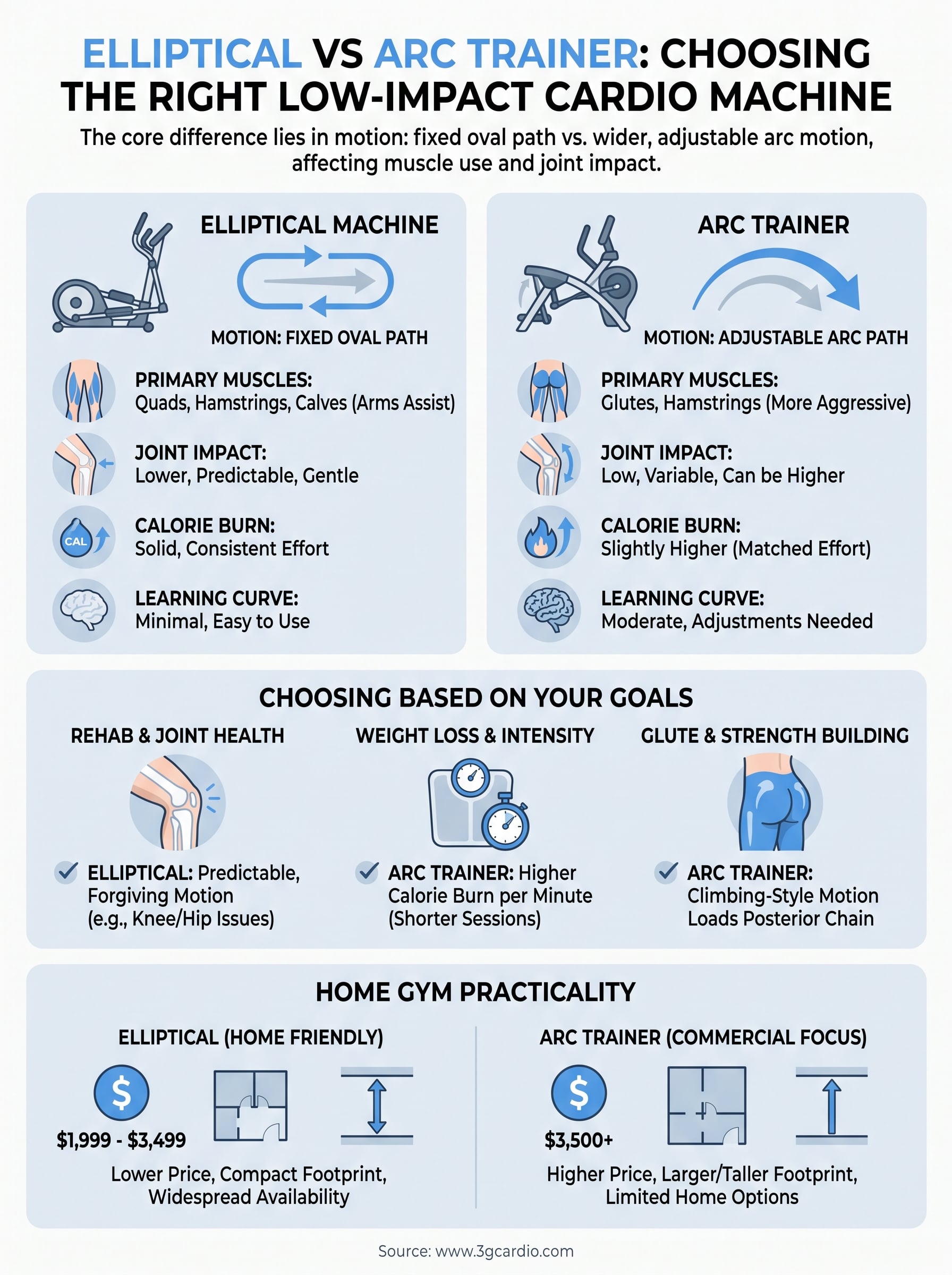
Here’s the short answer: ellipticals move your feet in a fixed oval path, while arc trainers use a wider, adjustable arc-shaped motion that recruits your glutes and hamstrings more aggressively. That difference in movement pattern changes muscle engagement, calorie burn, and how your knees and hips feel afterward, especially if you’re logging long sessions several times a week.
In this article, we’ll break down how each machine moves, which muscles they target, how they compare on calorie burn and joint stress, and which one fits your goals better, whether you’re rehabbing an injury, training for endurance, or just want a machine you’ll actually use every day. If you’re shopping for home cardio equipment, this comparison will help you buy the right one the first time.
Why the difference between elliptical and arc trainer matters
The motion pattern is where these two machines actually split apart, even though they look like cousins from across the gym. An elliptical machine locks your feet into a fixed, egg-shaped path that stays consistent no matter how hard you push. An arc trainer uses a curved, adjustable track that lets your foot travel through a wider range, closer to how your leg moves when you’re climbing stairs or sprinting uphill. That wider arc is the whole reason people ask about arc trainer vs elliptical trainer differences in the first place. It’s not a cosmetic difference. It changes which muscles fire first and how much force travels through your joints on every stride.
Muscle engagement isn’t the same workout twice
Ellipticals spread the work fairly evenly across the muscles an elliptical trainer works, including your quads, hamstrings, and calves, with your arms pitching in through the moving handles. Arc trainers shift more of that load onto your glutes and hamstrings because the arc-shaped path mimics the muscle groups a climbing motion loads rather than a gliding one. If you’ve ever finished an arc trainer session and felt it in your glutes the next morning in a way an elliptical never delivered, that’s not a coincidence. This is the detail most comparisons of arc trainer vs elliptical skip entirely, and it’s often the deciding factor for people trying to target specific muscle groups instead of just burning generic cardio calories.
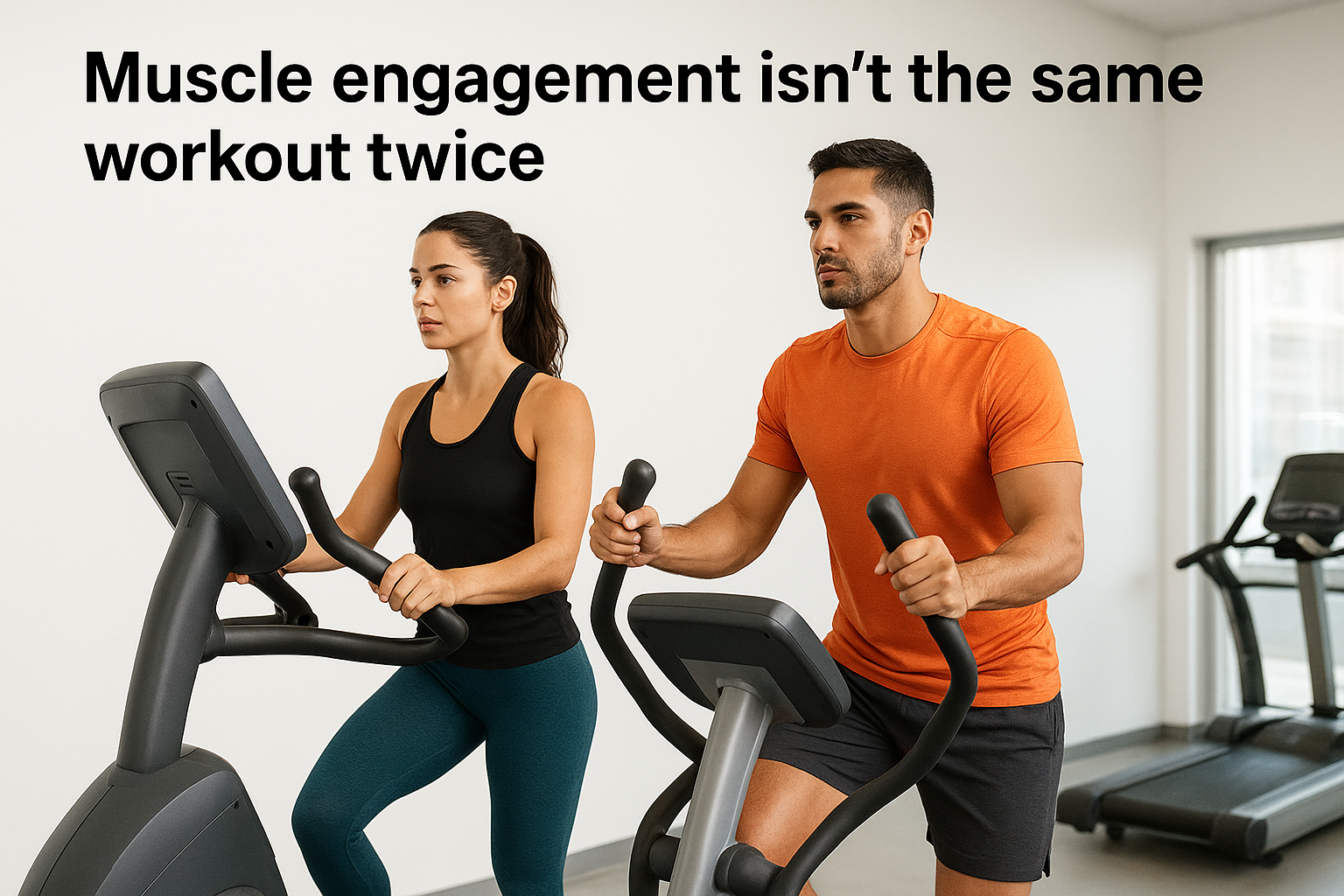
The arc trainer’s wider motion recruits your glutes and hamstrings harder, while the elliptical spreads the work more evenly across your legs.
Calorie burn and joint stress tell the rest of the story
Studies on energy expenditure, including research published through the American Council on Exercise, have found arc trainers can burn calories at a rate comparable to or slightly higher than ellipticals at matched perceived effort, largely because the larger range of motion demands more from bigger muscle groups. But calorie burn only matters if you can keep showing up, and that’s where joint impact enters the conversation. Both are low impact cardio machines by design, meaning your feet never leave the pedals, but the elliptical’s fixed path tends to feel gentler on sensitive knees and hips because the movement is predictable and symmetrical every single rep.
| Factor | Elliptical | Arc Trainer |
|---|---|---|
| Motion path | Fixed oval | Adjustable arc |
| Primary muscles | Quads, hamstrings, calves | Glutes, hamstrings |
| Joint impact | Lower, more predictable | Low, but more variable |
| Calorie burn (matched effort) | Solid | Slightly higher |
| Learning curve | Minimal | Moderate |
Understanding this table matters more than it seems, because the wrong pick can quietly sabotage your consistency. Someone recovering from a hip replacement who buys an arc trainer for its higher calorie burn potential might find the motion less forgiving than expected. Someone chasing serious glute and hamstring development on an elliptical machine vs arc trainer setup might plateau because the fixed path just doesn’t demand enough from those muscles. Getting this decision right upfront saves you from buying equipment that ends up as an expensive clothes rack in the corner of your home gym.
How to choose the right machine for your fitness goals
Picking between an elliptical machine vs arc trainer setup starts with an honest look at your body, not the spec sheet. Your joints, your training history, and what you actually enjoy doing five days a week matter more than any marketing claim about calorie burn. Skip this step and you’ll end up with a machine that sits untouched by month three.
Start with your joints and injury history
Begin by asking how your knees and hips have handled impact in the past. If you’ve had knee surgery, arthritis flare-ups, or chronic hip pain, the elliptical’s fixed, predictable path is usually the safer starting point because your joints move through the same range every single rep. Runners rehabbing an injury often lean elliptical for this reason. If your joints are healthy and you’re looking to build strength while you burn calories, the arc trainer’s wider range gives you more to work with.
Choose based on how your joints have handled exercise in the past, not on which machine burns more calories on paper.
Match the machine to your training style
Consider how you actually like to train. If you’re someone who wants a steady, low-effort session you can do while watching TV, the elliptical’s consistency makes it easier to zone out and just move. If you crave variety and want a machine that feels more like climbing or sprinting, the arc trainer’s adjustable stride keeps sessions from feeling stale.
Run through this checklist before you decide:
- Do you have current or past knee, hip, or ankle issues?
- Are you training for general cardio health or targeted muscle building?
- Do you prefer a predictable motion or one that changes with intensity?
- Will you use this machine daily, or a few times a week?
- Is glute and hamstring development a specific goal, or just a bonus?
Answering these honestly points most people toward one machine fairly quickly. If you’re still torn, that usually means your goals fall in the middle ground, which the next section will help you sort out.
Which machine wins for common fitness goals
Different goals call for different winners here, and pretending one machine beats the other across the board does you a disservice. If your goal is pure calorie burn during shorter sessions, the arc trainer usually pulls ahead because its bigger muscle recruitment pushes your heart rate higher per minute. If you want a machine you can ride for 45 minutes without your knees complaining, the elliptical earns the win instead.
Weight loss and fat burn
For weight loss, the benefits of arc trainer vs elliptical come down to intensity, the same factor that separates the top home cardio machines for losing weight. The arc trainer’s demanding motion torches more calories per minute at a given perceived effort, making it the better pick if you’re doing shorter, harder sessions. But if you prefer longer, steady-state cardio, the elliptical still delivers a solid calorie deficit without wearing you out early.
If you burn out on hard sessions fast, the elliptical’s steady pace will get you further over a month than the arc trainer’s higher intensity.
Building glutes, hamstrings, and lower-body strength
Lifters and runners chasing posterior chain strength should lean arc trainer every time. Its steeper, climbing-style motion loads your glutes and hamstrings much the way a vertical stair stepper with an adjustable hiking stride does, in a way the elliptical’s flatter path simply doesn’t replicate, and that difference shows up fast in how sore you feel the next day.
Rehab, joint recovery, and everyday consistency
Recovering from surgery or nursing a cranky knee points you straight back to the elliptical. Its fixed, symmetrical stride keeps stress predictable, which matters more during rehab than any calorie-burn edge the arc trainer offers. Machines like the Elite EM X elliptical trainer are built with that kind of forgiving, joint-friendly motion in mind, which is where stride length matters more than marketing claims, so you can log daily sessions without aggravating old injuries.
Cost, space, and availability for home workouts
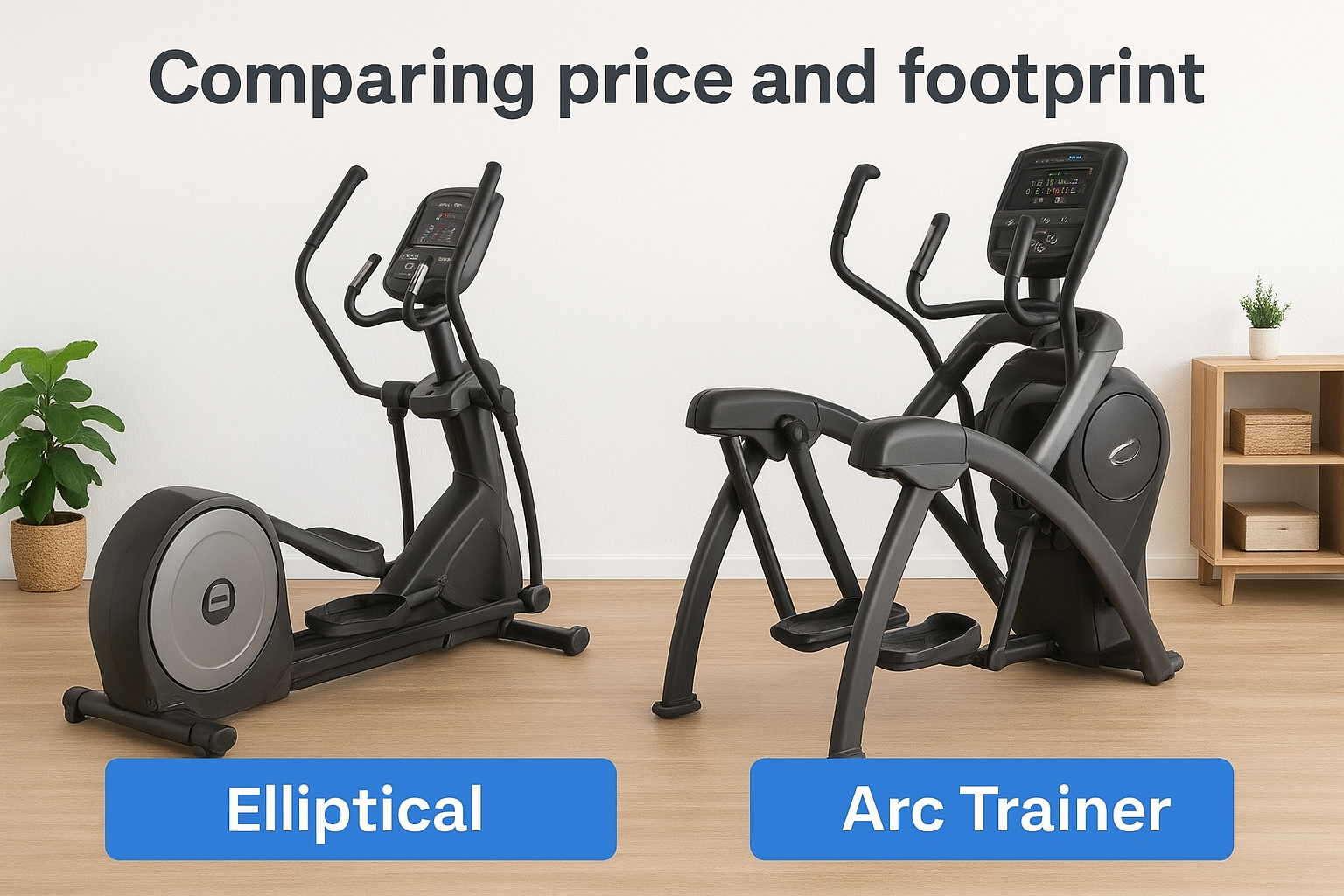
Budget and floor space often settle the elliptical vs arc trainer debate faster than any muscle-engagement chart. Arc trainers are bulkier machines with a taller footprint because that wider arc motion needs more vertical clearance, and that extra engineering usually shows up in the price tag too. Ellipticals, by contrast, have been refined for home use for decades, so you’ll find more elliptical models tested for home gyms, more price points, and more accessories built specifically for residential spaces.
Comparing price and footprint
Here’s how the two typically stack up for home shoppers:
| Factor | Elliptical | Arc Trainer |
|---|---|---|
| Typical home price range | $1,999 to $3,499 | $3,500 and up |
| Footprint | Compact to mid-size | Larger, taller |
| Ceiling clearance needed | Standard | Often 8+ feet |
| Availability for home use | Widespread | Limited, mostly commercial gyms |
If floor space and budget are tight, the elliptical almost always wins on practicality alone.
Why availability matters more than people expect
Most arc trainers were designed for commercial gym floors, not living rooms, which means residential options are scarce and often carry a commercial price tag even in a home version. Shoppers searching "arc trainer vs elliptical machine" for home use frequently discover this the hard way, after they’ve already measured their space for a machine they can’t easily find in stock. Ellipticals solved that problem years ago, with manufacturers building sturdy, commercial-grade frames sized specifically for spare bedrooms and basements.
Particularly for buyers who want Bluetooth connectivity, app pairing with no subscription fees, and a warranty that doesn’t leave them stranded after year one, the elliptical category simply has more mature options. A machine like the Elite EM X elliptical trainer delivers that commercial-quality build at a footprint and price built for actual homes, without asking you to knock out a wall for ceiling clearance. If you’ve been circling the arc trainer purely for its calorie-burn edge, it’s worth weighing that advantage against the real logistics of getting one into your house and keeping it there long term.
Finding the right fit for your home gym
Both machines deliver real low-impact cardio, but the right pick depends on your joints and your goals, not on which one sounds more advanced. Choose the arc trainer if your knees and hips are healthy and you want to hammer your glutes and hamstrings with a steeper, climbing-style motion. Choose the elliptical if you want a predictable, joint-friendly stride you can log daily without wondering if today’s the day your knee complains. For most home gyms, the elliptical also wins on price, footprint, and availability, which matters when you’re the one measuring doorways and clearing floor space.
If you’ve read this far and the elliptical sounds like your machine, don’t just take our word on the fit and stride length. See the Elite EM X commercial-grade elliptical with an 18" to 23" adjustable stride and decide whether its stride range and compact frame match what your home gym actually needs.




No Comments