

16 Sep 10 Best Treadmills for Home Use in 2026
Shopping for a treadmill best for home use means wading through hundreds of models, half of them padded with gimmicks you’ll never touch and monthly subscription fees you didn’t sign up for. You want something that runs quietly, holds up to daily miles, and doesn’t force you into a screen you don’t need just to change the incline.
This list cuts through that noise. Whether you’re after the best affordable treadmill for home use or ready to invest in a commercial-grade machine for a dedicated treadmill home gym, you’ll find options here matched to real budgets and real training goals, from casual walkers to marathon prep.
We’ve spent years building and selling cardio equipment at 3G Cardio, so we know what separates a treadmill that lasts a decade from one that rattles apart after a year of use. Below, you’ll get ten picks for 2026 covering motor strength, deck cushioning, Bluetooth connectivity, and warranty coverage, plus straight talk on which features actually matter and which are just marketing.
1. 3G Cardio Elite Runner X: best overall home treadmill
If you’re searching for the treadmill best for home use that won’t need replacing in three years, the Elite Runner X is where you should start. It’s built on the same commercial platform 3G Cardio sells to gyms and hotels, then priced for a home budget, which is exactly why it tops this list instead of a big-box brand with a flashier screen.
Key specs and features
Underneath the deck sits a heavy-duty motor and a frame rated for daily, high-mileage use, not the occasional weekend jog. The console runs on FreeSync FTMS Bluetooth, so it pairs directly with apps like Zwift, Kinomap, and Peloton’s app without locking you into a proprietary subscription. A wireless heart rate strap ships in the box, and the tablet shelf with USB charging keeps your phone or tablet powered through a full workout.
| Spec | Elite Runner X |
|---|---|
| Motor | Commercial-grade, continuous duty |
| Running surface | Extra-long, extra-wide deck |
| Incline | Power incline, multiple levels |
| Connectivity | FreeSync FTMS Bluetooth, BYOS |
| Console | Tablet shelf, USB charging |
| Frame warranty | Lifetime (residential) |
A treadmill only earns "best overall" status when the motor and deck are built for daily mileage, not just a spec sheet.
Who it’s for
Runners who log real miles at home need a deck long enough and a motor strong enough to handle it, and that’s the buyer this machine suits best. Households with more than one user also benefit, since the frame doesn’t flex or wear the way lighter residential decks do after a few months of shared use. If you’ve been running on commercial equipment at a gym and want that same feel in your treadmill home gym, this is the closest match you’ll find at a direct-to-consumer price. It’s less suited to someone who only wants an occasional walk, since you’d be paying for capacity you won’t use.
Price and warranty
Expect the Elite Runner X to sit at the top of the price range for 3G Cardio’s lineup, reflecting the commercial-grade motor and deck construction inside it. That price includes a lifetime frame warranty, seven years on parts, and one year of labor for residential use, coverage that beats what most consumer brands offer at double the cost. You can review full specs and current pricing on the Elite Runner X product page, and 3G Cardio backs every purchase with a price match guarantee within six months, plus a choice of free curbside delivery or full white glove setup.
2. 3G Cardio Pro Runner X: best value treadmill
Not everyone needs the full commercial-grade capacity of the Elite Runner X, and that’s exactly the gap the Pro Runner X fills. It shares the same design philosophy, solid parts, no gimmicks, but trims some of the top-tier specs to land at a best value treadmill price point that fits more household budgets without sacrificing durability.
Key specs and features
Builders kept the motor and deck sturdy enough for regular running and walking, just scaled slightly below the Elite Runner X’s continuous-duty rating. You still get FreeSync FTMS Bluetooth connectivity for pairing with Zwift, Kinomap, and other apps through the same BYOS approach, so you’re not locked into a proprietary ecosystem. A wireless heart rate strap ships standard, and the console keeps the tablet shelf and USB charging port that make longer sessions easier to manage. Adjustable incline levels give you enough variety for interval training without adding complexity you’ll never touch.
The best value pick isn’t the cheapest option, it’s the one that gives you commercial-grade parts without paying for capacity you don’t need.
Who it’s for
Households that want a good home treadmill for regular walking, jogging, or moderate running will find the Pro Runner X hits the mark. It suits buyers who compared the Elite Runner X but decided they didn’t need the extra-long deck or the top motor tier, and would rather put that savings elsewhere. Anyone shopping for a top home treadmill without going commercial-grade in price should look here first before dropping down to lighter-duty consumer brands.
Price and warranty
The Pro Runner X sits below the Elite Runner X in price while still carrying the same lifetime frame warranty, seven years on parts, and one year of labor for residential buyers. Full specs and current pricing are on the Pro Runner X product page, and it comes with the same six-month price match guarantee and delivery choices as the rest of the lineup.
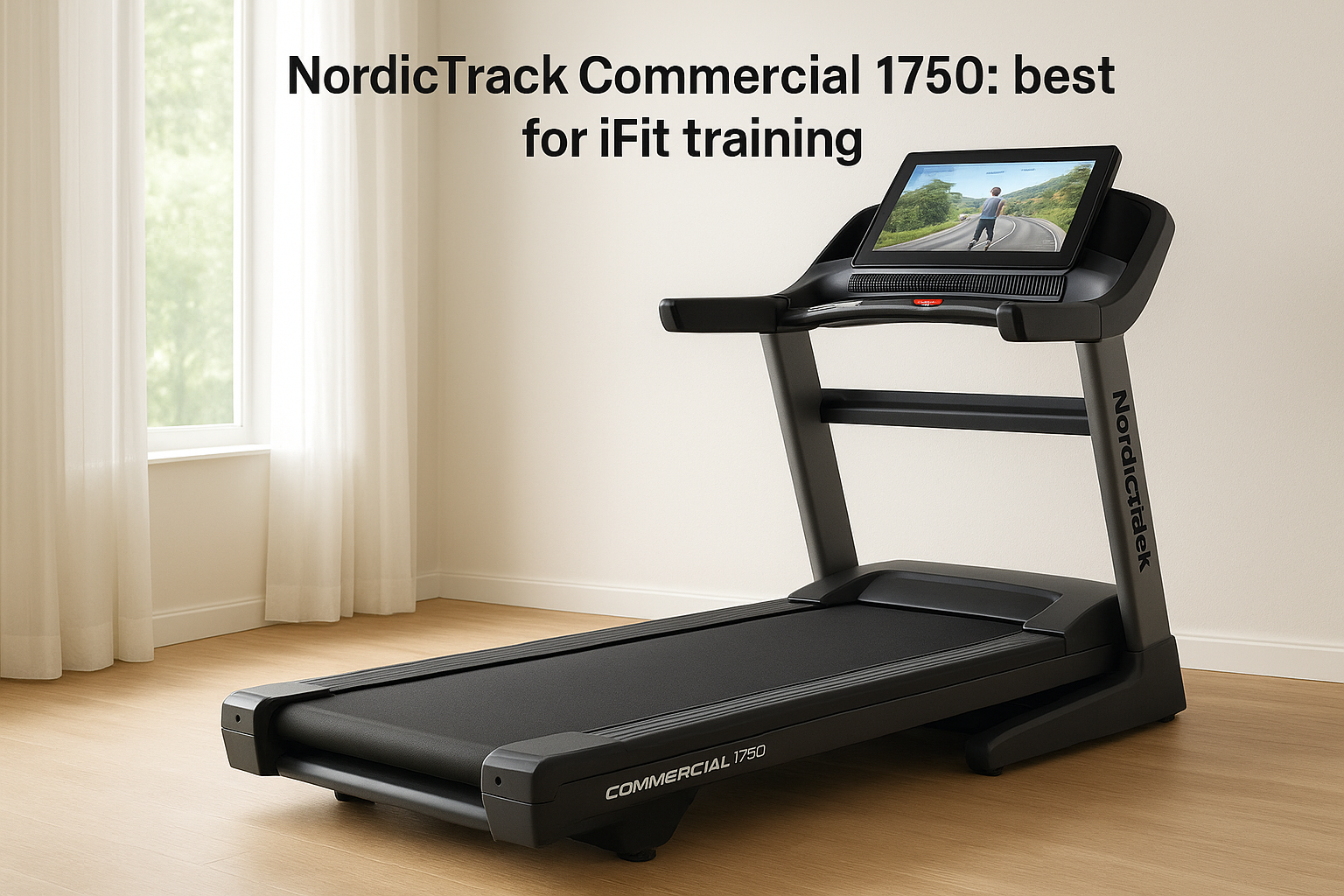
3. NordicTrack Commercial 1750: best for iFit training
Switching gears from 3G Cardio’s no-subscription approach, the NordicTrack Commercial 1750 takes the opposite path and does it well. This machine leans hard into iFit-powered training, streaming instructor-led runs and scenic routes straight to a large touchscreen, making it a strong pick if guided workouts motivate you more than a bare console ever could. It’s a fair choice for anyone comparing the best at home treadmill options and wanting entertainment built into the hardware itself, not bolted on as an afterthought.
Key specs and features
At the core sits a 3.75 CHP motor and a deck that handles incline up to 12% and decline down to 3%, giving you terrain simulation that flat decks can’t match. A 14-inch HD touchscreen pivots for off-treadmill workouts, and automatic trainer control adjusts speed and incline in real time during iFit sessions. Bluetooth heart rate strap compatibility rounds out the tracking side, though most of the console’s value depends on staying subscribed to iFit content.
Guided, terrain-based training only pays off if you’re willing to keep paying the monthly fee that powers it.
Who it’s for
Runners who thrive on structure, think coached intervals, global route videos, and progress tracking, will get the most out of this treadmill. It suits buyers who’ve already budgeted for an ongoing subscription and see it as part of the equipment cost, not an unwelcome surprise. Households debating a fitness at home treadmill purely for entertainment value should weigh whether they’ll actually renew iFit past the included trial period, since the console loses much of its function without it.
Price and warranty
Expect a price in the mid-to-upper range for a folding consumer treadmill, before factoring in the iFit membership required for full functionality. Warranty terms typically run 10 years on the frame, 2 years on parts and electronics, and 1 year of labor, shorter than the lifetime frame coverage 3G Cardio includes standard. Confirm current subscription pricing and warranty terms directly with NordicTrack before buying, since both change periodically.
4. Horizon 7.0 AT: best affordable treadmill for runners
Horizon built the 7.0 AT to compete directly with treadmills that cost hundreds more, and it mostly succeeds. If you’re chasing the best affordable treadmill for home running rather than casual walking, this is one of the few sub-$1,500 machines with a motor and deck that can actually take a pounding week after week.
Key specs and features
Horizon fits the 7.0 AT with a 3.5 CHP motor, a running surface long enough for taller runners, and Horizon’s variable-response cushioning, which firms up under the heel and softens toward the toe to mimic outdoor road feel. Incline runs to 15% and decline to 3%, giving you real hill training without upgrading to a pricier deck. Bluetooth connects to the Horizon Fit app for tracking, and a set of pre-loaded workout programs covers interval and hill training without needing a subscription.
| Spec | Horizon 7.0 AT |
|---|---|
| Motor | 3.5 CHP |
| Incline/decline | 15% / -3% |
| Cushioning | Variable-response deck |
| Connectivity | Bluetooth, Horizon Fit app |
| Frame warranty | Lifetime |
An affordable treadmill only earns a runner’s trust when the deck and motor can handle real mileage, not just a walk-and-jog pace.
Who it’s for
Runners on a tighter budget who still log three or four runs a week will get the most value here. It suits buyers who want incline variety for hill training but don’t need iFit-style streaming or a touchscreen console to stay motivated. If you’re weighing the best inexpensive home treadmill against a used commercial machine, the 7.0 AT usually wins on warranty and support alone.
Price and warranty
Horizon prices the 7.0 AT under $1,500 in most cases, making it one of the more competitively priced runner-focused decks on this list. Warranty coverage includes a lifetime frame, 3 years on parts, and 1 year of labor, solid for the price but still short of the 3G Cardio residential warranty on parts coverage. Check current pricing and promotions directly with Horizon before buying, since sales fluctuate seasonally.
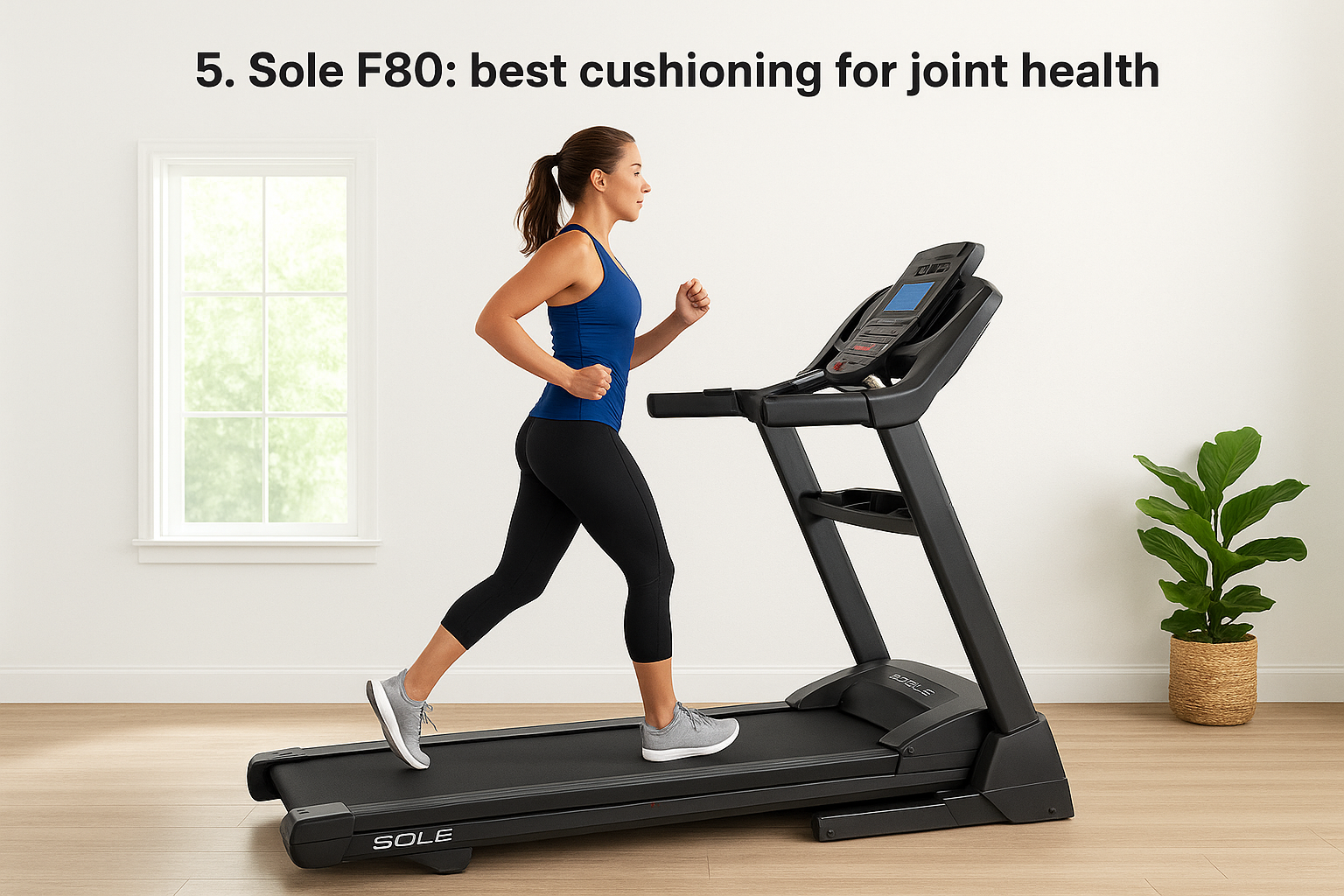
5. Sole F80: best cushioning for joint health
Sole built a reputation on deck cushioning long before most competitors treated it as a selling point, and the F80 is the clearest proof of that focus. Anyone dealing with knee or hip discomfort and searching for the best in home treadmill that won’t punish their joints should put this deck near the top of their shortlist.
Key specs and features
Underneath the belt sits Sole’s Cushion Flex Whisper Deck, a suspension system that softens impact at the heel strike zones while staying firmer toward the front for push-off stability. A 3.5 CHP motor drives a long, wide running surface built for taller users, and incline goes to 15% for hill work. The console keeps things simple with a 9-inch display, Bluetooth speaker pairing, and compatibility with the Sole Fitness app, no subscription required to access core training programs.
Deck cushioning matters more than motor size once joint pain, not speed, is what’s keeping you off the treadmill.
Who it’s for
Walkers and joggers managing knee, hip, or lower back sensitivity get the most benefit from this deck’s shock absorption. It suits buyers who tried a cheaper machine, felt every footstrike in their joints, and decided cushioning quality matters more than a touchscreen or streaming library. Households wanting a good home treadmill for rehab-style walking programs, post-injury training, or simply gentler daily cardio will find the F80 holds up better than firmer decks at a similar price.
Price and warranty
Sole prices the F80 in the mid-range for folding treadmills, typically landing between the Horizon 7.0 AT and the NordicTrack Commercial 1750. Warranty coverage runs lifetime on the frame and motor, 3 years on parts and electronics, and 1 year of labor, competitive for the category though still shorter than 3G Cardio’s residential parts coverage. Confirm current pricing directly with Sole, since promotions shift throughout the year and can move the F80 closer to entry-level pricing during sales events.
6. Bowflex T6: best budget treadmill under $1,000
Bowflex built the T6 for shoppers who want a best cheapest treadmill for home use without stepping down to a flimsy frame that wobbles at speed. It won’t compete with commercial-grade decks on this list, but for casual walking and light jogging under a tight budget, it holds its own better than most machines in its price bracket.
Key specs and features
A 2.75 CHP motor powers the T6, enough for walking and light jogging but not built for daily marathon training. The deck folds up with Bowflex’s SoftDrop system, so it lowers gently instead of slamming down, a small detail that matters if you’re storing it in a shared space. A 7-inch console displays workout stats, and Bluetooth connects to the JRNY app, which offers adaptive workout suggestions though full features require a subscription after the trial period ends. Incline adjusts up to 10%, giving you basic hill variation without the steeper ranges found on pricier decks.
A budget treadmill earns its price tag when the frame stays stable at speed, not just when the number on the tag looks small.
Who it’s for
Casual walkers and light joggers who want a good home treadmill without spending fifteen hundred dollars or more will find the T6 fits the bill. It suits smaller households or first-time buyers testing whether a treadmill home gym habit will actually stick before investing in something sturdier down the line. Serious runners logging consistent weekly mileage should look elsewhere, since the motor and deck aren’t rated for that kind of daily wear.
Price and warranty
Bowflex typically prices the T6 under $1,000, making it one of the more accessible treadmills for home use under $1,000 on this list. Warranty coverage includes 10 years on the frame and motor, 1 year on parts, and 90 days of labor, noticeably shorter than the parts and labor coverage 3G Cardio includes on its residential lineup. Confirm current pricing directly with Bowflex, since sales and bundle offers shift throughout the year.
7. Peloton Tread: best for streaming workout classes
Peloton built its entire brand around live and on-demand instructor-led classes, and the Tread is the hardware version of that same experience. If you’re drawn to a treadmill best for home use that feels more like a studio class than a solo jog, this is the machine built specifically for that motivation style, not an afterthought bolted onto a standard console.
Key specs and features
A 23.8-inch rotating HD touchscreen anchors the Tread, streaming thousands of classes ranging from steady-state runs to bootcamp-style intervals that blend floor work with treadmill segments. The belt uses a slat-based design rather than a traditional continuous belt, which Peloton says reduces impact, though it also means replacement parts come only from Peloton itself. Incline adjusts up to 12.5%, and the console auto-adjusts speed and incline when instructors call out changes mid-class. Bluetooth pairs with heart rate straps and headphones, but nearly every meaningful feature routes through the required Peloton App membership.
A streaming-first treadmill only makes sense if the monthly class subscription is a cost you’re genuinely willing to carry for years, not just the first few months.
Who it’s for
Someone who stays motivated by live leaderboards, instructor energy, and community challenges will get real value from the Tread in ways a quiet console never provides. It suits buyers who already pay for group fitness classes and would rather bring that same format into a treadmill home gym than commute to a studio. Runners who prefer training solo, without a screen dictating pace, should look toward a machine like the Elite Runner X instead, since paying for content you won’t use adds cost without adding value.
Price and warranty
Peloton prices the Tread well above most machines on this list, and that price doesn’t include the required monthly membership needed to unlock class content. Warranty coverage runs 12 months on the frame, motor, parts, and labor, notably shorter than the lifetime frame coverage bundled into 3G Cardio’s residential warranty. Verify current pricing and membership terms directly with Peloton before buying, since both have shifted multiple times in recent years.
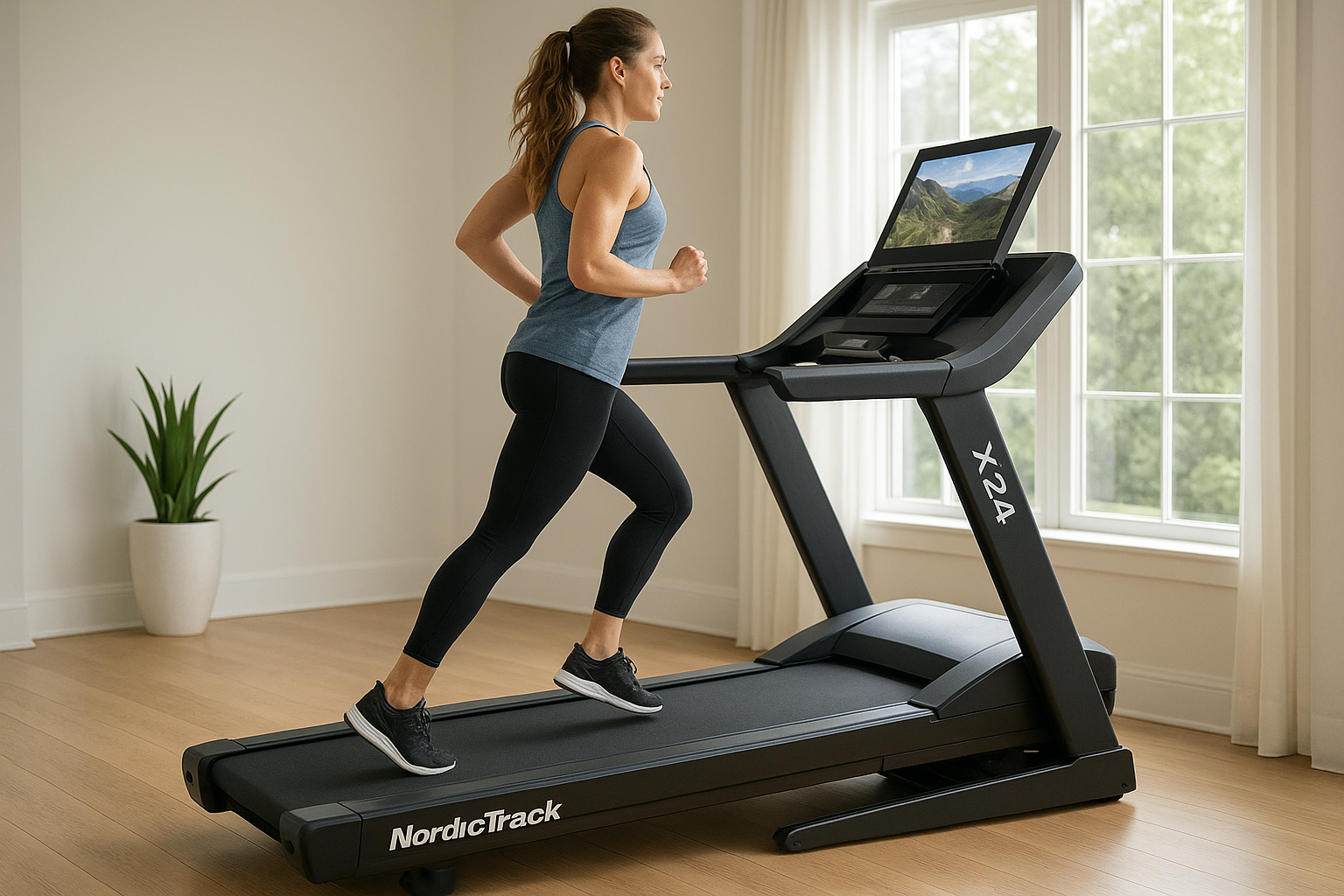
8. NordicTrack X24: best incline treadmill
NordicTrack pushed incline simulation further than almost anyone else with the X24, and that focus on grade, not screens or streaming, is what earns it a spot on this list. If you’re after the best incline treadmill for serious hill training or marathon prep that includes downhill terrain, this deck goes places most home machines simply can’t.
Key specs and features
Giles behind the X24’s design clearly prioritized incline range over anything else, and the numbers show it: incline climbs to 40% and decline drops to negative 6%, a range no other machine on this list touches. A 4.25 CHP motor drives the belt, and a 24-inch HD touchscreen tilts for floor workouts when you step off the deck. iFit content powers most of the console’s guided programming, so automatic trainer control adjusts incline and speed in real time during video-based runs.
| Spec | NordicTrack X24 |
|---|---|
| Incline/decline | 40% / -6% |
| Motor | 4.25 CHP |
| Touchscreen | 24-inch HD, pivoting |
| Programming | iFit-powered, subscription required |
No other home treadmill matches a 40% incline range, but that ceiling only matters if hill training is actually part of your routine.
Who it’s for
Hikers training for elevation, runners simulating mountain races, and anyone chasing a top treadmill for home hill-repeat routine will get genuine use out of this incline range. It suits buyers who already value iFit’s coached content and won’t mind the subscription cost layered on top of the hardware price. Casual walkers or flat-road runners should skip the X24, since you’d be paying a premium for incline capacity you’ll rarely touch.
Price and warranty
NordicTrack prices the X24 near the top of the consumer treadmill market, reflecting its incline motor and larger touchscreen. Warranty terms typically run 10 years on the frame, 2 years on parts and electronics, and 1 year of labor, shorter than the lifetime frame and seven-year parts coverage on 3G Cardio’s residential lineup. Confirm current pricing and subscription terms directly with NordicTrack before buying.
9. Echelon Stride-6: best folding treadmill
Echelon designed the Stride-6 for apartments and small rooms where floor space disappears the moment you’re done training. If storage is your biggest obstacle to owning a treadmill home gym, this folding deck for a small home solves that problem better than most machines on this list, since it tucks away without needing a garage or spare room.
Key specs and features
Beneath the deck sits a compact motor built for walking and moderate jogging, not heavy daily mileage, paired with a folding hinge that lifts the belt vertically for storage against a wall. A 6-inch console pairs over Bluetooth with the Echelon app, streaming instructor-led classes similar in format to Peloton’s, though full access requires a paid membership after the trial period. Incline adjusts to a modest 12%, and built-in wheels make rolling the folded unit between rooms simple.
A folding treadmill only earns its spot in a small home if you actually fold it, otherwise you’ve paid extra for a hinge you’ll never use.
Who it’s for
Apartment dwellers and anyone furnishing a fitness at home treadmill setup in a multipurpose room will appreciate the Stride-6’s footprint the most. It suits walkers and light joggers who value the class-based motivation Echelon streams, provided they’ve budgeted for the ongoing membership cost. Serious runners logging consistent weekly mileage should look toward a sturdier, non-folding deck instead, since the lighter motor and frame aren’t built for that kind of daily wear.
Price and warranty
Echelon typically prices the Stride-6 in the lower-to-mid range for folding consumer treadmills, before factoring in the required app membership for full class access. Warranty coverage runs shorter than most machines here, often just a couple years on the frame and one year on parts and labor, well below the lifetime frame coverage bundled into 3G Cardio’s residential warranty. Confirm current pricing and membership terms directly with Echelon, since both shift periodically.
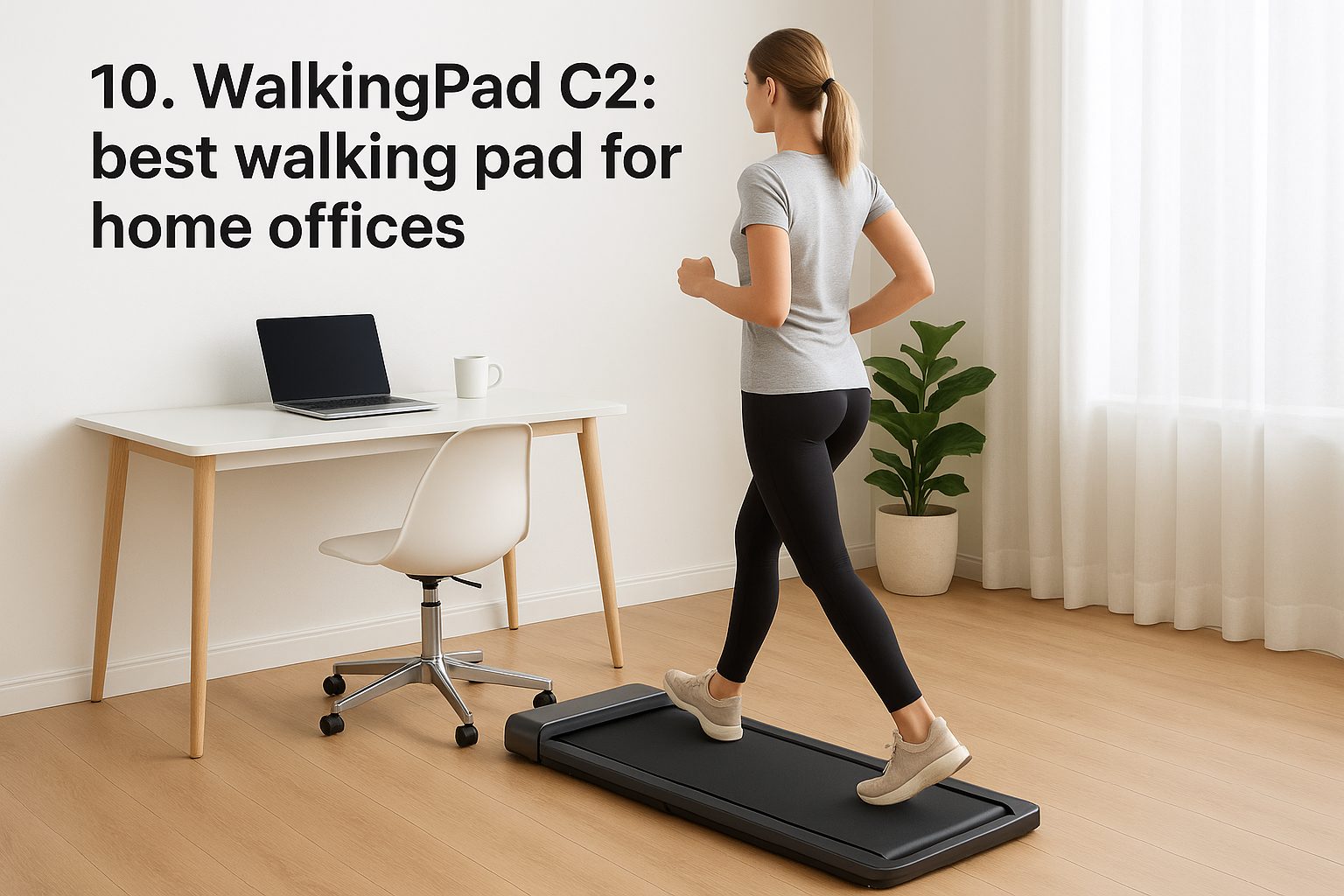
10. WalkingPad C2: best walking pad for home offices
WalkingPad built the C2 for a completely different use case than everything else on this list, and that’s exactly why it earns a spot. Instead of chasing running performance, this compact pad that slides under a desk or bed folds nearly flat, making it the practical answer if you want a treadmill best for home office walking rather than structured cardio sessions.
Key specs and features
Underneath the belt sits a motor capped around 3.7 mph in standard mode, enough for steady desk-walking but nowhere near jogging speed unless you switch to manual mode, which unlocks slightly higher speeds without automatic control. The C2 folds in half using a hinge mechanism that most users manage without tools, and built-in wheels make rolling it into a closet simple once you’re done. A small LED display on the side rail shows speed and distance, while Bluetooth connects to the WalkingPad app for step tracking and remote speed adjustments from your phone.
A walking pad only replaces a treadmill if walking, not running, is genuinely your goal.
Who it’s for
Remote workers wanting a fitness at home treadmill they can use during calls or while typing will find the C2 solves a problem no running-focused deck addresses. It suits small apartments and home offices where floor space matters more than incline range or motor horsepower. Anyone shopping for a top home treadmill for actual running mileage should skip this pick entirely, since the motor and belt simply aren’t rated for that kind of impact or speed.
Price and warranty
WalkingPad prices the C2 well below most folding treadmills on this list, landing it among the best economical treadmill for home office options available. Warranty coverage typically runs one year on the motor and frame, shorter than nearly every other machine here and far below the lifetime frame coverage bundled into 3G Cardio’s residential warranty. Confirm current pricing and warranty terms directly with WalkingPad before buying, since coverage varies by retailer.
11. How to choose the right treadmill for your home
Matching the right machine to your goals matters more than chasing the longest spec sheet. A budget for a treadmill best for home use should account for motor capacity, deck cushioning, and warranty length together, not just the sticker price, since a cheap frame that fails in year two costs more than a slightly pricier one that lasts a decade.
Consider how you’ll actually train before you consider screens or streaming. Runners logging real weekly mileage need a continuous-duty motor rated above 3 CHP and a deck long enough for full stride length, while casual walkers can get away with lighter-duty machines built for shorter, gentler sessions. Households with more than one user should lean toward sturdier frames regardless of who’s the primary trainee, since shared use wears lighter decks faster than manufacturers advertise.
The treadmill that fits your home isn’t the one with the most features, it’s the one matched to how often and how hard you’ll actually use it.
Decide early whether you want subscription-based coaching or a machine that works fully on its own. Some buyers thrive on iFit or Peloton-style classes and are happy paying monthly for motivation, while others want Bluetooth connectivity to their own apps without ongoing fees layered onto the hardware cost.
Use this quick checklist before you buy:
- Space: measure your room and confirm folding or footprint needs
- Motor: match CHP rating to walking, jogging, or daily running use
- Cushioning: prioritize deck suspension if joint comfort matters
- Connectivity: decide between subscription apps and open Bluetooth pairing
- Warranty: compare frame, parts, and labor coverage side by side
- Delivery: check whether white glove setup is included or extra
Weighing these factors against your actual training habits, not marketing copy, is what separates a satisfying purchase from one you regret within a year.
12. Common questions about home treadmills
Buyers researching a treadmill best for home use tend to ask the same handful of questions before they commit, so here are straight answers based on what actually matters once the machine is in your living room.
How much should you spend on a good home treadmill? Casual walkers can get by spending under $1,000, but anyone running three or more times a week should budget at least $1,500 to $2,500 for a motor and deck rated for daily mileage. Spending less usually means replacing the machine within two or three years, which erases any savings.
Do you need a subscription to use a treadmill? No. Machines like the Elite Runner X and Pro Runner X connect through FreeSync FTMS Bluetooth to apps you already own, while iFit and Peloton-style consoles require ongoing membership fees to unlock most features. Decide which model fits your budget before you fall for a flashy screen.
What motor size do you actually need? Walking calls for at least 2.5 CHP, jogging needs 3 CHP or higher, and daily runners should look for continuous-duty motors rated 3.5 CHP and above. Anything less strains under regular use and shortens the treadmill’s lifespan.
Does deck cushioning matter as much as motor power? For joint health, yes. Suspension quality determines how much impact reaches your knees and hips, so if you’re managing joint pain, prioritize cushioning even over top speed or incline range.
How long should a warranty last? Look for at least a lifetime frame warranty and multiple years of parts coverage, since a machine that fails outside a one-year window becomes an expensive repair bill. 3G Cardio’s residential warranty covers a lifetime frame, seven years on parts, and one year of labor, well beyond what most consumer brands offer.
Should you buy folding or fixed-frame? Folding decks save space but usually sacrifice motor strength and stability, so choose fixed-frame if you run regularly and folding if storage space is your bigger constraint.
Picking the treadmill that fits your goals
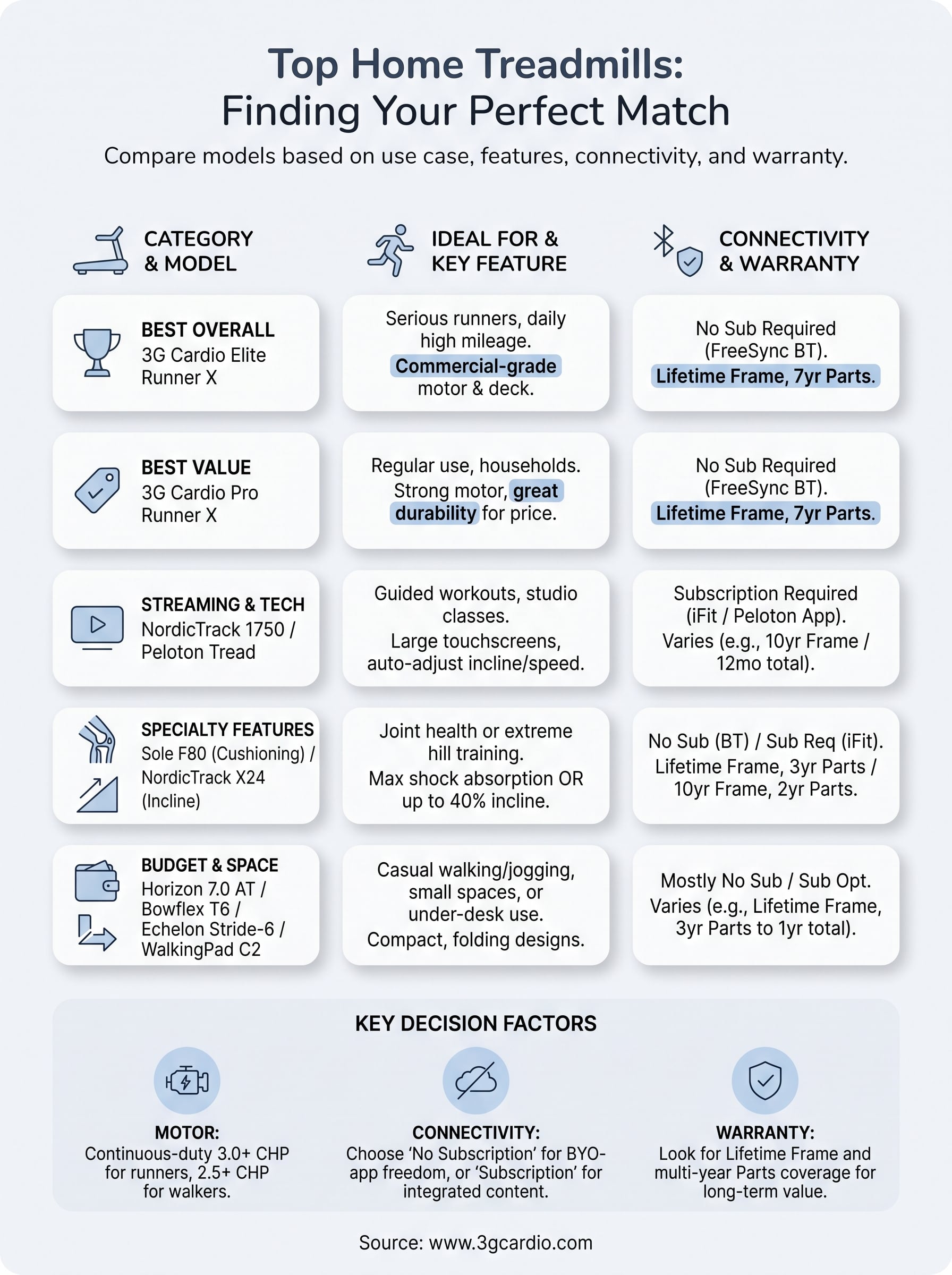
Ten treadmills, ten different buyers, but the decision usually comes down to the same three questions: how often you’ll actually run, how much floor space you have, and whether you’re willing to pay a monthly fee for coaching. Get honest with yourself on those three points and the right machine on this list becomes obvious fast.
Skip the treadmill that impresses you in a showroom but doesn’t match your actual training habits, and skip any deck that locks core features behind a subscription you’ll cancel by spring. A machine built for daily mileage, backed by a real warranty, and connected on your terms will outlast the trendier options by years, not months.
If no-subscription connectivity and commercial-grade construction matter to you as much as they matter to us, browse the FreeSync treadmills that pair free with the apps you already use and see which one fits your home gym.




No Comments