

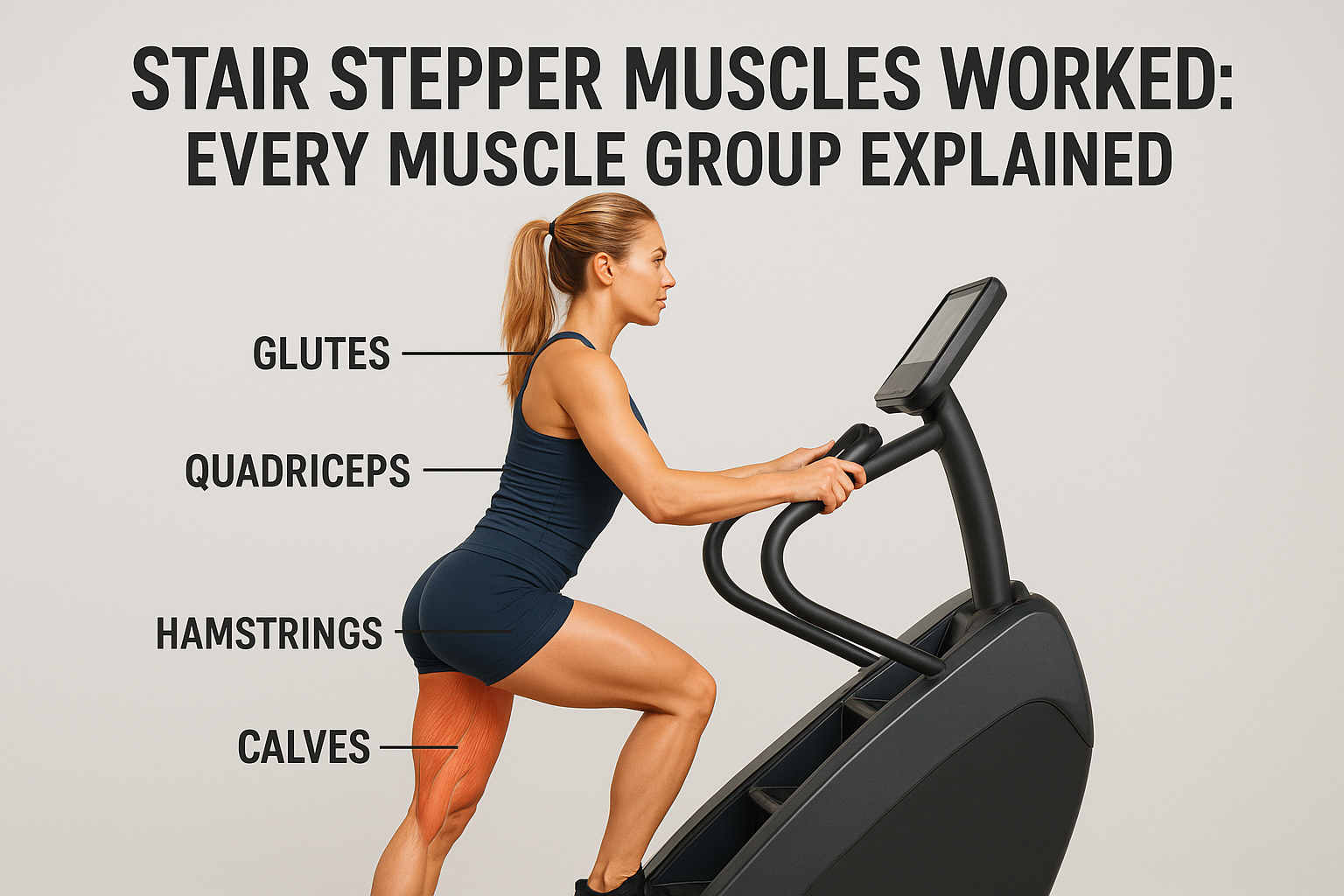
22 Jul Stair Stepper Muscles Worked: Every Muscle Group Explained
You’ve probably heard that stair steppers are good for your legs, but that vague answer doesn’t tell you much when you’re trying to decide if this machine belongs in your home gym. Stair stepper muscles worked span far more territory than most people realize, and knowing exactly which ones fire with each push can change how you train.
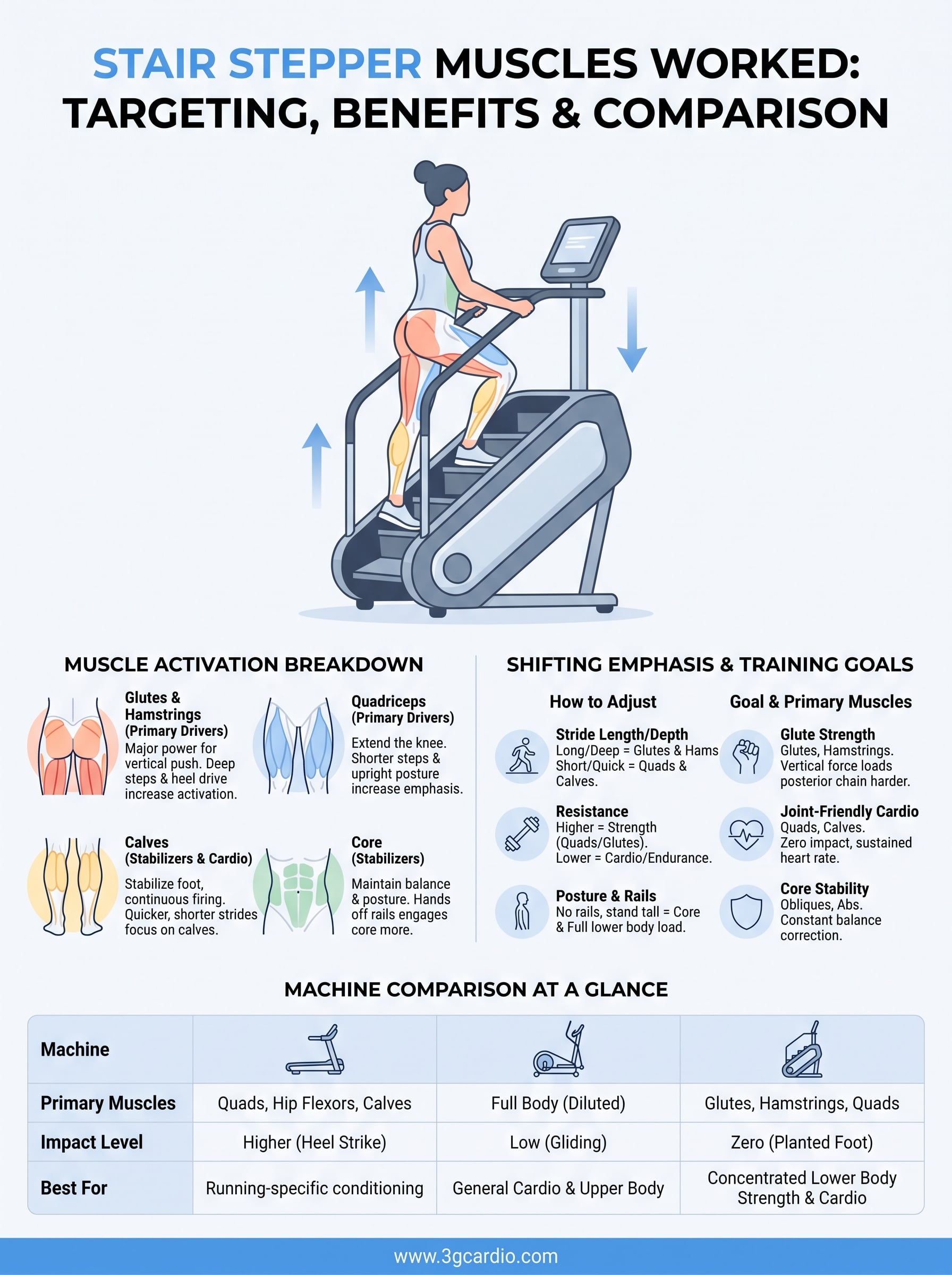
Here’s the direct answer: a stair stepper primarily targets your glutes, quadriceps, and hamstrings, while your calves, hip flexors, and core work continuously to stabilize each step. Unlike a treadmill, the vertical push pattern recruits your posterior chain more aggressively, which is why your glutes feel it the next day even if your legs don’t feel fatigued during the workout itself.
In this article, we’ll break down every major muscle group involved, explain how resistance and stride adjustments shift the emphasis between quads and glutes, and cover the cardiovascular benefits that come with consistent stepping sessions. We’ll also touch on why commercial-grade construction matters when you’re loading a machine with repetitive, high-impact-free movement day after day, something we think about constantly when building equipment like our Elite VS X stair stepper.
Why stair stepper muscle activation matters for your goals
Understanding stair stepper muscles worked isn’t just trivia. It tells you whether this machine actually fits your training goals, whether that’s building glute strength, protecting your knees, or torching calories in a limited time window. Muscle activation patterns determine everything from how sore you’ll be tomorrow to how many calories you burn today, so it pays to know what’s happening under the hood before you commit to a routine.
The posterior chain advantage
Most cardio machines, treadmills included, lean heavily on your quads and hip flexors for forward propulsion. A stair stepper flips that ratio. Because you’re pushing your body weight vertically instead of horizontally, your glutes and hamstrings take on a bigger share of the workload with every step. This matters if you sit at a desk all day, since chronic sitting weakens the glutes and shortens the hip flexors, creating the kind of imbalance that leads to lower back pain. Regular stepping sessions counteract that pattern by forcing the posterior chain to fire repeatedly under load.
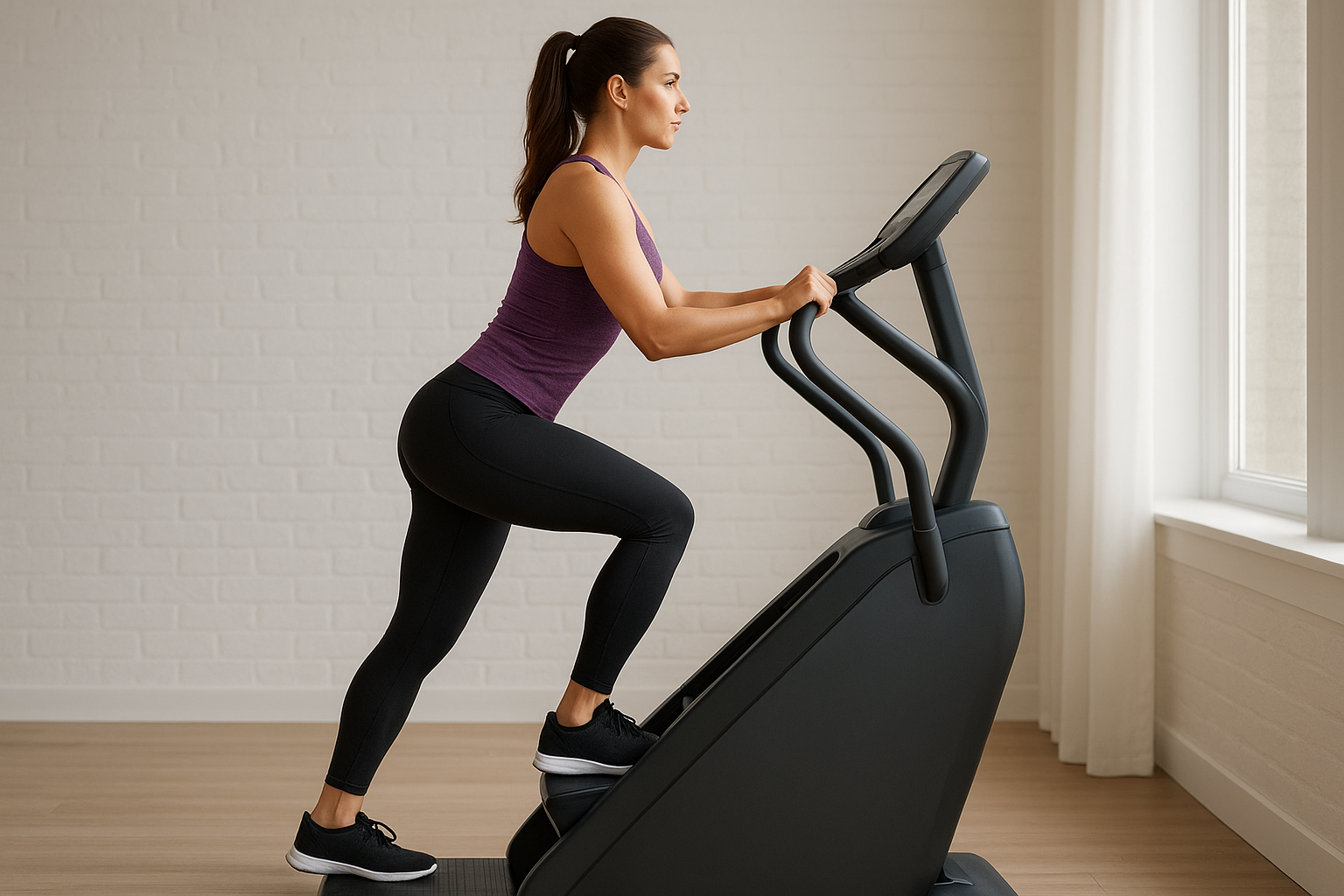
A stair stepper trains the muscles that sitting all day weakens the most.
Low-impact strength building
Runners and joggers eventually deal with impact-related wear on the knees and hips, but a stair stepper delivers strength work without the pounding. Your foot stays planted on the pedal through the full range of motion, so there’s no jarring heel strike. That’s a real advantage if you’re managing joint pain or recovering from an injury but still want to load your quadriceps and calves meaningfully. According to the CDC, muscle-strengthening activity at least twice a week is recommended alongside aerobic exercise for adults, and a stair stepper lets you check both boxes in a single session without switching equipment.
Here’s a quick look at how the effort compares across common goals:
| Training Goal | Primary Muscles Engaged | Why the Stepper Helps |
|---|---|---|
| Glute strength | Glutes, hamstrings | Vertical push pattern loads posterior chain harder than walking or running |
| Joint-friendly cardio | Quads, calves | No heel strike or impact absorption required |
| Core stability | Obliques, transverse abdominis | Constant balance correction with each step |
| Calorie burn | Full lower body, cardiovascular system | Sustained heart rate elevation with continuous large-muscle engagement |
Metabolic and cardiovascular payoff
Beyond the muscles themselves, stepping keeps your heart rate elevated because you’re recruiting large muscle groups continuously rather than in short bursts. That sustained engagement is why a 20-minute stepper session can feel more taxing than a 20-minute walk at the same perceived effort. Strength and cardio benefits overlap here in a way that’s hard to replicate on machines built purely for one or the other.
Setting realistic expectations matters too. If your goal is pure muscle hypertrophy, a stair stepper won’t replace heavy squats or deadlifts. But if you want functional lower body endurance, better glute engagement, and cardiovascular conditioning in one machine, the muscle activation pattern lines up well with that combination. Pairing the right resistance level with your goals, which we’ll cover next, determines how much of that potential you actually capture during each workout.
How to target specific muscles on a stair stepper
Once you understand which stair stepper muscles worked matter most for your goals, the next step is learning how to shift emphasis between them. Small adjustments to stride, resistance, and posture change which muscle group carries the load, and most machines let you make these tweaks without breaking your rhythm.
Adjusting stride length and step depth
Shorter, quicker steps keep your calves and quads firing continuously, since you’re never sinking deep into the movement. Longer strides that push the pedal further down recruit more glute and hamstring fiber because your hip has to travel a greater range to complete each push. If you’re specifically chasing glute activation, deliberately drive your heel down through the pedal rather than pushing off your toes. That single cue changes the muscle recruitment pattern more than almost any other adjustment you can make.
Where you drive the pressure through your foot decides which muscle does the work.
Increasing resistance for strength focus
Higher resistance settings slow your cadence but force your quadriceps and glutes to generate more force per step, which builds strength rather than pure endurance. Lower resistance with faster stepping shifts the workout toward cardiovascular conditioning and calf endurance instead. Neither approach is wrong, but they train different qualities, so match the setting to what you’re actually trying to accomplish that day.
Posture and hand position matter more than people think
Leaning on the handrails feels natural when you’re tired, but it quietly removes load from your legs and shifts it to your arms and shoulders. Standing tall with minimal handrail support keeps your core and lower body doing the work they’re supposed to do. Try this sequence to isolate different muscle groups during a single session:
- Minutes 1-5: Light resistance, hands off rails, quick cadence for calf and cardio warmup
- Minutes 6-15: Moderate resistance, deep steps, focus on driving through the heel for glute emphasis
- Minutes 16-20: Higher resistance, slower controlled steps, no handrail support for quad and core strength
This kind of interval structure, easy to program on our Elite VS X console, gives you a full lower body session in one continuous workout instead of splitting muscle groups across separate machines.
Stair stepper workouts that hit every muscle group
Single-focus sessions have their place, but combining movement patterns in one workout hits every major muscle group without needing a second machine. A well-structured routine cycles through cadence changes, resistance shifts, and posture cues so your glutes, quads, hamstrings, calves, and core all get real work in the same 20 to 30 minutes.
A full-body stepper circuit
Building a circuit is simpler than it sounds once you know which variable controls which muscle. Try this structure on your next session:
- Warmup (5 minutes): Light resistance, hands off the rails, moderate cadence to raise heart rate and prep the calves
- Glute block (8 minutes): Deep steps, heel-driven pressure, moderate-to-heavy resistance for posterior chain emphasis
- Quad and core block (8 minutes): Faster cadence, lighter resistance, no handrail support, upright posture to shift load forward
- Finisher (4 minutes): Alternate 30 seconds of maximum resistance with 30 seconds of easy recovery stepping
This pattern forces your body to recruit different fibers in sequence rather than repeating the same motion for half an hour, which is exactly how you avoid the plateau that comes from doing the identical workout every time.
Why interval structure beats steady-state stepping
Steady-state sessions are fine for building base endurance, but they underuse your muscle fibers compared to interval work. Varying resistance and cadence within a single session recruits fast-twitch fibers during the harder intervals and slow-twitch fibers during recovery, giving you a broader strength and conditioning stimulus than a flat 20-minute climb at one setting.
Changing resistance mid-workout trains more muscle fiber types than any single steady pace ever will.
Sample weekly rotation
Rotating your session focus across the week also prevents overuse while still training everything.
| Day | Session Focus | Primary Emphasis |
|---|---|---|
| Monday | Glute-focused deep steps | Glutes, hamstrings |
| Wednesday | Fast cadence intervals | Calves, cardiovascular system |
| Friday | Mixed circuit above | Full lower body, core |
Keeping the routine varied means your stair stepper stays useful for months rather than becoming background noise you tune out after week three.
How stair stepper muscle work compares to other cardio
Knowing the stair stepper muscles worked in isolation only tells half the story. The real question most buyers ask is how it stacks up against the treadmill or elliptical already taking up space in their garage. Each machine recruits muscle differently, and those differences should guide which one earns your workout time.
Treadmill versus stair stepper
Treadmills emphasize forward propulsion, which means your hip flexors and quads do most of the work while your glutes stay relatively quiet unless you’re running uphill. A stair stepper reverses that balance by forcing a vertical push through the glutes and hamstrings on every rep. Runners often discover this the first time they switch machines and feel muscles they didn’t know were undertrained. If your knees ache from repeated heel strikes on a treadmill, the stepper’s planted-foot motion removes that impact entirely while still building serious lower body strength.
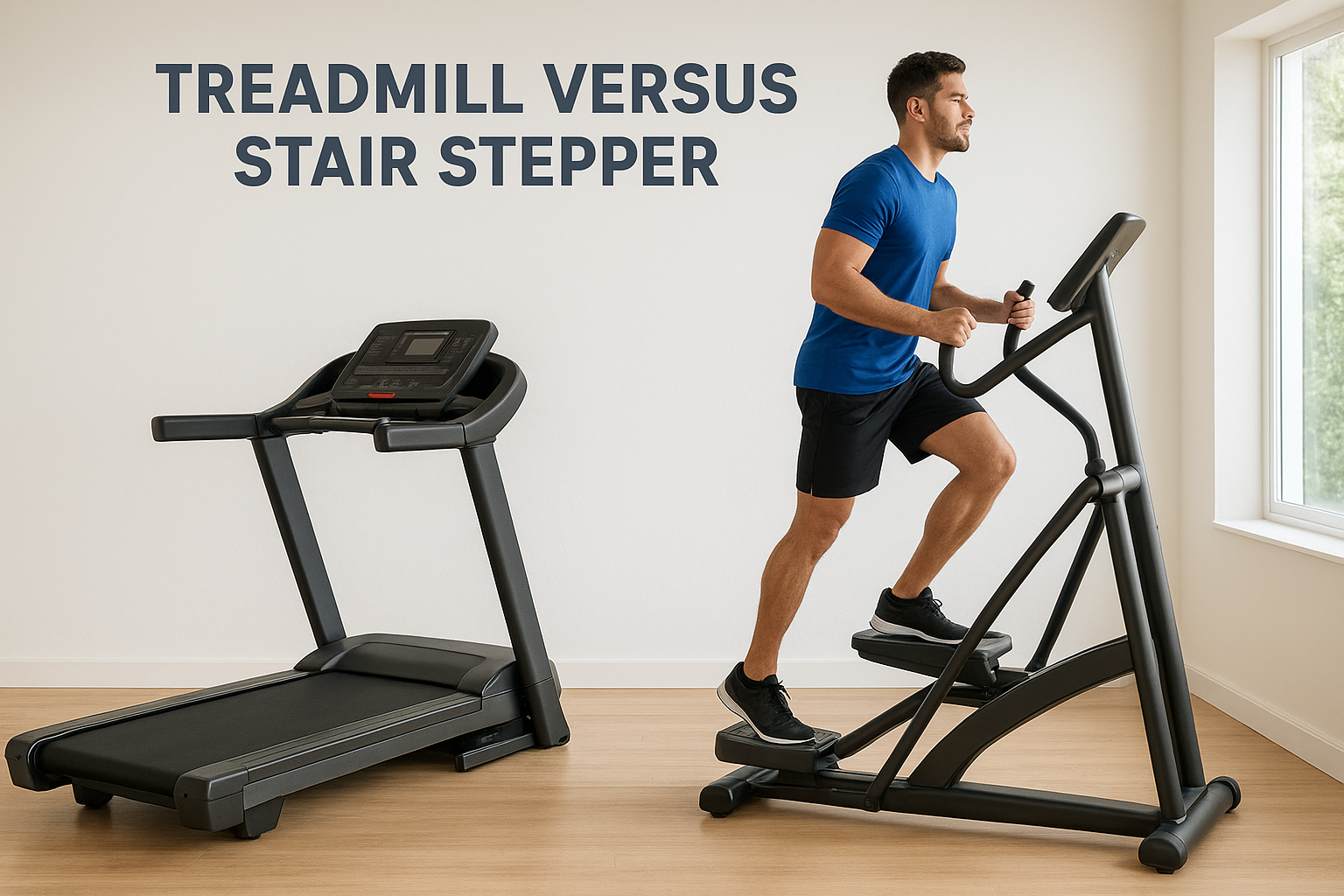
Switching from running to stepping wakes up muscles that pounding pavement never reaches.
Elliptical trainers and muscle balance
Ellipticals feel similar to stair steppers at first glance since both are low-impact, but the fluid gliding motion on an elliptical spreads effort across a wider arc, which softens the load on any single muscle group. A stair stepper’s more vertical, compressed range of motion concentrates force into the glutes and quads more directly. Ellipticals also tend to involve the arms through moving handles, distributing work away from the legs. If your goal is targeted lower body development rather than total-body movement, the stepper wins that comparison.
Quick comparison at a glance
| Machine | Primary Muscles | Impact Level | Best For |
|—|—|—|
| Treadmill | Quads, hip flexors, calves | Higher impact | Running-specific conditioning |
| Elliptical | Full body, diluted per muscle | Low impact | General cardio with upper body involvement |
| Stair stepper | Glutes, hamstrings, quads | Zero impact | Concentrated lower body strength and cardio |
Each machine has a place, but if you’re specifically chasing glute and hamstring development without joint stress, the stair stepper delivers a more concentrated stimulus than either alternative, which is exactly why so many home gym owners add one alongside equipment they already own rather than replacing it outright.
Putting your stair stepper muscles to work
Now you know exactly which stair stepper muscles worked matter most: glutes, quads, and hamstrings driving the movement, with calves and core stabilizing every step. That knowledge changes how you train. Instead of hopping on and stepping at the same pace for twenty minutes, you can adjust stride, resistance, and posture to target whatever your body needs that day, whether it’s posterior chain strength or joint-friendly cardio.
Getting real results depends on the machine holding up to daily use without wobbling, squeaking, or wearing out after a few months. Commercial-grade construction is what lets you push resistance and cadence hard without worrying about the equipment itself becoming the limiting factor. If you’re ready to put these muscle groups to work on a machine built for that kind of demand, check out the Elite VS X stair stepper and see how it fits into your home gym.




No Comments