

06 Sep 9 Best Small Home Treadmills for Tight Spaces in 2026
Finding a small home treadmill that actually fits your space without sacrificing a real running deck is harder than it sounds. Most apartments and spare rooms can’t handle a bulky commercial machine, but plenty of compact models on the market feel flimsy the moment you pick up the pace. You need something built to last, not a treadmill that wobbles at 6 mph or folds up so tight it loses stability.
This guide answers that search directly. We tested and compared the best compact treadmills for tight spaces, weighing deck size, fold-up design, incline range on folding treadmills, and console quality against real-world durability, because a small treadmill for home use still has to survive daily workouts, not just apartment storage.
As a manufacturer that builds commercial-grade cardio equipment ourselves, including compact treadmill frames built for real running and true incline capability, we know exactly what separates a sturdy compact machine from a cheap folding unit. Below you’ll find nine standout options, including a few of our own, so you can pick the right fit for your home in 2026 without guessing.
1. 3G Cardio Elite Runner X
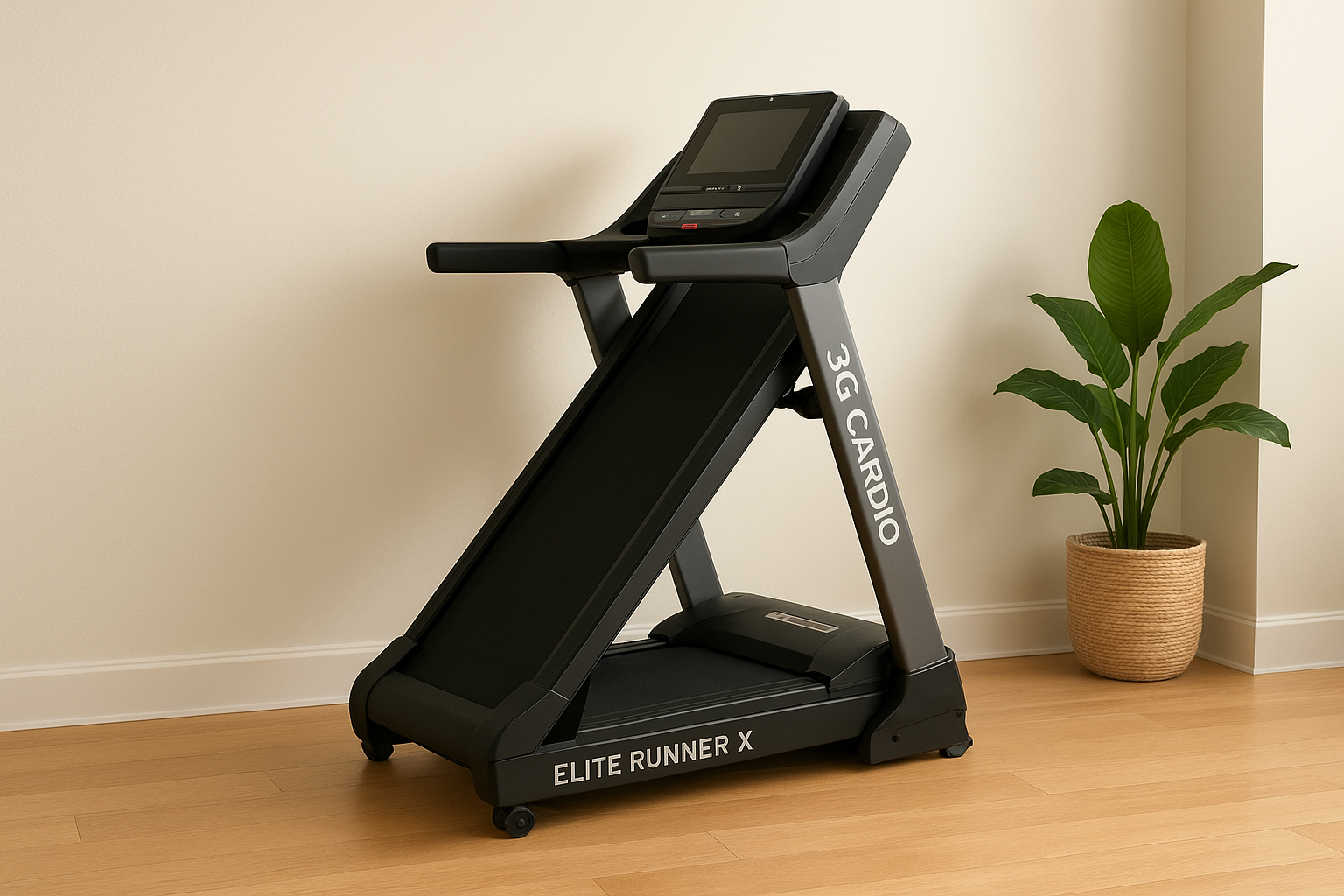
We’ll start with our own machine because it was engineered specifically to answer the question this whole article is built around: how do you get a commercial-grade running deck into a room that can’t fit a commercial-grade treadmill? The Elite Runner X folds up on a gas-assisted hydraulic hinge, so you’re not wrestling a 250-pound deck into place every time you want your living room back. It’s the treadmill we point apartment dwellers and spare-bedroom gym owners toward first, because the frame doesn’t flex or rattle once you fold it back down and start running.
Folded size and storage
Folded, the Elite Runner X stands roughly 62 inches tall by 34 inches wide, with a footprint that shrinks to about 34 by 40 inches once it’s upright against a wall. That’s a compact treadmill for home use in the sense that matters most: it clears a doorway, fits in a closet-depth alcove, and rolls on transport wheels so one person can reposition it without help. Unlike ultra-slim walking pads, it doesn’t sacrifice deck width to hit that footprint, which is exactly why it holds up better under real running strides.
Speed, incline and motor
The running deck measures 20 by 60 inches, generous for a folding machine, and it’s driven by a 4.0 continuous-horsepower motor that doesn’t bog down when you push past a jog. Incline runs 0 to 15 percent, which is a wider range than most small treadmill with incline for home shoppers will find on comparably sized units, and speed tops out at 12 mph.
| Spec | Elite Runner X |
|---|---|
| Deck size | 20" x 60" |
| Motor | 4.0 CHP |
| Speed range | 0.5-12 mph |
| Incline range | 0-15% |
| Folded footprint | 34" x 40" |
A folding treadmill only earns its "commercial-grade" label if the deck and motor still perform like one after you fold it flat a hundred times.
The console runs on our FreeSync FTMS Bluetooth platform used across our cardio lineup, so it pairs directly with apps like Kinomap, Zwift, and most FTMS-compatible fitness apps without a subscription tax. A tablet shelf and USB charging port come standard, and a wireless heart rate strap is included in the box.
Best for
This machine suits runners, not just walkers, who need real incline training in a footprint that folds away. If you’re serious about interval work or hill simulation but live somewhere without a dedicated gym room, the Elite Runner X handles that tension better than most cardio machines sized for apartments and spare rooms on this list.
Price
The Elite Runner X runs in the $2,999 to $3,499 range depending on current promotions, and it ships with our residential warranty: lifetime frame, 7 years on parts, and 1 year of labor. Financing through 6 months 0% interest is available at checkout, and free curbside delivery is included, with White Glove setup offered for an added fee.
2. Echelon Stride-6
Echelon built its reputation on Peloton-style bikes, and the Stride-6 brings that same touchscreen-first approach to a folding treadmill. It’s a legitimate portable treadmill for home use, with a slim frame that appeals to buyers who want a connected workout experience more than raw motor power. The catch is that most of its best features live behind a monthly app subscription, which is worth knowing before you compare it against machines that skip that fee entirely.
Folded size and storage
Folded upright, the Stride-6 measures about 62 inches tall by 33 inches wide, with a shallow depth that lets it slide against a wall in a bedroom or hallway. Transport wheels make repositioning manageable, though the frame feels lighter-duty than steel-heavy competitors, something you’ll notice when folding it daily rather than occasionally.
Speed, incline and motor
A 3.0 continuous-horsepower motor powers the deck, with speeds up to 12 mph and incline adjustable from 0 to 12 percent. That’s a modest range for a small treadmill with incline for home hill training, adequate for walking and light jogging but not built for serious distance runners.
| Spec | Echelon Stride-6 |
|---|---|
| Deck size | 20" x 55" |
| Motor | 3.0 CHP |
| Speed range | 0.5-12 mph |
| Incline range | 0-12% |
| Folded footprint | 33" x 40" |
A treadmill’s touchscreen can’t make up for a motor that struggles once you’re past a light jog.
Best for
Buyers who already use Echelon’s ecosystem, or who prioritize a slick touchscreen interface over deck durability, will get the most value here. It suits walkers and casual joggers more than committed runners chasing incline work.
Price
The Stride-6 typically retails between $1,799 and $2,199, but factor in Echelon’s required app subscription, often $39.99 monthly, to unlock guided classes and full console functionality. Without it, you’re left with a fairly basic display, which changes the real cost picture significantly over a few years of ownership.
3. WalkingPad R2
WalkingPad built its name on ultra-thin under-desk pads, and the R2 keeps that low-profile design while adding a longer deck than earlier models. It’s less a treadmill in the traditional sense and more a portable treadmill for home offices, much like other home mini treadmills built for tight rooms, since it folds nearly flat and slides under a bed or couch when you’re done. If your goal is a small treadmill for home walking routine rather than serious running, this is the machine that disappears completely between sessions.
Folded size and storage
Unfolded, the R2 sits low to the ground with a slim profile that never rises much past ankle height, and folded, it collapses to roughly 6 inches thick, thin enough to store upright in a closet or flat under furniture. There’s no tall folded silhouette to worry about here, which makes it one of the few options on this list that genuinely fits into rooms with zero spare floor space.
Speed, incline and motor
A 2.0 continuous-horsepower motor drives the belt, with speeds ranging from 0.5 to 3.7 mph in walking mode and up to 6.2 mph in jogging mode, but incline is fixed at zero. That’s a real limitation if you were hoping for a small treadmill with incline for home hill training, since the R2 simply doesn’t offer that adjustment.
| Spec | WalkingPad R2 |
|---|---|
| Deck size | 17.7" x 47.2" |
| Motor | 2.0 CHP |
| Speed range | 0.5-6.2 mph |
| Incline range | None |
| Folded footprint | 6" thick |
A treadmill this thin will always trade incline and top speed for the ability to vanish under your bed.
Best for
Remote workers who want light walking during calls, or apartment dwellers with genuinely no floor space to spare, will appreciate the R2 most. It’s not built for runners or anyone chasing incline-based training.
Price
The WalkingPad R2 typically sells between $599 and $799, making it one of the more affordable entries here, though the tradeoff is a smaller motor and no incline function compared to full-size folding treadmills.
4. Horizon 7.0 AT
Horizon Fitness built its name on mid-range home treadmills that punch above their price, and the 7.0 AT is the clearest example on this list. It’s a genuinely compact treadmill for home use that doesn’t feel like a downgrade from a full-size gym machine, thanks to a deck and motor combo that Horizon didn’t shrink just to hit a smaller folded footprint. Shoppers comparing a small home treadmill against bulkier commercial units often land here because it splits the difference well.
Folded size and storage
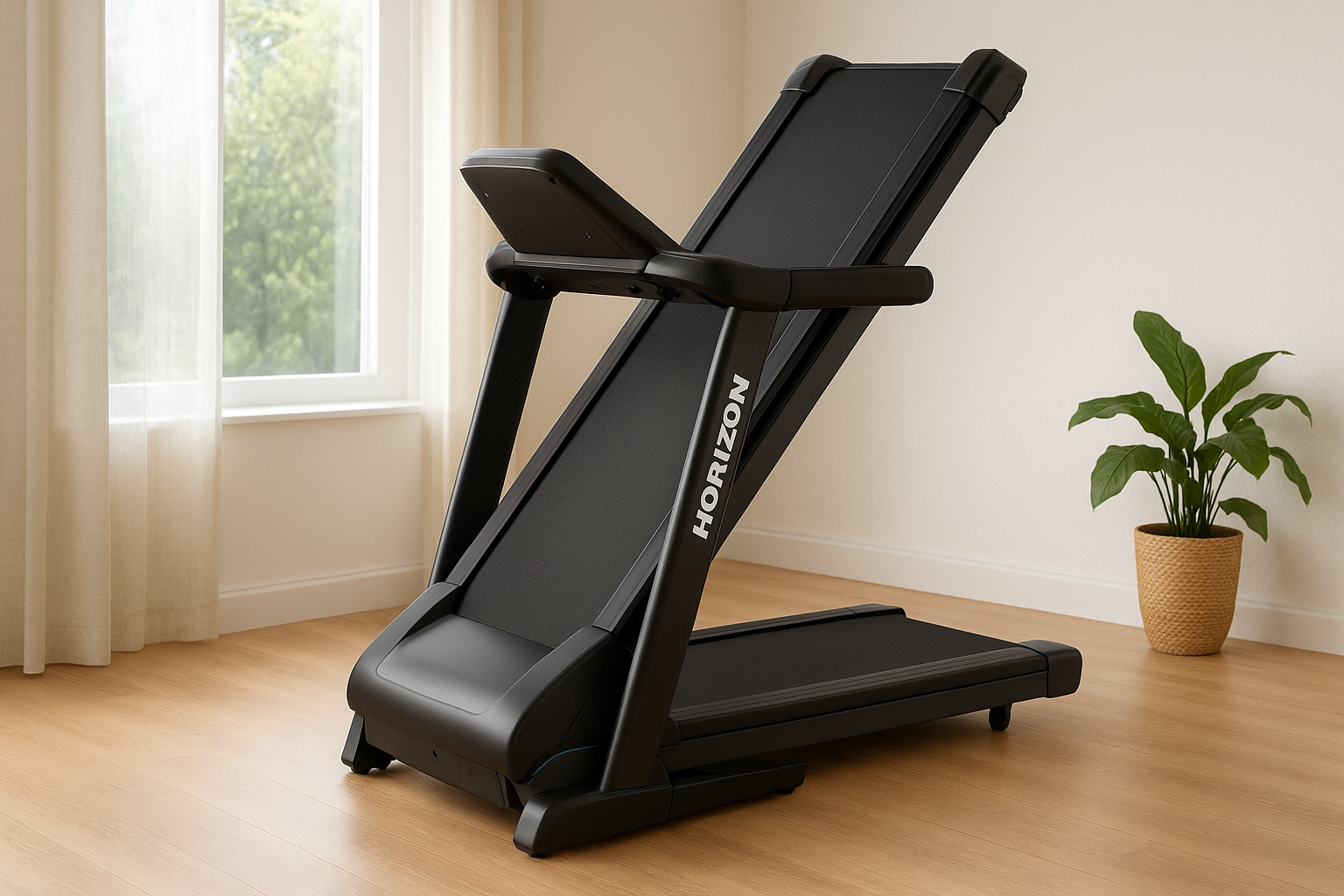
Standing folded, the 7.0 AT measures about 66 inches tall by 35 inches wide, and its quick-fold hydraulic hinge, like the ones on other foldable treadmills built for tight rooms, means you’re not fighting the deck into place after every workout. Built-in transport wheels and a low-profile base let one person roll it against a wall without straining, which matters if you’re storing it daily in a shared living space rather than a dedicated gym room.
Speed, incline and motor
A 3.25 continuous-horsepower motor drives the 20 by 60 inch deck, with speed reaching 12 mph and incline adjustable from 0 to 15 percent, a real range for anyone shopping specifically for a small treadmill with incline for home hill training.
| Spec | Horizon 7.0 AT |
|---|---|
| Deck size | 20" x 60" |
| Motor | 3.25 CHP |
| Speed range | 0.5-12 mph |
| Incline range | 0-15% |
| Folded footprint | 35" x 39" |
Incline range separates a walking treadmill from a training tool, and 15 percent puts the 7.0 AT firmly in the second category.
Best for
Runners who want real hill work without buying a commercial-size frame will get the most from this machine. It also suits households where two or three people share the treadmill, since the deck handles varied paces without feeling undersized.
Price
Expect to pay between $1,499 and $1,799 for the 7.0 AT, placing it below our Elite Runner X but above budget folding units. Horizon backs it with a lifetime frame warranty and 10 years on the motor, though labor coverage runs shorter than what you’ll find on higher-priced commercial-grade alternatives.
5. ProForm Carbon TLX
ProForm built the Carbon TLX to compete directly with iFit-driven treadmills that dominate big-box stores, and it lands as a genuinely compact treadmill for home gyms that still want a touchscreen experience. Nineteen inches of deck width keeps the footprint tight, and ProForm leans on its iFit subscription to justify the console, which means you’re paying for software as much as hardware here. That tradeoff won’t bother everyone, but it’s worth knowing upfront if you’re comparing this against machines that skip subscription fees entirely.
Folded size and storage
Once folded, the Carbon TLX rises to about 66 inches tall and 35 inches wide, with a SpaceSaver design that locks the deck vertically so it won’t drift back down mid-storage. Transport wheels are standard, though the unit’s weight, close to 300 pounds, makes solo repositioning harder than lighter folding models on this list.
Speed, incline and motor
A 3.5 continuous-horsepower motor drives the deck, with speed maxing out at 12 mph and incline adjusting from 0 to 12 percent automatically through iFit’s trainer-led workouts. That’s a decent range for a small treadmill with incline for home interval training, though it falls short of the 15 percent ceiling you’ll find on Horizon and 3G Cardio models.
| Spec | ProForm Carbon TLX |
|---|---|
| Deck size | 19" x 55" |
| Motor | 3.5 CHP |
| Speed range | 0.5-12 mph |
| Incline range | 0-12% |
| Folded footprint | 35" x 39" |
A treadmill’s incline range only matters if you’re willing to pay a monthly fee to unlock the console that controls it.
Best for
Buyers already committed to iFit’s ecosystem, or who want trainer-led workouts without shopping separately for classes, will find real value here. It suits walkers and moderate joggers more than distance runners chasing a wider incline range.
Price
The Carbon TLX typically retails between $1,299 and $1,599, but a 12-month iFit membership, often bundled at purchase, adds roughly $180 to $240 annually once that promotional period ends.
6. Sole F63
Sole has built a loyal following among home gym buyers who want a heavier, more stable frame than most folding treadmills offer, and the F63 is the brand’s most popular model for good reason. It’s marketed as a small home treadmill that still feels like a commercial machine underfoot, thanks to a steel frame and cushioned deck that absorbs impact better than lighter competitors on this list. Runners who’ve outgrown a basic walking pad and want to know what makes a treadmill good for daily running often land here next.
Folded size and storage
Folded, the F63 stands about 66 inches tall and 35 inches wide, with an easy assist fold system that lowers the deck gently instead of letting it drop. Transport wheels are standard, but the unit weighs close to 230 pounds, so plan on rolling it rather than lifting it when you reposition against a wall.
Speed, incline and motor
A 3.5 continuous-horsepower motor drives a 20 by 60 inch deck, with speed reaching 12 mph and incline adjusting from 0 to 15 percent. That range makes the F63 a legitimate small treadmill with incline for home hill training, matching the incline ceiling you’ll find on our own Elite Runner X and the Horizon 7.0 AT.
| Spec | Sole F63 |
|---|---|
| Deck size | 20" x 60" |
| Motor | 3.5 CHP |
| Speed range | 0.5-12 mph |
| Incline range | 0-15% |
| Folded footprint | 35" x 39" |
A heavier frame usually means a steadier ride, and the F63 proves that tradeoff is worth the extra pounds.
Best for
Households with multiple runners, or anyone who’s felt a lighter folding treadmill flex underfoot at faster paces, will appreciate the F63’s stability most. It suits serious walkers and moderate runners rather than sprint-focused training.
Price
Expect to pay between $1,699 and $1,999 for the F63, positioning it just above the Horizon 7.0 AT. Sole backs it with a lifetime frame and motor warranty, plus 3 years on parts and 1 year of labor, solid coverage for a machine at this price point.
7. NordicTrack Commercial 1750
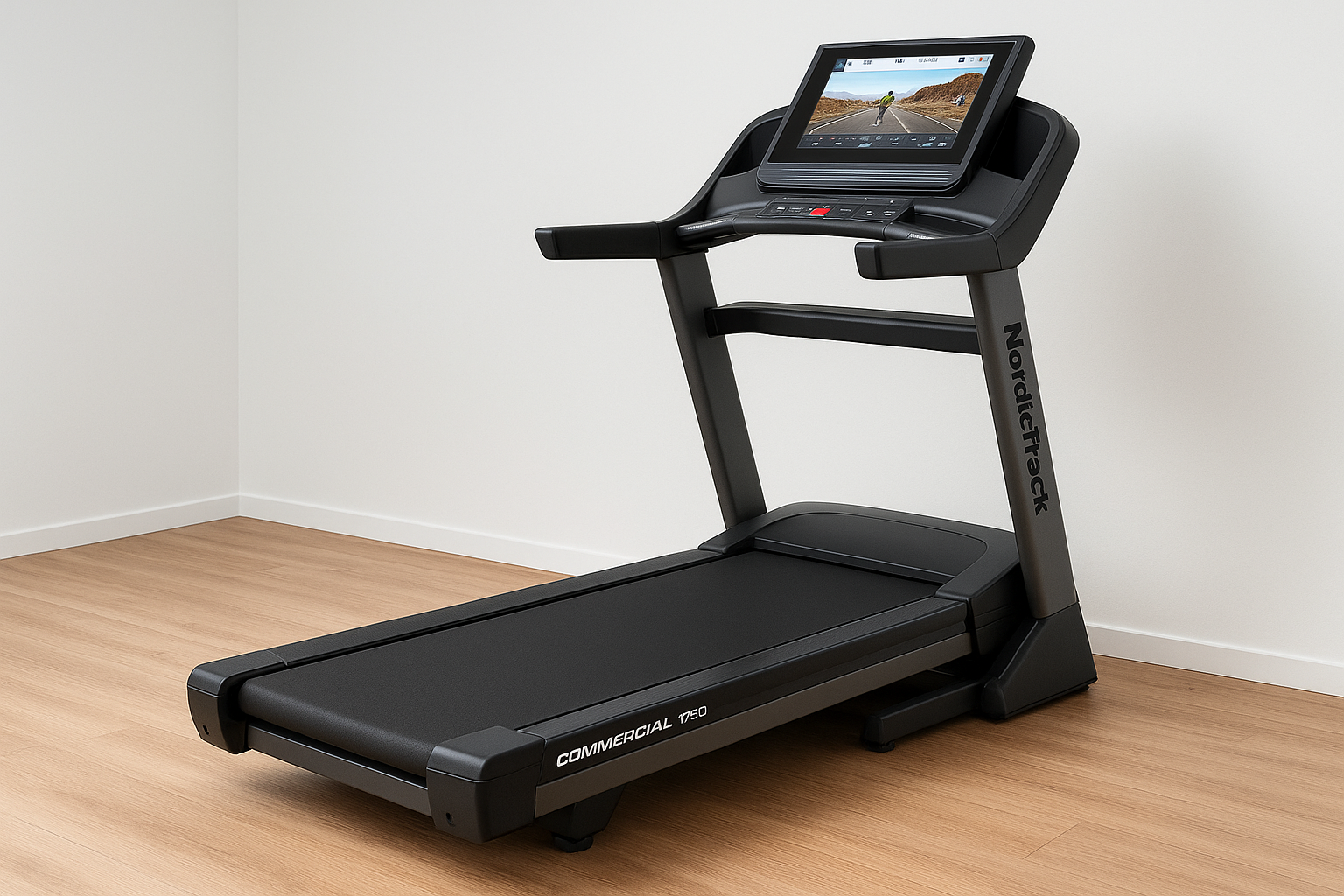
NordicTrack’s Commercial 1750 aims at buyers who want a genuine studio-style experience without renting a locker at the gym. It’s larger than most machines on this list, so calling it a small home treadmill stretches the definition a bit, but the folding deck still saves enough floor space to earn its spot here. The 10-inch touchscreen tilts and rotates, which matters if you’re squeezing this into a room where the treadmill isn’t the only piece of furniture competing for wall space.
Folded size and storage
Folded, the 1750 stands about 66 inches tall and 38 inches wide, noticeably deeper than the Horizon or Sole once you account for the touchscreen housing. Transport wheels are standard, but between the screen and the frame, the unit weighs close to 300 pounds, so solo repositioning takes some effort even with the wheels doing most of the work.
Speed, incline and motor
A 3.75 continuous-horsepower motor drives a 22 by 60 inch deck, wider than most compact treadmill for home competitors, with speed reaching 12 mph and incline adjusting from -3 to 15 percent. That negative incline option is rare at this size and gives serious runners a downhill training option most folding machines skip entirely.
| Spec | NordicTrack Commercial 1750 |
|---|---|
| Deck size | 22" x 60" |
| Motor | 3.75 CHP |
| Speed range | 0.5-12 mph |
| Incline range | -3% to 15% |
| Folded footprint | 38" x 39" |
Decline training is the one feature most compact treadmills skip, and it’s the reason serious runners keep circling back to this machine.
Best for
Runners training for races with varied terrain, or anyone who wants iFit’s trainer-led workouts on a wider deck, will get the most value here. It’s less suited to apartments with truly tight square footage, given its larger footprint.
Price
The Commercial 1750 typically retails between $1,999 and $2,499, and like the Carbon TLX, it leans on an iFit subscription, roughly $180 to $240 annually after the introductory period, to unlock the full console experience.
8. Urevo CyberMega
Urevo made its name with budget-friendly walking pads, and the CyberMega is the brand’s push into full-size folding treadmills with incline. It targets buyers who want a small treadmill for home use at a price well below Sole or NordicTrack, without giving up incline or a real running deck entirely. The tradeoff shows up in build quality and console polish, both noticeably lighter-duty than the pricier machines on this list.
Folded size and storage
Folded, the CyberMega stands about 60 inches tall and 33 inches wide, one of the smaller vertical profiles among the full-deck treadmills here. Wheels on the base let you roll it into a closet or against a wall, and Urevo markets it as a compact treadmill for home offices where floor space gets reclaimed daily. The frame feels lighter than steel-heavy competitors, so expect more flex at faster paces.
Speed, incline and motor
A 2.5 continuous-horsepower dual-motor system drives the deck, with speed topping out at 8.7 mph and incline adjusting from 0 to 10 percent automatically. That’s a modest ceiling for anyone specifically hunting a small treadmill with incline for home hill training, since it trails the 15 percent range found on the Elite Runner X, Horizon, and Sole.
| Spec | Urevo CyberMega |
|---|---|
| Deck size | 17.7" x 47.2" |
| Motor | 2.5 CHP dual motor |
| Speed range | 0.5-8.7 mph |
| Incline range | 0-10% |
| Folded footprint | 33" x 39" |
A lower price tag almost always means a lower incline ceiling, and the CyberMega is a clear example of that trade.
Best for
Walkers and light joggers on a tighter budget, especially first-time buyers testing whether a home treadmill fits their routine, get the most value here. Serious runners chasing higher speeds or steep inclines will outgrow it quickly.
Price
The CyberMega typically sells between $799 and $999, making it one of the most affordable full-deck folding treadmills with incline on this list and a fair comparison against other home treadmills priced under $1,000, though warranty coverage is limited compared to established fitness brands.
9. Sunny Health & Fitness Interactive Slim
Sunny Health & Fitness rounds out this list with a machine built for shoppers who want something smaller and lighter than a full-size folding treadmill but still want a real incline option. The Interactive Slim splits the difference between a walking pad and a traditional folder, making it a genuine small treadmill for home use in apartments where every square foot counts. It won’t compete with the Elite Runner X or Sole F63 on power, but it also costs a fraction of what those machines run.
Folded size and storage
Folded, the Interactive Slim stands about 51 inches tall and 28 inches wide, noticeably narrower than most other entries here. Transport wheels are built into the base, and the frame’s lighter weight, under 100 pounds, means one person can lift and reposition it without straining, something the heavier Sole and NordicTrack machines can’t offer.
Speed, incline and motor
A 2.2 continuous-horsepower motor drives a narrow 16 by 40 inch deck, with speed capped at 7.5 mph and incline adjusting from 0 to 5 percent. That’s a limited range if you’re specifically hunting for a small treadmill with incline for home hill training, but it beats the zero-incline WalkingPad R2 for anyone who wants at least some grade adjustment.
| Spec | Interactive Slim |
|---|---|
| Deck size | 16" x 40" |
| Motor | 2.2 CHP |
| Speed range | 0.5-7.5 mph |
| Incline range | 0-5% |
| Folded footprint | 28" x 39" |
A narrow deck and modest incline make this treadmill better suited to walking than to any serious running program.
Best for
Walkers, beginners, and anyone short on both budget and floor space will get the most out of this machine. Runners or buyers who want incline training beyond light hills should look higher on this list instead.
Price
The Interactive Slim typically retails between $599 and $799, making it one of the cheapest full-fold treadmills here and worth weighing against other affordable treadmills for home use, though the narrow deck and 5 percent incline ceiling reflect that lower price point clearly.
10. How to choose a small home treadmill
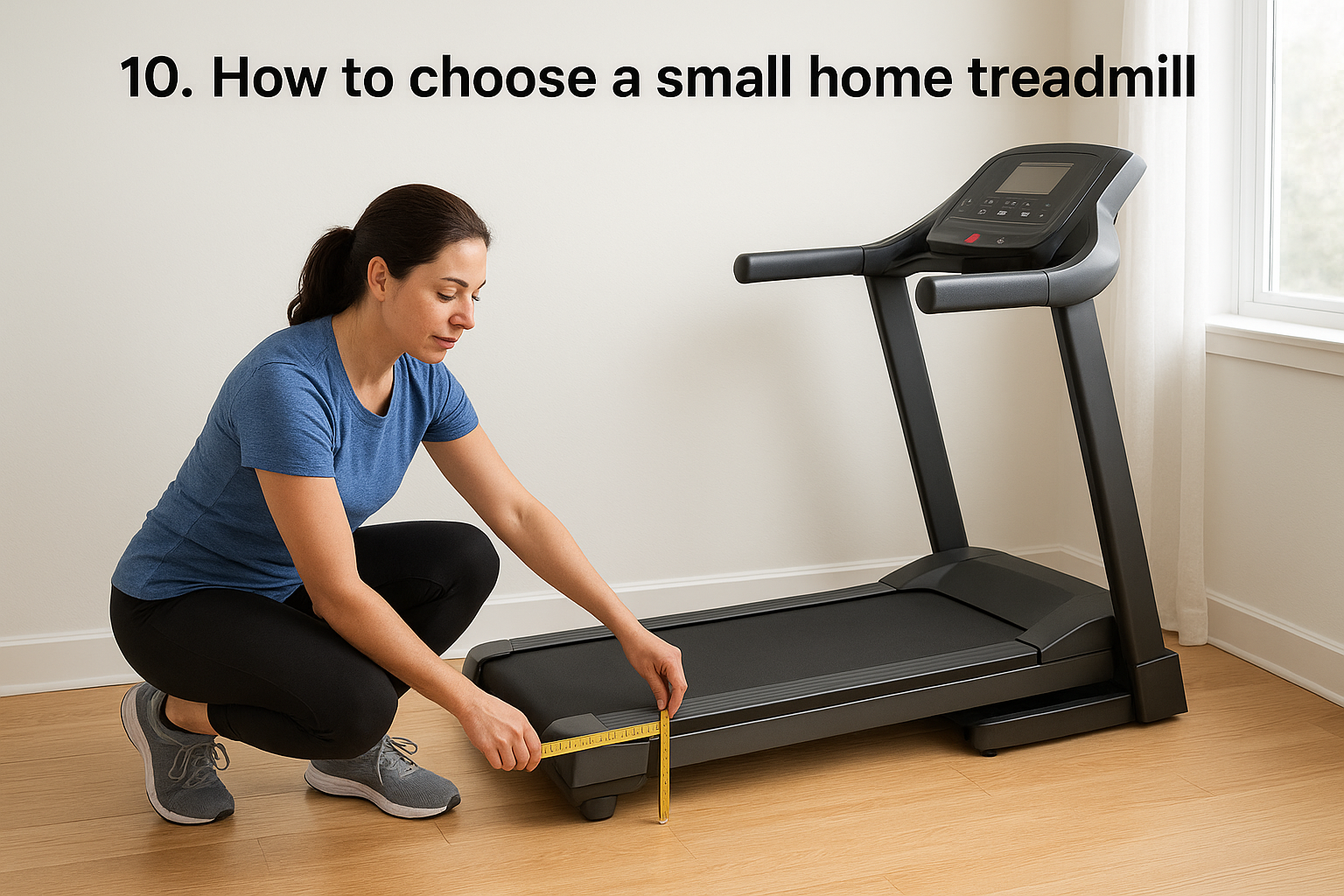
Measuring your space beats guessing every time. Before you compare a single spec sheet, work through the specs that predict how long a treadmill lasts, then grab a tape measure and check the ceiling height where the treadmill will sit, the doorway width it needs to pass through, and the wall space it’ll fold against. A small home treadmill that looks compact online can still be too tall for a low basement ceiling or too wide for a narrow hallway, so write those three numbers down before you shop.
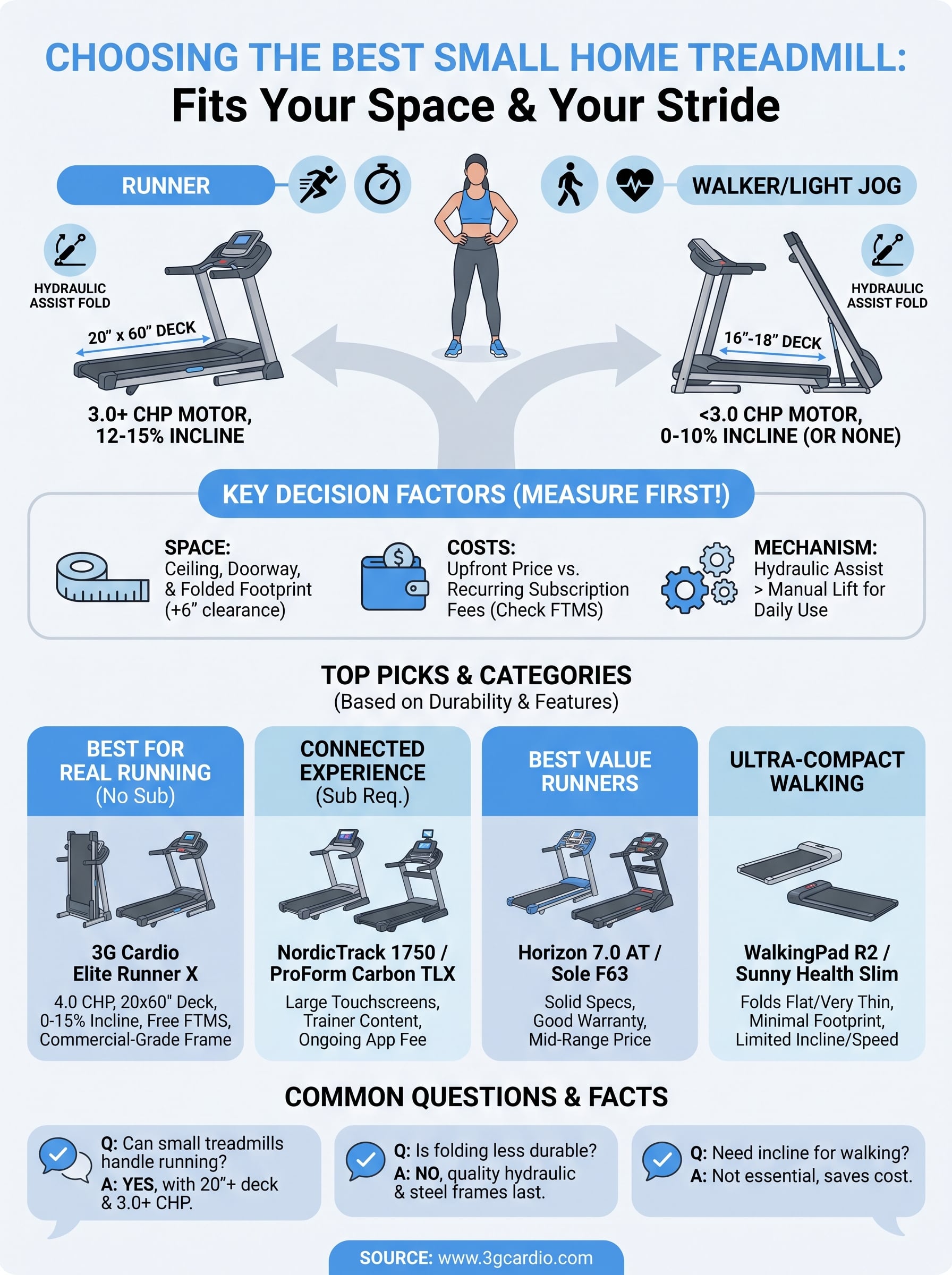
Deck size matters more than folded footprint for anyone actually running rather than walking. A 20-inch by 60-inch deck, like you’ll find on the Elite Runner X, Horizon 7.0 AT, and Sole F63, gives taller runners room to stride without clipping the rails, while narrower 16 to 18 inch decks work fine for walking but feel cramped at a jog. If incline training matters to you, treat anything under 10 percent as a walking treadmill, look for 12 to 15 percent if you want real hill work, and know how much of an incline you should actually use once you’re training.
Buy for the workouts you’ll actually do six months from now, not the ones you’re imagining today.
Subscription costs deserve the same scrutiny as the sticker price. A compact treadmill for home use that looks cheap upfront can cost more over three years than a pricier machine with no required app fee, so check this before you compare price tags directly:
- Motor and deck: 3.0 CHP or higher, deck at least 20 inches wide if you plan to run
- Incline range: 12 to 15 percent for hill training, 0 to 10 percent if you’re walking only
- Fold mechanism: hydraulic assist over manual lift, especially if you’re folding it daily
- Console fees: confirm whether app connectivity requires a subscription or works free through FTMS Bluetooth
- Warranty: lifetime frame coverage is standard among quality brands; check parts and labor terms separately
Weight capacity and your own build also factor in. Heavier steel frames handle faster paces with less flex, but they’re harder to reposition solo, a real tradeoff if you’re the one moving it after every workout.
11. Small home treadmill questions answered
Buyers researching a small home treadmill tend to ask the same handful of questions before checking out, so here are straight answers based on what actually holds up in daily use.
How much space do I really need around a folded treadmill?
Plan on at least 6 inches of clearance on each side and a couple feet in front for the fold to swing open without hitting furniture. Most compact treadmill for home models need a footprint close to 3 feet wide by 3.5 feet deep once folded upright, so measure your actual wall space before ordering, not just the room’s general size.
Can a small treadmill still handle running, not just walking?
Yes, but only if the deck is at least 20 inches wide and the motor rates 3.0 continuous horsepower or higher. Anything narrower or weaker, like the sub-3.0 CHP units on this list, starts to feel unstable once you push past a light jog, which is why treadmills built for serious runners keep those specs high.
A treadmill’s folded size tells you nothing about how it’ll feel once you’re actually running on it.
Do I need incline if I mostly walk?
Not really. A small treadmill with incline for home hill training only pays off if you’re training for races or want calorie burn without adding speed. Walkers doing steady-state cardio can skip incline entirely and save money on a flatter, cheaper model.
Are folding treadmills less durable than fixed-frame models?
Not inherently. Quality portable treadmill for home use, built with hydraulic hinges and steel frames, holds up just as well as fixed models, and yes, you can log real miles on a fold-up treadmill. The failure point is usually a weak motor or thin deck, not the fold mechanism itself.
Is a subscription worth it for a small treadmill?
Depends on your habits. If you’ll actually use guided classes weekly, the fee earns its keep. If you just want a reliable console with heart rate tracking and app pairing, look for FTMS Bluetooth connectivity instead, since it skips the recurring cost entirely while still syncing with most fitness apps.
Finding the right fit for your space
A small home treadmill doesn’t have to mean a flimsy one. The nine machines above prove you can get a real running deck, true incline, and app connectivity without sacrificing a whole room to fitness equipment. Your next step is simple: measure your space, decide whether you’re walking or running, and check that incline range against how you’ll actually train, not how you imagine training.
If hydraulic folding, a full-size deck, and Bluetooth connectivity without a subscription fee sound like what you need, you already know where we’d point you. We built the Elite Runner X to solve exactly this problem, and we stand behind it with a warranty that reflects how confident we are in the frame. Compare specs, measure twice, and when you’re ready, see the full specs and warranty on the Elite Runner X folding treadmill with a 22-inch cushioned deck and decide if it fits your space the way it’s fit hundreds of others.


Sorry, the comment form is closed at this time.