

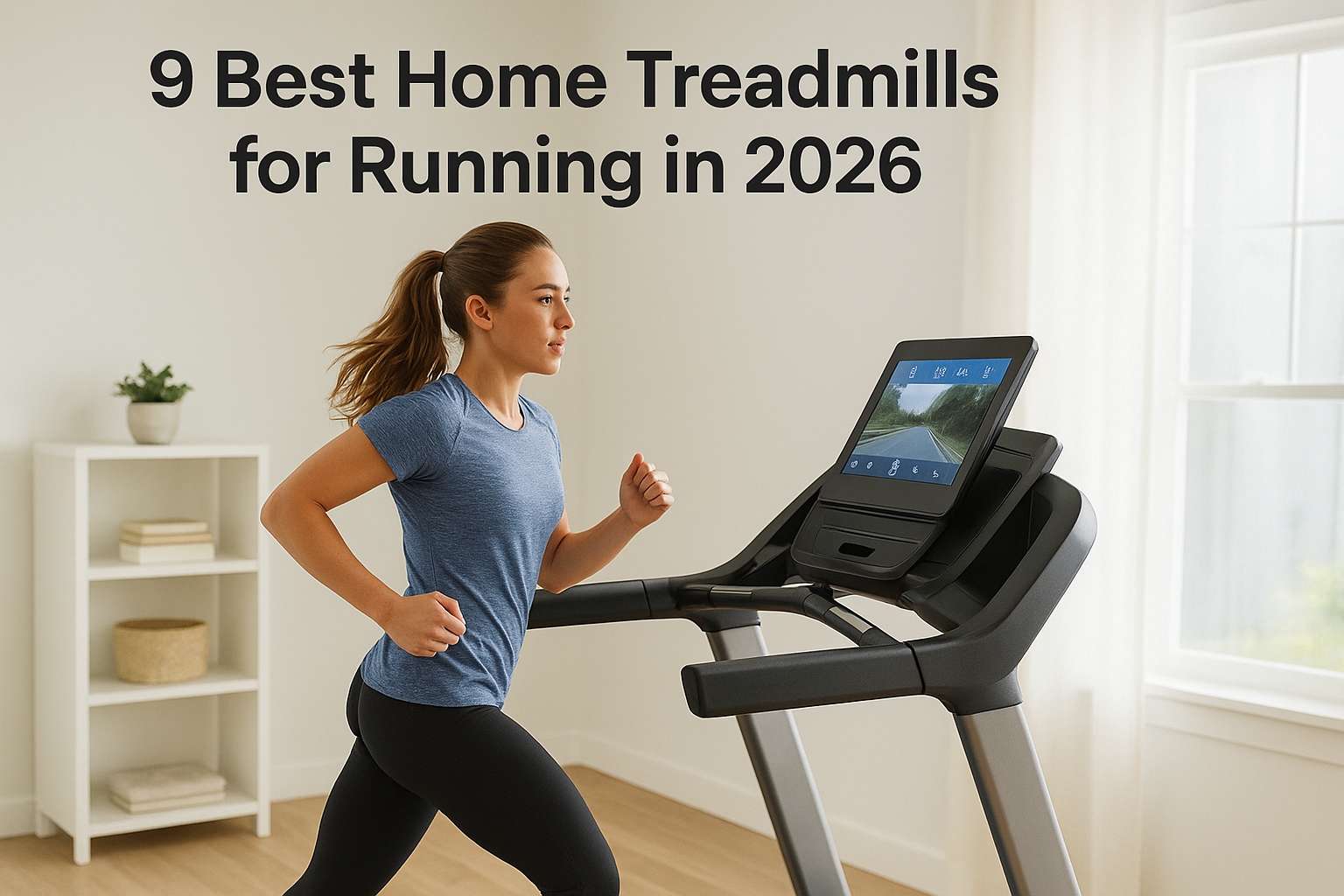
09 Sep 9 Best Home Treadmills for Running in 2026
Most treadmills sold online can’t handle real running. They wobble past 6 mph, the belt feels like a plank, and the motor burns out within two years. If you’re searching for the best home running treadmill, you already know what actually makes a treadmill good for running rather than walking, mile after mile, week after week.
The short answer: look for a continuous-duty motor rated at 3.0 CHP or higher, a belt at least 60 inches long, and a warranty that actually covers the frame for life. Skip anything padded with subscription fees or flashy screens that don’t add durability. Commercial-grade construction at a fair price matters far more than a touchscreen that stops working once the app’s server does.
This list breaks down nine treadmills worth your money in 2026, from budget-friendly options under $2,000 to premium models built for daily marathon training. We tested motor performance, deck cushioning, incline range, and app connectivity across brands, including our own Elite Runner X and the Pro Runner X, our $2,299 folding running treadmill, so you can compare specs side by side. Whether you’re training for a race or just trying to stay consistent through winter, you’ll find a reliable home setup here that matches your budget and your mileage.
1. 3G Cardio Elite Runner X
We built the Elite Runner X because most home treadmills fall apart the moment you push them past a jog. It’s the flagship in our own lineup, and it’s the machine we point to when someone asks what the best home running treadmill actually looks like on paper and in practice. This isn’t a spec sheet dressed up with marketing language; it’s a machine engineered around the motor, the deck, and the frame first, with the touchscreen treated as an accessory instead of the main event.
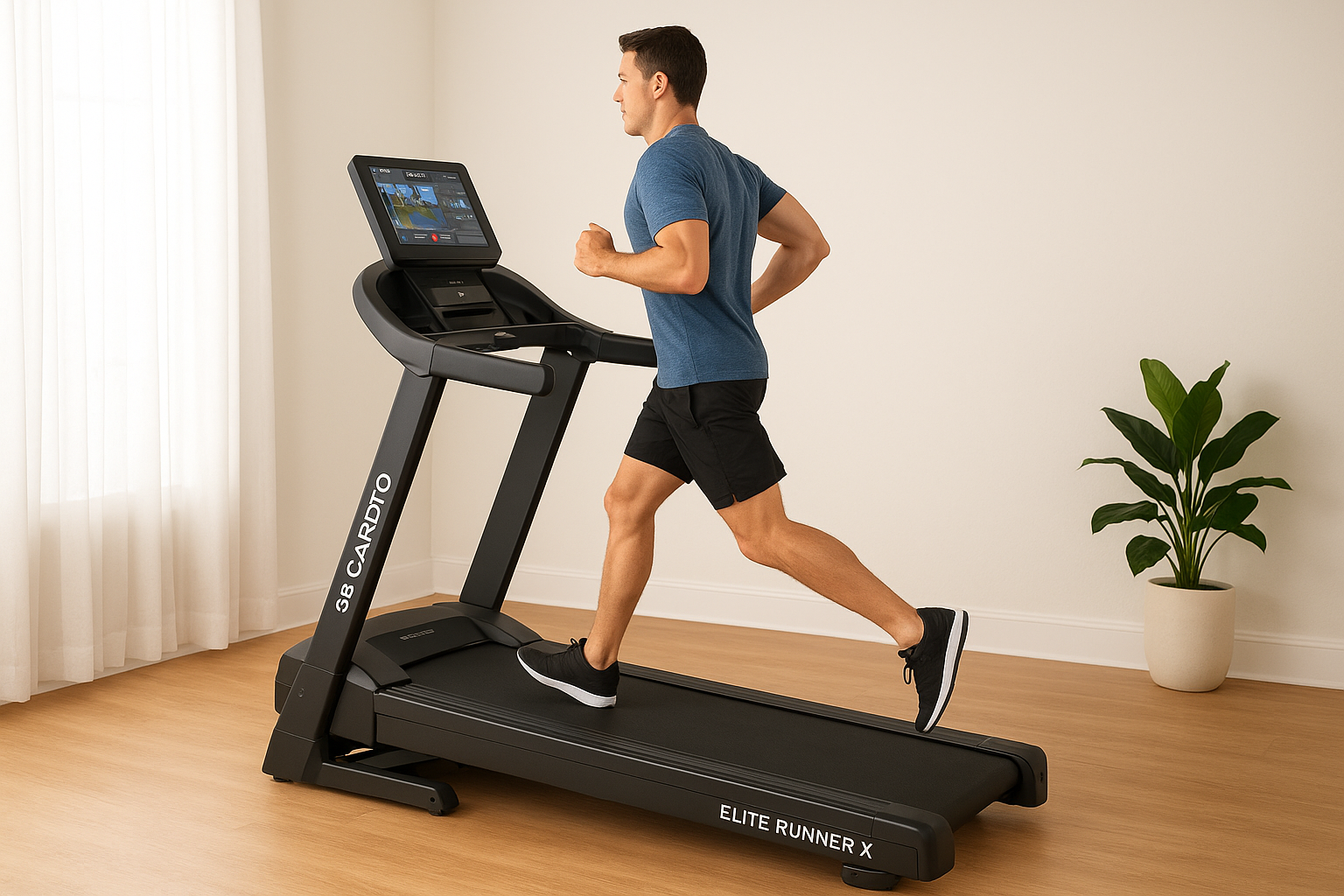
Key specs
| Spec | Elite Runner X |
|---|---|
| Motor | 4.0 CHP continuous-duty |
| Running surface | 22" x 62" |
| Top speed | 12 mph |
| Incline range | 0-15% |
| Weight capacity | 400 lbs |
| Connectivity | FreeSync FTMS Bluetooth, BYOS |
| Folding | No, fixed commercial frame |
What makes it stand out
Beneath the deck sits a 4.0 continuous-duty motor, which is a full step above the 2.5 to 3.0 CHP motors you’ll find on most consumer treadmills in this price range. That extra power means the belt doesn’t bog down when you shift from an easy jog to sprint intervals, and it won’t overheat during back-to-back long runs the way smaller motors do. The 22-inch by 62-inch belt gives taller runners and longer strides real room to move without clipping the edges, something a lot of budget decks simply can’t offer.
A treadmill motor rated below 3.0 CHP will struggle to survive years of actual running, no matter how nice the screen looks.
Our console connects directly to Kinomap, Zwift, and other third-party apps through BYOS technology, the same open setup used across our full lineup of FreeSync BYOS machines, so you’re not locked into a subscription just to see your workout data. Runners doing structured speed work also get 15% incline range, letting you simulate hills without buying a separate incline trainer.
Who it’s for
The Elite Runner X suits serious runners who log 20 or more miles a week and refuse to babysit a machine that shakes at 8 mph. It’s also a strong fit if you’ve used commercial gym treadmills for years and want that same feel at home, since the fixed frame and heavier motor mirror what you’d find at a health club rather than a big-box store. Households with multiple runners of different heights and paces benefit from the longer belt and the 400-pound capacity that heavier runners need too, since it doesn’t force anyone to shorten their stride.
If you mostly walk or do light jogging a few times a month, this machine is more treadmill than you need, and a lighter-duty model will save you money without sacrificing your workout quality.
Price and warranty
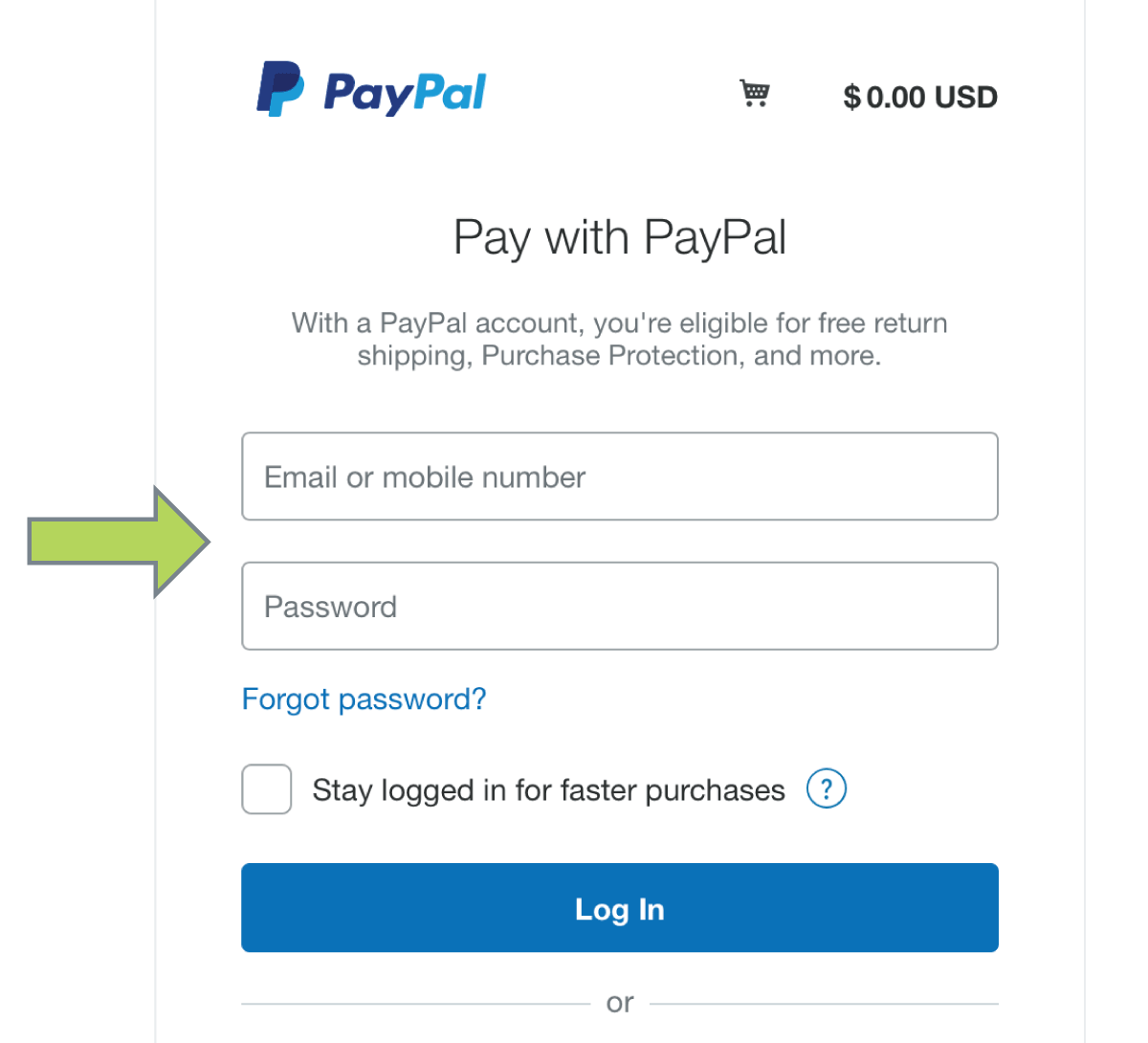
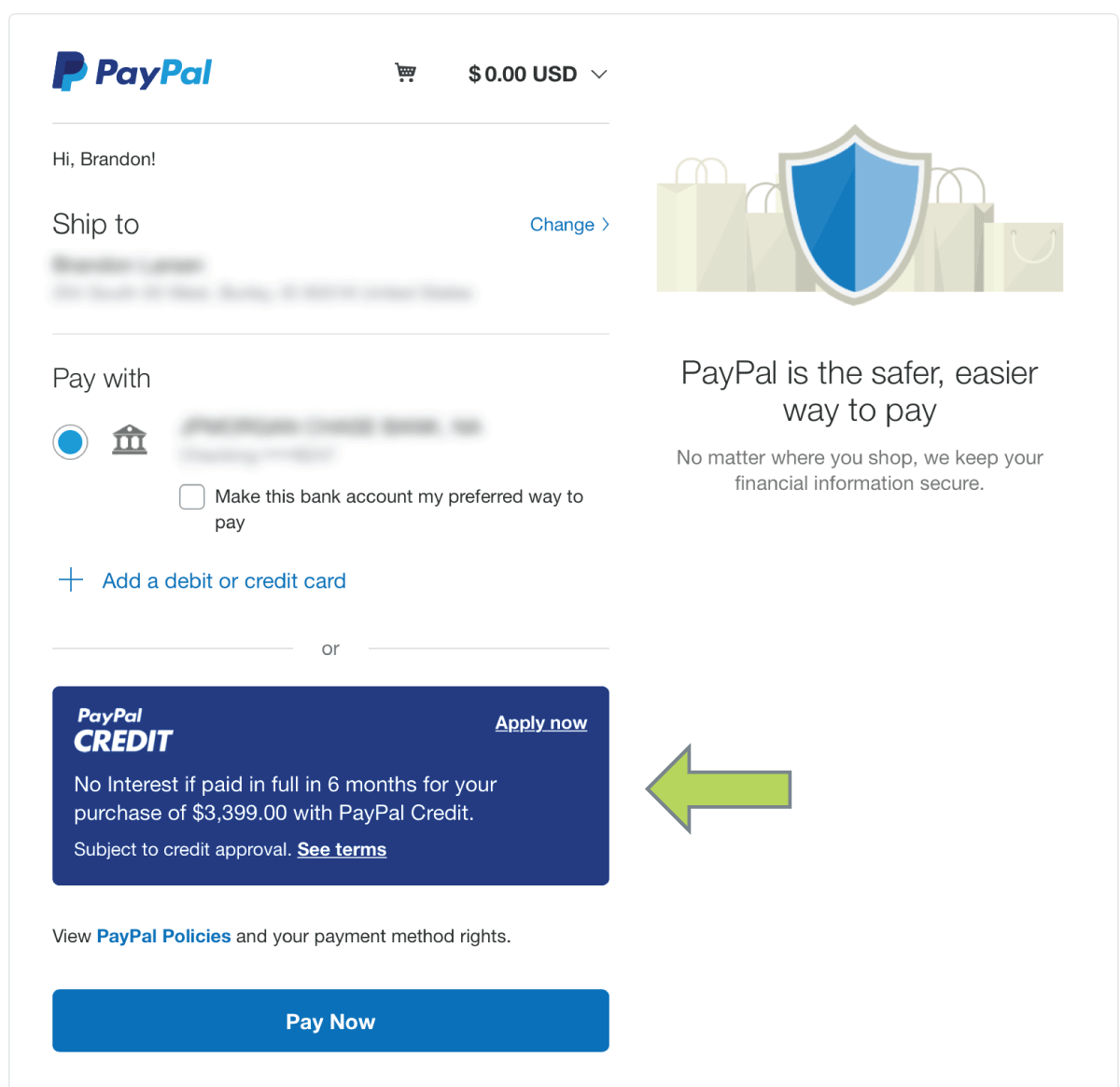
The Elite Runner X runs in the $3,999 to $4,699 range depending on current promotions, which puts it below comparable commercial-class treadmills from bigger brands while matching or beating their build quality. Every unit ships with a residential lifetime frame warranty, 7 years on parts, and 1 year on labor, along with free curbside delivery or optional White Glove setup. You can review full specs and financing options, including 6 months 0% financing through PayPal Credit, on the Elite Runner X product page.
2. NordicTrack Commercial 1750
NordicTrack built a name on iFit-powered training, and the Commercial 1750 is the model most home runners land on when they want a good home treadmill for running with a big touchscreen and streaming workouts baked in. It’s a folding deck, which separates it from our fixed-frame Elite Runner X, but the motor and belt size still hold up to regular running rather than just walking.
Key specs
| Spec | Commercial 1750 |
|---|---|
| Motor | 3.75 CHP |
| Running surface | 22" x 60" |
| Top speed | 12 mph |
| Incline/decline | -3% to 15% |
| Weight capacity | 300 lbs |
| Connectivity | 10" touchscreen, iFit required for full features |
| Folding | Yes, hydraulic fold |
What makes it stand out
Commercial-quality touches show up in the decline feature, which few treadmills in this category offer, letting you simulate downhill running for race-specific training. The 10-inch touchscreen pivots for off-treadmill workouts too, and the auto-adjust incline responds to trainer-led iFit routes without you touching a button.
Decline capability is rare below $2,500, and it’s the single feature that separates the 1750 from most folding treadmills.
Folding decks with real incline range save floor space, but they also mean a lighter frame than a fixed commercial build, something worth weighing if you run heavy mileage.
Who it’s for
Runners who want structured, trainer-led workouts and don’t mind paying a monthly iFit fee will get the most value here. It suits apartment dwellers and smaller homes too, since the fold-up deck tucks away between sessions, unlike a fixed frame. If you specifically want the best at home treadmill for running without any recurring subscription, this isn’t the pick, since most of the console’s value depends on an active iFit membership after the included trial ends.
Price and warranty
Expect to pay between $1,999 and $2,299 depending on sales. NordicTrack backs it with a 10-year frame warranty, 2 years on parts, and 1 year on labor, which is shorter than the lifetime frame coverage you’ll find on the Elite Runner X. Factor the ongoing iFit cost into your total price before comparing it against subscription-free alternatives.
3. Sole F80
Sole has built a loyal following among runners who want a good treadmill for running at home without paying for a screen-heavy console. The F80 is the brand’s long-running flagship, a fixed-belt design that leans into commercial-style construction rather than streaming features. It’s a favorite in gyms and hotels, which tells you something about how it holds up under repeated use.
Key specs
| Spec | Sole F80 |
|---|---|
| Motor | 3.5 CHP |
| Running surface | 22" x 60" |
| Top speed | 12 mph |
| Incline range | 0-15% |
| Weight capacity | 375 lbs |
| Connectivity | Bluetooth speakers, tablet holder, no touchscreen |
| Folding | Yes, manual assist |
What makes it stand out
Sole’s cushioned deck uses a flex system with elastic bands at the front and firmer cushioning near the back, and how firm a treadmill deck should feel matters more than most shoppers expect when mimicking the feel of running outdoors. That variable cushioning reduces treadmill running impact on your knees during long runs without making the belt feel spongy during faster intervals.
A deck that flexes at the front and firms up at the back protects your joints without slowing your turnover.
Sole skips a built-in touchscreen entirely, relying on a tablet holder and Bluetooth speakers instead, which keeps the price down and avoids the forced software updates that plague console-heavy machines.
Who it’s for
Runners who want a best home treadmill for running option without paying for iFit-style subscriptions will appreciate Sole’s no-frills approach. It also suits anyone who prefers running with their own phone or tablet propped up rather than staring at a built-in screen tied to one ecosystem. The folding deck works for smaller rooms, though the manual assist means you’re lifting the deck yourself rather than using a hydraulic lift.
Households logging heavy weekly mileage should note the 375-pound weight capacity, which is solid but slightly below our Elite Runner X’s 400-pound rating.
Price and warranty
Expect to pay between $2,199 and $2,499 for the F80. Sole covers it with a lifetime frame warranty, 3 years on parts, and 1 year on labor, plus 1 year of in-home service. That’s stronger coverage than most folding treadmills, though the parts and labor terms still fall short of the extended coverage bundled with commercial-grade fixed frames.
4. Horizon 7.4 AT
Horizon Fitness built its reputation on treadmills that punch above their price point, and the 7.4 AT is the model most shoppers find when they search for a best treadmill for home running that won’t wreck a mid-range budget. It’s a folding deck aimed at runners who want commercial-style feedback without commercial-level pricing, and Horizon backs it with one of the more thoughtful control layouts in this list.
Key specs
| Spec | Horizon 7.4 AT |
|---|---|
| Motor | 3.5 CHP |
| Running surface | 22" x 60" |
| Top speed | 12 mph |
| Incline/decline | -3% to 15% |
| Weight capacity | 375 lbs |
| Connectivity | Bluetooth, 10" tablet holder, app sync |
| Folding | Yes, hydraulic FeatherLight fold |
What makes it stand out
Quick Dial controls sit right at your fingertips on either side of the console, letting you adjust speed and incline without hunting for a button mid-stride. That kind of console design matters more than people expect once you’re deep into an interval workout and can’t afford to look down. Horizon also includes a Bluetooth sync feature that logs your workouts straight to fitness apps, so you’re not stuck manually tracking mileage.
Controls you can reach without breaking stride make interval training safer and more consistent than a touchscreen buried in menus.
The variable response cushioning softens impact near the front of the deck and firms up at the back, a similar approach to what Sole uses, which keeps the ride comfortable during long runs while still feeling responsive during faster splits.
Who it’s for
Runners hunting for affordable home treadmills worth considering that still handle regular mileage will find good value here. It also suits smaller households, since the FeatherLight hydraulic fold makes it one of the easier decks to lift and stash between workouts. If you’re logging serious weekly mileage above 30 miles, though, the 3.5 CHP motor and 375-pound capacity sit a notch below heavier-duty fixed frames built for daily punishment.
Price and warranty
Expect to pay between $1,599 and $1,899 depending on promotions. Horizon covers the 7.4 AT with a lifetime frame warranty, 5 years on motor and parts, and 2 years on labor, a stronger labor term than several competitors in this price range offer.
5. Echelon Stride-8S
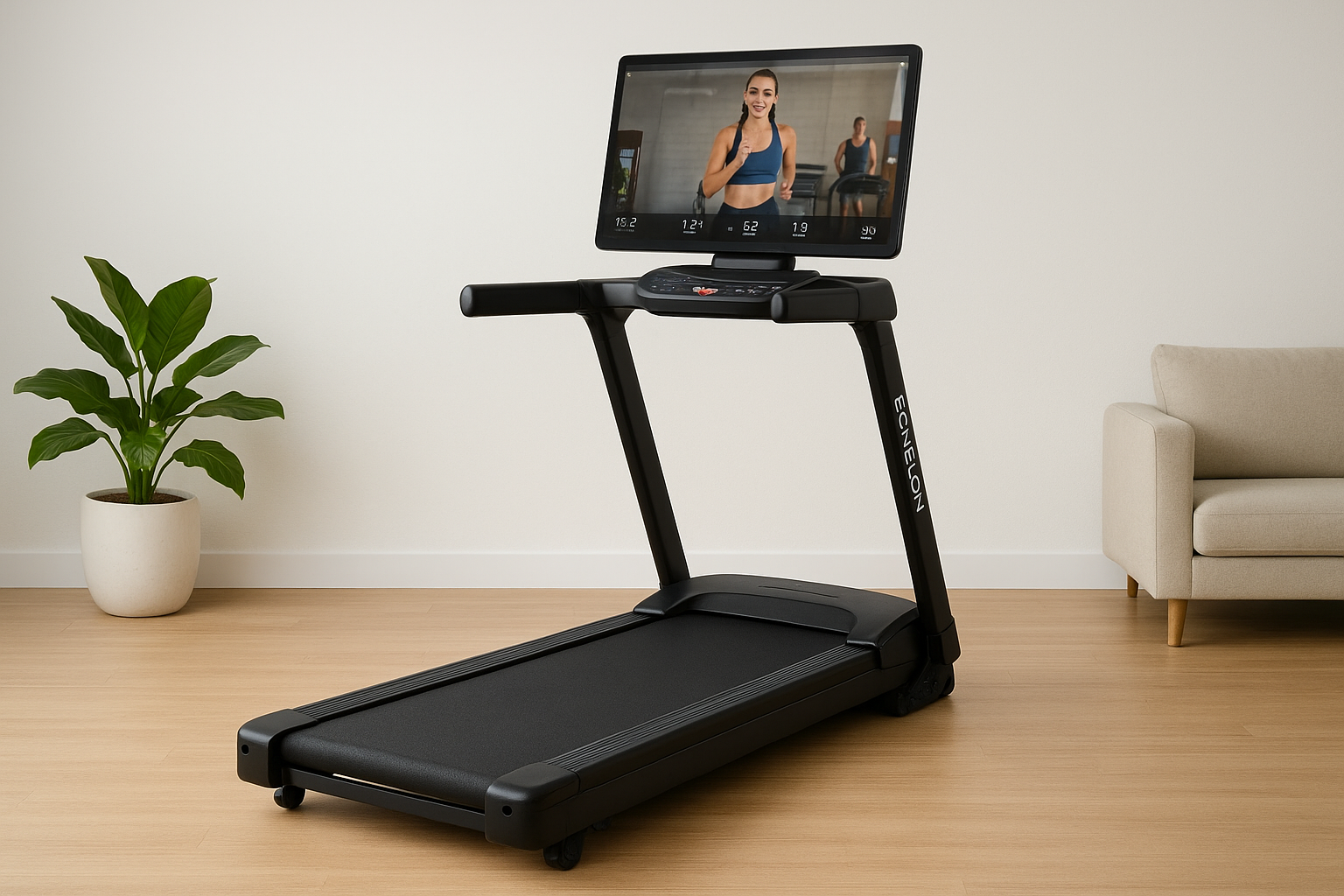
Echelon made its name with connected bikes, and the Stride-8S brings that same subscription-first approach to running. It’s a folding treadmill built around a large touchscreen and a monthly membership model, which sets it apart from the fixed-frame, subscription-free machines earlier on this list. If you already pay for Echelon classes or want a best running treadmill for home setup tied to a live instructor experience, this model deserves a look.
Key specs
| Spec | Echelon Stride-8S |
|---|---|
| Motor | 3.0 CHP |
| Running surface | 20" x 55" |
| Top speed | 12 mph |
| Incline range | 0-12% |
| Weight capacity | 300 lbs |
| Connectivity | 32" rotating touchscreen, Echelon app required for classes |
| Folding | Yes, manual fold |
What makes it stand out
Size sets the Stride-8S apart immediately. The 32-inch touchscreen rotates for off-treadmill workouts like yoga or strength training, turning the machine into more of a media hub than a pure running tool. Guided classes stream live or on-demand through the Echelon app, and the console tracks pace against instructor targets in real time.
A bigger screen doesn’t mean a bigger motor, so check the CHP rating before you fall for the display.
Unfortunately, the belt runs shorter than most machines on this list at 20 by 55 inches, and the motor tops out at 3.0 CHP rather than the 3.5 or 4.0 CHP you’ll find on dedicated running decks. That combination works fine for moderate paces but starts to feel cramped once you stretch into a real stride at faster speeds.
Who it’s for
Runners who value guided, class-based motivation over raw running performance will get the most from the Stride-8S. It suits shorter-stride runners and walkers who want variety through strength and yoga content built into the same screen. Taller runners or anyone training for best treadmill for home use running at faster paces should look elsewhere, since the shorter belt and lighter motor limit how hard you can push it.
Price and warranty
The Stride-8S sells for roughly $1,839 to $2,095, plus a required monthly membership fee to unlock full class content. Echelon backs the frame for life, with parts covered for 1 year and labor for 90 days, noticeably shorter than the multi-year labor terms offered by Sole and Horizon.
6. Bowflex T9
Bowflex built the T9 around its JRNY adaptive training app, positioning it as a best treadmill for running at home for people who want a machine to adjust workouts on the fly based on their fitness level. It’s a folding deck with a mid-size motor, sitting between the budget and premium tiers on this list. The console leans hard into guided coaching rather than raw horsepower, which shapes who should actually buy it.
Key specs
| Spec | Bowflex T9 |
|---|---|
| Motor | 3.0 CHP |
| Running surface | 20" x 60" |
| Top speed | 12 mph |
| Incline range | 0-15% |
| Weight capacity | 300 lbs |
| Connectivity | 10" HD touchscreen, JRNY app included |
| Folding | Yes, manual fold with lift assist |
What makes it stand out
JRNY sets the T9 apart by adjusting incline and speed automatically based on your heart rate and past workouts, so the machine reacts to how you’re actually performing rather than a fixed program you set once. That adaptive coaching works well for runners who like structure but don’t want to plan every session themselves. The console also tracks progress toward specific goals, like a 5K time, and updates recommendations week to week.
Adaptive coaching only helps if the hardware underneath can keep pace, and a 3.0 CHP motor is the ceiling for consistent running use.
Bowflex includes a full year of JRNY membership with purchase, after which a subscription fee applies to keep the adaptive features active.
Who it’s for
Beginners and intermediate runners who want a best home treadmill for running with built-in coaching will get real value from the T9. It suits people who’ve never followed a structured running plan and want the app to handle the guesswork. Experienced marathoners logging high weekly mileage should look toward a heavier motor and longer belt, since the 20-inch width feels tight once your stride opens up at faster paces.
Price and warranty
The T9 typically sells between $1,699 and $1,999. Bowflex covers the frame for a lifetime, motor for 5 years, parts for 2 years, and labor for 1 year, a middle-of-the-road warranty compared to the lifetime frame and multi-year labor terms found on Sole and Horizon.
7. Matrix T75
Matrix built its reputation supplying treadmills to actual gyms, and the T75 brings that same commercial pedigree into a home-friendly footprint. It’s a fixed-frame machine, not a folder, which puts it closer to our own Elite Runner X in philosophy than to the folding decks from NordicTrack or Bowflex. Anyone hunting for a best treadmill for home use running who’s spent time on gym-floor equipment will recognize the T75’s control layout instantly.
Key specs
| Spec | Matrix T75 |
|---|---|
| Motor | 3.5 CHP |
| Running surface | 20" x 60" |
| Top speed | 12 mph |
| Incline range | 0-15% |
| Weight capacity | 350 lbs |
| Connectivity | XUR touch console, Bluetooth, USB charging |
| Folding | No, fixed commercial frame |
What makes it stand out
Gym-tested durability shows up in the deck’s isolators, which absorb impact at four points rather than relying on a single cushioning strip down the middle. That design spreads shock more evenly across your stride, something you notice after 30 minutes rather than in the first mile. Matrix also carries over its XUR touch console from commercial installations, giving you gym-quality feedback without a subscription tied to it.
Fixed-frame construction built for gym traffic tends to outlast folding decks made for occasional home use.
Bluetooth pairing sends your workout data straight to fitness apps, and USB charging keeps a phone topped off during longer sessions, small touches that add up during marathon training blocks.
Who it’s for
Runners who’ve trained on Matrix equipment at a gym and want that same feel at home are the obvious fit here. Households without space concerns benefit most, since the fixed frame doesn’t fold away and needs a permanent spot. If floor space is tight, a folding model like the Sole F80 makes more sense than forcing this into a small room.
Price and warranty
Expect to pay between $2,999 and $3,499 for the T75. Matrix backs it with a lifetime frame warranty, 5 years on parts, and 2 years on labor, solid coverage though still short of the 7-year parts warranty bundled with our Elite Runner X.
8. ProForm Carbon TLX
ProForm aims the Carbon TLX at budget-conscious runners who still want iFit’s guided coaching without paying flagship prices. It’s one of those foldable treadmill options for apartments, smaller than most machines on this list, built for spare rooms where floor space is tight. Anyone comparing a best inexpensive treadmill for home use against pricier fixed-frame options will land on this model eventually, since it undercuts nearly everything else here on price.
Key specs
| Spec | ProForm Carbon TLX |
|---|---|
| Motor | 3.0 CHP |
| Running surface | 20" x 55" |
| Top speed | 12 mph |
| Incline range | 0-12% |
| Weight capacity | 300 lbs |
| Connectivity | 10" HD touchscreen, iFit required for full features |
| Folding | Yes, SpaceSaver compact fold |
What makes it stand out
Space efficiency is the whole pitch. The SpaceSaver fold shrinks the footprint down small enough for closets or under a bed, which matters if you’re squeezing a treadmill into a studio apartment rather than a dedicated home gym. iFit workouts stream through the 10-inch touchscreen, adjusting incline automatically during trainer-led routes the same way pricier NordicTrack models do.
Compact folding treadmills trade belt length and motor power for floor space, a fair trade only if you’re tight on room.
That compact build comes with real tradeoffs, though. The 20 by 55-inch belt and 3.0 CHP motor sit at the lower end of what this list recommends for consistent running, closer to Echelon’s Stride-8S than to Matrix’s gym-grade T75.
Who it’s for
Beginners and casual runners who log a few miles a few times a week, and who need the machine to disappear between sessions, fit this treadmill well. It also suits anyone already invested in iFit through other NordicTrack or ProForm equipment who wants a second, smaller unit. Serious runners chasing a best quality treadmill for home use built for daily double-digit mileage should look toward a heavier motor and longer deck instead, since this one wasn’t built for that kind of volume.
Price and warranty
The Carbon TLX typically sells between $999 and $1,299, putting it near the cheapest home treadmills under $1,000 and making it one of the least expensive machines on this list. ProForm backs it with a 10-year frame warranty, 2 years on parts, and 1 year on labor, plus a required iFit subscription after the trial period to access most training content.
9. NordicTrack Ultra 1
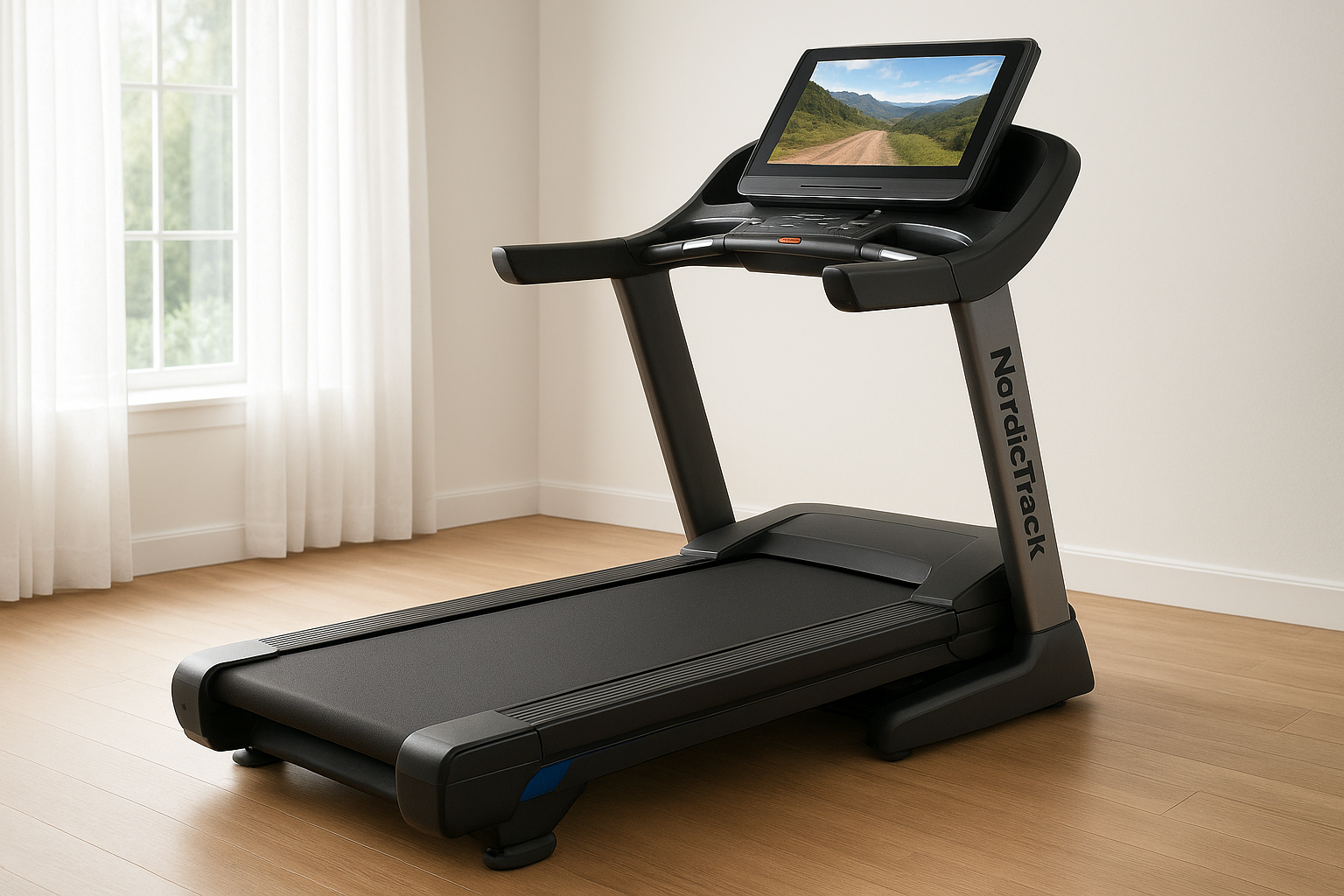
NordicTrack closes out this list with its premium flagship, aimed squarely at runners who want the biggest screen and the most incline range money can buy. The Ultra 1 sits above the Commercial 1750 in NordicTrack’s own lineup, and it’s the model the brand points to when someone asks for the best home treadmill running enthusiasts actually splurge on. It’s still a folding deck, but the motor and incline hardware push closer to commercial territory than anything else NordicTrack sells for residential use.
Key specs
| Spec | NordicTrack Ultra 1 |
|---|---|
| Motor | 4.25 CHP |
| Running surface | 22" x 60" |
| Top speed | 13 mph |
| Incline/decline | -3% to 20% |
| Weight capacity | 350 lbs |
| Connectivity | 30" rotating touchscreen, iFit required for full features |
| Folding | Yes, hydraulic fold |
What makes it stand out
Incline range separates the Ultra 1 from nearly every other treadmill here, topping out at 20% for serious hill simulation alongside a 3% decline for downhill training. Paired with a 4.25 CHP motor and a 13 mph top speed, it’s built to keep pace with sprint work and steep incline walks in the same session. The 30-inch touchscreen rotates for off-treadmill workouts, mirroring the Commercial 1750’s design but scaled up considerably.
A 20% incline range turns a flat treadmill run into genuine hill training, something few home machines can replicate.
Auto-adjusting incline responds to iFit’s global workout routes in real time, so the deck tilts and the belt speeds up without you touching a dial, a feature that appeals to runners who train by terrain rather than a fixed pace chart.
Who it’s for
Runners chasing variety, especially trail runners simulating elevation gain indoors, get the most out of the Ultra 1. It also suits anyone already committed to iFit’s ecosystem who wants the top-tier hardware to match. If you want a best quality treadmill for home use without ongoing subscription costs, this isn’t it, since most of its coaching value locks behind an active membership.
Price and warranty
Expect to pay between $2,999 and $3,499. NordicTrack backs the Ultra 1 with a 10-year frame warranty, 2 years on parts, and 1 year on labor, coverage that lags behind the lifetime frame and multi-year labor terms found on fixed-frame commercial builds earlier in this list.
10. What to look for in a home running treadmill
Before you compare individual models, it helps to know which treadmill specs predict long-term durability after a year of hard use. Shoppers searching for best treadmill brands for home use often get distracted by touchscreen size or app branding, when the real differences show up in the motor, deck, and frame long before the software matters.
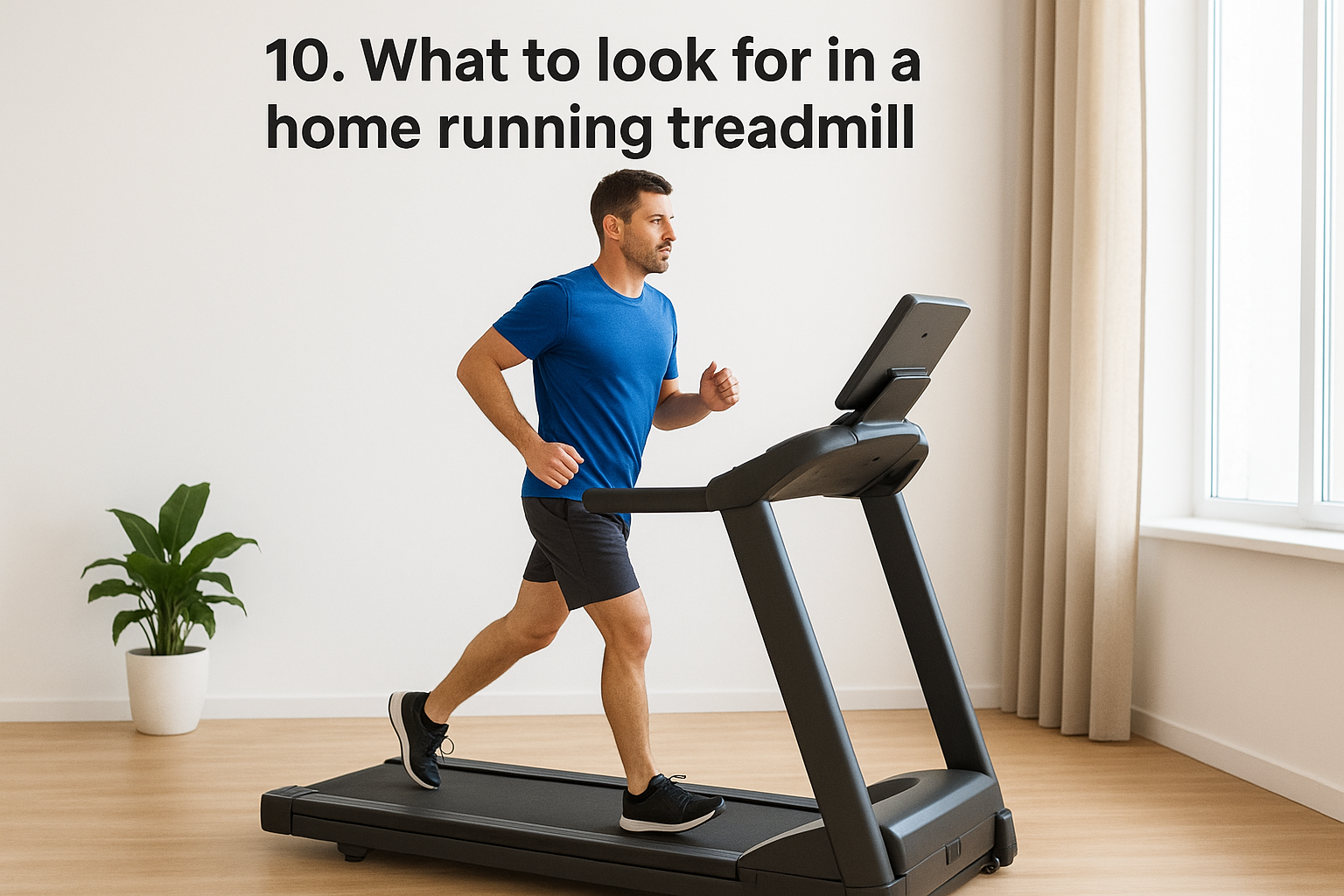
Motor power and belt size
A continuous-duty motor rated at 3.0 CHP or higher is the baseline for regular running, and anything below that struggles once you push past a jog for more than 20 minutes. Belt length matters just as much: aim for at least 60 inches if you’re taller than 5’10" or run with a longer stride, since a short belt forces you to shorten your gait to avoid clipping the rear rail.
| Runner type | Minimum motor | Minimum belt |
|---|---|---|
| Casual jogger, under 15 mi/week | 2.5-3.0 CHP | 55" |
| Regular runner, 15-30 mi/week | 3.0-3.5 CHP | 60" |
| Serious runner, 30+ mi/week or sprint work | 3.5-4.0+ CHP | 60-62" |
Frame construction and warranty
Folding decks save floor space, but fixed commercial frames hold up better under sustained mileage because they don’t rely on a hinge that loosens over time. When comparing warranties, look past the headline "lifetime" claim and read the warranty fine print to see what it actually covers.
A lifetime warranty on the frame means little if parts and labor are only covered for a year.
Favor brands offering at least 5 years on parts and multi-year labor coverage, not just the frame.
Connectivity without subscription lock-in
Many treadmills now tie their best features to a monthly membership, which pushes your real cost of ownership well beyond the sticker price. If you want a good home treadmill for running without ongoing fees, prioritize open Bluetooth or FTMS connectivity that works with apps you already own, rather than a console that goes dark without an active subscription. This single detail separates treadmills built to last from ones designed to keep billing you.
11. Common questions about home running treadmills
Runners shopping across price tiers tend to ask the same handful of questions before committing to a purchase. Here are the ones we hear most often from people trying to figure out which treadmill is good for home use and how to avoid an expensive mistake.
How much should I spend on a treadmill for running?
Budget somewhere between $1,600 and $3,500 if you’re running regularly, since that range covers motors and belts built to handle real mileage rather than occasional walking. Anything cheaper usually means a motor under 3.0 CHP, which shortens the machine’s lifespan once you start logging consistent miles. Spending more than $4,000 only makes sense if you want fixed-frame, commercial-grade construction like our Elite Runner X, or you specifically want a giant touchscreen with trainer-led content baked in.
Do I need a subscription to use a home treadmill?
No, not if you choose a machine with open Bluetooth or FTMS connectivity instead of a locked console. Several treadmills on this list, including the Commercial 1750, Ultra 1, and Carbon TLX, push most of their value behind an iFit membership that costs extra every month. If avoiding recurring fees matters to you, look for FreeSync FTMS Bluetooth or similar open connectivity that pairs with apps you already own.
A treadmill that goes dark without a monthly fee isn’t saving you money, it’s deferring the cost.
Is a folding treadmill durable enough for daily running?
Folding decks work fine for moderate mileage, though whether you can run on a fold-up treadmill long term comes down to the hinge mechanism, one more part that can loosen over years of daily use. Fixed-frame machines like the Elite Runner X and Matrix T75 skip that weak point entirely, which is why gyms rarely use folding equipment on the floor.
What’s the difference between residential and commercial warranties?
Commercial warranties typically cover fewer years since the equipment sees far more daily use, while residential warranties stretch coverage out further for lighter home use. Checking parts and labor terms separately from the frame warranty tells you far more about real coverage than the marketing headline ever will.
Finding the right treadmill for your stride
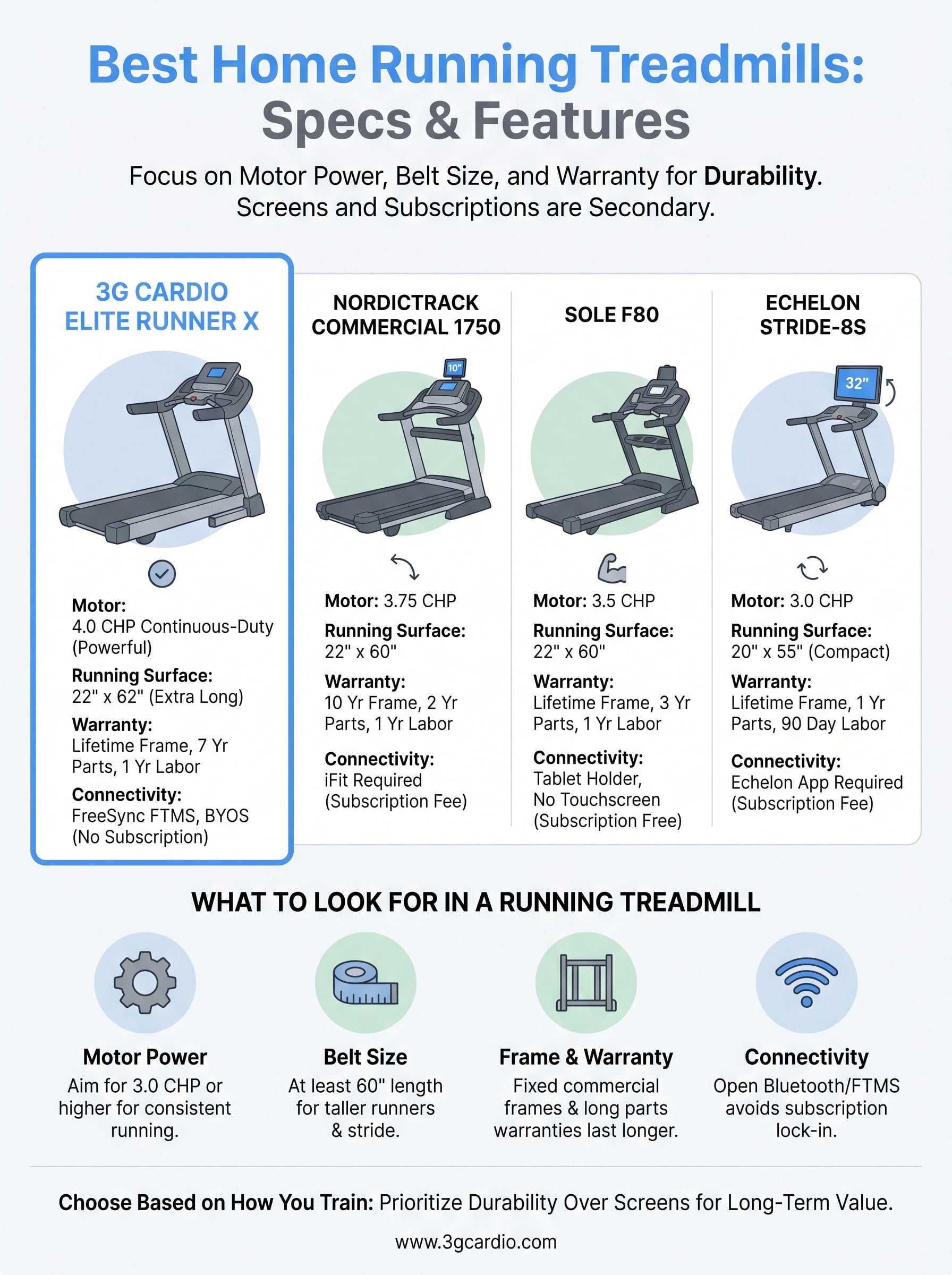
Every treadmill on this list can handle real running, but the right pick comes down to how you actually train. If you log heavy mileage and want a fixed commercial frame that won’t loosen over years of pounding, lean toward the machines built around continuous-duty motors above 3.5 CHP. If floor space matters more than raw horsepower, a folding deck with a solid warranty still gets the job done for moderate weekly runs.
Don’t let a big touchscreen distract you from the motor rating, belt length, and warranty terms underneath it. Those three specs predict how the machine feels in year three far better than any app ever will. If you want that commercial-grade construction without a subscription tied to every feature, see the Elite Runner X treadmill with its 4.0 HP motor and 22-inch cushioned deck and compare it to what you’re currently considering.


Sorry, the comment form is closed at this time.