

15 Aug 7 Best Home Cardio Machines for Weight Loss in 2026
You want to lose weight, and you know cardio works, but every equipment page online just lists specs without telling you what actually burns fat. Finding the best home cardio machine for weight loss means matching a machine to your body, your joints, and how likely you are to actually use it three or four times a week. Skip that step and expensive equipment turns into an overpriced clothes rack in your garage.
The honest answer is that no single machine wins for everyone. A treadmill torches calories fast but hammers your knees over time. A recumbent bike protects your joints while still driving your heart rate up. An elliptical splits the difference. What matters is picking the best cardio machine for weight loss at home based on your fitness level, injury history, and how much space you’re working with.
We build cardio equipment for a living, so this list isn’t guesswork pulled from spec sheets. Below, you’ll find seven machines worth considering, what each one does well, who it fits best, and how to think about calorie burn versus long-term joint health before you spend a dollar on home cardio equipment for weight loss.
1. Treadmills
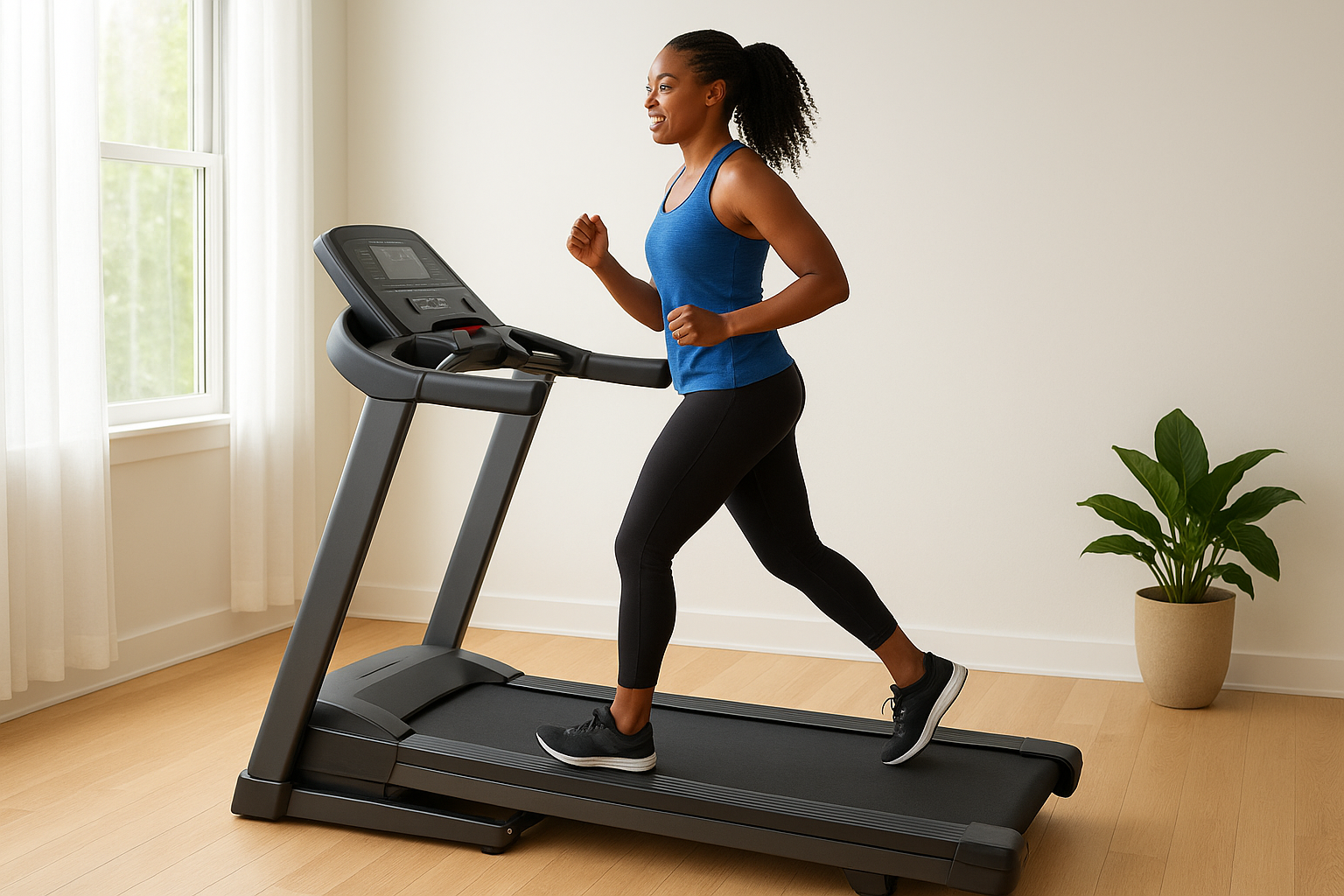
Treadmills remain the default answer when people think about burning calories at home, and for good reason. Walking or running triggers your largest muscle groups (your glutes, quads, and hamstrings) while forcing your heart rate up in a way that’s easy to track and progressively overload. You control the intensity with speed and incline, which makes a treadmill one of the most versatile machines for a best home cardio machine for weight loss search.
How it works for weight loss
A treadmill burns calories through weight-bearing movement, and that impact is actually part of the appeal. Running or walking against gravity recruits more muscle mass per stride than seated cardio, which drives up your metabolic cost. Bumping the incline to 5-10% turns a moderate walk into a serious calorie burn without the joint pounding of running, since incline walking shifts effort to your posterior chain while keeping impact forces lower than jogging on flat ground. A 180-pound person burns roughly 355 calories in 30 minutes walking at 3.5 mph on a 5% incline, compared to about 200 calories walking flat at the same pace, based on standard metabolic equivalent (MET) values from the CDC’s physical activity guidelines.
A treadmill set on incline burns more fat with less joint stress than flat-out running.
Who it’s best for
Treadmills suit people without significant knee, hip, or ankle issues who want the option to walk, jog, or sprint on the same machine. They’re also the right pick if you’re training for an event that involves running, since nothing replicates running mechanics like a treadmill. If you’ve had joint replacements, chronic lower-back pain, or you’re carrying significant extra weight and worried about impact, you’ll want to weigh a treadmill against the lower-impact options later in this list before committing.
What to look for when buying
Cheap treadmills fail at the motor and the deck long before the electronics quit, so buy based on mechanical specs, not touchscreen size, as any honest guide to choosing the right treadmill will tell you. A commercial-grade motor rated at 3.0 CHP or higher, a shock-absorbing deck, and a weight capacity with real margin above your body weight will keep the machine reliable for years of regular use.
| Spec | Minimum for home use | What it does |
|---|---|---|
| Motor | 2.5-3.0+ CHP | Handles running, not just walking |
| Deck cushioning | Multi-zone shock absorption | Reduces joint impact |
| Incline range | 0-10% or higher | Enables fat-burning incline work |
| Belt size | 20" x 55"+ | Fits a full running stride |
| Weight capacity | 300+ lbs | Adds durability margin |
Our flagship Elite Runner X and Pro Runner X treadmills are built around commercial-grade motors and cushioned decks specifically because home treadmills take a beating from daily use, not occasional gym visits. If floor space is tight, the Pro Runner X folding treadmill delivers the same running-ready build in a frame that folds away, and either way you should check for Bluetooth connectivity that works with apps you already use, rather than a proprietary screen you’ll outgrow. Our FreeSync FTMS Bluetooth consoles connect to Kinomap and other third-party apps through Bring Your Own Screen technology, so you’re not locked into hardware that gets outdated or tied to a subscription fee just to unlock basic features.
2. Elliptical trainers
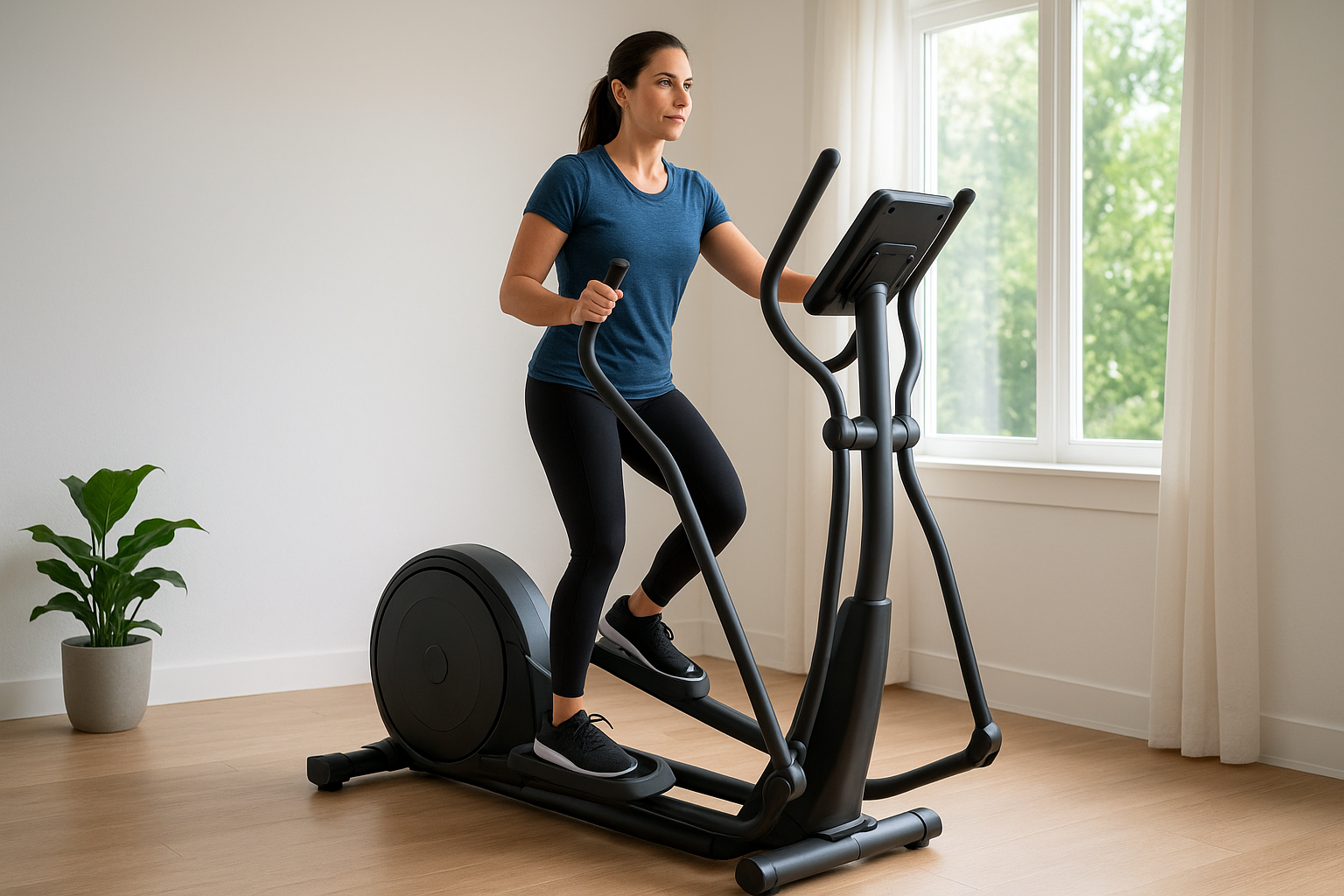
Elliptical trainers give you the calorie burn of a treadmill without the pounding, which is why they show up on almost every list of the best home cardio equipment for weight loss. The pedals move in a fixed oval path, so your feet never leave the footplates, and that single design choice removes the impact forces that wear down knees and hips over years of use.
How it works for weight loss
Moving the pedals through their arc engages your quads, hamstrings, and glutes, and most machines add moving handlebars that pull your arms and back into the effort too. That full-body recruitment pushes your heart rate up fast even at moderate resistance, which matters for weight loss because more muscle mass working means more calories burned per minute. A 180-pound person burns roughly 335 calories in 30 minutes of moderate elliptical work, putting it close to jogging in calorie cost but without the ground-reaction forces a treadmill delivers.
An elliptical delivers near-running calorie burn with zero-impact landing.
Who it’s best for
Ellipticals fit people who want a hard cardio session but have knees, hips, or a lower back that can’t tolerate repeated impact. They also suit anyone recovering from a running injury who still wants to maintain cardiovascular fitness during rehab. If you’re brand new to structured exercise, the fixed foot path also makes balance easier than a treadmill, since you’re not adjusting to a moving belt underfoot.
What to look for when buying
Stride length is the spec that separates a good elliptical from an uncomfortable one when you’re picking an elliptical for home use, and it’s the first thing to check before anything else on the console.
- Adjustable stride length (18-22 inches) so the machine fits your height, not the other way around
- Heavy flywheel weight for smooth, momentum-driven pedaling instead of jerky resistance changes
- Multiple resistance levels to progress intensity as your fitness improves
- Bluetooth or app connectivity that works with apps you already use
Our Elite EM X elliptical with a 3-level adjustable stride uses a commercial-grade drive so the motion stays smooth whether you’re walking pace or pushing a hard interval, with FreeSync FTMS Bluetooth built in for third-party app tracking.
3. Recumbent exercise bikes
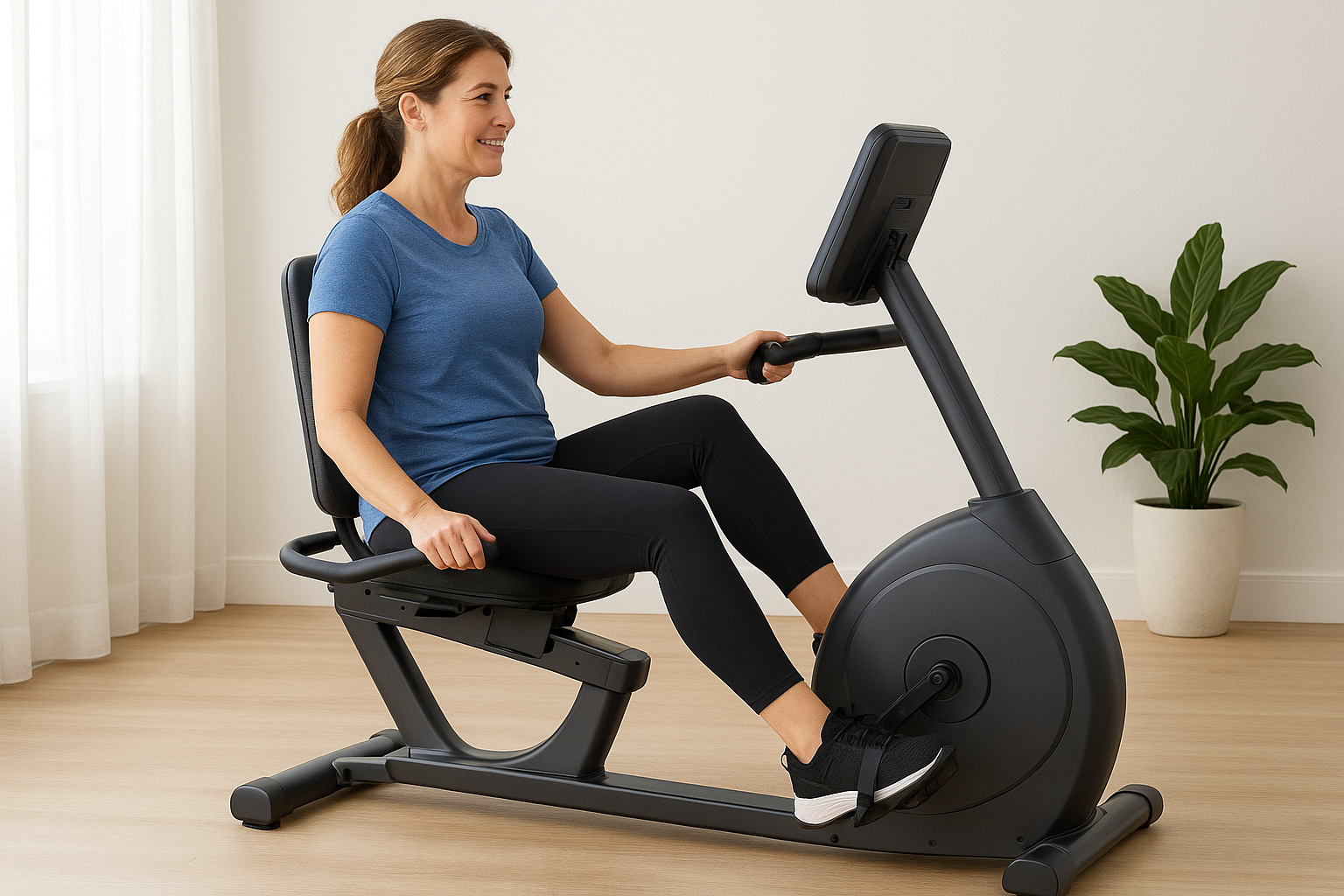
Recumbent bikes put you in a reclined seat with your legs out in front, which takes your spine and hips out of the load path entirely. That seated position is why this machine shows up so often in searches for the best home cardio equipment for weight loss among people who’ve written off cardio because their back or knees can’t handle anything else.
How it works for weight loss
Pedaling against resistance still drives your heart rate up and burns real calories, even though your upper body barely moves. A 180-pound person burns roughly 260-300 calories in 30 minutes of moderate recumbent cycling, a bit lower than a treadmill or elliptical, but that gap closes fast once you factor in consistency. A bike you can ride every day without pain beats a treadmill that flares up your knees after two sessions a week. Bumping resistance level and cadence together turns a recumbent bike into legitimate interval training, not just a low-effort seated workout.
The best cardio machine for weight loss is the one that doesn’t hurt the next morning.
Who it’s best for
The benefits of a recumbent exercise bike suit people managing arthritis, chronic back pain, obesity-related joint stress, or recovery from lower-body surgery. They also work well for older adults and anyone new to exercise who wants a stable seat and back support while building cardio capacity. If you’re already comfortable with high-impact training and looking to maximize calorie burn per minute, an upright bike or treadmill will likely get you there faster.
What to look for when buying
Seat adjustment and resistance range matter more on a recumbent bike than almost any other spec, since comfort determines whether you’ll actually use it daily.
| Feature | Why it matters |
|---|---|
| Adjustable seat with lumbar support | Fits different heights, protects lower back |
| Magnetic resistance, 20+ levels | Smooth, quiet progression as fitness improves |
| Step-through frame | Easier entry and exit for limited mobility |
| Bluetooth heart rate monitoring | Tracks intensity without a chest strap |
Consumer Reports named our Elite RB X recumbent exercise bike the best recumbent exercise bike of 2025, largely because of its commercial-grade frame, wide seat adjustment range, and FreeSync FTMS Bluetooth console that pairs with the same apps you’d use on a treadmill or elliptical, so your training data stays in one place regardless of which machine you’re on that day.
best home cardio machine for weight loss at home
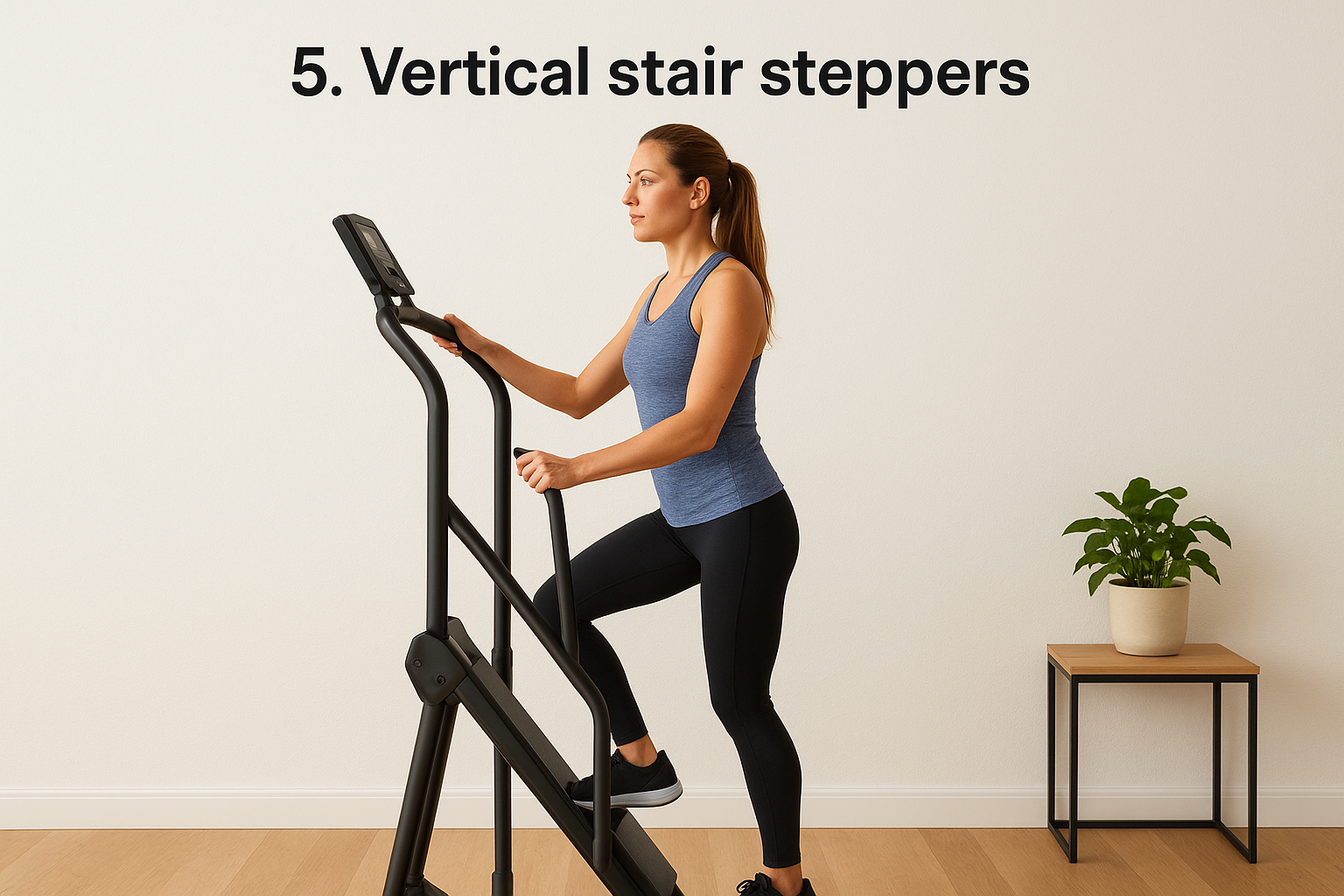
5. Vertical stair steppers
Vertical stair steppers give you a continuous climbing motion, like walking up an endless flight of stairs, and they pack a serious calorie burn into a small footprint. This machine rarely gets mentioned alongside treadmills and bikes, but for anyone chasing the best home cardio machine for weight loss in a compact space, it deserves a look.
How it works for weight loss
Climbing recruits the muscles a stair stepper works (glutes, quads, and calves) harder than flat walking or cycling, since you’re lifting your full body weight against gravity with every step. That extra muscle demand pushes your heart rate up quickly, even at a moderate pace. A 180-pound person burns roughly 340-370 calories in 30 minutes of steady stepping, putting it ahead of recumbent cycling and on par with jogging, but without the repetitive ground impact a treadmill delivers. Holding the side rails lightly instead of leaning on them keeps your core engaged and the calorie burn honest.
Climbing works your glutes harder than any seated machine ever will.
Who it’s best for
Stair steppers suit people who want a serious calorie burn without a large footprint, since most units take up less floor space than a treadmill or elliptical. They also work well for anyone building lower-body strength alongside cardio fitness, since the climbing motion trains glutes and quads more directly than seated equipment. Skip this option if you have significant knee or hip issues, since the constant knee-bend under load can aggravate joints that already struggle with impact.
What to look for when buying
Step depth and resistance consistency separate a stepper worth owning from one that feels flimsy after a few months of daily use.
- Independent pedal action so each leg works through a full range without assistance from the other
- Hydraulic or magnetic resistance for smooth, adjustable intensity
- Compact frame with a small footprint, ideal for apartments or home gyms
- Sturdy side rails for balance without inviting you to lean and cheat the workout
Our commercial-grade Elite VS X climber uses a sturdy frame and smooth independent pedal action, with FreeSync FTMS Bluetooth so you can track climbs the same way you’d track a treadmill or bike session.
6. Upright exercise bikes
Upright exercise bikes, compared with spin bikes, put you in a traditional cycling position, leaning forward slightly with your core engaged, closer to riding a road bike than lounging in a recliner. This posture asks more of your stabilizer muscles than a recumbent bike, and that extra engagement is part of why upright bikes stay popular with anyone comparing the best home cardio equipment for weight loss who already has decent core strength and balance.
How it works for weight loss
Pedaling from an upright position recruits your quads, hamstrings, and glutes the same way a recumbent bike does, but your core and lower back also work to keep you stable through every rotation. That added muscle recruitment nudges calorie burn slightly above recumbent numbers. A 180-pound person burns roughly 300-330 calories in 30 minutes of moderate upright cycling, and pushing into standing intervals on the pedals bumps that number further by adding upper-body sway and extra leg drive.
Standing intervals on an upright bike turn a steady ride into real interval training.
Who it’s best for
Riders who already cycle outdoors, or anyone who wants a compact machine that mimics road bike mechanics, gravitate toward upright bikes like the Elite UB X. They also suit people with decent joint health who find recumbent seating too passive but still want to avoid the impact of running. If balance is a concern, or you’re managing lower-back pain, a recumbent bike will serve you better than an upright frame.
What to look for when buying
Saddle comfort makes or breaks whether you’ll actually use an upright bike past week two, so don’t skip past this spec chasing a lower price tag.
- Adjustable seat height and horizontal position to match your leg length and torso
- Magnetic resistance with 16+ levels for smooth, quiet progression
- Wide, cushioned saddle or compatibility with aftermarket seat covers
- Bluetooth console that connects to the fitness apps you already use, not a proprietary screen
A sturdy frame with a low center of gravity keeps the ride stable during standing intervals, which matters more on an upright bike than almost any other cardio machine on this list.
7. Compact cardio equipment for small spaces
Not everyone has a spare bedroom for a full-size treadmill or elliptical, and that shouldn’t stop you from losing weight at home. Compact cardio equipment for small spaces, think folding treadmills, mini steppers, and under-desk pedal bikes, gives apartment dwellers and small-home owners a real path to the best cardio machine for weight loss at home without sacrificing a living room to exercise gear.
How it works for weight loss
Compact machines burn calories through the same basic mechanisms as their full-size counterparts: repeated muscle contraction against resistance, sustained over enough time to raise your heart rate into a fat-burning zone. A folding treadmill still delivers incline walking. A mini stepper still loads your glutes and quads with every push. The tradeoff usually comes in motor size and stride range rather than the exercise physiology itself, so a 180-pound person doing 30 minutes of brisk stepping on a compact unit still burns somewhere in the 250-300 calorie range, close to a full-size machine at the same intensity.
A smaller footprint doesn’t mean a smaller calorie burn if you keep the intensity honest.
Who it’s best for
Renters, apartment residents, and anyone furnishing a small home office corner benefit most from compact equipment. It also suits beginners who want to test whether they’ll stick with a home cardio habit before investing in a commercial-grade machine with a bigger price tag and a bigger floor plan.
What to look for when buying
Compact fitness equipment that actually works doesn’t have to mean flimsy, but you need to check the fine print before buying.
- Weight capacity and frame stability, since lighter frames flex under load and shorten the machine’s lifespan
- Folding mechanism quality, so it locks securely instead of collapsing mid-workout
- Motor or resistance strength, since undersized motors bog down on incline or higher resistance settings
- Storage wheels and footprint dimensions, measured against your actual available space
If you outgrow a compact unit’s limits, our full lineup of Elite cardio machines still fits most home gyms while giving you commercial-grade durability the smallest units can’t match.
8. How to choose the right cardio machine for your goals
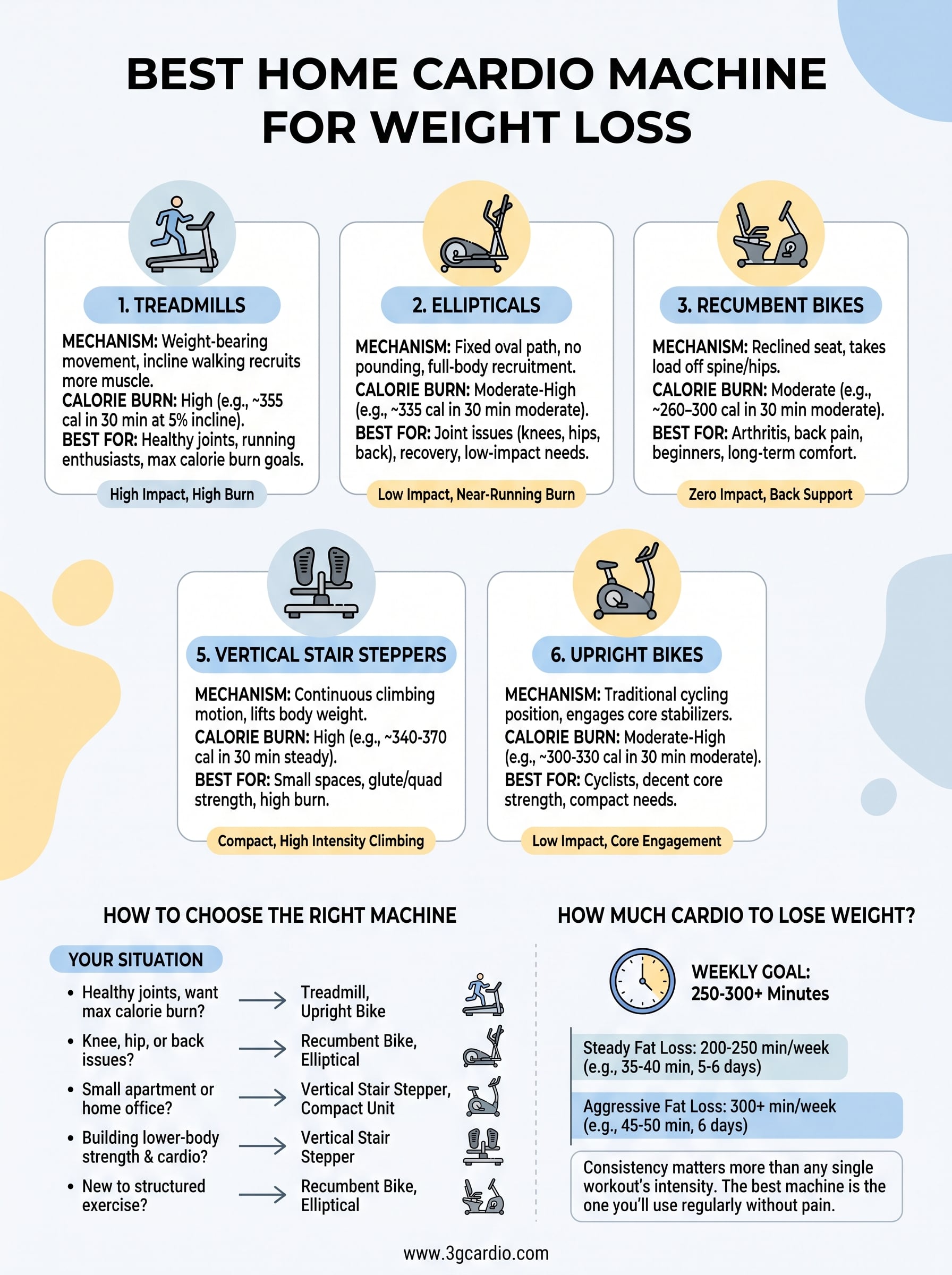
Picking the best home cardio machine for weight loss starts with an honest look at your joints, not your Pinterest board. If you’ve got healthy knees and hips and enjoy the feeling of running, a treadmill will burn calories fast and keep you motivated. If your joints ache after a flight of stairs, a joint-friendly cardio machine like a recumbent bike or elliptical protects you while still driving your heart rate up. Match the machine to your body first, and the calorie-burn numbers will take care of themselves because you’ll actually show up for the workout.
The machine that fits your joints beats the machine with the highest calorie count on paper.
Space and budget narrow the list further. A full-size treadmill needs real floor space and a bigger price tag, while a stepper or recumbent bike fits into a corner of a bedroom or home office. Think through where the machine will actually live day to day when you plan your home gym setup, not where it looks good in a showroom, since equipment shoved in a closet after week three does nothing for your weight loss goals.
Use this quick filter to narrow things down:
| Your situation | Best-fit machine |
|---|---|
| Healthy joints, want max calorie burn | Treadmill or upright bike |
| Knee, hip, or back issues | Recumbent bike or elliptical |
| Small apartment or home office | Vertical stair stepper or compact unit |
| Building lower-body strength alongside cardio | Vertical stair stepper |
| New to structured exercise | Recumbent bike or elliptical |
Goals matter as much as joints. Someone training for a 5K needs treadmill mileage that a recumbent bike can’t replicate, while someone rehabbing a knee surgery needs the zero-impact motion an elliptical or bike provides. Weigh what you’re training toward, not just what burns the most calories per hour, since a machine that fits your actual goal keeps you consistent longer than one chosen purely off a calorie chart. Consistency, more than any single spec, is what turns home cardio equipment for weight loss into results you can see in the mirror three months from now.
Finally, don’t ignore connectivity if you already use a fitness app to track workouts. A machine with Bluetooth that pairs with the app on your phone removes one more excuse to skip a session.
9. How much cardio you actually need to lose weight
Most health guidelines point to 150-300 minutes of moderate cardio per week, based on the CDC’s Physical Activity Guidelines for Americans, but that range covers general health, not necessarily fat loss. If you’re using a best home cardio machine for weight loss to actually shed pounds, plan on the higher end of that range, closer to 250-300 minutes a week, split across how many days of cardio you need to lose weight, typically 5, rather than crammed into two long sessions.
Reaching a real calorie deficit takes more math than most people expect, and what the science says about cardio and belly fat makes the same point. One pound of fat equals roughly 3,500 calories, so burning 300 calories a day on a treadmill or recumbent bike gets you to that deficit in about 12 days, assuming your diet stays steady rather than compensating with extra snacking after a hard workout.
Cardio creates the deficit, but your fork decides whether that deficit actually shows up on the scale.
Consistency matters more than any single workout’s intensity, since your body adapts to steady moderate effort just as well as sporadic hard sessions, and steady effort is easier to sustain for months. A simple weekly structure, built around how long each cardio session should be, keeps the math working in your favor without burning you out:
| Weekly goal | Minutes per week | Session length |
|---|---|---|
| Maintain fitness | 150 minutes | 30 min, 5 days |
| Steady fat loss | 200-250 minutes | 35-40 min, 5-6 days |
| Aggressive fat loss | 300+ minutes | 45-50 min, 6 days |
Mixing intensity across the week also helps. Two or three moderate sessions on a recumbent bike or elliptical, paired with one or two harder interval sessions on a treadmill or stair stepper, burns more total calories than the same minutes at one flat pace, and it keeps your joints from taking the same repetitive load every single day. Skipping a day here and there won’t sink your progress as long as the weekly total stays in range, so build the schedule around a routine you can actually repeat for months, not just the week you feel motivated.
Building a cardio routine you’ll stick with
The best home cardio machine for weight loss is the one sitting in your house that you’ll actually use, not the one with the flashiest console at the gym. Treadmills and steppers burn calories fast but demand healthy joints. Recumbent bikes and ellipticals trade a bit of intensity for a machine you can use every single day without pain. Pick based on your body first, your space and budget second, and the calorie math sorts itself out over weeks of consistent effort.
Start with one machine, hit your weekly minutes, and let your app track the trend instead of obsessing over one workout. Whichever machine you land on, buy something built to survive daily use for years, not months. If you want equipment that connects to the fitness apps you already use with zero subscription fees, browse our cardio machines with FreeSync FTMS Bluetooth and no subscription fees and find the one that fits your goals.




Sorry, the comment form is closed at this time.