
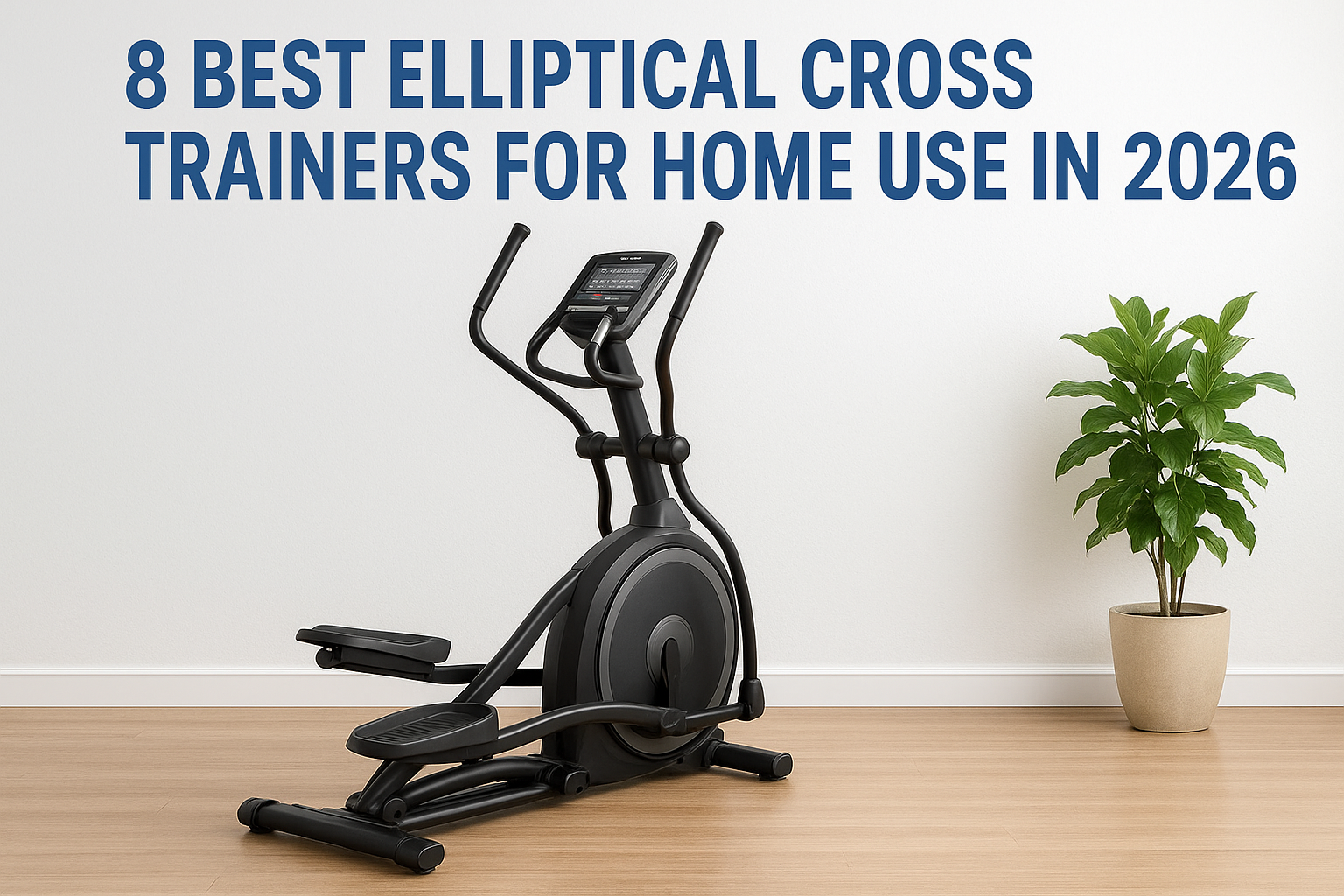
13 Sep 8 Best Elliptical Cross Trainers for Home Use in 2026
Shopping for the best elliptical cross trainer for home use gets confusing fast. Every brand claims commercial quality, every listing looks the same, and the price range runs from a few hundred dollars to well over four thousand. Meanwhile, your knees or hips need a low impact workout that won’t fall apart after six months of regular use.
Here’s the short answer: the best home ellipticals in 2026 combine heavy-duty steel frames, smooth magnetic resistance, and real connectivity without locking you into a subscription just to see your workout stats. We tested stride length, console durability, Bluetooth app pairing, and how each machine holds up under daily use, not just a showroom demo.
Below you’ll find eight machines worth your money this year, ranked by build quality, resistance range, and total value rather than marketing hype, and you can compare them against our wider roundup of elliptical trainers we’ve put through home testing. We’ll walk through warranty coverage, adjustable stride options, and who each model actually fits, whether you’re a serious cardio trainer or just getting back into a routine. By the end, you’ll know exactly which elliptical belongs in your home gym.
1. 3G Cardio Elite EM X: best overall home elliptical
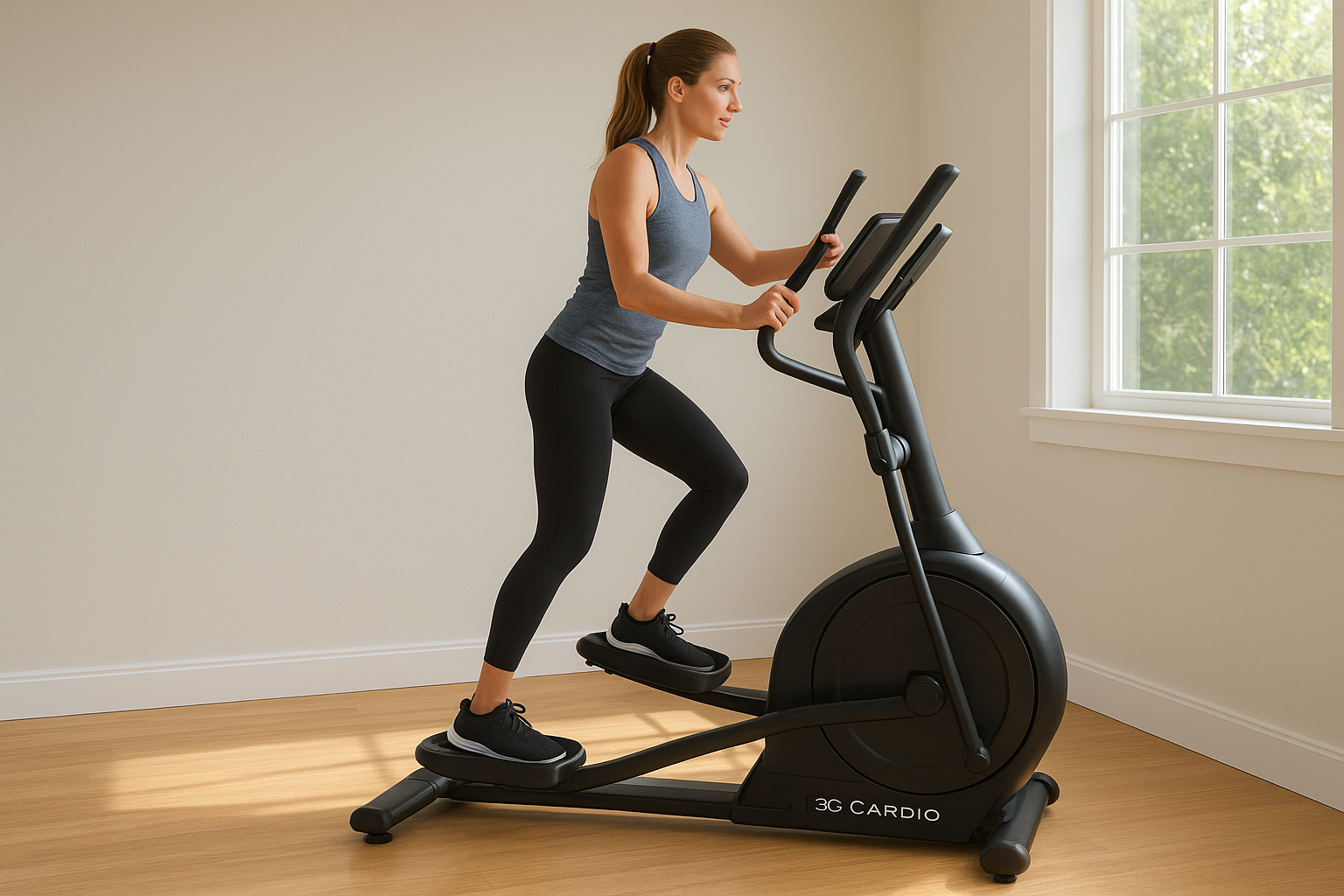
The 3G Cardio Elite EM X tops this list because it does what most home ellipticals don’t: it feels like commercial gym equipment without the commercial gym price tag or the subscription strings attached. Built on the same engineering philosophy 3G Cardio uses across its treadmill and bike lines, this machine skips gimmicky touchscreens in favor of a heavier frame, smoother resistance, and a stride that actually adapts to your body. If you’ve used a flimsy big-box elliptical that rattled after a month, this is the corrective.
Key features
What separates the Elite EM X from the crowded field of home ellipticals is how it handles the two things that actually matter: motion quality and durability. The console runs on FreeSync FTMS Bluetooth, part of a lineup of cardio machines that connect to apps without a subscription, and it pairs directly with apps like Kinomap, Zwift, and other FTMS-compatible platforms without forcing you into a proprietary ecosystem or a monthly fee. A built-in tablet shelf and USB charging port mean you can stream a show or a coached workout without balancing your phone on the handlebar.
- Adjustable stride length so both shorter and taller users get a natural gait
- 20 levels of electromagnetic resistance for a smooth, quiet workout curve
- Wireless heart rate strap included, not sold as an add-on
- Oversized, cushioned pedals that reduce joint strain during long sessions
- Commercial-grade steel frame rated well above typical residential ellipticals
A home elliptical only earns its price tag if it still feels solid after a thousand miles, and that’s exactly where the Elite EM X separates itself from the pack.
Specs at a glance
| Spec | Details |
|---|---|
| Resistance type | Electromagnetic, 20 levels |
| Stride length | Adjustable |
| Console | FreeSync FTMS Bluetooth |
| Max user weight | 350 lbs |
| Heart rate monitoring | Wireless chest strap included |
| Connectivity | Kinomap and other FTMS apps (BYOS) |
| Frame warranty | Lifetime |
Who it’s best for
This machine suits serious home fitness users who want a low-impact cardio option that can replace a gym membership rather than supplement one. If you’re recovering from a running injury, managing arthritis, or just tired of pounding pavement, the adjustable stride and smooth magnetic resistance let you dial in a workout that matches your joints, not just your goals. It also fits households with more than one user, since the stride and resistance adjustments accommodate a wide range of heights and fitness levels without needing a second machine.
Small commercial spaces, like apartment gyms, physical therapy offices, or boutique studios, also do well with the Elite EM X. The frame is rated for heavier daily use than typical residential ellipticals, so it holds up when multiple people cycle through it every day instead of just one household using it a few times a week.
Price and warranty
The Elite EM X lands in the same investment range as other commercial-quality home ellipticals, and you can check current pricing directly on the 3G Cardio Elite EM X product page. What justifies the cost is the warranty structure behind it: a lifetime frame warranty, seven years on parts, and one year of labor coverage on the residential plan, with separate commercial warranty terms available if you’re outfitting a studio or office gym.
You also get 6 months of 0% financing through PayPal Credit if you’d rather spread out the payment, plus free curbside delivery or optional White Glove delivery and installation if you don’t want to assemble it yourself. 3G Cardio backs the purchase with a price match guarantee within six months, so you’re not left wondering if you overpaid. Between the build quality, the warranty, and the direct customer support from the company’s co-owners, the Elite EM X earns its spot as the best overall elliptical for home use in 2026.
2. Sole E25: best for knee pain and joint comfort
The Sole E25 built its reputation on one thing: a stride path so smooth that people with bad knees actually keep using it. Sole increased the flywheel weight and lengthened the stride arm compared to earlier E-series models, which cuts down on the jarring feel some ellipticals produce at the top and bottom of each stride. If your main goal is cardio without knee pain, this machine earns its spot on the list for that reason alone.
Key features
Sole engineered the E25 around a 20-inch stride length and a self-adjusting, oversized pedal design that lets your foot rest naturally instead of forcing an unnatural angle. A 10-inch backlit console displays your stats without the clutter of a touchscreen you’ll never fully use, and Bluetooth connectivity syncs workout data to the Sole Fitness app.
- 20-inch stride length with a self-adjusting incline
- Oversized pedals with a slight cushion for reduced joint impact
- 20 levels of magnetic resistance
- Bluetooth heart rate monitoring compatible with chest straps
- Transport wheels for easier repositioning
Joint comfort on an elliptical comes down to stride length and pedal design more than any digital feature, and that’s exactly where the E25 focuses its engineering.
Specs at a glance
| Spec | Details |
|---|---|
| Resistance type | Magnetic, 20 levels |
| Stride length | 20 inches |
| Console | Backlit LCD with Bluetooth |
| Max user weight | 375 lbs |
| Flywheel weight | 25 lbs |
| Warranty | Lifetime frame, 5-year parts, 2-year labor |
Who it’s best for
Older adults, arthritis sufferers, and anyone recovering from a lower-body injury will notice the difference the longer stride and cushioned pedals make within the first few sessions, which is why the E25 shows up alongside other cardio machines built for sore knees and hips. Runners nursing shin splints or knee inflammation also gravitate toward the E25 as a low-impact substitute that still delivers a real cardio load, since the resistance range goes high enough to challenge fitter users too.
Price and warranty
Pricing typically lands in the low-to-mid $1,000s, putting it below most commercial-style ellipticals but above true budget models. Sole backs the E25 with a lifetime frame warranty, five years on parts, and two years of in-home labor, which is solid coverage for the price point even if it falls short of the lifetime parts warranties you’ll find on higher-end residential machines.
3. NordicTrack AirGlide 14i: best for streaming workouts
The NordicTrack AirGlide 14i targets a specific buyer: someone who wants their elliptical to double as an on-demand fitness studio. NordicTrack built this machine around a large touchscreen and its iFit content library, so if you already like coached workouts with instructors calling out resistance changes, this is the closest thing to a boutique studio class you’ll get on a home elliptical machine reviews list. It’s a different philosophy than a stripped-down, subscription-free machine, and it’s worth understanding that trade-off before you buy.
Key features
A 14-inch rotating HD touchscreen anchors the console, and it swivels so you can use it for off-machine workouts too, like floor stretching or strength routines. AirGlide’s automatic incline and resistance adjustments respond to the trainer on screen, so you’re not manually turning a dial mid-workout.
- 14-inch rotating touchscreen with iFit compatibility
- Automatic incline adjustment up to 20 percent
- 26-inch stride length for a longer, more natural gait
- SpaceSaver design that folds up for storage
- Bluetooth heart rate strap compatibility
Streaming workouts only add value if the resistance actually adjusts with the trainer, and that automation is what makes the AirGlide 14i stand out from screen-only competitors.
Specs at a glance
| Spec | Details |
|---|---|
| Resistance type | Digital, auto-adjusting |
| Stride length | 26 inches |
| Console | 14-inch rotating touchscreen |
| Max user weight | 375 lbs |
| Incline range | 0-20 percent |
| Subscription | iFit membership required for full features |
Who it’s best for
This machine suits people who genuinely enjoy guided cardio workouts and don’t mind paying a recurring fee to unlock the full experience. If you thrive on structure, like a coach counting down intervals, and want scenery-based rides through the incline feature, the AirGlide 14i keeps you engaged in ways a blank console never will. It’s less appealing if you specifically want to avoid subscription costs, since most of the machine’s value sits behind the iFit paywall.
Price and warranty
Expect to pay in the mid-$2,000 range before factoring in the ongoing iFit membership, which runs as a monthly or annual fee on top of the hardware cost. NordicTrack’s warranty covers ten years on the frame, two years on parts, and one year of labor, coverage that’s respectable but shorter than the lifetime frame and parts terms you’ll find on subscription-free machines built for long-term durability.
4. Bowflex Max Trainer M6: best for small spaces
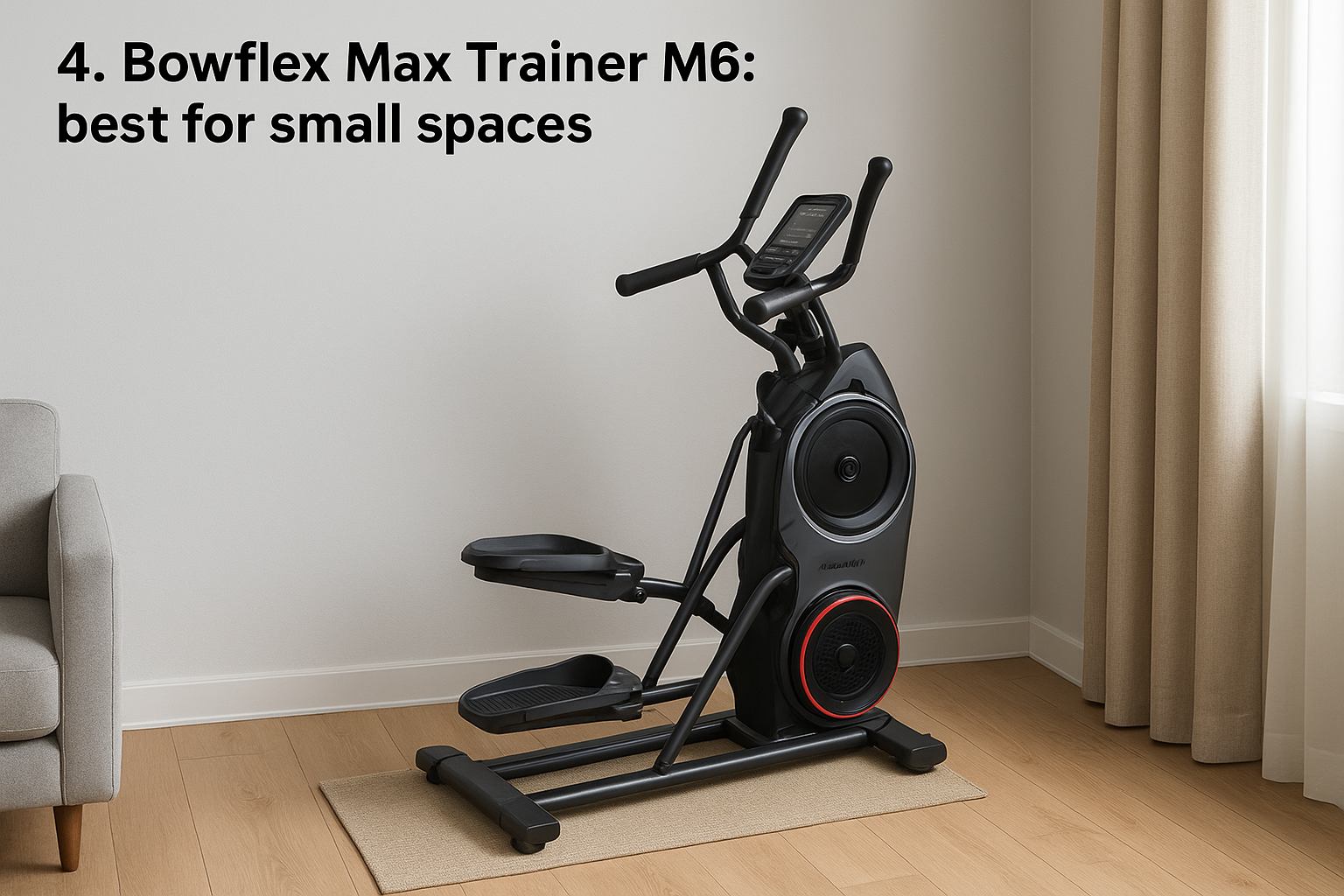
The Bowflex Max Trainer M6 isn’t a traditional elliptical at all. It blends a stepper motion with elliptical-style arm handles into a compact footprint that fits in a corner most other machines couldn’t touch. If your home gym is really just a spare corner of the living room, the M6 solves a real problem, the same one every piece of cardio gear designed for a small room has to answer: it delivers a genuine cardio workout without eating up the floor space a 26-inch stride machine demands.
Key features
Bowflex built the M6 around short, quick strides instead of the long gliding motion you get on a true elliptical, which is what lets the footprint stay so small. The Max Interval Training programs push you through structured high-intensity intervals, and the console tracks Burn Rate, a metric Bowflex uses to compare your calorie burn against other users of similar age and weight.
- Compact footprint that fits small rooms or apartments
- 16 resistance levels adjusted with simple up/down buttons
- JRNY app compatibility for guided workouts and progress tracking
- Bluetooth connectivity for heart rate straps and fitness apps
- Two-year frame warranty backed by Bowflex’s parts coverage
Small-space cardio machines only work if the workout intensity holds up, and the M6 proves a compact footprint doesn’t have to mean a watered-down session.
Specs at a glance
| Spec | Details |
|---|---|
| Motion type | Stepper/elliptical hybrid |
| Footprint | Compact, roughly 4 ft by 2.5 ft |
| Resistance type | Magnetic, 16 levels |
| Console | LCD with Bluetooth |
| Max user weight | 300 lbs |
| App support | JRNY (subscription optional) |
| Warranty | 2-year frame, 90-day parts and labor |
Who it’s best for
Renters, apartment dwellers, and anyone short on square footage will get the most value from the M6, especially if the alternative is skipping cardio entirely because a full-size elliptical won’t fit. It also suits people who want short, intense workouts rather than long steady-state sessions, since the machine’s interval programming is built around 14-minute HIIT-style routines rather than a 45-minute cardio grind. Just know going in that the stride feels shorter and choppier than a standard elliptical, so if joint comfort is your top priority, this isn’t the pick.
Price and warranty
The M6 typically sells in the $1,000 to $1,300 range, making it one of the more affordable machines on this list. Bowflex covers it with a two-year frame warranty and just 90 days on parts and labor, noticeably shorter than the lifetime frame and multi-year parts coverage you’ll find on machines like the Elite EM X or Sole E25. Factor that shorter warranty window into the price when you’re comparing total value, not just the sticker cost.
5. Horizon EX-59: best for elliptical beginners
The Horizon EX-59 works well if you’ve never owned an elliptical and don’t want to spend your first month figuring out a complicated console. Horizon designed this machine around simplicity: a clear step-on motion, an easy-to-read display, and preset programs that walk new users through a full workout without any guesswork. If you’re shopping for a best rated home elliptical machine that won’t intimidate a first-time buyer, this is the one to test first.
Key features
Horizon focused the EX-59 on approachable ergonomics rather than flashy extras. A 20-inch stride length suits most heights without adjustment, and the console groups its buttons logically instead of burying settings in submenus. Bluetooth connects to the Horizon Fitness app so beginners can track progress without juggling a second device.
- 20-inch stride length suited to a wide range of user heights
- 20 resistance levels with a simple dial-style adjustment
- Bluetooth connectivity to the Horizon Fitness app
- Built-in speakers and USB charging port
- Folding frame that saves space between workouts
A beginner-friendly elliptical succeeds when the first ten minutes feel intuitive, not when the spec sheet looks impressive.
Specs at a glance
| Spec | Details |
|---|---|
| Resistance type | Magnetic, 20 levels |
| Stride length | 20 inches |
| Console | Backlit LCD with Bluetooth |
| Max user weight | 350 lbs |
| Frame design | Folding, space-saving |
| Warranty | Lifetime frame, 3-year parts, 1-year labor |
Who it’s best for
Newcomers to cardio equipment, people returning to exercise after a long break, and households with limited storage space all fit the EX-59’s target buyer profile. The folding elliptical design matters here since beginners often start cautiously and appreciate being able to tuck the machine away between sessions rather than committing floor space permanently. It’s also a reasonable pick for a shared household gym where one person is experienced and another is just starting out, since the resistance range stretches from very light to moderately challenging.
Price and warranty
Expect to pay somewhere in the $700 to $900 range, which places the EX-59 solidly in entry-level territory without feeling like a toy. Horizon backs it with a lifetime frame warranty, three years on parts, and one year of labor, coverage that beats budget imports but still trails the parts warranty you’d get on a higher-tier machine like the Elite EM X. For a first elliptical, that trade-off between price and long-term coverage makes sense, especially if you’re still deciding whether elliptical training is a habit that sticks.
6. Sunny Health & Fitness Magnetic Elliptical: best budget pick
The Sunny Health & Fitness Magnetic Elliptical exists for one reason: to get you moving without spending a month’s rent on cardio equipment. Sunny strips away the touchscreens, the app ecosystems, and most of the electronics you’d find on pricier machines, leaving a straightforward magnetic elliptical that does the basics well. If you’re testing whether you’ll actually stick with elliptical workouts before committing real money, this is where you start, and it’s worth seeing how it stacks up against other low-cost ellipticals for a home gym.
Key features
Sunny built this machine around simplicity and a low price point rather than any standout technology. The console runs on batteries and displays the essentials, time, distance, calories, without Bluetooth or app syncing. Eight levels of magnetic resistance give you enough range to build a light sweat, though serious athletes will hit the ceiling quickly.
- Eight levels of manual magnetic resistance
- Basic LCD console tracking time, speed, distance, and calories
- Compact frame that fits in small apartments or spare rooms
- Transport wheels for easy repositioning
- Budget-friendly price point under $300
A budget elliptical only earns its keep if it survives daily use, and Sunny’s steel frame does that without pretending to be something it’s not.
Specs at a glance
| Spec | Details |
|---|---|
| Resistance type | Magnetic, 8 levels |
| Stride length | 13 inches |
| Console | Basic battery-powered LCD |
| Max user weight | 220 lbs |
| Connectivity | None |
| Warranty | 90 days to 1 year, varies by retailer |
Who it’s best for
First-time buyers, casual exercisers, and anyone furnishing a guest room gym on a tight budget will get the most out of this machine. Shoppers searching for home elliptical trainer reviews that skew toward affordability rather than commercial-grade construction land here for good reason. Taller users or anyone over 220 pounds should look elsewhere, since the shorter 13-inch stride and lighter frame weren’t built for heavier daily loads or long-legged strides. It also suits people who just want light movement during a TV show rather than a structured, high-intensity cardio program.
Price and warranty
Most retailers price this elliptical under $300, making it one of the cheapest machines on this list by a wide margin. Warranty coverage varies depending on where you buy it, but expect somewhere between 90 days and one year on parts, with little to no labor coverage included. That’s a fair trade for the price, but it also means you’re accepting more risk if something breaks down the road. Treat this machine as a starter option rather than a long-term investment, and budget for an upgrade once you know elliptical training is a habit worth keeping.
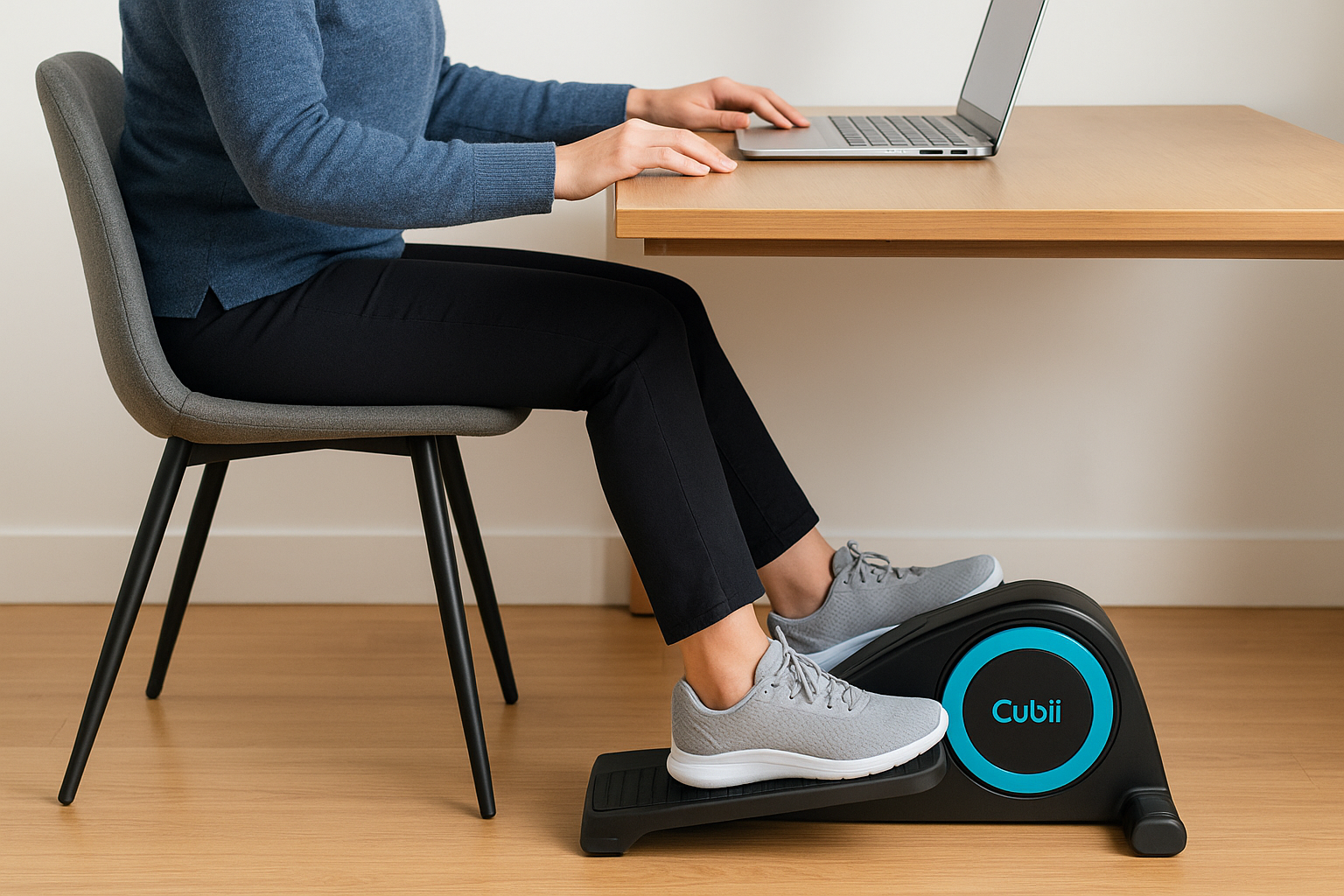
7. Cubii Move: best under-desk elliptical
The Cubii Move isn’t trying to replace your gym elliptical, and that’s exactly the point. Cubii built this compact elliptical you can move room to room to slide under a desk, a couch, or a coffee table so you can pedal while you work, watch TV, or take a call. If your biggest obstacle to daily movement is a desk job that keeps you seated for eight hours straight, this is the machine that fits into that reality instead of asking you to carve out gym time you don’t have.
Key features
Cubii ditched arm handles and a tall console entirely, since the Move is designed to sit low and quiet beneath furniture. Eight levels of magnetic resistance let you go from a light fidget-level pedal to a real leg workout, and the companion app tracks steps, distance, and calories over time.
- Whisper-quiet magnetic resistance for office and living room use
- Bluetooth syncing to the Cubii app and select fitness platforms
- Compact, low-profile frame built to fit under most desks
- Battery-powered display showing time, distance, and calories
- Lightweight design with carry handle for easy repositioning
A desk elliptical earns its keep by disappearing into your day, not by demanding a dedicated workout session.
Specs at a glance
| Spec | Details |
|---|---|
| Resistance type | Magnetic, 8 levels |
| Footprint | Low-profile, under-desk design |
| Console | Battery-powered LCD with Bluetooth |
| Max user weight | 300 lbs |
| Connectivity | Cubii app |
| Warranty | 1-year limited |
Who it’s best for
Remote workers, office employees, and anyone with a desk-bound job will get the most value here, since the Move turns idle sitting time into low-level cardio without interrupting a meeting or a workday. Older adults working on maintaining mobility also gravitate toward it, since the seated, low-impact motion is gentle enough for daily use without straining knees or hips. Just don’t expect this to substitute for a full elliptical workout. It’s built for accumulated movement over hours, not a 30-minute sweat session, so pair it with a full-size machine like the Elite EM X if serious cardio training is your actual goal.
Price and warranty
Pricing typically falls between $300 and $400, positioning it as an accessible add-on rather than a primary cardio machine. Cubii backs the Move with a one-year limited warranty, coverage that matches its role as a supplemental device rather than a heavy-duty daily driver. Given the price and purpose, that warranty length is reasonable, but don’t mistake this for equipment built to withstand years of intense training.
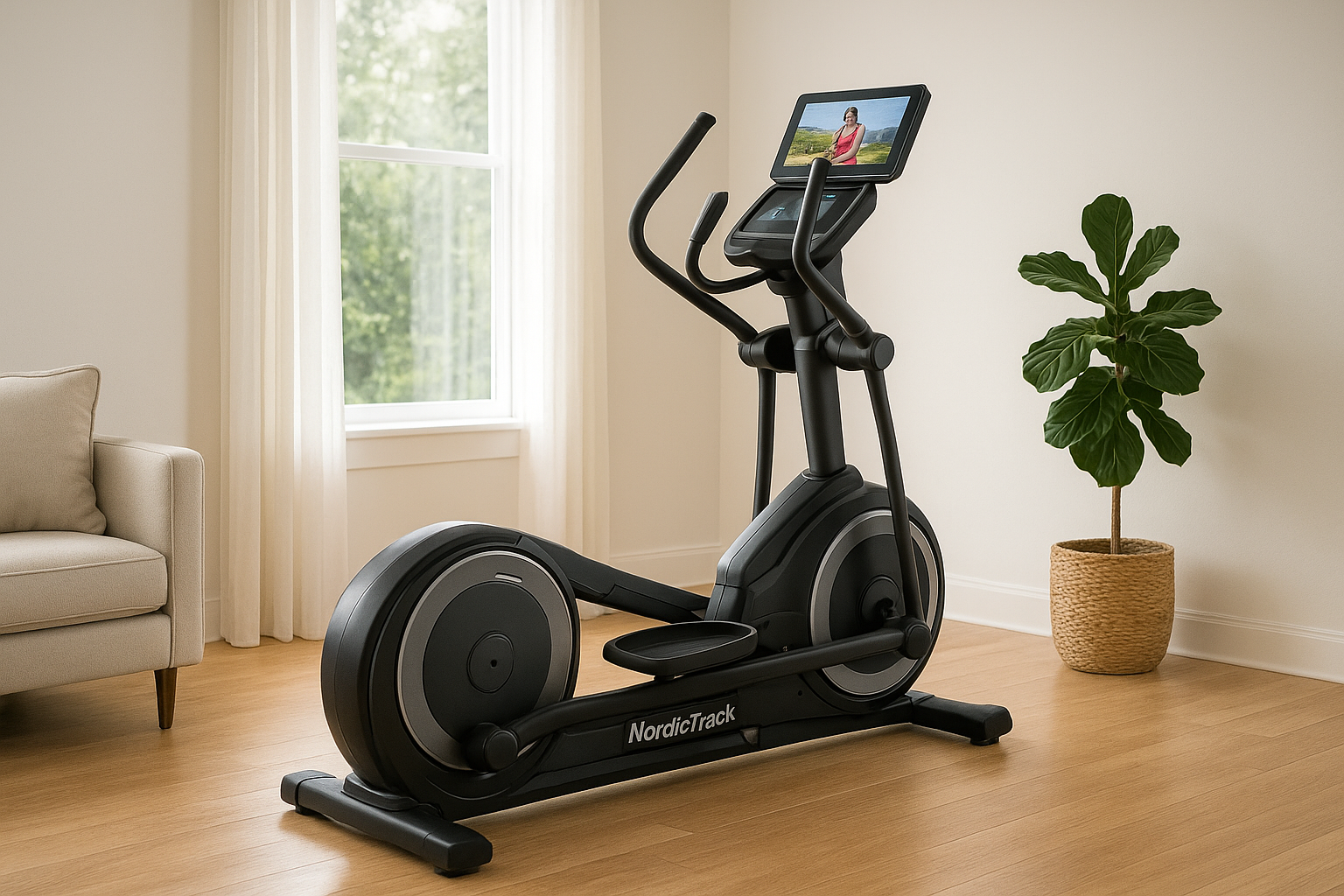
8. NordicTrack X16: best heavy-duty elliptical
The NordicTrack X16 is built for one type of buyer: someone who wants incline range and heavy-duty construction that rivals what you’d find at a physical therapy clinic or a serious training facility. This isn’t a machine you tuck into a corner. It’s a large-footprint elliptical designed to handle steep incline changes, higher user weights, and daily use without flexing under load. If you’ve read through in home elliptical machine reviews looking for the closest thing to commercial-grade incline training, the X16 is usually the answer.
Key features
NordicTrack engineered the X16 around a massive incline range and a 16-inch touchscreen that pivots for off-elliptical workouts. The frame carries a heavier gauge steel construction than most consumer ellipticals, which is what lets it support the incline swings without wobbling mid-stride.
- Incline range up to 20 percent for real hill-climbing resistance
- 16-inch rotating HD touchscreen with iFit compatibility
- 24-inch adjustable stride length
- Heavy-duty steel frame rated for higher daily use
- Bluetooth heart rate strap compatibility
Incline range separates a heavy-duty elliptical from a standard one, and the X16’s 20 percent swing is what earns it a spot among serious training machines.
Specs at a glance
| Spec | Details |
|---|---|
| Resistance type | Digital, auto-adjusting |
| Incline range | 0-20 percent |
| Stride length | 24 inches, adjustable |
| Console | 16-inch rotating touchscreen |
| Max user weight | 375 lbs |
| Subscription | iFit membership required for full features |
Who it’s best for
Experienced athletes, former runners rebuilding cardio capacity, and anyone who wants incline-based interval training will get the most out of the X16. It also suits larger households where multiple people, including heavier users, need a frame that won’t feel undersized. It’s not the right pick if you’re avoiding subscriptions or short on floor space, since the footprint and iFit dependency both run large.
Price and warranty
Expect to pay in the $2,500 to $3,000 range before the ongoing iFit membership. NordicTrack backs the X16 with ten years on the frame, two years on parts, and one year of labor, solid coverage for a machine this size, though it still trails the lifetime frame and parts warranties you’ll find on subscription-free competitors like the Elite EM X.
9. What to look for when buying a home elliptical
After testing eight machines, a few patterns separate the ones you’ll still love in year three from the ones gathering dust in the garage. Use these factors as a checklist before you swipe your card, because the spec sheet on a listing page rarely tells the whole story.
Stride length and adjustability
Stride length determines whether the motion feels natural or forces your hips into an awkward angle. Shorter users generally do better with an 18 to 20-inch stride, while taller users need 22 inches or more to avoid a cramped, choppy gait. Machines with adjustable stride length, like the Elite EM X, solve this for multi-person households instead of forcing everyone to compromise on one fixed setting, and it’s worth reading why the stride spec deserves more weight than the marketing around it.
Resistance type and range
Magnetic resistance has become the standard for a reason: it’s quieter, requires less maintenance, and wears more evenly than older friction-based systems. Look for at least 16 to 20 resistance levels so you have room to progress as your fitness improves, not just a handful of settings that top out within a month of regular use.
The best home elliptical isn’t the one with the most features, it’s the one whose stride and resistance actually match your body and your goals.
Frame weight and stability
A heavier frame with a wider footprint stays planted during hard efforts instead of rocking or creaking. Check the max user weight rating too, and don’t just aim for your current weight. Give yourself buffer room, since a rating that matches you exactly leaves no margin as the machine ages.
Console and connectivity
Decide upfront whether you want a subscription-based coaching experience or a subscription-free console that still connects to the apps you already use. Bluetooth FTMS connectivity lets a console pair with third-party platforms like Kinomap or Zwift without locking you into one ecosystem, which matters if you’re comparing a best rated elliptical machine for home against one that demands a monthly fee just to see your workout history.
Warranty coverage
Warranty terms tell you how much the manufacturer trusts its own construction. Compare these categories before you buy:
- Frame warranty: lifetime coverage signals real confidence in the welds and steel gauge
- Parts warranty: look for at least five years, ideally seven or more
- Labor warranty: one year minimum, since in-home repair visits add up fast without it
A machine that skimps on warranty length is telling you something about its expected lifespan, so weigh that alongside the price tag.
10. Elliptical cross trainer FAQs
These are the questions we hear most from shoppers comparing an elliptical trainer best suited to their home versus a gym membership they’re ready to drop.
Is an elliptical better than a treadmill for home use?
Ellipticals put less stress on your knees, hips, and lower back than a treadmill, since your feet never leave the pedals and there’s no impact with the floor. Treadmills still win for runners training toward a race, since the motion translates directly to road or trail pace, and our side-by-side look at ellipticals and treadmills breaks down where each one pays off. If your priority is joint-friendly cardio you can do daily without soreness, an elliptical is the safer long-term choice.
How many minutes a day should I use an elliptical?
Most people see real cardiovascular benefit from 20 to 30 minutes a session, four to five days a week. Beginners should follow a weekly cardio plan built for first-timers, starting closer to 10 to 15 minutes and building up gradually rather than pushing a full 30-minute session on day one, which is how a lot of home ellipticals end up abandoned within the first month.
Do ellipticals help you lose weight?
Yes, when paired with a calorie deficit. A 30-minute session at moderate resistance burns roughly 250 to 400 calories depending on your weight and effort level, comparable to jogging but without the joint pounding, and our breakdown of fat loss on an elliptical versus a treadmill digs into the numbers. Consistency matters more than intensity here, so pick a machine you’ll actually use most days rather than the one with the highest calorie-burn claim on the box, especially since elliptical calorie displays rarely match your real burn.
Weight loss on an elliptical comes down to showing up consistently, not chasing the machine with the flashiest calorie counter.
What’s the difference between magnetic and friction resistance?
| Feature | Magnetic resistance | Friction resistance |
|---|---|---|
| Noise level | Quiet | Louder |
| Maintenance | Minimal | Requires pad replacement |
| Wear over time | Even, gradual | Uneven, faster wear |
| Found on | Most mid-to-high-end machines | Budget and older models |
Magnetic resistance has become the standard on nearly every machine in this guide for good reason: it lasts longer and stays quiet in a shared living space.
Do I need a subscription to use a home elliptical?
No, but some brands build their entire experience around one. Machines like the NordicTrack AirGlide 14i and X16 rely heavily on iFit for coached content, while subscription-free options like the 3G Cardio Elite EM X connect through FreeSync FTMS Bluetooth to apps like Kinomap without a recurring fee. Decide which model fits your budget before you commit, since a monthly subscription adds up fast over a few years of ownership.
Choosing the right elliptical for your home
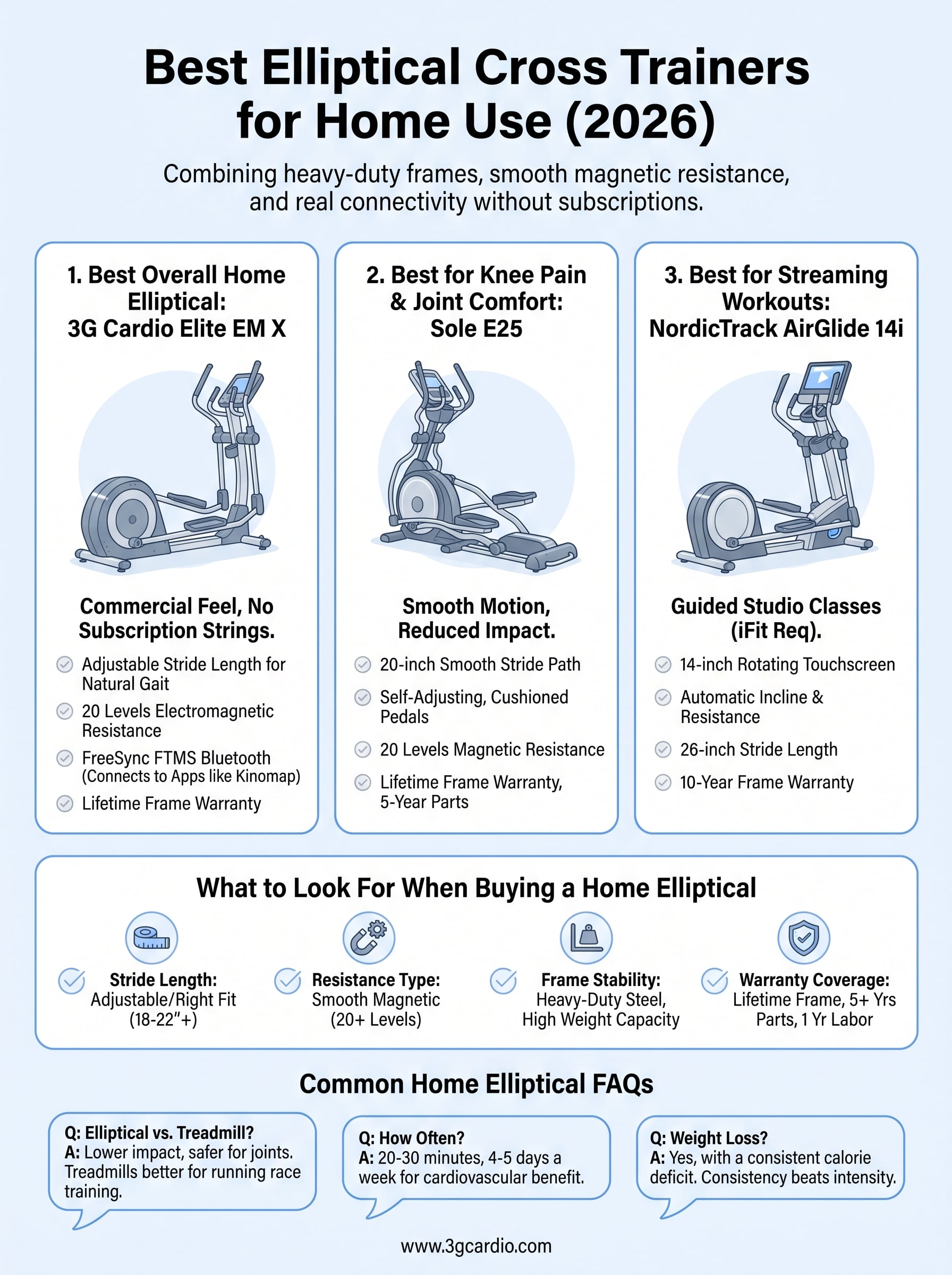
The best elliptical cross trainer for home use isn’t the one with the biggest touchscreen or the longest features list. It’s the machine that matches your stride, holds up under daily use, and doesn’t nickel-and-dime you with a subscription just to see your heart rate. Whether you’re managing joint pain, training seriously, or squeezing in movement between meetings, one of these eight machines fits your situation better than the rest.
Go back through the specs and warranty terms before you buy, not just the price tag on the box. A machine with a lifetime frame warranty and real Bluetooth connectivity will outlast one that looks flashier in a showroom but falls apart in year two. If you want commercial-grade construction, adjustable stride, and app connectivity without a monthly fee attached, take a closer look at the Elite EM X elliptical with 32 magnetic resistance levels and no subscription and see why it earned the top spot on this list.




No Comments