

02 Jan Why Does the Elliptical Say I Burned Fewer Calories Than I Expected?
 One of the most common questions we hear from customers who purchase an elliptical machine, centers on their calorie display.
After finishing what felt like a demanding workout, the console shows a number that seems impossibly low compared to the effort invested. The disconnect between perceived exertion and displayed calories leads many users to question whether their equipment is functioning properly or whether their workout actually accomplished anything meaningful.
The truth is that the calorie number displayed on any elliptical machine represents an estimate, not a measurement. Understanding how that estimate gets calculated, and why it systematically underrepresents certain types of effort, reveals why focusing on calorie displays alone misses the bigger picture of what effective training actually accomplishes.
How Elliptical Machines Calculate Calorie Estimates
Every elliptical on the market uses algorithms to estimate calorie expenditure based on available data points. These calculations typically incorporate workout duration, speed or cadence, resistance level, and sometimes user-entered body weight. The fundamental limitation is that these algorithms were developed using models more similar to stationary bikes than treadmills, which is standard across the fitness equipment industry. This calculation approach explains why elliptical calorie estimates consistently appear conservative compared to what users expect based on their perceived effort.
Treadmills typically display higher calorie numbers because walking and running are weight-bearing activities. Each foot strike requires the body to absorb impact forces and work against gravity in ways that increase total energy expenditure. That same impact, however, creates stress on joints, particularly the knees, hips, and lower back. Users who train frequently or who are managing injuries often find that impact accumulation becomes limiting over time, regardless of what the calorie display suggests.
Why Elliptical Workouts Feel Harder Than the Numbers Suggest
The disconnect between effort and displayed calories becomes more pronounced on elliptical machines because of how the movement pattern differs from other cardio equipment. On an elliptical, your feet remain in continuous contact with the pedals throughout the entire motion. This eliminates impact but also changes how calorie algorithms interpret the activity, typically resulting in lower estimated values.
What those algorithms fail to capture adequately is the nature of continuous muscular engagement that elliptical training demands. Unlike activities where muscles work in short bursts followed by brief recovery periods, elliptical movement requires sustained activation throughout the entire range of motion. When resistance increases, major muscle groups including the glutes, hamstrings, quadriceps, and often the upper body must work simultaneously against that load. The metabolic demand of this sustained, multi-muscle engagement frequently exceeds what simplified calorie algorithms predict.
Understanding EPOC and Why It Matters More Than Console Numbers
Perhaps the most significant limitation of calorie displays is that they capture only one component of total energy expenditure. The phenomenon known as EPOC, or Excess Post-Exercise Oxygen Consumption, describes the elevated metabolic rate that continues after exercise ends. Your body requires additional energy to replenish oxygen stores, repair muscle tissue, clear metabolic byproducts, and return various physiological systems to baseline. None of this additional energy expenditure appears on the console display.
The magnitude of EPOC depends heavily on workout characteristics rather than simple duration. Intensity level, resistance load, total muscle mass involvement, and degree of muscular fatigue all influence how much additional energy the body expends during recovery. A steady-state, low-effort elliptical session produces minimal EPOC effect. However, workouts involving higher resistance levels, varied intensity, and sustained muscular challenge can elevate metabolism for hours after the session ends. This post-exercise metabolic boost represents real calorie expenditure that never appears on any fitness console.
How the 3G Cardio Elite EM X Supports Effective Training
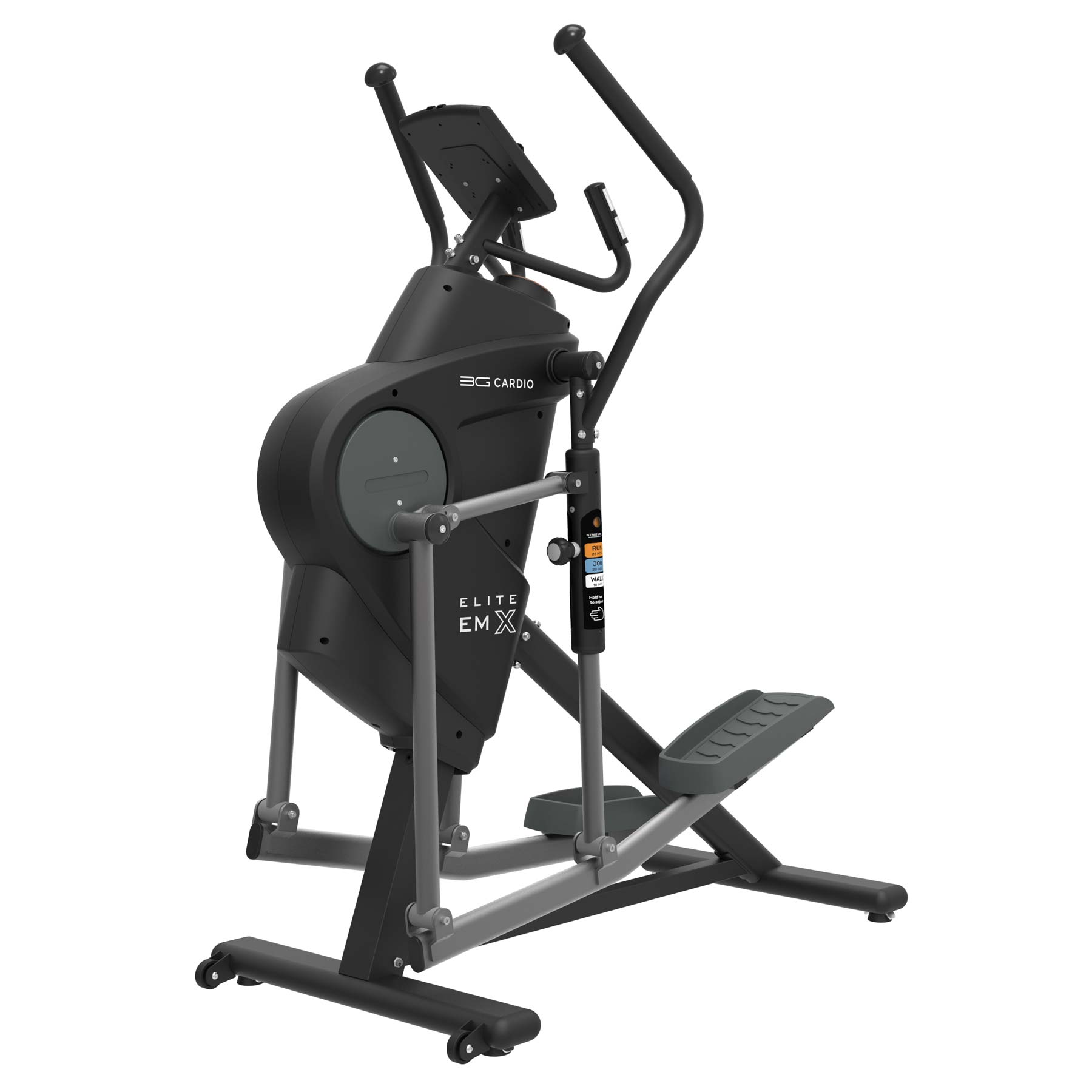
The 3G Cardio Elite EM X Elliptical was engineered specifically to enable the kind of training that produces meaningful results beyond what calorie displays capture. Several design decisions support this capability in ways that distinguish it from equipment built primarily for entry-level users.
The adjustable stride length system allows users to modify joint angles and muscle recruitment patterns during their workout. Longer stride settings increase activation of the glutes and hamstrings, while shorter settings emphasize cadence and cardiovascular demand. This adjustability means workouts can target different training objectives rather than forcing users into a single, fixed movement pattern. The ability to vary stride length within a single session or across different workouts creates training stimulus variety that fixed-stride machines cannot match.
The resistance system on the Elite EM X delivers consistent, substantial load throughout the entire pedal motion. Unlike cheaper ellipticals where resistance feels inconsistent or where momentum can carry users through portions of the movement, the Elite EM X maintains engagement that requires continuous muscular effort. This constant load creates the sustained muscle activation associated with effective metabolic training and meaningful EPOC response. The electromagnetic resistance system provides smooth transitions between levels without the mechanical inconsistency common in friction-based systems.
The inclusion of active upper-body handles transforms the Elite EM X from lower-body equipment into a total-body training platform. When users engage both upper and lower body muscle groups simultaneously, total metabolic demand increases substantially. More muscle mass working means more energy required, both during the workout and throughout the extended recovery period that follows challenging sessions.
What Actually Matters for Your Training
A lower calorie number on the elliptical display does not indicate a less effective workout. The console provides one data point, and that data point is an estimate built on algorithms that systematically undervalue certain types of effort. Rather than chasing a higher number on the display, effective training focuses on factors that produce actual physiological adaptation.
Resistance level matters more than the calorie display suggests. Higher resistance creates greater muscular demand, which drives both immediate energy expenditure and extended post-exercise metabolic elevation. Effort and intensity, measured by how challenged you feel and how your muscles respond during and after training, provide better feedback than console estimates. Consistency over time produces results that no single workout, regardless of displayed calories, can match.
The Elite EM X was built for users who understand that meaningful fitness progress comes from consistent, challenging training rather than optimizing for impressive-looking console numbers. The engineering decisions behind adjustable stride, consistent resistance delivery, and total-body engagement capability support the kind of workouts that produce actual results, even when the calorie display seems conservative.
The Reality of Calorie Displays
Elliptical calorie displays represent conservative estimates, not comprehensive measures of workout effectiveness. Treadmills often show higher numbers due to impact and weight-bearing calculations, but that impact comes with joint stress that accumulates over time. Ellipticals offer continuous resistance, sustained muscular engagement, and reduced joint impact while creating metabolic demand that standard algorithms underestimate.
The 3G Cardio Elite EM X supports training approaches that maximize the benefits elliptical exercise can provide. With 3G Cardio’s FreeSync™ FTMS Bluetooth technology, you can connect your own device and use whatever apps or entertainment you prefer during your workout, without subscription requirements or ecosystem restrictions. Your equipment should work the way you want it to work, not the way a subscription service demand.
Judge your workouts by how your body responds over weeks and months of consistent training. The calorie display provides one piece of information, but adaptation, strength gains, cardiovascular improvement, and how you feel during daily activities tell you far more about whether your training is actually working.
Pay with Your HSA/FSA
The 3G Cardio Elite EM X Elliptical qualifies for HSA/FSA payment for eligible customers through our partnership with Flex. Use your pre-tax healthcare dollars to invest in the fitness equipment your doctor recommends. Learn more about HSA/FSA payment options.
When you’re ready to experience the 3G Cardio difference, call us directly at 1-888-888-7985 for immediate assistance from our team.

Visit 3GCardio.com to explore our full range of commercial-grade fitness equipment and experience fitness equipment ownership without subscriptions, without complications, just quality that works exactly as it should.





Sorry, the comment form is closed at this time.