

05 Dec What Makes Upright Bike Testing Different? 3G Cardio’s Elite UB X Was Built for It
Upright Bikes Face Different Testing Challenges Than Recumbent Bikes
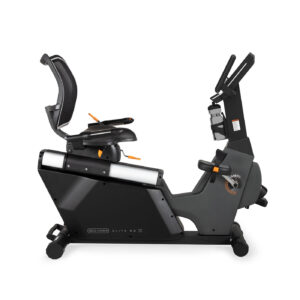
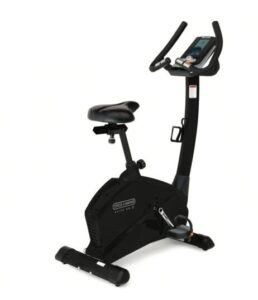
If you’ve read our companion article about What Independent Testing Organizations Look for in Recumbent Bikes, you already understand how rigorous evaluation protocols separate quality equipment from marketing hype. But upright exercise bikes face an entirely different set of challenges in testing environments, and understanding these differences helps explain why the 3G Cardio Elite UB X was engineered the way it was.
The fundamental difference comes down to body position and weight distribution. On a recumbent bike, your weight distributes across a supported seat with backrest, and your legs extend forward to pedals positioned in front of you. On an upright bike, you’re sitting on a saddle with your full body weight pressing straight down, your core muscles must work constantly to maintain posture, and you have the option to stand and pedal out of the saddle for high-intensity intervals. These differences create testing criteria that don’t even apply to recumbent bikes.
The Saddle Challenge That Defines Upright Bike Quality
Independent testing organizations consistently identify saddle comfort as the single most important factor determining whether users actually continue using an upright bike long-term. Unlike recumbent bikes where body weight distributes across a wide, supported seat, upright bike saddles concentrate your entire body weight onto a relatively small contact area. This creates what fitness professionals call the “saddle sore problem,” where constant downward pressure on soft tissue makes extended workouts uncomfortable or even painful.
Testing protocols evaluate saddle design across multiple sessions rather than brief showroom tests because saddle issues often don’t manifest until 20 or 30 minutes into a workout. Testers assess padding density, saddle width relative to sit bone spacing, surface material breathability, and whether the design allows proper blood flow during extended pedaling sessions. A saddle that feels fine during a 10-minute test ride can become torture during the 45-minute workouts that deliver real fitness results.
The Elite UB X addresses this challenge with an oversized, cushioned saddle that provides significantly more surface area than standard upright bike seats. The padding uses density-appropriate foam that supports body weight without compressing flat over time, and the tilt-adjustable design allows users to fine-tune the angle to match their specific anatomy. We engineered this seat knowing it would face direct comparison against competitors in extended testing sessions where saddle comfort becomes the deciding factor.
Stability Testing Takes on New Meaning When Users Can Stand
Recumbent bikes only need to remain stable during seated pedaling because their design doesn’t permit standing. Upright bikes face a completely different stability challenge because users can and do stand on the pedals for high-intensity intervals, sprint efforts, and climbing simulations. This out-of-saddle pedaling shifts weight distribution dramatically and applies lateral forces that seated pedaling never creates.
Independent testing protocols for upright bikes measure stability under standing pedaling conditions, not just seated use. Testers evaluate how much the bike rocks or shifts when a 200-pound user stands and pedals aggressively at high resistance. They measure whether the frame flexes under these conditions, whether the bike tends to walk across the floor during standing efforts, and whether the overall structure feels secure enough that users will actually use the standing capability rather than avoiding it due to stability concerns.
The Elite UB X was engineered with a wide, stable base specifically designed for standing pedaling security. The frame construction uses heavy-gauge steel that resists flex under dynamic loading conditions, and the overall weight distribution keeps the bike planted firmly even during aggressive out-of-saddle intervals. When independent testing organizations subject the Elite UB X to standing stability protocols, they find security that belongs in commercial gym equipment rather than the compromise solutions that characterize most home upright bikes.
Core Engagement Changes Everything About Fit Evaluation
Recumbent bikes provide back support that allows users to pedal without engaging core muscles significantly. The Elite RB X‘s seat design focuses on lumbar support and cushioning for this supported position. Upright bikes require users to maintain their own posture throughout the workout, which means core muscles engage constantly from the moment you start pedaling until you finish.
This core engagement requirement changes how independent testing organizations evaluate fit and adjustability. On a recumbent bike, fit primarily concerns leg extension and reach to handlebars. On an upright bike, testers must also evaluate whether the riding position allows users to maintain proper spinal alignment while their core works to stabilize their torso. Poor upright bike positioning can lead to lower back strain that recumbent bikes simply don’t create because of their supported seating.
The Elite UB X features ergonomically designed upper handlebars positioned to encourage natural arm placement and proper spinal posture. The multi-position seat adjustment system, with 10 height positions combined with forward and back adjustment, allows users to achieve positioning that keeps their spine neutral while their core engages appropriately. This isn’t about comfort alone. It’s about sustainable positioning that allows consistent use without developing the back pain that drives many upright bike owners to abandon their equipment.
Higher Intensity Potential Demands Better Resistance Systems
Upright bikes generally support higher intensity training than recumbent bikes because the riding position allows users to recruit more muscle groups and generate more power. Standing pedaling, aggressive sprints, and HIIT-style intervals all become possible on an upright bike in ways that recumbent positioning doesn’t support. This higher intensity potential means independent testing organizations evaluate resistance systems with different expectations.
Testing protocols measure whether resistance systems can challenge users during standing sprint efforts, not just comfortable seated pedaling. They evaluate response time when resistance changes during interval programs, consistency of resistance across different pedaling speeds, and whether the system provides enough range to accommodate both recovery periods and maximum effort bursts within the same workout.
The Elite UB X uses 16 levels of magnetic resistance engineered to support the full range of upright bike training intensities. The resistance transitions smoothly for interval training, responds consistently regardless of pedaling cadence, and provides enough challenge at maximum settings to push even well-conditioned users during standing efforts. The silent magnetic operation means you can perform high-intensity intervals without disturbing others in your home, which matters because HIIT workouts often happen early in the morning or late at night.
Who Tests Fitness Equipment and What They Measure
Several independent organizations conduct rigorous fitness equipment testing using standardized protocols. Consumer Reports has evaluated exercise equipment since 1936, purchasing products anonymously and accepting no advertising revenue. Good Housekeeping Institute tests fitness equipment in their labs as part of their broader consumer product evaluation. Wirecutter conducts hands-on testing with multiple reviewers across extended time periods. University biomechanics labs and sports science departments evaluate equipment for research purposes. These organizations share a common goal: providing objective data that helps consumers make informed decisions rather than relying on manufacturer marketing claims.
Understanding what these testing protocols actually measure helps explain why certain upright bikes succeed in independent evaluation while others fall short despite aggressive marketing.
Stability testing measures how much force is required to tip the bike over, factoring in base width, weight distribution, and center of gravity. For upright bikes, this testing occurs during both seated and standing pedaling conditions. The Elite UB X‘s 91 lb. unit weight and wide base design deliver stability scores that reflect our commercial-grade engineering approach.
Display assessment evaluates ease of reading, interacting with controls, and whether the interface makes sense during actual use rather than just during setup. The Elite UB X takes a different approach through FreeSync™ FTMS Bluetooth technology that lets you use your own tablet or smartphone, ensuring your display never becomes outdated and always runs the apps you actually want to use.
Programming evaluation examines the variety of onboard programs, whether customizable programs exist, and whether heart rate control programs actually maintain target zones effectively. The Elite UB X includes 12 pre-programmed workouts, 3 heart rate interactive programs that automatically adjust resistance to keep you in your target zone, and 1 watt-based program for power-focused training. The 4 user ID settings allow multiple household members to maintain separate profiles with accurate personal statistics.
The Compact Footprint That Doesn’t Compromise Quality
The Elite UB X occupies just 41″ L x 22.5″ W of floor space, making it one of the more compact full-featured upright bikes available. This matters because independent testing recognizes that fitness equipment only provides value when users actually use it consistently, and equipment that doesn’t fit available space often gets neglected regardless of its quality.
Achieving this compact footprint without compromising stability or construction quality required careful engineering. Many compact upright bikes sacrifice frame rigidity or base width to reduce their footprint, creating bikes that feel unstable during standing efforts or flex noticeably during high-intensity intervals. The Elite UB X maintains commercial-grade construction within its compact dimensions, delivering the stability that testing protocols measure without consuming the floor space that larger bikes require.
The front transport wheels allow easy repositioning for storage or cleaning, a practical feature that affects real-world usability but rarely appears in marketing specifications. At 91 lbs., the Elite UB X provides stability during use while remaining manageable for repositioning when necessary.
Why 350 lb. Capacity Matters More on Upright Bikes
Weight capacity takes on additional significance for upright bikes because of the dynamic forces created during standing pedaling. When a 280-pound user stands on the pedals and drives power through aggressive intervals, the forces on the frame, bearings, and drive system exceed what seated pedaling creates. A bike rated for 300 pounds during seated use might not maintain that rating during standing efforts where dynamic loading multiplies effective forces.
The Elite UB X’s 350 lb. weight capacity was verified through testing that includes standing pedaling stress, not just static loading or seated operation. We engineered the frame, crank system, and bearings to handle sustained use by users approaching that weight limit during the kind of high-intensity training that upright bikes are designed to support. This means users between 250 and 300 pounds are operating well within design parameters during all training styles, not pushing equipment limits that might affect reliability or safety.
FreeSync™ FTMS Bluetooth for Connected Training
The Elite UB X incorporates FreeSync™ FTMS Bluetooth connectivity that opens compatibility with apps like Zwift, Kinomap, and iCardio for users who want immersive connected fitness experiences. This approach provides practical advantages over proprietary integrated tablets that become obsolete within a few years of purchase.
Your smartphone or tablet receives regular software updates, runs whatever apps you choose, and can be upgraded whenever better devices become available. Proprietary fitness equipment tablets freeze at whatever capability level existed when the equipment was manufactured, often running outdated operating systems that stop receiving app updates or security patches. FreeSync™ FTMS Bluetooth means your equipment’s connectivity improves over time as you upgrade your personal devices rather than degrading as proprietary electronics age.
The basic console still displays time, RPM, watts, distance, calories, and heart rate for users who prefer straightforward workout feedback without additional devices. Heart rate monitoring works through either handlebar contact sensors or the included wireless chest strap for more accurate readings during high-intensity intervals when handlebar grip may be inconsistent.
Warranty Coverage That Reflects Engineering Confidence
The warranty coverage on the Elite UB X reflects our confidence in engineering quality: lifetime warranty on the frame, 7 years on parts, and 1 year of in-home labor for residential use. Commercial installations receive 3 years on parts and 1 year on labor, appropriate for the more intensive use patterns in multi-user environments.
These warranty terms substantially exceed industry standards and indicate our expectation of reliable long-term performance. Equipment failures create warranty costs for us, which incentivizes designing and building equipment that continues operating reliably rather than accepting higher failure rates as the inevitable cost of hitting lower price points. Independent testing organizations consider warranty coverage as one indicator of manufacturer confidence in actual equipment durability.
Pay with Your HSA/FSA
The Elite UB X qualifies for HSA/FSA payment for eligible customers through our partnership with Flex. Use your pre-tax healthcare dollars to invest in the fitness equipment your doctor recommends. Learn more about HSA/FSA payment options.
When you’re ready to experience the 3G Cardio difference, call us directly at 1-888-888-7985 for immediate assistance from our team.

Visit 3GCardio.com to explore our full range of commercial-grade fitness equipment and experience fitness equipment ownership without subscriptions, without complications, just quality that works exactly as it should.





Sorry, the comment form is closed at this time.