

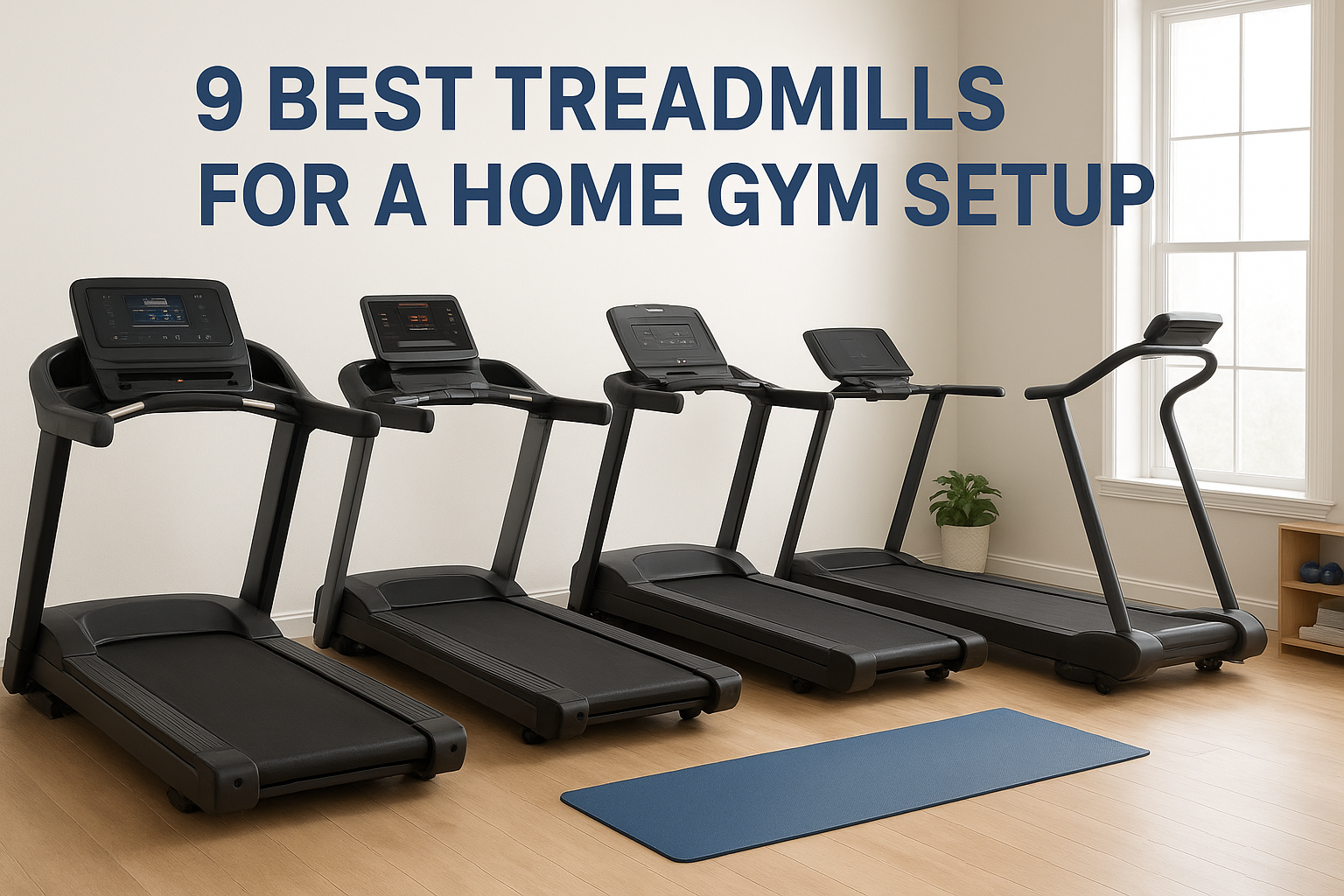
20 Aug 9 Best Treadmills for a Home Gym Setup in 2026
Building a treadmill and home gym setup in 2026 means sorting through dozens of models that all claim to be commercial-grade. Most aren’t. You’ll find flimsy motors dressed up with touchscreens, subscription apps you didn’t ask for, and warranties that shrink the moment you actually need them. If you’re spending real money on home fitness equipment, you deserve a machine built to handle daily use for years, not a treadmill designed to look good in a showroom for six months.
This list answers a simple question: which treadmills actually hold up in a home gym, and which features are worth paying for? We focus on motor durability, deck size, incline range, and honest pricing rather than gimmicks. You’ll also see where app connectivity through Bluetooth and FTMS actually adds value versus where it’s just marketing.
Below, you’ll find nine treadmills worth considering for your home gym in 2026, including options from 3G Cardio’s own Elite Runner X and the Pro Runner X folding treadmill built for serious running lines. We built these treadmills without inflated markups or forced subscriptions, and we’ll show you exactly how they compare on price, warranty, and construction against other brands so you can make an informed choice.
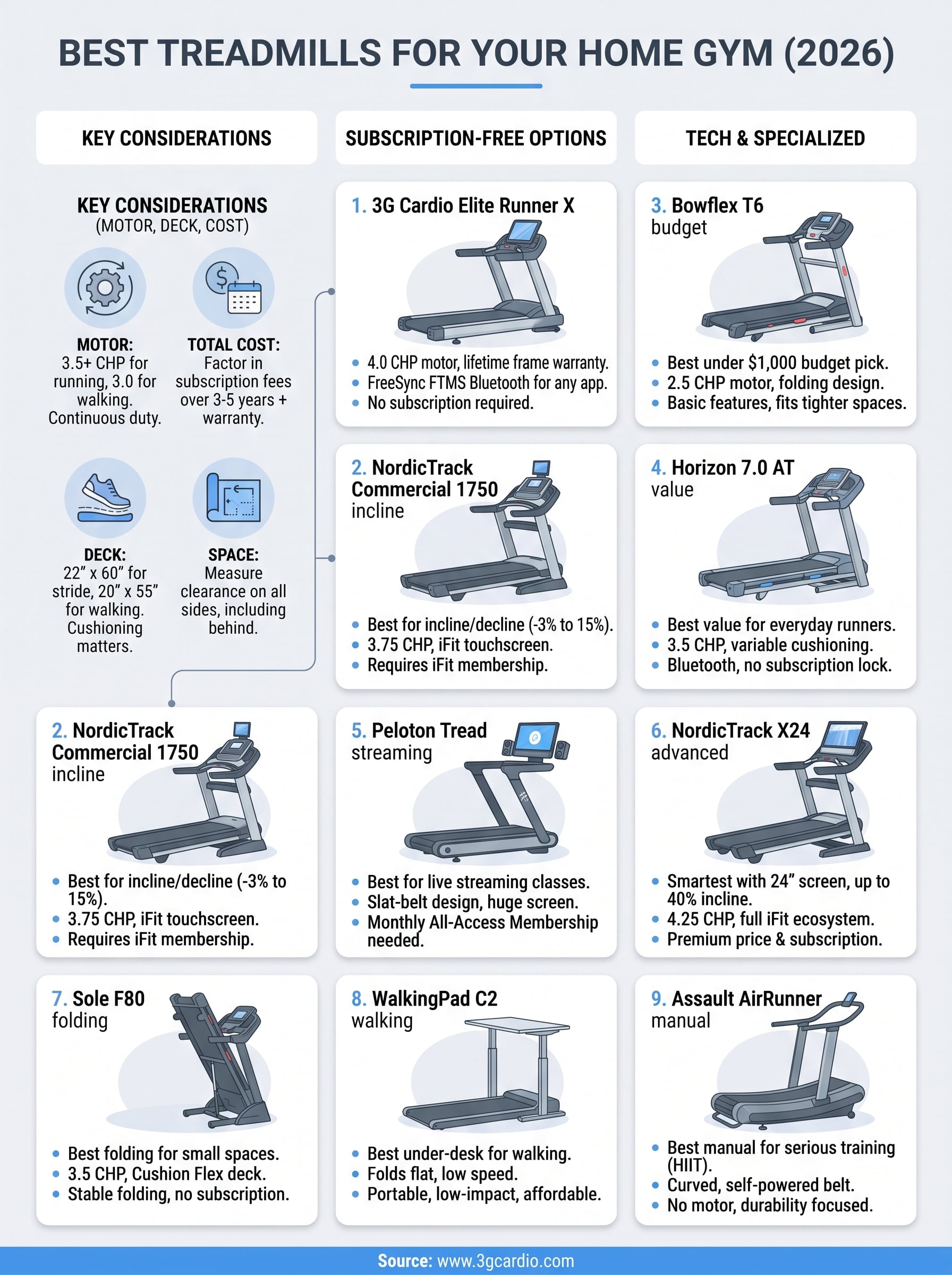
1. 3G Cardio Elite Runner X: best treadmill without subscriptions
The 3G Cardio Elite Runner X club-quality running treadmill is built for people who want a commercial-grade treadmill without the recurring fees that come bundled into so many home gym machines today. It runs on a 4.0 continuous-duty HP motor and a deck large enough for taller runners to open up their stride without feeling boxed in. Instead of locking core functions behind a monthly app fee, 3G Cardio designed the console around FreeSync FTMS Bluetooth, so you can pair it with whatever fitness app you already use and enjoy fitness equipment with no subscription required.
Key features
This treadmill focuses on the things that actually affect your workout day to day, not flashy extras that stop working once the warranty runs out.
- 4.0 continuous-duty HP motor rated for daily home use
- 22" x 60" running deck, roomy enough for sprinting and long runs
- 0 to 12 mph speed range with a 0 to 15% incline
- FreeSync FTMS Bluetooth connectivity for third-party apps and tablets
- Wireless heart rate strap included, plus a heart rate monitoring grip
- Tablet shelf and USB charging port built into the console
- Bring Your Own Screen (BYOS) design, so you’re not stuck with an outdated built-in display
A treadmill shouldn’t need a monthly fee to unlock speed, incline, or heart rate data you already paid for.
Who it’s for
The Elite Runner X suits serious home runners who log regular mileage and don’t want their equipment to depend on a subscription staying active. It also fits buyers who already use apps like Kinomap, Zwift, or Peloton’s app on their own tablet and just need a durable, connected deck underneath them. If you’ve used commercial treadmills at a gym and want that same feel of solid, quiet, dependable performance at home, this is the model built with that comparison in mind. It’s less suited to someone who wants an all-in-one branded ecosystem with a huge built-in touchscreen, since the whole point here is bringing your own screen and skipping proprietary lock-in.
Pricing and warranty
The Elite Runner X is priced in the $2,999 to $3,499 range depending on current promotions, which puts it well below what big-box brands charge for comparable motor size and deck length once you account for their subscription costs over a few years. 3G Cardio backs it with a residential warranty that includes a lifetime frame guarantee, 7 years on parts, and 1 year on labor, plus a separate commercial warranty for light commercial settings. The company also offers a price-match guarantee within six months of purchase and 6 months of 0% financing through PayPal Credit, so you’re not stuck paying full price upfront if you’d rather spread out the cost. Combined with free curbside delivery or optional White Glove setup, it’s a straightforward buy with few hidden costs down the line.
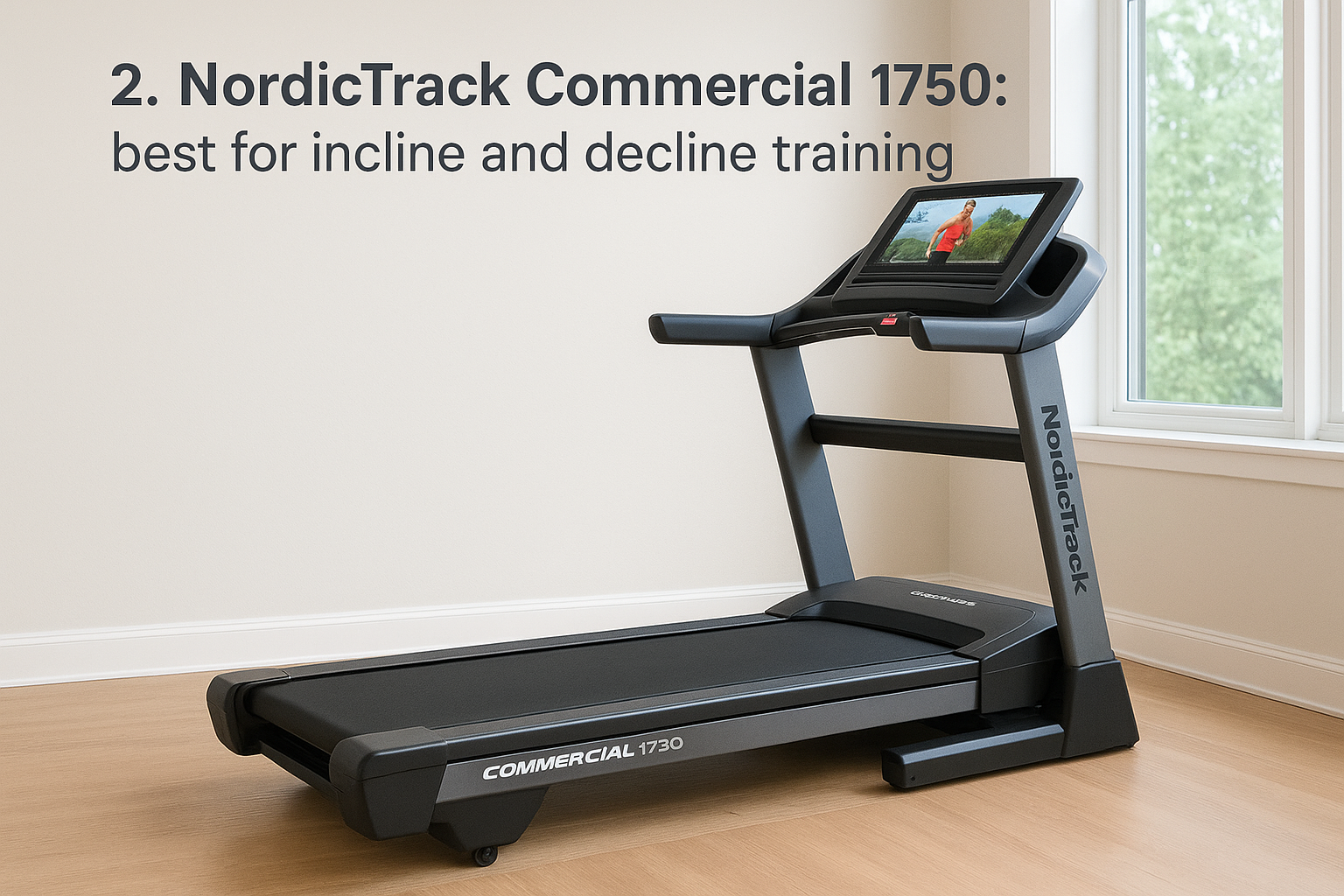
2. NordicTrack Commercial 1750: best for incline and decline training
The NordicTrack Commercial 1750 built its reputation on one thing: terrain simulation. Its incline range runs from -3% to 15%, which lets you train downhill grades and steep climbs without leaving your home gym, though it’s worth knowing how much of an incline you should actually use before chasing the steepest grade available. This matters if you’re training for a race with elevation changes or just want your legs to work differently than flat-ground running allows. NordicTrack pairs this decline and incline range with a 3.75 CHP motor and a 10-inch HD touchscreen that drives its iFit programming.
Key features
Here’s what stands out on this model compared to flatter, simpler treadmills:
- Incline range from -3% to 15% for true decline and incline training
- 3.75 CHP motor with a 22" x 60" deck
- 10-inch rotating touchscreen for iFit-guided workouts
- Automatic trainer control that adjusts speed and incline during iFit sessions
- Bluetooth connectivity for heart rate straps and headphones
Decline training works muscles flat treadmills never touch, but that feature only pays off if you’ll actually use it.
Who it’s for
Runners training for hilly races or triathlons get the most value here, since few home treadmills offer true decline capability alongside steep incline. It also suits buyers who want guided, trainer-led workouts and don’t mind paying for that structure every month. If you already have a fitness app you prefer, or you’d rather skip subscription costs entirely, this treadmill pushes you toward iFit whether you want it or not, since many features require an active membership to function fully.
Pricing and warranty
Expect to pay around $1,999 for the Commercial 1750, plus an ongoing iFit membership if you want full functionality out of the console. The warranty coverage includes a 10-year frame guarantee, 2 years on parts, and 1 year on labor, which lags behind the lifetime frame warranty offered on some competing home treadmills. Financing is available through third-party lenders, but there’s no built-in price-match guarantee like you’ll find elsewhere.
3. Bowflex T6: best budget treadmill under $1,000
The Bowflex T6 targets buyers who want a functional treadmill and home gym starter piece without spending three or four thousand dollars on their first machine. It runs on a 2.5 CHP motor, smaller than the commercial-grade motors found on pricier models, but adequate for walking, jogging, and light running a few times a week. Bowflex kept the design simple, with a 20" x 55" deck and a basic console rather than a large touchscreen, which is part of how they hold the price down.
Key features
The T6 sticks to the essentials rather than chasing every trend on the market:
- 2.5 CHP motor with a 0 to 12 mph speed range
- 20" x 55" running deck, adequate for walking and moderate jogging
- 0 to 10% incline range, adjustable manually or through presets
- Bluetooth connectivity for the JRNY app and compatible heart rate monitors
- Foldable design with SoftDrop technology for easier storage
A budget treadmill only makes sense if it survives daily use, not just the return window.
Who it’s for
Beginners and walkers who need reliable equipment without a big upfront investment fit this treadmill well. It also suits smaller households where floor space is tight, since the SoftDrop folding mechanism lets you store the deck upright between sessions. Runners logging serious weekly mileage will likely outgrow the 2.5 CHP motor faster than they’d like, so this isn’t the pick if marathon training is the goal.
Pricing and warranty
Expect to pay around $999 to $1,199 for the Bowflex T6, making it one of the more affordable entries on this list. Warranty terms include a 10-year frame guarantee, 2 years on parts, and 1 year on labor, coverage that’s reasonable for the price but shorter than the lifetime frame warranties offered by higher-end brands. The JRNY app requires a subscription for full guided workout access, though basic manual use works without it.
4. Horizon 7.0 AT: best value treadmill for everyday runners
The Horizon 7.0 AT sits in the middle of the market, built for people who run several times a week and want a machine that won’t buckle under regular use. It uses a 3.5 CHP motor paired with Horizon’s Variable Response Cushioning, a deck system that softens impact near the front and back while staying firmer in the middle where your stride lands hardest, a good example of how treadmill suspension systems are supposed to work. This isn’t a treadmill chasing touchscreens or streaming classes. It’s aimed squarely at everyday runners who want dependable mechanics at a fair price.
Key features
Horizon focuses its engineering budget on the parts that affect how the treadmill feels underfoot, rather than console extras.
- 3.5 CHP motor with a 0 to 12 mph speed range
- 22" x 60" deck with Variable Response Cushioning
- 0 to 15% incline, controlled through quick-touch buttons
- Bluetooth connectivity for compatible fitness apps and heart rate monitors
- Folding frame with hydraulic assist for easier storage
A treadmill’s value shows up in how your knees feel after a year, not in its spec sheet on day one.
Who it’s for
Runners who log three to five sessions a week and want a deck that handles that volume without excessive strain fit this model well. It also suits buyers who compared pricier commercial-style treadmills but couldn’t justify the jump for features they wouldn’t use, like built-in touchscreens or streaming subscriptions. If your priority is a large running deck with real cushioning at a mid-range price, the 7.0 AT delivers that without much extra weight in the price tag. It’s a poor fit for anyone who wants guided coaching baked into the console experience.
Pricing and warranty
The Horizon 7.0 AT typically runs between $1,299 and $1,599, depending on retailer promotions. Warranty coverage includes a lifetime frame guarantee, 10 years on the motor, 2 years on parts, and 1 year on labor, coverage that’s stronger than most treadmills in this price range. There’s no subscription requirement to access core functions, which keeps ongoing costs down compared to app-dependent competitors.
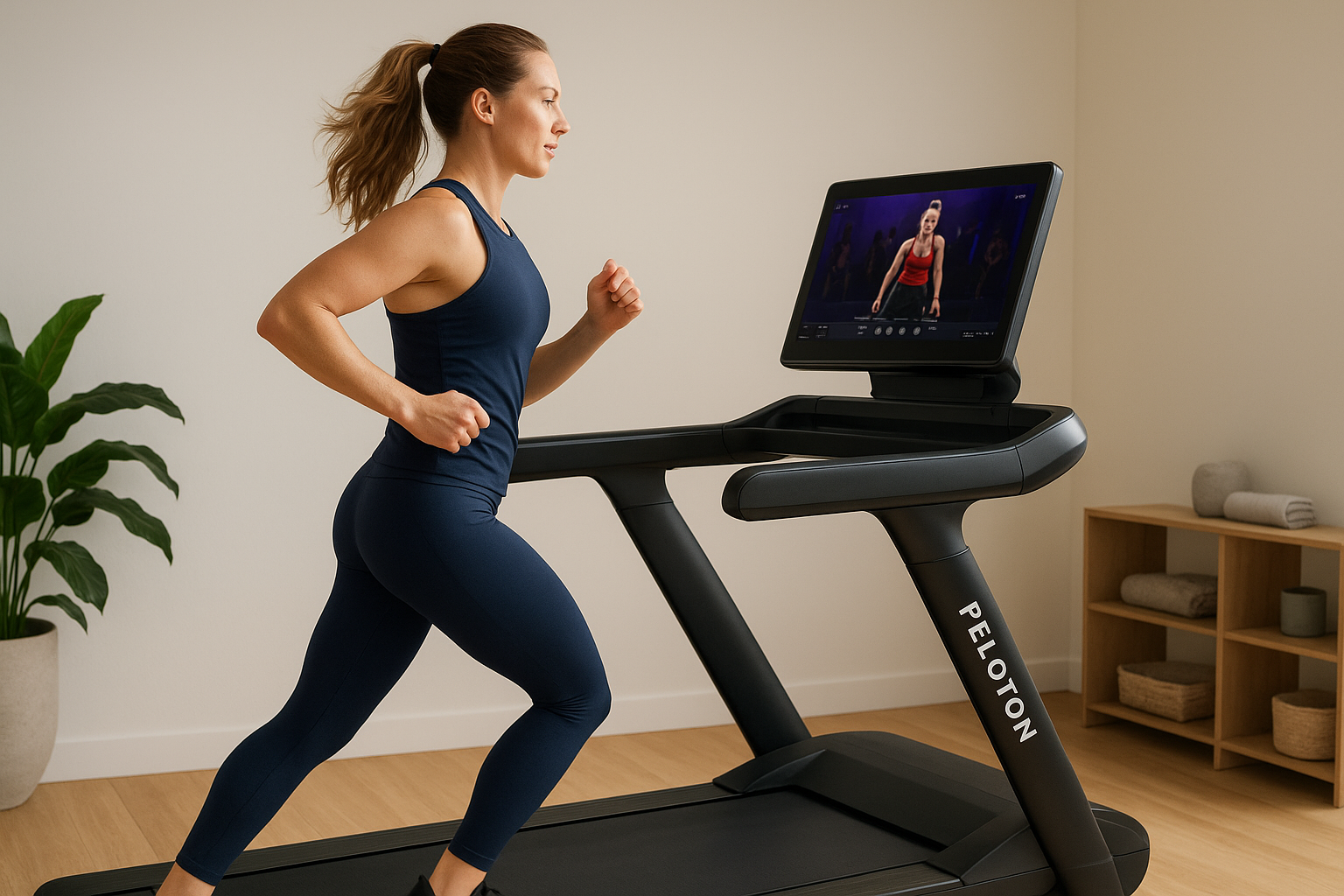
5. Peloton Tread: best treadmill for streaming fitness classes
The Peloton Tread built its whole identity around one thing: live and on-demand classes led by instructors who keep you motivated when you’d rather skip the workout. It runs on a commercial-grade motor tuned for the slat-belt design Peloton uses instead of a traditional rubber belt, and the 23.8-inch HD touchscreen is built into the console rather than treated as an add-on. This is the treadmill for people who want the studio experience without leaving their home gym, not for buyers hunting for the biggest motor or deck on paper.
Key features
Peloton’s engineering leans into class delivery and screen quality rather than raw specs:
- Slat-belt design rated for speeds up to 12.5 mph
- 23.8-inch rotating HD touchscreen with built-in speakers
- 0 to 12.5% incline range
- Live and on-demand class library through the Peloton app
- Automatic resistance and incline adjustments during certain classes
A treadmill built around classes only pays off if you’ll actually show up for them month after month.
Who it’s for
Buyers who thrive on instructor-led motivation and don’t mind paying a recurring fee for it get the most out of this machine. It also suits people who’ve used Peloton bikes before and want that same class ecosystem for running and walking. If you’re the type who prefers picking your own app connectivity or skipping subscriptions altogether, the Tread works against you here, since the touchscreen is largely locked to Peloton’s own software rather than open to third-party apps.
Pricing and warranty
The Peloton Tread costs around $2,995, plus a required monthly All-Access Membership near $44 to unlock the full class library and workout tracking. Warranty coverage includes 12 months on the frame, motor, and parts, with labor coverage limited to the first year as well, shorter than most treadmills on this list. Financing is available through Affirm, but there’s no price-match guarantee included with purchase.
6. NordicTrack X24: best smart treadmill with advanced tech
The NordicTrack X24 pushes the console side of a treadmill about as far as it goes, with a 24-inch touchscreen that pivots to double as a display for iFit’s off-treadmill workouts. This is the top-of-the-line model in NordicTrack’s lineup, built for buyers who want their treadmill and home gym setup to feel like a full studio rather than just a place to run. Its incline and decline range mirrors the Commercial 1750, but the deck and motor are beefed up to handle the added weight and demands of a larger touchscreen and heavier daily use.
Key features
NordicTrack loaded the X24 with tech most competitors don’t attempt at any price point.
- 4.25 CHP motor with a 22" x 60" deck
- Incline range from -6% to 40%, among the steepest available on a home treadmill
- 24-inch rotating HD touchscreen for iFit workouts, strength routines, and yoga sessions
- Automatic incline and speed adjustments during trainer-led iFit sessions
- Bluetooth connectivity for headphones and heart rate monitors
A 40% incline sounds impressive until you realize most runners never touch anything past 15%.
Who it’s for
Buyers who want one machine to replace a treadmill, an incline trainer, and a yoga mat setup will get the most use from the X24’s rotating screen and steep incline range. It also suits households already committed to iFit across other equipment, since the subscription unlocks the bulk of what makes this console worth the price. Someone who mainly wants a dependable running deck without paying for a screen they’ll rarely touch should look elsewhere on this list, since the X24’s price premium goes almost entirely toward tech rather than motor or deck upgrades.
Pricing and warranty
The X24 typically costs between $3,999 and $4,499, plus an iFit membership required to access most guided content and automatic adjustments. Warranty coverage includes a lifetime frame guarantee, 10 years on the motor, 2 years on parts, and 1 year on labor. There’s no built-in price-match guarantee, and ongoing iFit costs add up quickly if you keep the subscription active for years.
7. Sole F80: best folding treadmill for small home gyms
The Sole F80 solves a problem a lot of buyers run into: they want a serious treadmill and home gym setup, but they don’t have a spare room to dedicate to it full-time. This model folds up on a hydraulic hinge and rolls away on built-in wheels, so it can live in a corner of a bedroom or garage between workouts, much like the other home folding treadmills with incline worth comparing. Under the hood, it runs a 3.5 CHP motor and a 22" x 60" deck, which is a larger running surface than most folding treadmills manage without sacrificing stability.
Key features
Sole built the F80 around cushioning and durability rather than screen size, which shows in how it’s specced:
- 3.5 CHP motor with a 0 to 12 mph speed range
- 22" x 60" deck with Cushion Flex Whisper Deck shock absorption
- 0 to 15% incline range, adjustable through quick-touch controls
- Bluetooth connectivity for compatible fitness apps and heart rate monitors
- Hydraulic folding mechanism with wheels for easy storage and relocation
A folding treadmill only earns its keep if the fold doesn’t compromise the deck you run on.
Who it’s for
Apartment dwellers and buyers shopping foldable home treadmills for tight rooms get the clearest benefit here, since the F80 delivers a full-size deck without demanding a permanent footprint. It also suits runners who’ve been burned by flimsier folding models before and want a deck sturdy enough that folding doesn’t feel like a compromise. Someone chasing a large built-in touchscreen or streaming class library should look elsewhere, since Sole keeps its console simple by design.
Pricing and warranty
Expect to pay between $1,699 and $1,999 for the Sole F80, depending on current sales. Warranty coverage includes a lifetime frame and motor guarantee, 3 years on parts, and 1 year on labor, coverage that holds up well against pricier competitors. There’s no subscription requirement to run the machine, and financing options are available through Sole’s website at checkout.
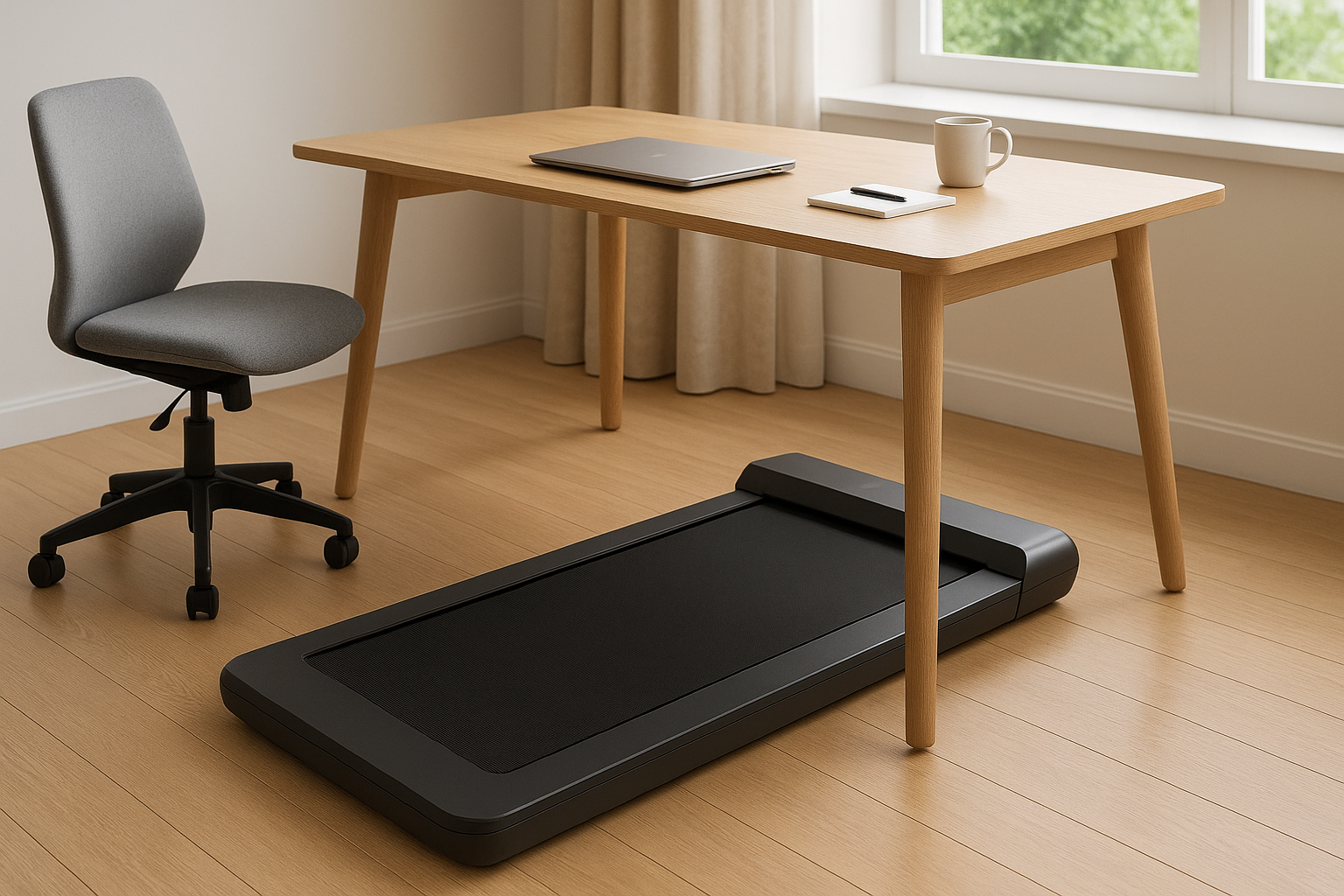
8. WalkingPad C2: best under-desk treadmill for walking
The WalkingPad C2 flips the usual treadmill script by folding flat rather than upright, sliding under a standing desk or a couch when you’re done. It’s built for walking, not running, with a top speed around 3.7 mph and a compact deck that won’t handle sprinting or heavy jogging. If your version of a treadmill and home gym setup is really about staying active during work hours rather than logging miles, this is the machine designed for that exact use case.
Key features
WalkingPad focused its engineering on portability and quiet operation rather than speed or incline range.
- 2.0 HP motor with a 0.5 to 3.7 mph speed range
- Folding design that collapses flat for under-desk or under-bed storage
- Built-in wheels for easy relocation between rooms
- App connectivity for step tracking and workout history
- Remote control for speed adjustments without bending down
A treadmill that folds flat solves a space problem no upright folding deck ever will.
Who it’s for
Remote workers who want to walk during calls or reading time get the most value from the C2, since it’s built to disappear under a desk between sessions. It also suits buyers in small apartments who have no room for a permanent treadmill but still want a low-impact way to hit daily step goals, the same reason home mini treadmills for small spaces keep selling. Someone training for a race or wanting incline work should skip this model entirely, since the C2 has no incline function and caps out well below jogging speed.
Pricing and warranty
Expect to pay between $399 and $599 for the WalkingPad C2, making it one of the most affordable options on this list. Warranty coverage typically runs 1 to 2 years on the motor and frame, shorter than the lifetime guarantees offered by full-size treadmill brands, which reflects its lighter-duty construction. There’s no subscription requirement, and the low price point makes it an easy add-on rather than a standalone investment.
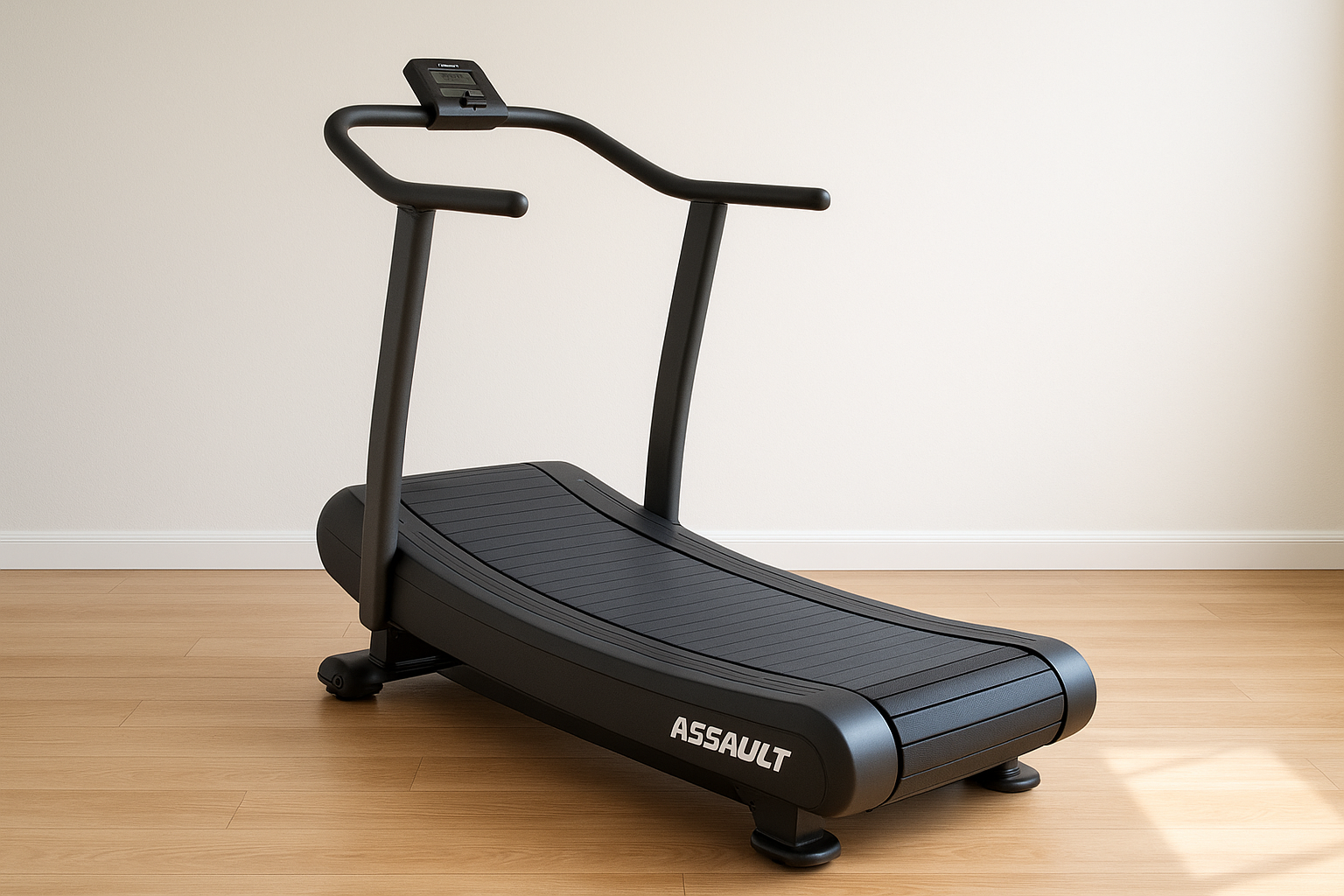
9. Assault AirRunner: best manual treadmill for serious training
The Assault AirRunner ditches the motor entirely, using a curved, non-motorized belt that moves only when you drive it with your own stride. This design forces proper running mechanics, since you can’t lean on a belt that’s pulling you forward. It’s built around air resistance training, the same concept behind Assault’s popular air bikes, so the harder you push, the more resistance you feel. There’s no speed dial and no incline button. You control both purely through effort, which makes this a different animal from every other treadmill and home gym pick on this list.
Key features
Assault stripped away anything that isn’t essential to manual, resistance-based running.
- Curved, non-motorized belt driven entirely by the runner
- Air resistance system that scales with effort, no manual adjustment needed
- Steel frame rated for heavy commercial use
- LCD console tracking speed, distance, calories, and watts
- No incline motor or preset programs, resistance comes from your own pace
A manual treadmill never lies about your effort, because the machine only moves as hard as you do.
Who it’s for
CrossFit athletes, sprint-interval trainers, and anyone doing HIIT work will get the most from the AirRunner, since it rewards short, explosive bursts better than steady-state jogging. It also suits serious training environments like garage gyms or small commercial studios where durability matters more than screens. Casual walkers or anyone wanting a relaxed jog should avoid this model, since running on a curved belt with no motor assist takes real adaptation and isn’t comfortable for slow, extended sessions.
Pricing and warranty
Expect to pay between $2,995 and $3,495 for the Assault AirRunner, positioning it closer to premium motorized treadmills despite having no motor at all. Warranty coverage includes a lifetime frame guarantee, 5 years on parts, and 1 year on labor, solid coverage that reflects the simpler mechanical design. There’s no subscription requirement, no touchscreen to maintain, and financing is available through third-party retailers at checkout.
10. How to choose the right treadmill for your home gym
Start by measuring your actual space before you fall for any spec sheet, since space is the first of several factors to consider before buying a treadmill for your home. A treadmill with a 22" x 60" deck needs roughly 3 feet of clearance on each side and behind it for safe use, and folding models still need floor space to unfold every session. Once you know your footprint, try choosing a treadmill by motor size and deck length first, since those two specs determine whether the machine holds up to daily running or just occasional walking.
Consider how you’ll actually train before you consider what a console can do. Someone logging five runs a week needs a 3.5 CHP motor or higher and a full-length deck, while someone walking during work calls is fine with a compact, slower unit like an under-desk model. Matching the machine to your real routine, not your aspirational one, saves you from buying more treadmill than you’ll use or less than you’ll need in six months.
Buy for the workouts you actually do, not the ones you imagine doing after the first month.
Here’s a quick checklist to run through before you buy:
- Space: Measure clearance on all sides, including behind the belt
- Motor: 3.0 CHP minimum for walking, 3.5 CHP or higher for regular running
- Deck size: 20" x 55" fits walkers, 22" x 60" suits runners with longer strides
- Incline range: 10-15% covers most home training needs without paying for 40% you’ll never use
- App connectivity: Bluetooth or FTMS support if you already use a fitness app you don’t want to abandon
- Subscription costs: Factor in monthly fees over 3-5 years, not just the sticker price
Finally, weigh warranty coverage as heavily as any feature list. A treadmill with a shorter frame guarantee often signals cheaper components inside, even when the console looks identical to a pricier model. Knowing what to look for before you buy and reading the warranty terms tells you more about long-term reliability than any spec on the box.
11. Treadmill features that actually matter long-term
Screens age faster than motors, and that gap explains most of the buyer’s remorse we hear about. A touchscreen that feels cutting-edge in 2026 looks dated by 2029, while a well-built motor and deck keep working the same way they did on day one. When you’re setting up a home gym step by step with equipment meant to last five or ten years, weigh features by how long they stay useful, not by how impressive they look in a showroom.
| Feature | Why it matters long-term |
|---|---|
| Continuous-duty motor (3.5+ CHP) | Handles daily running without overheating or wearing out early |
| Deck cushioning system | Reduces joint strain over thousands of miles, not just the first few runs |
| Bluetooth/FTMS connectivity | Keeps working with whatever app you use next, no lock-in |
| Lifetime frame warranty | Signals the manufacturer trusts the core structure to outlast the console |
| Large touchscreen | Often the first component to fail or feel outdated |
Motor durability decides whether your treadmill still runs smoothly after two years of regular use or starts straining under the same routine you started with. Continuous-duty ratings matter more than peak horsepower numbers marketing teams like to print, since peak figures describe a burst the motor can’t sustain during a real workout.
Buy the motor and deck for the next decade, and treat the touchscreen as a bonus that might not survive it.
Deck cushioning affects your knees and hips more than any other single spec, especially if you’re running four or five times a week. Warranty length backs this up indirectly, and what a treadmill warranty really tells you is worth reading closely: manufacturers offering a lifetime frame guarantee are betting on components built to outlast cheaper competitors, while short frame warranties often hint at thinner steel and weaker welds underneath the paint.
12. How much should you budget for a home treadmill
Price tells you almost nothing on its own, but it tells you a lot once you separate the machine cost from the hidden costs layered on top. A realistic budget for a durable home treadmill starts around $1,500 and climbs past $3,000 once you want what separates a good running treadmill from a cheap one: a commercial-grade motor, a full-length deck, and a warranty that actually protects you long term. Anything cheaper usually means a lighter motor, a shorter deck, or a frame warranty measured in years instead of a lifetime.
Subscriptions change the math more than most buyers expect going in. A $2,995 treadmill with a required $44 monthly membership costs you over $4,500 after three years, while a similarly priced machine with no subscription stays flat at $2,995 for as long as you own it. Add up subscription costs over five years before you compare sticker prices side by side, since that’s the window most people actually keep a treadmill.
The real price of a treadmill is what you pay after three years, not what’s on the tag today.
| Budget tier | Price range | What you get |
|---|---|---|
| Entry-level | $600-$1,200 | Compact deck, 2.0-2.5 CHP motor, walking-focused |
| Mid-range | $1,300-$2,000 | 3.0-3.5 CHP motor, full deck, solid cushioning |
| Commercial-grade | $2,500-$4,500 | 4.0+ CHP motor, lifetime frame warranty, no forced subscription |
Setting your budget around total ownership cost, not just the upfront number, keeps you from getting locked into a treadmill and home gym setup that quietly drains your wallet every month. Once you know your ceiling, work backward through motor size, deck length, and warranty terms to see which models on this list actually fit inside it.
Finding the treadmill that fits your home gym
The nine treadmills above cover every real scenario, from a curved manual belt for HIIT sessions to a flat-folding walking pad under your desk. What separates the good buys from the regrets isn’t the touchscreen size or the incline range, it’s whether the motor and deck can handle your actual routine for years without a subscription tax attached. Match the machine to how you train, not how you imagine training after a burst of January motivation, and you’ll avoid the buyer’s remorse that fills so many resale listings.
If you want commercial-grade construction without forced monthly fees eating into your budget, that’s exactly what we built the Elite Runner X and Pro Runner X around. Browse the FreeSync FTMS Bluetooth treadmills and cardio equipment with no monthly fees and see which one fits your space, your budget, and the workouts you’ll actually do.



Sorry, the comment form is closed at this time.